Excellent questions from my anth class today: “…a question related to Social Anthropology: how do we truly understand another person when we may not share the same way of experiencing and interpreting the world? I have been thinking about the idea that, if there are eight billion people in the world, perhaps there are also eight billion different “languages.” By this, I do not mean spoken languages, but the individual ways in which people experience, think about, and give meaning to the world. Even when people speak the same language, they may still understand and interpret the same words differently. This leads me to my question: As an anthropologist, how do you approach understanding the individual “language” of another person through a shared language? How can we move beyond understanding the words themselves and reach the meaning and perspective behind them?”
My answer is not enough, but …
I think this is a great question of course – though the idea is somewhat absurd, I would certainly support there being an ethnography for all. ie, for literally all 8 billions of people on this benighted planet, and in fact more than 8 billion, because obviously 2 billion must die each 20 years or so, and they take a while to write… Crikey – too many tragic stories, but I also think everyone has a book in them. Only, how would I have time to read all that, and some could be really horrible. I guess even the horrible ones might have some perverse interest. What would Tramps doctor have to say, for example. But not even grammarxly could fix that writing, done with crayons I’d expect.
Then again, social media might have us all write an ethnography in real time, turn it into a commodity, and sell it back to us – there might even be devices, priced at some hundreds of thousands of dong, designed just so you can do this, with a photo and audio recording facility… I guess they could be called Note, Galaxy, or Mate, or some such…
More substantive philosophical questions are involved alongside the commodity-economic aspect too – I am not sure there is a behind the words when you say ‘understanding the words themselves and reach the meaning and perspective behind them’ since meaning and perspective, or at least understanding, have mostlly, in ethnography, to be communicated in words. I guess there are also always emotional dimensions alongside words, and images, – so that helps get the meaning across, ie., I write with the emotion of wanting there to be more discussion like this, and more time for discussion like this. Sure, I can put that in words, but there is also something else going on. Vortex of meaning in images… And at the same time enthusiasm for this has to be tempered by the other constraints of needing to go home before it rains as I’ll get wet on the bike, and to do other things that demand my time, to eat the fruits that thầy Son just handed over the partition to me… I can put these things into words, but the meaning is something you can feel, or taste…
Biographical Notes on Marx’s Literary Interests by Eleanor Marx-Aveling Abstract Source: Marx Engels On Literature and Art, Progress Publishers, 1976; Transcribed: by Andy Blunden.
And so many and many a year later Marx told stories to his children. To my sisters — I was then too small — he told tales as they went for walks, and these tales were measured by miles not chapters. “Tell us another mile,” was the cry of the two girls. For my own part, of the many wonderful tales Mohr told me, the most wonderful, the most delightful one, was “Hans Röckle.” It went on for months and months; it was a whole series of stories. The pity no one was there to write down these tales so full of poetry, of wit, of humour! Hans Röckle himself was a Hoffmann-like magician, who kept a toyshop, and who was always “hard up.” His shop was full of the most wonderful things — of wooden men and women, giants and dwarfs, kings and queens, workmen and masters, animals and birds as numerous as Noah got into the Arc, tables and chairs, carriages, boxes of all sorts and sizes. And though he was a magician, Hans could never meet his obligations either to the devil or the butcher, and was therefore — much against the grain — constantly obliged to sell his toys to the devil. These then went through wonderful adventures — always ending in a return to Hans Röckle’s shop. Some of these adventures were as grim, as terrible, as any of Hoffmann’s; some were comic; all were told with inexhaustible verve, wit and humour.
And Mohr would also read to his children. Thus to me, as to my sisters before me, he read the whole of Homer, the whole Nibelungen Lied, Gudrun, Don Quixote, the Arabian Nights, etc. As to Shakespeare he was the Bible of our house, seldom out of our hands or mouths. By the time I was six I knew scene upon scene of Shakespeare by heart.
On my sixth birthday Mohr presented me with my first novel — the immortal Peter Simple [adventure novel by the English writer Frederick Marryat]. This was followed by a whole course of Marryat and Cooper. And my father actually read every one of the tales as I read them, and gravely discussed them with his little girl. And when that little girl, fired by Marryat’s tales of the sea, declared she would become a “Post-Captain” (whatever that may be) and consulted her father as to whether it would not be possible for her “to dress up as a boy” and “run away to join a man-of-war,” he assured her he thought it might very well be done, only they must say nothing about it to anyone until all plans were well matured. Before these plans could be matured, however, the Scott mania had set in, and the little girl heard to her horror that she herself partly belonged to the detested clan of Campbell. Then came plots for rousing the Highlands, and for reviving “the forty-five.” [refering to Walter Scott’s novel Waverley which described an uprising against the British rule in Scotland in 1745] I should add that Scott was an author to whom Marx again and again returned, whom he admired and knew as well as he did Balzac and Fielding. And while he talked about these and many other books he would, all unconscious though she was of it, show his little girl where to look for all that was finest and best in the works, teach her — though she never thought she was being taught, to that she would have objected — to try and think, to try and understand for herself.
Eleanor Marx Archive | Marx Biography | Marx/Engels On Literature and Art
Useful for some perhaps, but I think horrible too. Especially its promotion of the SciSpace app that will read documents for you and will summarise and explain concepts. That is going to be normative, very often wrong, and not open to interpretive conflicts. It destroys independent critical capacity, and – well, reading is the very reason for having texts, why outsource this pleasure to a machine?
Then the three items listed under ‘Help with Research Writing’ – at all levels this is not ‘help’ but abandonment of the task of learning to write (we all, even the most advanced, should be searching for our own words, our own expression). In the context of second language writing, the unfortunate dominance of English, each of these three writing tools destroys the task of learning to write. It enables a mad normative rush to the middle, removes at a stroke the long slow learning required for authorial style, discouraging any ability in an emergent author to discern and stretch grammar rules with flair, personality and timbre. Hurtling towards a mindless perfection, it excuses the mass production of correct but bland text and this absolutely kills enthusiasm, creativity and spontaneity in expression. Beyond proofreading, the so-called clarity of the machine has such baleful effects that the destruction has already happened once it is turned on.
I am concerned that we are betraying the opportunity that we, as students, should also be taking in learning to write – if we permit, beyond using apps for research tasks that can be mechanised – if we permit, or encourage, the use of these so-called ‘writing tools’. This is a disaster for writing since the process of learning to write in an autonomous voice within an evolving constrictive but enabling grammar (which should of course be pushed) is too easily lost. And in terms of teaching any ‘art’ of writing, this too is lost to numbers, where any teaching via ‘marking’ work is done only to correct the machine, to improve the machine’s ability to control, enhancing logarithmic orthodoxy. Writing ability is replaced by dead automated application of machine writing and, in direct consequence, thought suffers, the algorithm rules – viva dot.matrix all hail Skynet!
Perhaps, on the other hand, it is not all bad that a generation of the upwardly mobile urban elite have their education sabotaged by the imposition of normative, boxed, by-the-numbers thinking? Though this sabotage would be more encouraging if there were a strong expressive culture ready to replace it, where hitherto subordinated classes could gain a direct access to textual production without being coded in turn by these same machines, now embodied int he administrative class. How to encourage that uprising when the commodity market absorbs everything into its screwed tight squares?
The admittedly slow, difficult, work of reading for the detail, while still critical – albeit of a ‘very heterodox Marxism’ – is still the criteria by which it seems necessary to persevere (even if the tediously slow yet rapid demand for text in publish or perish produces so much pap to wade through). Some historians of note still deserve your time.
As I am not sure the link to Ramachandra Guha’s remembrance of Sumit Sarkar will stick. A screen shot of the piece from The telegraph yesterday is here and a pdf below that. From The Telegraph epaper page 10 Saturday, 22 Aug, 2026.
All power to the Jadavpur people battling the BjP atrocities this week.
This text is well worth your time… (I have, for this blogsnip, retitled it from a phrase in one of the early paragraphs, apologies, but some of this is excellent, and all of it is, well, dedicated work – much appreciated – check out the link as the pdf does not do it justice – the author, Jeremy Braddock, is Professor of English at Cornell University):
The anthropological project, tired and exhausted after years searching for ‘methodological absolution’, remains mired in a spiral of self-doubt and self-indulgent ‘crisis’. Anthropological teaching continues the very complicities that a self-critical reflexivity professed to avoid. Cooption and incorporation, even at the best of times. This essay asks just what would break the cycle of ‘suicidal rejoicing’ for an ‘end of anthropology’ that never comes, that continues to be taught anew, over and over? Nietzsche once suggested that what is falling down should be pushed. A reconfigured anthropology would be a different discipline, perhaps reinvesting the tasks of knowledge production with a purpose that was not wholly slave to the same interests of power. There is much to be cleared away.
OK. Let’s for starters assume there is a discipline called anthropology. Furthermore, let it be a wholly institutionally-based global system of knowledge about the peoples of the world, organised with researchers and research projects, teaching programmes and degree structures, publishing houses, theoretical schools (more than one, more than a succession of paradigms), methodological precepts, debates, tenure, career, course guides, reading lists, footnotes and let this whole agglomeration be, if not the most important and central among the knowledges, at least not totally decimated and paralysed by anxiety and reflexive crisis or post-colonial/post-modern angst… Let us then invoke the proper names and crucial texts…
First of all there is a core code. Admittedly any ‘contemporary’ periodisation of anthropological research and disciplinarity could never be specified unproblematically, and leaps and strides in approaches and tasks could be proclaimed and launched from a variety of dates—post-Malinowski, post-war, post-Geertz, post-Clifford, post-early-for-Xmas? The discipline moves through history, and this is one that more or less reflects its times. What history? Though it may seem sometimes to hint at…
Fixing the rent
Sociologists and historians are paid to produce a scientific analysis of the functioning of the social world [1, p. 54].
Self-reflexive critique serves several ends, and correlates well with self-imposed accountabilities, even where these are strategic. Although it was always an issue even when Malinowski was setting up Institutes in Africa, or Rhodes and Livingstone’s names were commemorated in what was then Rhodesia, increasingly social scientists are required to find and justify their…
‘Post-colonial anthropology’ as a cultural industry
Now more than ever the excuse of specificity and specialisation in anthropology appears as a conservative force, a way of side-stepping sharp political questions (and skipping off to the ‘remote’ safety of the library—or tent). Gledhill’s parodic glossed response deserves to be extended when he mimics an esoteric ethnography: “yes, of course neo-imperialist domination is important, but others can write about that side since I’m exploring this other neglected anthropological issue—but you can’t…
What space for a critical anthropology curriculum?
Insofar as it is an invitation to negotiate, no-one is really all that interested in polite debates about real-world constraints and practicalities of hard-nosed and no-illusions research, getting your hands dirty in the push and pull of commerce, necessity of finding autonomous (meaning corporate) funding, and ‘development consultancies’ (that are allegedly more real than ‘headfuck theoretical’ anthropology). Sure, it is an undeniable concern that various financial, economic and commercial…
More crisis what crisis
It will be readily agreed that for a long time there has been too much empty discussion of ‘the crisis’. We just love it. It keeps critics in the business. In sociology this has taken the form of the end of ideology, the post-modern turn and/or legitimisation breakdown blah blah blah. Very often it seems that the work of this discussion has been to destroy the place from which a politics about it can be formed. Enthusiasms peter out in verbose polemics. The last thirty years of anthropology has…
Exclusions
The limits and limiting responses to demand for change explains why at a still wider level the function of the crisis of representation is difficult to dislodge since its long established role is in keeping another crisis, and a coherent discussion of this crisis, out of academic debate. The conferences, publications and university corridors that have been filled for so long with proclamations of annulment and endless rejoicing in the crisis of anthropology/social science, are also occupied…
A debate could be had as to whether the imputation of a local slave trading regime is imposed or copied from outside. No less than the Philippines’ national hero José Rizal had annotated an edition of Antonio de Morga, in which Morga explains that the Spanish, 100 years earlier than his writing in 1602, had effectively made space for the Mindanao and Sebu Mohammadans to begin raids on the pintados (Spanish for the painted ones) to capture them as slaves.
On raids, it is interesting to note Rizal’s annotations where Morga explains how the Spanish Governor ordered a certain Captain Villagra to ‘burn the fortress which had been constructed in Caldera Bay; and return with all his men and vessels he had with him, to Manila’ (Morga [1609] 1962: 132). The soldiers certainly wanted to return home but in what Rizal comments as ‘the first piracy of the inhabitants of the South recorded in the history of the Philippines’ (Rizal [1890] 1962: 134) saw the Sulus ‘sail to the coasts of the “painted ones” (Visayas) to ravage and sack them and make captives of them’ (Morga [1609] 1962: 132)
Rizal’s annotation adds that these raids by ‘inhabitants of the South’ were not the first acts of piracy as such, as the first piracy was European acts ‘committed by the Magellan expedition, capturing vessels of friendly islands and even of unknown ones, demanding from them large ransoms’ (Rizal [1890] 1962: 134). While Rizal is keen to attribute the model of piracy to the Spanish, he is ironically also appreciative of Morga as ‘scholar, warrior, jurist and historian’ (Rizal [1890] 1962: 146) describing with seeming approval Morga’s portrait of the baleful effects on the painted ones of the removal of the protection afforded by the Spanish colony on Mindanao. Morga’s point was that those from Mindanao, Jolo and Sulu became ‘more courageous’ (Morga [1609] 1962: 132). Rizal adds some ironic commentary about a debt to Spain and acknowledges Morga as having celestial qualities:
What bitterness and sorrow are revealed in these lines! Morga was one of those upright men who go to the colonies from time to time, rare like comets, and like these are precursors of misfortune for superstitious peoples. In these last days, comets of this kind appeared also in the Philippines (Rizal [1890] 1962: 185)
The scholar Ambeth Ocampo, in an appreciation of the anti-colonialist history that Rizal begins, notes that while ‘There is no doubt that the pre-Hispanic Indios were a seafaring people who built swift and light vessels that could traverse the length of the archipelago or across into neighbouring countries for trade’ he points to archaeological excavations on Mindanao that confirm boats ‘as large as Morga describes, but nothing comes close to the massive 2,000 ton boats of which Rizal boasts?’ (Ocampo 1998: 200). Michael Hernandez stresses the ambiguity of ‘José Rizal and his fellow Ilustrados’ regarding earlier ‘proto–nationalisms’ (Hernandez 2025: 187) where he sees their assertion of racial equality as repeating the same racialism that they so ‘forcefully abhor’, a ‘re-inscription of the very same ethnocentric bias that they were intent on abolishing’ (Hernandez 2025: 191). Racialised Filipino identity excluded the Moros and other native tribes from Filipino racial equality, even as those ‘in the south in Mindanao … were never fully controlled by the Spanish empire and thus were never fully subjugated by colonial rule’ (Hernandez 2025: 192). What matter who is the first pirate? But a curio of language indirectly links the term Ilustrado, used for Rizal and others and meaning the enlightened ones, with those they would not immediately see as brethren, the painted pintados described above. Ilustrado does not mean painted of course, and here refers more precisely to the Spanish Enlightenment. Obviously, pintados are not simply illustrated bodies and were not considered in any respect the same as the Ilustrado–enlightened ones, but what should not be missed as a possible basis for a different project nevertheless is a trick of language which could link the civilisational skills needed to paint (ink) bodies with those of writing, the light of knowledge, the illustrated book and the civilisational significance of enlightened or illustrious being in the nexus of tattooed–illustrated–painted peoples and Rizal’s annotative writing as resistance to colonial forms of inscription.
That every interest in slavery is filtered through interpretation, translation, justification and the management of history including the relation of Mindanao to other polities and to wider debates around piracy and colonial history is not surprisingly as a case of how ‘the colonial epistemic violence of Eurocentric racism’ might feed ‘into the homo-hegemony of Filipino nationalisms’ as Hernadez discusses (2026: 236). This pertains to the deconstruction of myths of origin, where ‘For Rizal and the other ilustrados’:
not all races in the Philippines were equal in terms of culture and capacity for [European] civilization. For this reason, he made a distinction between those “civilized Filipinos” [los Filipinos civilizados] and the “mountain tribes” [los tribus montañesas] … He deliberately excluded the first wave inhabitants called Negritos … and the second wave of invading Malays who eventually intermarried with the Negritos and settled into the mountains … it was only the third wave of Malays who settled in the lowlands and who converted into Catholicism that can be considered as “real” Filipino ancestors … [who] … included the hispanized and Catholicized lowland populations of Luzon and the Visayas but excluding that of Mindanao. To these groups belong the ancestors of the Tagalogs, Bicolanos, Pampanguenos, Bisaya, Ilokanos, Cagayanos, Pangasinans and other lowland Christianized groups, which were collectively called “indios Filipinos” by the ilustrados’ (Hernandez 2026: 248-49)
That Hernandes choses to frame his discussion of Rizal and nationalism by asking what might ‘rupture the epistemic violence of the imperial project’ (Hernandez 2026: 251) and ends a meditation on violence, the ‘technics of language’ learning and Derrida’s notions of cosmopolitanism and friendship (Hernandez 2026: 255) only makes it all the more intriguing to consider projects to reclaim ‘human dignity and equality’ (Hernandez 2024: 251).
Hernandez, Michael Roland F. 2026. ‘On Grammatology and Eurocentrism: Deconstructing the Philippine Nationalist Fantasy.’ KRITIKE 20(1): 236-258
Hernandez, Michael Roland F. 2025. “The Fantasies of Filipino Identities: The Ironies of Racial Discourse in the 19th Century Philippines.” Mabini Review 15(2): 175-197. https://doi.org/10.70922/xjjhhv42
Morga, Antonio de [1609] 1962 Historical Events of the Philippine Islands. Manila: Jose Rizal National Centennial Commission.
Ocampo, Ambeth R. 1998. “Rizal’s Morga and Views of Philippine History.” Philippine Studies, 46(2): 184-214.
Rizal, José. [1890] 1962. “Annotations. To Morga.” In Morga, Antonio de Historical Events of the Philippine Islands. Manila: Jose Rizal National Centennial Commission.
“The last hereditary Welsh prince, Owain Gruffydd ap Gwenwynwyn, built Powis castle as a craggy fort in the 13th century; the estate was his reward for abandoning Wales to the rule of the English monarchy. But its most spectacular treasures date from a much later period of English conquest and appropriation: Powis is simply awash with loot from India, room after room of imperial plunder, extracted by the East India Company in the 18th century. There are more Mughal artefacts stacked in this private house in the Welsh countryside than are on display at any one place in India – even the National Museum in Delhi. The riches include hookahs of burnished gold inlaid with empurpled ebony; superbly inscribed spinels and jewelled daggers; gleaming rubies the colour of pigeon’s blood and scatterings of lizard-green emeralds. There are talwars set with yellow topaz, ornaments of jade and ivory; silken hangings, statues of Hindu gods and coats of elephant armour” (William Dalrymple – the Guardian 4 march 2015)
~~~~~~~~~~~~~~~~~~~~~~~~~
Marx also writes on th EIC and Clive—who bought Powis on his return from colonising war in Bengal. Marx calls him a ‘robber baron’ and notes that he eventually was dismissed by the EIC and commits suicide (by opium – though some say a knife). See my article on Kolkata attached at the end.
Clive is lauded mostly as having defeated Siraj Ud-dualah through a dodgy betrayal and sordid deal with Mir Jaffar, but Clive makes dirty tricks an artform, spurious diplomacy, trading opium, accepting presents, and in 1765 forces the Mughal emperor Shah Alam to cede control of the diwani (tax) of Bengal. Despite some censure in the British Parliament at the end, Robbie C generally Lords it about—the illustration above Benjamin West (1738–1820) is in the British Library and imagines the Shah handing a scroll announcing the diwani to Clive. This filthy robber-baron, sorry Lord Clive, is proclaimed in biographies (Macauley wrote one) and has a statue off Pall Mall. Marx’s ‘robber baron’ is tribute enough.
~~~~~~~~~~~~~~~~~~~~~~~~~
Yet it was Henrietta Clive who ‘gathered’ Tipu’s riches and shipped them off to Powis. that sentence omits the 60 elephants and hundreds of coolies who trudged along, with H in her palanquin, all across the Deccan, appropriating riches in the months after Tipu’s defeat. Obviously high time all that stuff was sent back.
~~~~~~~~~~~~~~~~~~~~~~~~~
The disturbing thing we should dwell upon is that the British Anthropologists were not unlike a kind of refined-bookish version of Lady Clive, collecting other people’s stories to display in their castle—books, as rulers of the world demand tribute.
How to even credit this—event—the sheer arrogance of British chutzpah, the institutionalised avarice of Lady Clive plundering Tipu’s treasures—his golden slippers, tent, and bed all end up with thousands of other items at Powys Castle in Wales to this day.
~~~~~~~~~~~~~~~~~~~~~~~~~
Collecting stories—who should do that, and tell them well, better?
~~~~~~~~~~~~~~~~~~~~~~~~~
Is anthropology about the world or storytelling?
Can it be both? —– > Can’t it be both?
‘Who will tell these human myths? Who will?’ (Miles Richardson)
-Big debates about who will tell news v fake news – what do you think of white privilege, class systems, superpowers…
-And always anthropology has its context in economics, in the past the EIC finding ways to export the cottons of India, today cheap labour producing Nike trainers under cover of the export economy.
•Anthropological study is a peculiarly self-reflexive study, beset by its own deeply ingrained uncertainty about anything.
•Because it has made a study of other ways of thinking, eventually this troubles its own certainty.
•Relativism-schmelativism, mostly theft—and all these trinkets—British Museums are awash with this stuff.
For anthropology as knowledge though, there still is something fresh in the idea of going to have a look for yourself. Or having those who look be the ones to write about what we are looking at.
•Going to have a look for yourself is not a solution or a guarantee against assumptions and prejudice and foolishness (which are pretty much the norm)
•but having a look is perhaps better than missionary (telling people what to do) administrative (telling them how to live) trader (telling them what to buy) or development agency (build it this way, after you buy our kit). The anthropologist is hopefully relatively closer to harmless when saying ‘tell me how you see it?’ Ideally. Yet… Still makes a career of it.
Henrietta too has a look forherself. What matters is where you look from—the view from atop an Elephant is rather different from that at the wrong wnd of British cannon.
~~~~~~~~~~~~~~~~~~~~~~~~~
On Henrietta, a snip from a recent article: “Given that Curzon “couldn’t sleep without laudanum” (Mitra and Mitra 2020, 188), his advocacy of the erection of statues to commemorate the life of Lord Clive, both in London and Bengal, might mean work made to accompany these old statues with associations to Clive’s plunder of Bengal, his introduction of opium trading, the shady deals with Mir Jafar to betray Siraj-ud-daulah, the myth of the black hole, and other, admittedly well-known, connections. Perhaps also calling for repatriation of the materials looted by Clive’s daughter-in-law Henrietta Antonia Clive on a six-month “tour,” with dozens of elephants and retainers, to “collect” the booty of the defeat of Tipu Sultan under Wellesley’s reign. The artefacts shipped to the UK and now held in the Welsh Museum and in Powis Castle rival those of any other colonial museum, including Tipu’s gold slippers, bed, furniture, and much else. All stored away as guilty plunder, they could now be piled at the feet of figures like the statues of Curzon or Victoria, in ways both eye-catching and educational, to magic-mirror reparations” – from “Corpographies of Public History: The Sequester of Statues in Flagstaff Gardens, Barrackpore, West Bengal” Asian Review of World Histories ISSN: 2287-9811 DOI: https://doi.org/10.1163/22879811-bja10107 More here: https://hutnyk.wordpress.com/2026/07/04/corpographies-of-public-history/
~~~~~~~~~~~~~~~~~~~~~~~~~
An excerpt from Henrietta’s journal:
“August 7th, Henrietta’s journal: I returned home by the gate where Tipu was killed. It was low and there are still many marks of blood on the walls. Bodies were so heaped above and below that all passage was impossible. It is near the palace where he was supposed to have intended to go. I forgot to mention that from the town we came into the great square of the palace where his sons now live. The great room is very fine, supported by two rows of pillars and painted with tygers’ stripes of green and yellow upon a scarlet ground. Within is the room in which Tipu slept. It is large and on each window an iron grating and with many locks to the door. Captain Marriot, who has charge of the younger children, lives there.I dined with Colonel Saxon in a house built by Haidar for Tipu when he was young and afterwards inhabited by Mozes Udeen. It is in the usual form but more airy and large.In the evening I went to the arsenal. There were 10,000 stands of arms, many made there and found in the palace. They appeared to me very light in the butt but the bayonets were of a formidable shape. There were nine hundred pieces of cannon in the fort. Some were ornamented with two tygers, which had been made here, and some with a tyger tearing a man’s head” Excerpt from “Birds of Passage” Henrietta Clive
~~~~~~~~~~~~~~~~~~~~~~~~~~~~
There’s much more to Powis than Indian booty too—its not like they will be short of tourist trinkets if they give some of what was stolen back.
~~~~~~~~~~~~~~~~~~~~~~~~~
Finally, here below—well, inside this piece—Marx on Clive…
If you saw the film Injustice, about deaths in UK police custody, and then Ken’s UltraViolence, or saw any Migrant Media stuff, or if you just want something that is not as BLAND and Bourgeois as Channel Four documentaries [sic – we screened Injustice on Channel 4 … from the street using a projector, since they had refused to screen it, despite claiming to want it] … and if you like your third cinema to hit hard, then look out for this next one – REBELLION. About th Bradford 12 struggle an its huge importance in law and as an example of how to fight.
“In 1981 twelve young Asian men were charged with terrorism for defending Bradford from an imminent racist skinhead attack. Following national and international protests in support of the defendants and a tense lengthy trial, they were acquitted, establishing the right of organised self-defence in the UK. This is their story.
This documentary feature film is a timely reminder of the importance of community organising and armed resistance against the political violence of fascism and the far-right.
‘Rebellion’ coming in 2026!”
Perhaps the film website is not so fully loaded with release details as yet, but there’s a lot on there already and more surely will come, so watch this space for details – its looking good and I am full of expectations for another excellent, Fero Mehmood joint: https://rebellionfilm.org/
Anthropologists, somewhat unconsciously, remained for a long time in the position of conservative culture camp commandants—overseers of a pickled-in-aspic view of ‘the native’ that was not far removed from colonial explorer adventure safari or, at best, pastoralising advocacy and brokerage. In contemporary anthropologies—for example such as the anthropology of tourism when it becomes too close to tourism management studies—we can see clearly that heritage still has has some part to play in hesitations to take up such a gate-keeping role, yet it is undeniably still there and to overstate the naivety of local communities is a mistake. And why shouldn’t such communities seek to make a dollar where they can, but do they need anthropo-advisors? Sheesh, give them research grants already? Why shouldn’t someone—ie., them—write about this for others to read?
It would be cute if we could believe the hype about how the longer term study that is the hallmark of anthropology really does best suit an evaluation model where initiatives in sustainable, responsible and ethical modes of knowledge production can also be a part of what is studied. This reflexive trick however also requires that it not be the same reflex anthropeeps who do this part that is not really participation. Actual participants—those impacted who best know what they need—should have a research component—that they are funded to do themselves—built into all so-called developmental projects. Universities can support this with fully funded fully accessible libraries etc. And tenure for those… Though, too often such initiatives are reported as curios but never examined as viable across time for their potential, success, failure, changes, sustainabilities… the idea would be that fully funded participant public anthropology could offer assessments that would allow such initiatives to mature, some succeed… the ratio of success cannot be as bad as some of the white elephants roaming about after the herds move on.
Your article, Contested Glories of Selective Renovation in West Bengal, has been published in South Asia: Journal of South Asian Studies, Volume 49, Issue 3, and is now available for you to access via Taylor & Francis Online.
Unbeknownst to each other, my much missed brother and I each got Enfield’s about the same time (his a continental) and might have shared notes if he’d rode on to his birthday, which would be today.
I’m always happy to squeeze into an end bay in the parking hall.
a pop up from some old search topic reports JF saying the following:
“In his conference presentation John Hutnyk (see this volume) indicated that even to discuss music at a time of global terror and of the demonization of the Asian minority populations across Europe is frivolous”.
yikes.
I cannot remember this from the time, but it makes me wonder if the smirk of presentational irony, rhetorical, self-critical, self-abasement, and a certain posed despair, just did not translate well to Scandinavia, but I remember the much-missed Dave Watts’s enthusiasm when I said I did not want to talk about music and politics about twenty times in the one talk…
Took some time to search out the article from COLLeGIUM, uncollected as it was a mash-up of things that eventually went into the book Pantomime Terror, but for sure I was not only saying musicians should spend all their time dedicated ‘to advancing the political struggle against oppression and for the advanced forms of socialism and democracy’ (Jonathan Feig 2009). Or I was.
John Hutnyk. 2009. ‘“Diasporic Music in a Time of War”: Pantomime Terrors.’ In: Tuulikki Pietilä (ed.) World Music: Roots and Routes: Studies across Disciplines in the Humanities and Social Sciences 6. Helsinki: Helsinki Collegium for Advanced Studies,102–121.
and the Jonathan Frieg piece, which otherwise says some interesting things, is: Jonathan Frieg. 2009. ‘Improvised Performance in World Music: Finding the Violin in Unexpected Places.’ In: Tuulikki Pietilä (ed.) World Music: Roots and Routes: Studies across Disciplines in the Humanities and Social Sciences 6. Helsinki: Helsinki Collegium for Advanced Studies. 135–154) https://helda.helsinki.fi/server/api/core/bitstreams/bc83b4a4-d6c0-4049-a405-314715b3eb3d/content
there are many instances of sentences written to specific people – love you all – that are also just thinking out loud, so this here below is one of those I want to keep to remind myself to take such advice sometimes….
[the context was a long overdue comment on some work sent by a colleague. Finally getting some time to respond, I wrote]:
______________________
Dear A
As promised – well overdue – I returned to this.
I find a pdf harder to comment on – cannot add track changes etc
but, a few comments I dunno how useful…
The opening image always matters, so erm, what is this – ‘rings an obscure bell to our otherwise modernised world’ – while a bell is a dated metaphor in our digital world perhaps, is there one more in keeping with the theme of ecology or folklore that would serve the same intent (perhaps bell would be good if about churches, or about alarm bells and the workday) but can you think of one that announced the concern you mean but is aligned more with folklore or environment, or how folklore calls to us from afar? Think of the boy who cried wolf, or the moralism of folk stories like Pied Piper – its a warning you want to signal here. Though alarm bell works well enough – it might be nice to line your metaphoric coding up so the narrative rings out your intention (to use a bell metaphor, ring, in self contradiction here).
So conversely, maybe the bell is the ‘ping’ of a digital reminder… – or is this too diminutive? Below I will suggest call or voice.
The phrase ‘ an extensive accretion ‘ – can one have an extensive accretion? Accretion builds over time, so can be extensive but it seems to double down on its meaning. Just accretion perhaps.
But I don’t yet know what this is about and this next sentence is too long and has too much going on (break it up and explain)- ‘Contrary to the popular belief now that folklore denotes the antiquity, and often an obscure system of beliefs and narrations that no longer holds value in the digitised lives of the contemporary generation, folklore tends to be of perpetual interest, not just in the elite circles of erudite polymaths, but even in the daily lives of common people who unknowingly continue the chain of dispersion through forms and expressions that are indebted to oral traditions and folk forms’ Who are the contemporary generation, are any of them ‘in the elite circles of erudite polymaths’ and are any of them ‘common people’ – this all makes me quite uncertain who you are talking about and why. The next quote refers to ‘people in general’ – which is very abstract. And we soon move on to the younger generation (younger than who) and adults, and then grandmothers, kings, ghosts, fox, other animals – the multiply populated ‘host’ of characters here should perhaps be more prominent and/or perhaps put Manipuri language stuff earlier. Will you return to Manipur at all in this discussion?
Indeed, why not use the metaphor of ‘“stories of kitchen furnace or stove”,’ in the place of the bell? Do folklore stories have this warning element and is it necessary today in digital times? For every generation. That could be a good argument.
Folklore already heard while growing up (ie ubiquitous) sits strangely alongside asserting that folklore is no longer ‘limited to just art, literature and performing arts anymore’. Was it ever? Yes, it is now becoming commercialised – since at least Wagner for Adorno – have a look at his In Search of Wagner and how even the elves of the forest are turned into commodity-like units, branded by the sound of the piccolo flute.
I am still not sure what you topic is, but if its ‘The Indian film industries have come up with an array of films that echoes certain regional folkloric motifs, and that have always acted as a massive magnet to attract viewers who wanted to smell the odour of folklore’ this is interesting and again I think Adorno is going to be helpful here, but if about film, start with film, and perhaps quote Madhava Prasad.
‘mere gothic tropes rather they stand as metaphorical figures who are being used to convey important social messages’ – this is exciting.
‘two such films where the idea of folklore has been subtly commercialized creating a version where the folklore and the reality blend together to solve the crisis of the contemporary world’ – and this! Makes me want to read it, so put this in the front so you start here (always start with your most interesting thing!) thn go on to generalise about populations groups audiences or whatever. In the context where the commercialisation of the Gothic is an old tale, but a good one grabbing new audiences.
‘humanity’s reconnection with the wilderness’ – we need this connection. The bell does not connect unless its a ringing in our ears, this is not enough as we shut it out, perhaps an insistent longing, a pain in the heart or soul would be too poetic, but I am still thinking of which metaphor calls us to listen to the voices of folklore. Maybe its the voices… or the voice of Daiva who ‘speaks of divine justice’ or perhaps its the howl of the wolf figure in Bhediya.
Somehow I expected this to then get deeper into the films but it stops after these two short descriptions. I assume you will go on to say more about the films and the ways the folkloric can offer a critique of digital appropriation but also carries meaningful social critique though its foregrounding of popular tradition. Is Sumanta Banerjee’s “Logic in a Popular Form” worth looking at here (alongside Adorno).
In terms of what this suggests you might be doing. I think it has great potential and you are marking out an area of importance. Some restructuring to get into the story (of the films) and how they illustrate both folklore and how folklore is appropriated by cinema-digital commercial both in content and in fact, and both with critical and illustrative- didactic angles, seems great to me., Promising.
Review of Madhava Prasad’s 2014 book seems now more than ever…
“Cine-Politics asserts that after a distinct period in which writers were dominant in the movies, the celebrity star system took hold, and this star persona system now acts like a contagion. In the past, and consistent with melodrama, the fragmentary and episodic form of stories and plots existed within an abstract whole. Subsequently, the movement from writers to star system evident in Tamil films and in the discussion Prasad offers of MGR, means the writer’s message-communicating model has been hollowed out. The message is now the star. It is revealing that the phrase used to warn against dismissing this transition is that of the haunting spectre of denial. To take cinema as transparent is to remain caught within a communicated messages model that had already been warded off as a mere propaganda tool, thus inviting ‘positive or negative valuation depending on one’s agreement or disagreement with the content of the propaganda’ (p. 46). The cultural content that haunts here is not a contained narrative or plot; MGR is not seen to be significant in any particular film, but across all films. Grand narrative returns as embodied persona. MGR plays the gods in general, and in the ‘socials’”
John Hutnyk (2018): Cine-Politics: Film Stars and Political Existence in South India, by M. Madhava Prasad, South Asia: Journal of South Asian Studies, DOI: 10.1080/00856401.2018.1412857
“Asian workers ‘at home’ have been organized, culturally and politically, and have provided a critique of anthropological categorisation themselves by focusing on political and organizational issues. It is salutary to find that the communist or Marxist-inspired authors and activists that should be discussed here were able to provide a critique of eurocentric models of social science writing long before such critiques*/under the guise of reflexive anxiety and postmodern doubt*/became common rhetoric within the social sciences as taught in white institutions. The need to challenge slavish mimicry of received versions of positivist and quantitative sociology, or exoticist and primitivist anthropology, has been nurtured amongst militant organizations much more than can be said of the credentialist teaching factories we call universities. A watchful vigilance against the pitfalls of complicity in surveillance knowledge production and the seductions of token-incorporation should not mean non-participation in those still-dominant institutions*/only that such participation is best thought of, and practised, first as critical and oppositional. In contradistinction to a culture of liberal alibi, the non-token stance is not to enact left posturing within the colleges, but to institute pathways and openings for further critical gains that refuse to replicate voyeuristic scholarship*/collaborative critical production projects, cross-sectoral alliances, campaign-based resourcing and knowledge production is far more useful than merely interpreting the world according to hitherto existing structures”
“An outpouring of books on the Sundarbans delta and other Bengal waterways immerse us in a new ecological analytic. An amazing liquid world churns at the end of long river systems, the Ganges, Brahmaputra, Meghna and Hooghly. These rivers are sourced in the Himalaya, venerable mountains created when the shifting mass of the Indian subcontinent crashed into the Eurasian tectonic plate, throwing up land that reaches the sky. Snow on the mountains thaws into rivers—more than ever now with climate change—running across rich alluvial plains, depositing ever more silt and producing, on meeting the Bengal basin, the largest delta area of forest and shifting islands in the world. That the Sundarbans and the rivers themselves confront imminent environmental and ecological catastrophe is a story told in each of the three books under review with a fluent yet turbulent style, wholly appropriate for tempestuous times”.
Empire and Ecology in the Bengal Delta: The Making of Calcutta, by Debjani Bhattacharyya, Cambridge, Cambridge University Press, 2019, 242 pp., £22.99 (paperback), ISBN 9781108443340
Living with Disasters: Communities and Development in the Indian Sundarbans, by Amites Mukhopadhyay, Cambridge, Cambridge University Press, 2016, 180 pp., £80.00 (hardback), ISBN 9781107107281
Forest of Tigers: People, Politics and Environment in the Sundarbans, by Annu Jalais, London, Routledge, 2010, 264 pp., £24.99 (paperback), ISBN 9780415690461
In SOUTH ASIA: JOURNAL OF SOUTH ASIAN STUDIES
John Hutnyk (2019): ‘Review Essay: Liquidity of the Sundarbans: If the Tigers and Cyclones Don’t Get You, the Law Will.’ South Asia: Journal of South Asian Studies, DOI: 10.1080/00856401.2019.1663884 To link to this article: https://doi.org/10.1080/00856401.2019.1663884
“Marx’s Eighteenth Brumaire provides commentary on the politics of the February Revolution in France (1848), leading onto an analysis of the to-ing and fro-ing of Louis Bonaparte (the nephew of Napoleon) in the aftermath of this revolution, noting as he takes the presidency that his actions prove that you can’t please all the people all the time, but with cynical, even comic, brilliance he tries exceedingly hard to at least please some of the people most of the time, whilst simultaneously and successfully pleasing himself at all stages. As we acknowledge Marx’s text as a work of brilliant strategic deconstruction, we also think it much more than mere commentary: The Eighteenth Brumaire is important by way of interjection. Through this work we see how class and group can be pitted against each other – the text demonstrates how politics is played; not only ‘played out’, or even ‘played with’. Politics is played, as in toyed with, performed, rules change, morals get gambled and those who are at one point rolling the dice, suddenly become the dice themselves. The Eighteenth Brumaire tells of how the house always wins. What we note in The Eighteenth Brumaire is that ‘the House’ of 1848–1852 consisted in reality of Louis Bonaparte and his “society [of the] flotsam and jetsam that the French term Bohemian” (Marx 1852/2002:63).
From L. King and J, Hutnyk. 2009. ‘The Eighteenth Brumaire of Gaius Balthar: Colonialism Reimagined in Battlestar Galactica’ in A. Kempf (ed.), Breaching the Colonial Contract: Anti-Colonialism in the US and Canada, Springer.
“The displacement of Marxist categories in the discussion of hybridity also alibis and parallels the displacement and replacement of third worldist solidarity work and internationalist politics with a cosmopolitan ‘post-colonial elite’ politics. This joins up with a stay-at-home-lecturing-from-afar approach by the white left, incapable of engaging a struggle against capital at home, co-constituted here and there. The here and there is forgotten in two complimentary ways (the second is more diasappointing than the first, but both are concerns): the postcolonial hybrids’ self-concern in the face of metropolitan racism and opportunity also leaves the rest of the world in shadow; and the metropolitan white lefts’ feeble attempts at solidarity end up as mere hectoring and lecturing from a position of assumed moral superiority, while leaving the presence and complicity of imperialist capital as managed from and organised in the very heart of the metropole unexamined, and so also in shadow”
‘In Paul Rabinow’s monograph Symbolic Domination (1975) the anthropologist examines the history of a Moroccan village and its dominant lineage descended from a seventeenth century saint Sidi-Lachen. A second book, Reflections on Fieldwork in Morocco (1977), examines the anthropologist’s relationships with the informants of the first book, whose “names have been changed to protect their anonymity” (Rabinow 1977:vi). Although only one ‘informant’ is mentioned in the 1975 text, it is surprising to find only in 1977 that identities have been protected – the validity and extent of this ‘fictionalization’ is confusing and all Rainbow’s proper names are put under a cloud’
Chapter 15 of “Celebrating Transgression Method and Politics in Anthropological Studies of Culture: A book in Honour of Klaus Peter Köpping” Edited by Ursula Rao and John Hutnyk 2005, Berghahn Books
Abstract: Public history means contested interpretations in public. Yet complicated discussion of colonial-era events can be restricted behind heritage façades. At the same time, the question of whose history, and indeed what and who deserves commemoration and renovation in that history, raises issues of the shape and content of history in embodied form. This article explores a set of “corpographic” monuments in a colonial garden—Flagstaff House and environs in Barrackpore, West Bengal—in order to scrutinize the motivations behind heritage renovation and renewal of its public promotion. Risking some sloganeering, I will borrow from Raminder Kaur, Tapati Guha-Thakurta, and Michael Taussig and say that uncanny relocations of old colonial figures invoke occult occlusions of traumatic pasts that must undergo revaluation and guarded resurrection. Apparitions that were for a long time relegated and secluded, silently and magically commemorating the British Raj in absentia, are treated by the heritage industry as opportunities to be exploited. In its final section, the article puts forward three speculative suggestions as to what to do with the statuary relocated in the late 1960s and early 1970s from the Calcutta Maidan to the Wellesley summer mansion. The point of inquiry is only to keep raising questions about how to reinterpret the vestiges of a problematic heritage.
Author manuscript version below – please cite the published version – write me to find out how to get a copy:
More to say on this soon as it is invaluable for the book I am working on and is so much more than the old Autnomedia version (alas, Italian was beyond me, I am guilty for not looking up the original).
The new trans is like a whole new book, especially the last few chapters. Maybe its the joy of memory loss, but i don’t recall much of this level of specificity. Also, looking at the first of my old copies, some idiot underlined all the wrong parts :) (me).
The update section to 2025 is crucial. I think we can never be quite finished with it, and sure can some critiques of the earlier continuist “Grundrisse”-inflected parts, but its certainly one of the major books of the late 20th century so must be discussed all over again now English readers can access the full thing.
Reading selections from his Dictionary, and his Mohamet
Marx and Engels mention: “The man who deprived seventeenth-century metaphysics and metaphysics in general of all credit in the domain of theory was Pierre Bayle. His weapon was scepticism, which he forged out of metaphysics’ own magic formulas. He himself proceeded at first from Cartesian metaphysics. Just as Feuerbach by combat-ing speculative theology was driven further to combat speculative philosophy, precisely because he recognised in speculation the last prop of theology, because he had to force theology to retreat from pseudo-science to crude, repulsive faith, so Bayle too was driven by religious doubt to doubt about the metaphysics which was the prop of that faith. He therefore critically investigated metaphysics in its entire historical development. He became its historian in order to write the history of its death. He refuted chiefly Spinoza and Leibniz. Pierre Bayle not only prepared the reception of material-ism and of the philosophy of common sense in France by shatter-ing metaphysics with his scepticism. He heralded the atheistic society which was soon to come into existence by proving that a society consisting only of atheists is possible, that an atheist can be a man worthy of respect, and that it is not by atheism but by superstition and idolatry that man debases himself” Marx and Engels The Holy Family Or Critique of Critical Criticism p.157 Progress Press edn
““to violate the equity that we owe to all people, to the wicked as well as to the good. One must never impute to people that which they have not done.” Bayle, “Mohamet” (a critique of Christian stories about the Prophet, yet as a prelude to, well, contradictions. no rush to judgement yet, but expecting to get there son enough.
A big section on Spinoza from the Critical an Historical Dictionary next too.
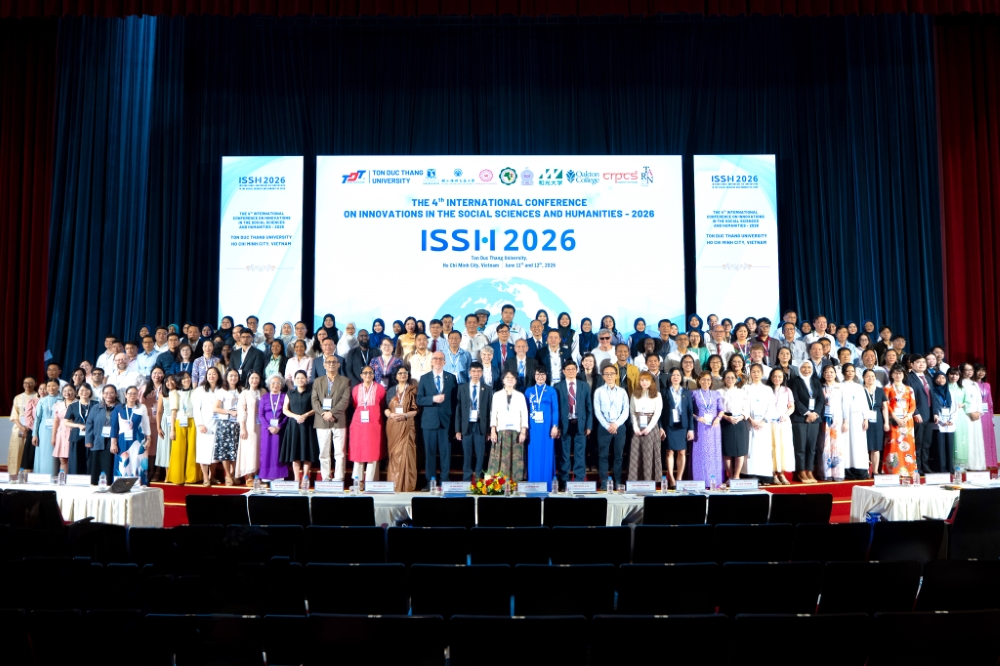
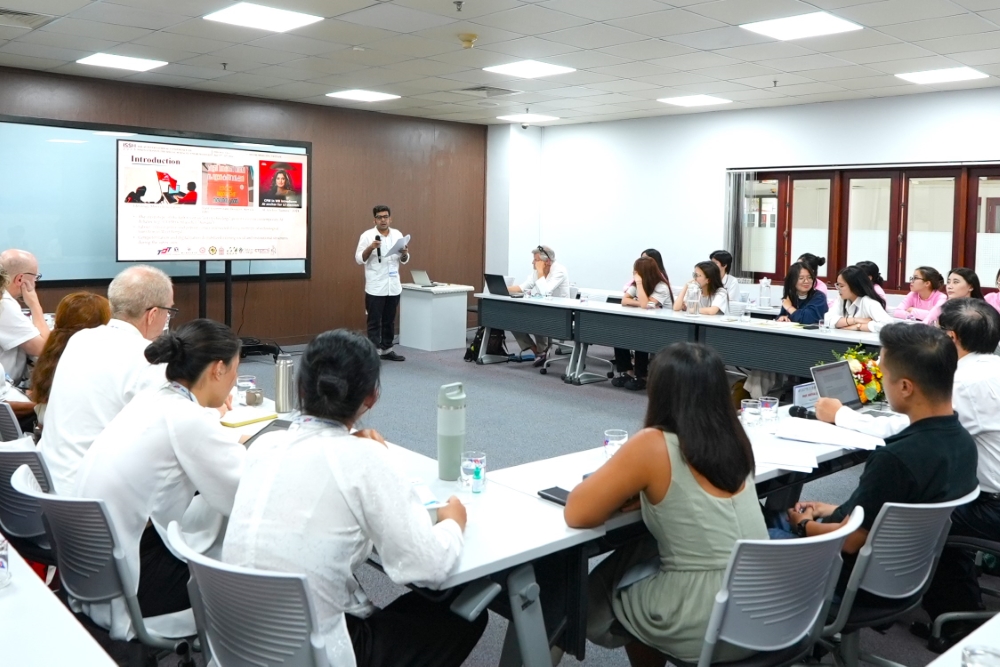
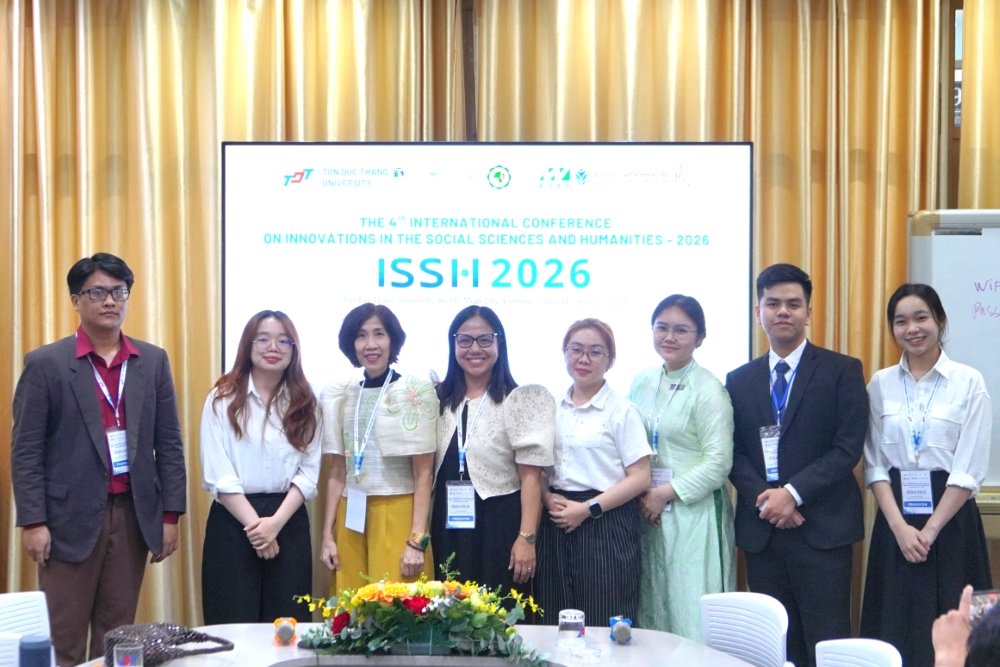
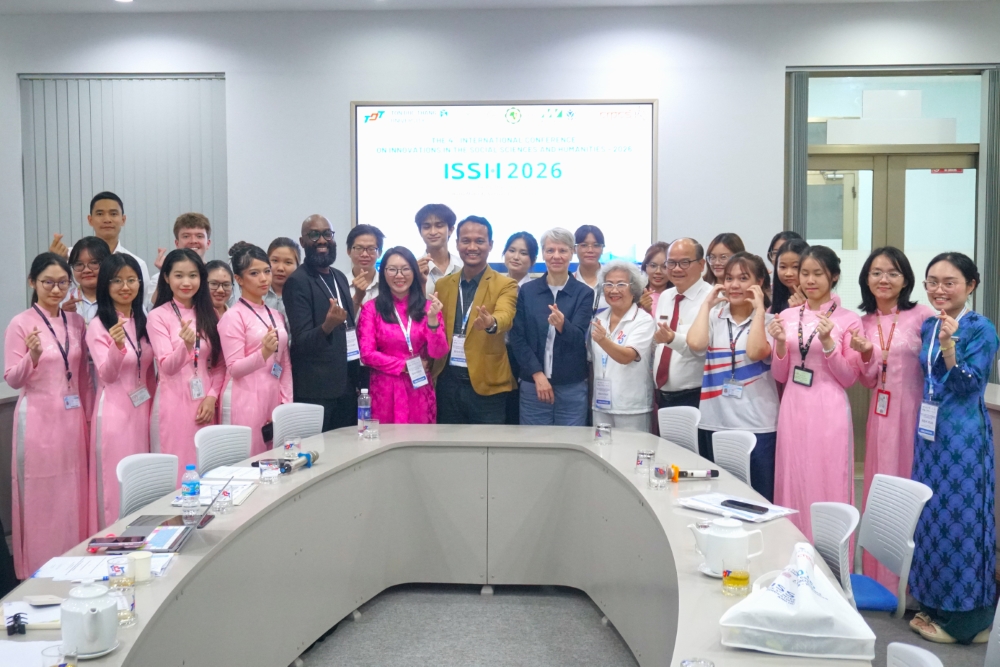
Free to come listen – Ton Duc Thang Univerity 11 – 12 June 2026
some highlights:
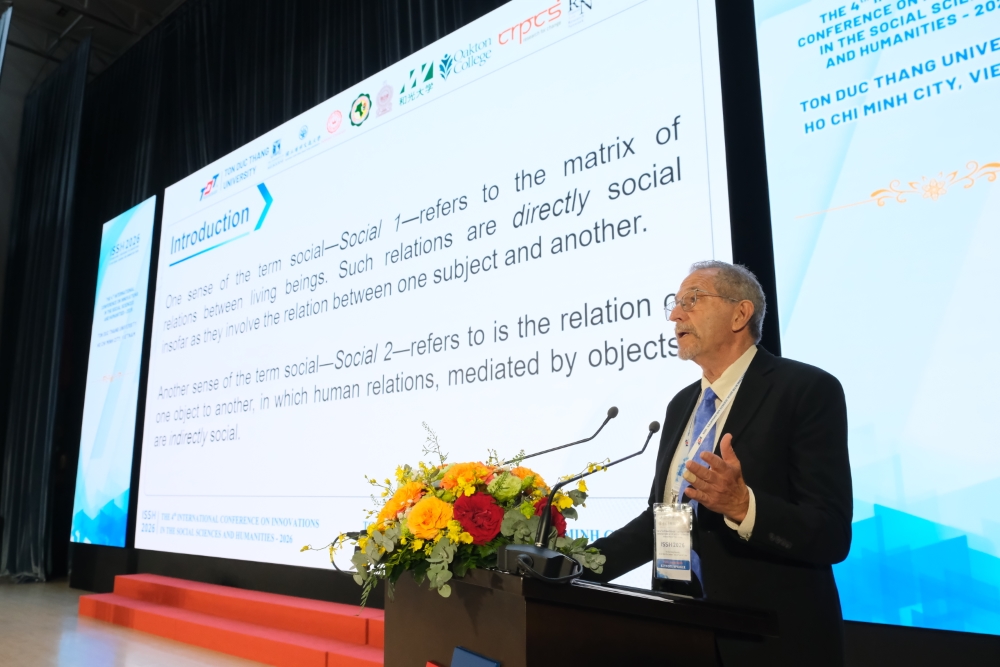
Prof Peter Hudis: Digital Reification and the Future of Critical Thought. (Oakton College, USA).- any sort of future for critical thinking means there can be no short cut in anticipating the implications of the ongoing digital revolution. Yet the production of virtual reality, and the development of artificial intelligence does indeed seem to promise short cuts. Really, a battle for the future is underway where culture, work, and the very way we think are subjected to mechanical manipulation. The concept of reification is difficult but it is the idea we need now.
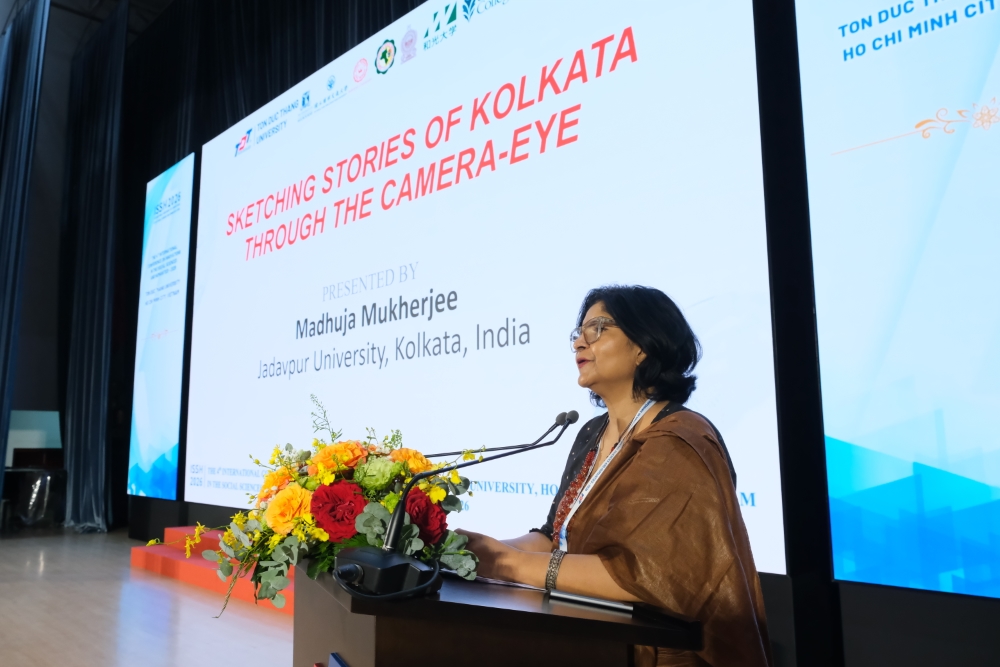
Prof. Madhuja Mukherjee: Sketching Stories of Kolkata through the Camera–Eye: Drones, Installations and Social Meaning of New Media Practice (Jadavpur University, India)- drone technology, and large (curved) screens, and other innovations in digital arts are transforming possibilities for questioning the past. The huge colonial-era Victoria Memorial in the city of Kolkata was the site for a unique art-video installation discussed in this talk on collective histories, digital–documentation and ‘decolonisation’
Prof Ursula Rao: The Temporal Order of Digital InfrastructureThe Temporal Order of Digital Infrastructure. (Max Planck Anthropology, Halle, Germany)- public services have gone digital as Government departments shift almost everything online and we need to study this closely – hardware, software, installed, new digital tools, feedback monitoring, stakeholder lobbying, resistance and delays – all introduce new problems for infrastructure that perhaps bureaucracies do not yet know what new work this will entail. Simply watching this space will not be enough.
Prof Abhijit Roy: Low–end DTP Services in South Asia: Blindspot in Digital Labour Discourse? (Jadavpur University, India) – the digital is not only social in the state, there is also an informal digital world of piracy, recycling, reconditioned hardware, e-waste and an organised unorganised sector that operates on a parallel with the traditional urban bazaar, but informal digital labour remains a blind spot to institutional discourses
.
TS. Võ Hoàng Duy – Phó Hiệu trưởng TDTU phát biểu chào mừng.
TS. John Hutnyk – Chủ tịch Hội thảo ISSH 2026 phát biểu khai mạc.
Các học giả chụp ảnh lưu niệm cùng Ban Tổ chức tại phiên khai mạc.
GS. Madhuja Mukherjee (Đại học Jadavpur, Ấn Độ) trình bày tham luận chính với đề tài “Sketching Stories of Kolkata through the Camera–Eye: Drones, Installations and Social Meaning of New Media Practice”.
GS. Peter Hudis (Trường Cao đăng Oakton, Mỹ) trình bày tham luận chính với đề tài “Digital Reification and the Future of Critical Thought”
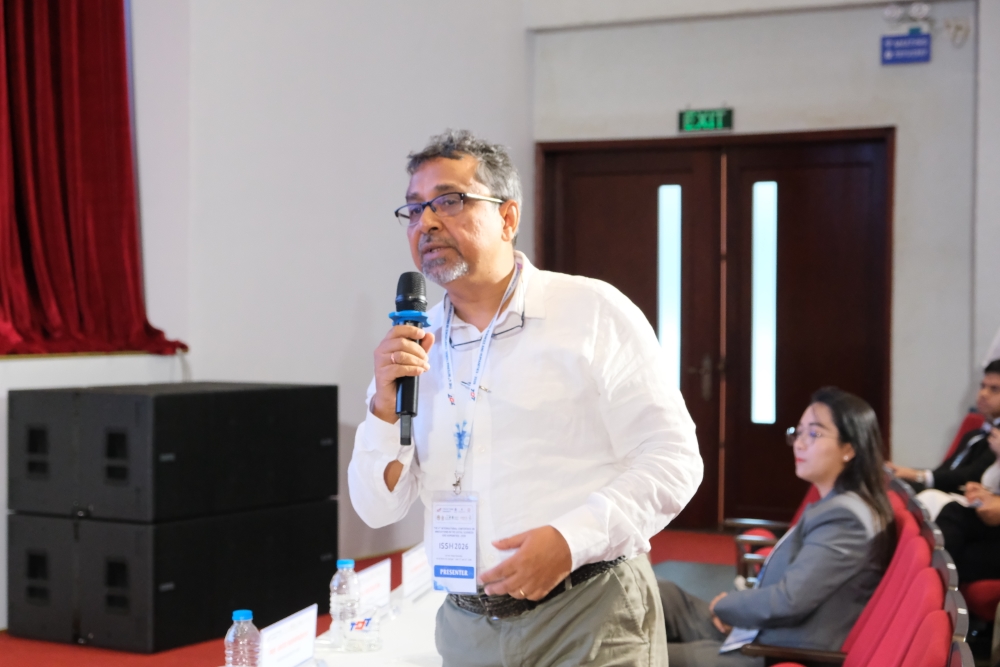
Các chuyên gia báo cáo, thảo luận và chụp hình lưu niệm tại các phiên song song.
The Portuguese colonial incursion in Orissa began around 1514, and Malaka port was a key trading link. Centuries later, they had the temerity to put the Jagannath shrine on the back of their one rupee and 2 1/2 rupee notes, from the 1920s.
The images below are from: Tripati, Sila. 2003. Depiction Of Jagannath Temple of Puri on The Portuguese Paper Currency Studies in History and Culture, 8(1–2): 83–90 (article also included).
I don’t think Robinson had any like the same sort of commitment to the revolution… This, then, is the standard story, but there is much more to it, especially on the importance of theory and practice (whereas Robinson seems mostly to talk to parrots).
“Johnno” (1975) was an important first book. I will reread it a third (or fourth time) because it is two decades since the last time, and it was important to remember it then, and I remember that its important now even if the only bit I truly remember is where he is being told by his father that each cell in your body is renewed within each seven years. So eventually you are new. Of course I would not want to pass this off as fact, nor can I be sure that I remember this correctly – did his father or a mate say it, and was that after., sort of a retrospective reason for writing? I guess fathers do say stuff that sticks. But I’d need to reread it to be sure how distorting memory can be. Nevertheless, RIP David Malouf.