Buy New
-48%
$11.50$11.50
FREE delivery Tuesday, September 15 on orders shipped by Amazon over $35
Ships from: Amazon.com Sold by: Amazon.com
Used - Good
$7.88$7.88
FREE delivery September 17 - 21
Ships from: ThriftBooks-Phoenix Sold by: ThriftBooks-Phoenix
Download the free Kindle app and start reading Kindle books instantly on your smartphone, tablet, or computer - no Kindle device required.
Read instantly on your browser with Kindle for Web.
Using your mobile phone camera - scan the code below and download the Kindle app.

Follow the author
OK
Legacy of Ashes (National Book Award Winner): The History of the CIA
Purchase options and add-ons
"For anyone interested in the CIA or American intelligence since World War II.” —The Washington Post
A Kirkus Reviews Best Nonfiction Book of the Century • The precursor to the New York Times bestseller The Mission
For years, the CIA has managed to maintain a formidable reputation in spite of its terrible record, burying its blunders in top-secret archives. Its mission was to know the world. When it did not succeed, it set out to change the world. Its failures have handed us, in the words of President Eisenhower, “a legacy of ashes.”
Now Pulitzer Prize–winning author Tim Weiner offers a definitive history of the CIA—and everything is on the record. LEGACY OF ASHES is based on more than 50,000 documents, primarily from the archives of the CIA itself, and hundreds of interviews with CIA veterans, including ten Directors of Central Intelligence. It takes the CIA from its creation after World War II, through its battles in the cold war and the war on terror, to its near-collapse after 9/ll.
Here is the hidden history of the CIA: why eleven presidents and three generations of CIA officers have been unable to understand the world; why nearly every CIA director has left the agency in worse shape than he found it; and how these failures have profoundly jeopardized our national security.
- Print length848 pages
- LanguageEnglish
- PublisherVintage
- Publication dateMay 20, 2008
- Dimensions5.2 x 1.75 x 7.91 inches
- ISBN-100307389006
- ISBN-13978-0307389008
Book recommendations, author interviews, editors' picks, and more. Read it now.
Frequently bought together
Customers who viewed this item also viewed
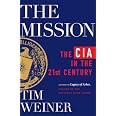
- The Mission: The CIA in the 21st Century―A Revelatory History of the Modern CIA, Based on Exclusive Interviews with Top Spies, by the author of the National Book Award-Winning Classic, Legacy of AshesHardcoverFREE Shipping on orders over $35 shipped by AmazonGet it as soon as Wednesday, Sep 16Only 12 left in stock - order soon.
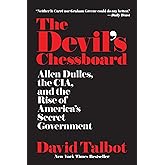
- The Devil's Chessboard: Allen Dulles, the CIA, and the Rise of America's Secret GovernmentPaperbackFREE Shipping on orders over $35 shipped by AmazonGet it as soon as Tuesday, Sep 15
- Enemies: A History of the FBIPaperbackFREE Shipping on orders over $35 shipped by AmazonGet it as soon as Tuesday, Sep 15
- Ghost Wars: The Secret History of the CIA, Afghanistan, and Bin Laden, from the Soviet Invasion to September 10, 2001PaperbackFREE Shipping on orders over $35 shipped by AmazonGet it as soon as Tuesday, Sep 15
- One Nation Under Blackmail - Vol. 1: The Sordid Union Between Intelligence and Crime that Gave Rise to Jeffrey Epstein, VOL.1PaperbackFREE Shipping on orders over $35 shipped by AmazonGet it as soon as Tuesday, Sep 15
- Reluctant Spy: My Secret Life in the CIA's War on TerrorPaperbackFREE Shipping on orders over $35 shipped by AmazonGet it as soon as Tuesday, Sep 15
Customers also bought or read
- Dirty Laundry: How I Stole Billions in CIA Drug Money, Almost
Paperback$14.95$14.95Delivery Tue, Sep 15 - The Devil's Chessboard: Allen Dulles, the CIA, and the Rise of America's Secret Government
Paperback$15.39$15.39Delivery Tue, Sep 15 - Ghost Wars: The Secret History of the CIA, Afghanistan, and Bin Laden, from the Soviet Invasion to September 10, 2001#1 Best SellerCentral Asia History
Paperback$11.48$11.48Delivery Tue, Sep 15 - One Nation Under Blackmail - Vol. 1: The Sordid Union Between Intelligence and Crime that Gave Rise to Jeffrey Epstein, VOL.1
Paperback$18.00$18.00Delivery Tue, Sep 15 - The Sword and the Shield: The Mitrokhin Archive and the Secret History of the KGB
Paperback$22.56$22.56Delivery Tue, Sep 15 - Dark Alliance: Movie Tie-In Edition: The CIA, the Contras, and the Crack Cocaine Explosion
Paperback$21.79$21.79Delivery Tue, Sep 15 - Surprise, Kill, Vanish: The Secret History of CIA Paramilitary Armies, Operators, and Assassins
Paperback$19.50$19.50Delivery Tue, Sep 15 - Company Man: Thirty Years of Controversy and Crisis in the CIA
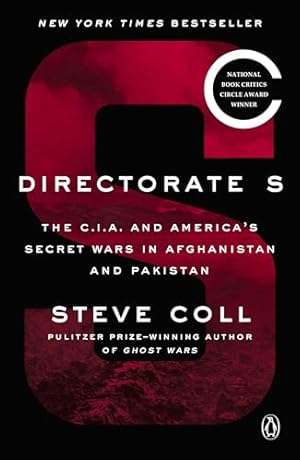
Paperback$20.17$20.17Delivery Tue, Sep 15 - Directorate S: The C.I.A. and America's Secret Wars in Afghanistan and Pakistan
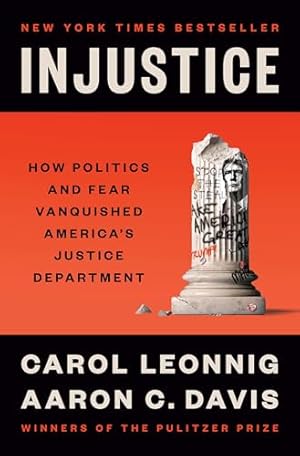
Paperback$11.50$11.50Delivery Tue, Sep 15 - Injustice: How Politics and Fear Vanquished America's Justice Department
Hardcover$16.20$16.20Delivery Tue, Sep 15 - The Israel Lobby and U.S. Foreign Policy#1 Best SellerSaudi Arabia History
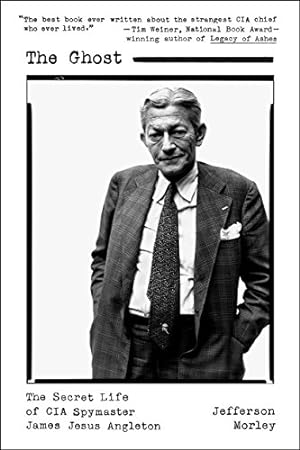
Paperback$11.29$11.29Delivery Tue, Sep 15 - The Ghost: The Secret Life of CIA Spymaster James Jesus Angleton
Paperback$21.00$21.00Delivery Tue, Sep 15 - Spycraft: The Secret History of the CIA's Spytechs, from Communism to Al-Qaeda
Paperback$12.10$12.10Delivery Tue, Sep 15 - Operation Paperclip: The Secret Intelligence Program that Brought Nazi Scientists to America
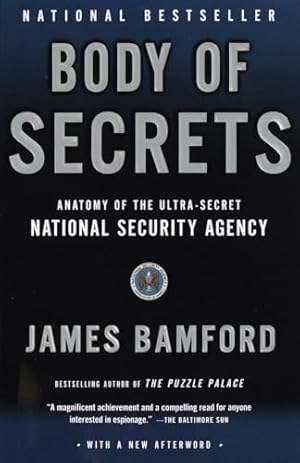
Paperback$22.19$22.19Delivery Sep 23 - 25 - Body of Secrets: Anatomy of the Ultra-Secret National Security Agency
Paperback$9.73$9.73Delivery Sep 18 - 20 - Bitter Fruit: The Story of the American Coup in Guatemala, Revised and Expanded (Series on Latin American Studies)
Paperback$23.99$23.99Delivery Tue, Sep 15 - Rise and Kill First: The Secret History of Israel's Targeted Assassinations
Paperback$13.75$13.75Delivery Tue, Sep 15 - King of Kings: The Iranian Revolution: A Story of Hubris, Delusion and Catastrophic Miscalculation
Hardcover$18.45$18.45Delivery Sep 28 - Oct 1 - G-Man (Pulitzer Prize Winner): J. Edgar Hoover and the Making of the American Century
Paperback$13.76$13.76Delivery Tue, Sep 15 - Chaos: Charles Manson, the CIA, & Secret History of the Sixties#1 Best SellerPolitical Intelligence
Paperback$13.73$13.73Delivery Tue, Sep 15
From the Publisher
Legacy of Ashes: The History of the CIA
|
The Mission: The CIA in the 21st Century
|
|
|---|---|---|
| Price | $11.50$11.50 | $16.94$16.94 |
| Pulitzer-Prize-winner Tim Weiner gets at the truth behind the CIA and uncovers in this National Book Award winner why nearly every CIA Director has left the agency in worse shape; and how these failures jeopardize our national security. | The epic successor to Legacy of Ashes: a gripping and revelatory history of the CIA reaching from 9/11 through the wars in Afghanistan and Iraq to today’s battles with Russia and China—and with the President of the United States. |
Editorial Reviews
Review
—The Washington Post
“Legacy of Ashes is the best book I've yet read on the CIA's covert actions."
—Edward Jay Epstein, The Wall Street Journal
"Legacy of Ashes should be must-reading for every presidential candidate—and every American who wants to understand why the nation repeatedly stumbles into one disaster abroad after another.”
—The Boston Globe
“A timely and vital contribution . . . [that] glitters with relevance.”
—Los Angeles Times
“This is by far the scariest book of the year.”
—The Christian Science Monitor
About the Author
Excerpt. © Reprinted by permission. All rights reserved.
Legacy of Ashes is the record of the first sixty years of the Central Intelligence Agency. It describes how the most powerful country in the history of Western civilization has failed to create a first-rate spy service. That failure constitutes a danger to the national security of the United States. Intelligence is secret action aimed at understanding or changing what goes on abroad. President Dwight D. Eisenhower called it “a distasteful but vital necessity.” A nation that wants to project its power beyond its borders needs to see over the horizon, to know what is coming, to prevent attacks against its people. It must anticipate surprise. Without a strong, smart, sharp intelligence service, presidents and generals alike can become blind and crippled. But throughout its history as a superpower, the United States has not had such a service.
History, Edward Gibbon wrote in The Decline and Fall of the Roman Empire, is “little more than the register of crimes, follies, and misfortunes of mankind.” The annals of the Central Intelligence Agency are filled with folly and misfortune, along with acts of bravery and cunning. They are replete with fleeting successes and long–lasting failures abroad. They are marked by political battles and power struggles at home. The agency’s triumphs have saved some blood and treasure. Its mistakes have squandered both. They have proved fatal for legions of American soldiers and foreign agents; some three thousand Americans who died in New York, Washington, and Pennsylvania on September 11, 2001; and three thousand more who have died since then in Iraq and Afghanistan. The one crime of lasting consequence has been the CIA’s inability to carry out its central mission: informing the president of what is happening in the world.
The United States had no intelligence to speak of when World War II began, and next to none a few weeks after the war ended. A mad rush to demobilize left behind a few hundred men who had a few years’ experience in the world of secrets and the will to go on fighting a new enemy. “All major powers except the United States have had for a long time past permanent worldwide intelligence services, reporting directly to the highest echelons of their Government,” General William J. Donovan, the commander of the wartime Office of Strategic Services, warned President Truman in August 1945. “Prior to the present war, the United States had no foreign secret intelligence service. It never has had and does not now have a coordinated intelligence system.” Tragically, it still does not have one.
The CIA was supposed to become that system. But the blueprint for the agency was a hasty sketch. It was no cure for a chronic American weakness: secrecy and deception were not our strengths. The collapse of the British Empire left the United States as the sole force able to oppose Soviet communism, and America desperately needed to know those enemies, to provide foresight to presidents, and to fight fire with fire when called upon to light the fuse. The mission of the CIA, above all, was to keep the president forewarned against surprise attack, a second Pearl Harbor.
The agency’s ranks were filled with thousands of patriotic Americans in the 1950s. Many were brave and battle–hardened. Some had wisdom. Few really knew the enemy. Where understanding failed, presidents ordered the CIA to change the course of history through covert action. “The conduct of political and psychological warfare in peacetime was a new art,” wrote Gerald Miller, then the CIA’s covert–operations chief for Western Europe. “Some of the techniques were known but doctrine and experience were lacking.” The CIA’s covert operations were by and large blind stabs in the dark. The agency’s only course was to learn by doing—by making mistakes in battle. The CIA then concealed its failures abroad, lying to Presidents Eisenhower and Kennedy. It told those lies to preserve its standing in Washington. The truth, said Don Gregg, a skilled cold-war station chief, was that the agency at the height of its powers had a great reputation and a terrible record.
Like the American public, the agency dissented at its peril during the Vietnam War. Like the American press, it discovered that its reporting was rejected if it did not fit the preconceptions of presidents. The CIA was rebuked and scorned by Presidents Johnson, Nixon, Ford, and Carter. None of them understood how the agency worked. They took office “with the expectation that intelligence could solve every problem, or that it could not do anything right, and then moved to the opposite view,” notes a former deputy director of central intelligence, Richard J. Kerr. “Then they settled down and vacillated from one extreme to the other.”
To survive as an institution in Washington, the agency above all had to have the president’s ear. But it soon learned that it was dangerous to tell him what he did not want to hear. The CIA’s analysts learned to march in lockstep, conforming to conventional wisdom. They misapprehended the intentions and capabilities of our enemies, miscalculated the strength of communism, and misjudged the threat of terrorism.
The supreme goal of the CIA during the cold war was to steal Soviet secrets by recruiting spies, but the CIA never possessed a single one who had deep insight into the workings of the Kremlin. The number of Soviet spies with important information to reveal–all of them volunteers, not recruits—could be counted on the fingers of two hands. And all of them died, captured and executed by Moscow. Almost all had been betrayed by officers of the CIA’s Soviet division who were spying for the other side, under Presidents Reagan and George H. W. Bush. Under Reagan, the CIA set off on misconceived third–world missions, selling arms to Iran’s Revolutionary Guards to finance a war in Central America, breaking the law and squandering what trust remained reposed in it. More grievously, it missed the fatal weakness of its main enemy.
It fell to machines, not men, to understand the other side. As the technology of espionage expanded its horizons, the CIA’s vision grew more and more myopic. Spy satellites enabled it to count Soviet weapons. They did not deliver the crucial information that communism was crumbling. The CIA’s foremost experts never saw the enemy until after the cold war was over. The agency had bled the Soviets by pouring billions of dollars of weapons into Afghanistan to help fight the Red Army’s occupying forces. That was an epic success. But it failed to see that the Islamic warriors it supported would soon take aim at the United States, and when that understanding came, the agency failed to act. That was an epochal failure.
The unity of purpose that held the CIA together during the cold war came undone in the 1990s, under President Clinton. The agency still had people who strove to understand the world, but their ranks were far too thin. There were still talented officers who dedicated themselves to serving the United States abroad, but their numbers were far too few. The FBI had more agents in New York than the CIA had officers abroad. By the end of the century, the agency was no longer a fully functioning and independent intelligence service. It was becoming a second–echelon field office for the Pentagon, weighing tactics for battles that never came, not strategies for the struggle ahead. It was powerless to prevent the second Pearl Harbor.
After the attacks on New York and Washington, the agency sent a small skilled cadre of covert operators into Afghanistan and Pakistan to hunt down the leaders of al Qaeda. It then forfeited its role as a reliable source of secret information when it handed the White House false reports on the existence of weapons of mass destruction in Iraq. It had delivered a ton of reportage based on an ounce of intelligence. President George W. Bush and his administration in turn misused the agency once proudly run by his father, turning it into a paramilitary police force abroad and a paralyzed bureaucracy at headquarters. Bush casually pronounced a political death sentence upon the CIA in 2004 when he said that the agency was “just guessing” about the course of the war in Iraq. No president had ever publicly dismissed the CIA that way.
Its centrality in the American government ended with the dissolution of the office of director of central intelligence in 2005. Now the CIA must be rebuilt if it is to survive. That task will take years. The challenge of understanding the world as it is has overwhelmed three generations of CIA officers. Few among the new generation have mastered the intricacies of foreign lands, much less the political culture of Washington. In turn, almost every president, almost every Congress, and almost every director of central intelligence since the 1960s has proved incapable of grasping the mechanics of the CIA. Most have left the agency in worse shape than they found it. Their failures have handed future generations, in the words of President Eisenhower, “a legacy of ashes.” We are back where we began sixty years ago, in a state of disarray.
Legacy of Ashes sets out to show how it has come to pass that the United States now lacks the intelligence it will need in the years ahead. It is drawn from the words, the ideas, and the deeds set forth in the files of the American national-security establishment. They record what our leaders really said, really wanted, and really did when they projected power abroad. This book is based on my reading of more than fifty thousand documents, primarily from the archives of the CIA, the White House, and the State Department; more than two thousand oral histories of American intelligence officers, soldiers, and diplomats; and more than three hundred interviews conducted since 1987 with CIA officers and veterans, including ten directors of central intelligence. Extensive endnotes amplify the text.
This book is on the record—no anonymous sources, no blind quotations, no hearsay. It is the first history of the CIA compiled entirely from firsthand reporting and primary documents. It is, by its nature, incomplete: no president, no director of central intelligence, and certainly no outsider can know everything about the agency. What I have written here is not the whole truth, but to the best of my ability, it is nothing but the truth.
I hope it may serve as a warning. No republic in history has lasted longer than three hundred years, and this nation may not long endure as a great power unless it finds the eyes to see things as they are in the world. That once was the mission of the Central Intelligence Agency.
Product details
- Publisher : Vintage
- Publication date : May 20, 2008
- Edition : Reprint
- Language : English
- Print length : 848 pages
- ISBN-10 : 0307389006
- ISBN-13 : 978-0307389008
- Item Weight : 1.9 pounds
- Dimensions : 5.2 x 1.75 x 7.91 inches
- Best Sellers Rank: #24,832 in Books (See Top 100 in Books)
- #8 in National & International Security (Books)
- #14 in Political Intelligence
- #64 in American Military History
- Customer Reviews:
About the author

Tim Weiner has won the Pulitzer Prize and the National Book Award for his reporting and writing on American national security. As a correspondent for The New York Times, he covered the Central Intelligence Agency and the Pentagon in Washington, and reported on war and terrorism from Afghanistan, Pakistan, the Sudan, and many other nations over the course of 15 years.
His new book, ONE MAN AGAINST THE WORLD: The Tragedy of Richard Nixon, was hailed as "[an] eye-opening study of Richard Nixon's booze-soaked, paranoid White House years and the endless tragedies they wrought" by Kirkus Reviews prior to publication. "It speaks volumes about Nixon that there is still more to learn about him, 40-plus years after Watergate. It speaks further volumes that what we are learning is even worse than what we knew."
Publisher's Weekly said ONE MAN AGAINST THE WORLD is a "devastating account of Nixon's presidency, drawing on documents declassified in the last seven years.... Chilling excerpts from tape recordings that have only recently been made accessible include cold-blooded exchanges between Nixon and [Henry] Kissinger in which the two debate the merits of committing war crimes in order to win in Vietnam. This is powerful raw material, but Weiner's brilliant turns of phrase transform it into something extraordinary."
His previous books include ENEMIES, a history of the FBI acclaimed as "fascinating" by The Wall Street Journal. LEGACY OF ASHES, his chronicle of the CIA, won the 2007 National Book Award; it was a bestseller across the United States and around the world. He has lectured at the CIA, universities, political think tanks, and Presidential libraries. He directs the Carey Institute's nonfiction residency program in upstate New York and teaches as the 2015 Anschutz Distinguished Fellow in American Studies at Princeton.
Customer reviews
Customer Reviews, including Product Star Ratings help customers to learn more about the product and decide whether it is the right product for them.
To calculate the overall star rating and percentage breakdown by star, we don’t use a simple average. Instead, our system considers things like how recent a review is and if the reviewer bought the item on Amazon. It also analyzed reviews to verify trustworthiness.
Learn more how customers reviews work on AmazonCustomers say
Generated from the text of customer reviewsSelect to learn more
Reviews with images
Excellent Condition
Top reviews from the United States
- 5 out of 5 stars
If you are or have been in the CIA, do not read this book!
Reviewed in the United States on April 20, 2025This product is encyclopedic in nature for it is extremely well referenced with over one hundred and fifty pages of reference material and five hundred and seven pages of very readable text on the history of the United States Central Intelligent Agency (USCIA).
It is appalling to read and understand the history of the CIA during the 1950's revealing the incompetence coupled with outright falsehoods and inadequate briefings by Allen Dulles to President Eisenhower. It is extremely fascinating to learn Eisenhower was completely impotent to curb Dulles during his two terms.
It appears according to the author, through recent released searches of documents, the reader is treated to inside information regarding the U2 shoot down, Allen Dulles incompetence, Castro Coup, and the planning of the Bay of Pigs (BOP) fiasco. In fact, the BOPs invasion is told here in color with material not previously exposed. Further on the reader is presented with the actual Cuban Missile Crisis with 2003 released audio taped material President Kennedy had installed in the White House.
As the reader progresses the text it is apparent the CIA outright lies throughout its history which is very disturbing. It is a prime example of how government agencies block and distort the truth from the American peoples' representatives. If today with almost 350 million inhabitants in the country and a government three times the size of the 1960's the merging elements of Deep State can successfully manipulate the events of the last ten years, and with the present resist movement on the executive's agenda; with a smaller government it is highly conceivable The Deep State could have conspired to assassinate our 35th president, his attorney general and MLK.
One thing that is clear from this work, starting with JFK, LBJ, Nixon, the CIA has been used against its own charter to spy on its citizens. Thus, resulting in the alienation of them from their government! With this United States credibility and its effective role damaged, it becomes known the US is intervening in international affairs of others. None the less the US relied on the CIA to subvert every nation on earth.
This book revels much that is uncovered to make the reader gasp. It is very well constructed and a labor of love for the author. High praise to Tim Weiner. It contains a table of contents broken in six parts with an excellent index, black and white photographs. The reference section is a manuscript in itself! This book may be the historic authority on the subject, CIA. The hard cover product is a little pricy, but it is worth the cost to view where the American taxpayer money has been flushed done the toilet! I invite you to come and read about the worst intelligence body ever to be created!
28 people found this helpfulSending feedback...Sending feedback...HelpfulThank you for your feedback.Sorry, we failed to record your vote. Please try againThanks, we'll investigate in the next few days.Sorry, We failed to report this review. Please try againWe'll check if this review meets our community guidelinesOpens in a new tab. If it doesn't, we'll remove it.
CancelReport - 4 out of 5 stars
Eye-opening, thought-provoking, inconclusive - just what you'd expect from spy business exposition.
Reviewed in the United States on December 31, 2018Legacy of Ashes: The History of the CIA is a somewhat loose, roughly chronological compendium of events, activities, and leaders associated with the US Central Intelligence Agency from its inception in 1945 through 2007. Information for the work appears to have been gathered from numerous primary and secondary sources, including conversations with former members of the CIA, politicians, and a number of unclassified documents with some declassified just prior to the first publication of the book in 2007. Taken at face value, this New York Times reporter’s work shocks the reader in two ways.
First, we are given to believe that the bulk of the efforts of the CIA from 1945 to 2007 were failed operations resulting from incompetent and bungling leadership within the agency. One comes away thinking the entire enterprise of U.S. intelligence gathering and covert operations is a series of one mis-guided, unmitigated disaster after another. The reader is treated to a litany of stories about ineffective and/or ignorant leadership, politically-motivated subterfuge, in-fighting, and downright deliberate deception and deceit on the part of the CIA with, and between and among others in the executive branch (presidents, vice presidents, and cabinet members), members of the military establishment, congress, and the state department.
Second, this reader was appalled at the extent of CIA-sponsored “interventions” which are redolent of the highest degree of hypocrisy and duplicity in the violations of norms national sovereignty. Contemporary allegations of Russian interference in the United States election process through social media tampering seem quaint compared with the dozens or hundreds of episodes of interfering with foreign governments and societies; directly and indirectly destroying and/or supporting (sometimes both at the same time!) political actors and systems of governance in countries around the world. Dispensing propaganda and operating Radio-Free Europe pale against charges of assassination, coups, and para-military incursions, and full-blown (or at least partial) direct, but unacknowledged, military invasions.
Justification for this no-holds-barred approach to intelligence gathering, counter-intelligence, espionage, and counter-espionage (and apparent counter-counter espionage, etc.), was the mission to combat, conquer, or at least contain the largely Soviet-engineered spread of communism. The net result of most of the work of the CIA seems to amount to an abhorrent waste of money, thousands of lives (CIA and surrogate foreign agents), layered on top of a litany of characters – at the highest level of government – engaging in all manner of excess, self-dealing, over-wrought ambition, and hubris with extremely little of benefit to the national security of the United States. The recurring themes of excesses, poor stewardship, lives lost needlessly, and infighting, bureaucratic incompetence, and weak, or at best ignorant, leadership throughout the CIA’s history is disheartening.
Regarding the work itself, I must acknowledge and applaud Weiner’s effort to tackle such a difficult subject, especially one in a domain in which obscuring and obfuscating information is the modus operandi and where a good bit of the evidence is based on declassified information (at least those fragments of the total store of data the government has allowed to be declassified), together with conversations and dialogs with many who may have an ax to grind, a legacy to protect or promote, along with a fair amount of unsubstantiated stories, opinions, and conjectures. The reader must accept at the outset that only a partial story can be viewed and that much more (some at least as horrific as was exposed in the book itself), lies beneath the surface and veil of necessary, or at least claimed necessity for, secrecy to protect national security interests.
The author pulls no punches in indicting the rank and file of politicians, military personnel, and civilian actors, showing culpability on both sides of the aisle of American politics. However, his wagging finger displays a hint of partisan slant at times. The journalistic reporting work of “facts,” to the extent the information reported can be considered as such, is punctuated with normative interjections, assessments, conclusions, and declarations that are mostly facile and unwarranted, or at least unproven. Clearly short on analysis, the work fulfils its ostensibly expository purpose, shedding light on the darker side of U.S. national security efforts.
Legacy of Ashes points to the many challenges and obstacles facing those tasked with ensuring national security at all costs, including recruiting, training, and deploying spies and covert operations personnel (while keeping “moles” or foreign spies out of the ranks). Weiner points out the inherent paradox of the intelligence business that relies on methods, techniques, and programs of deception, disinformation, and mis-direction that run counter to principles underlying the U.S. Constitution, U.S. law, and likely that offend the moral and ethical sensibilities of a large part of the American electorate.
The CIA Director role has shown to be a revolving door counting more than 30 different individuals (counting interim or acting directors) in its 73 year existence. Weiner notes this in his book and describes the challenges that such churn in leadership cause. By my count, the CIA director role has been filled by 12 or 13 career military officers, 7 academics, 5 lawyer/diplomats, 1 senator, and 2 business people (industrialist McCone, and oil man George H.W. Bush), with the remaining dozen or so individuals being career civil servants. One could argue that the bias towards military and civil service backgrounds is less suited and ill-matched to the requirements of leadership in such an organization as the CIA with such a mission as the CIA’s than that of an experienced and successful business person who knows how to set up and operate a sustainable operation. Granted the spy business is categorically different than making steel and setting up telecom infrastructure (McCone), and pumping oil (Bush), but sound command, control, and communication organization principles still apply.
My opinion aside, it is clear from the book that the CIA has been in a constant state of identity crisis: Who are we? What is our mission? How should we organize and operate? What should we do/not do? How are we positioned vis-à-vis the Pentagon, the state department, the executive branch, the judiciary, Congress, etc. Has anything changed at the CIA in the decade since the Legacy of Ashes was published? I would like to see a follow-on work that scrapes together enough scraps about the CIA’s most recent decade to get some insight. I may have to wait another few years or longer before more documents are declassified to learn more.
One could conclude from reading this work, assuming what is written accurately reflects the apparent doings, mis-doings, and state of disarray of the CIA, that the U.S. cannot possibly do the kinds of clandestine work, espionage, covert operations, etc. required to ensure the national security of our country given the values and structure of the our culture and system of governance. Perhaps the failures and shortcomings of the CIA imply reversion to old-fashioned, “hard-power” methods of geopolitical influence to avoid fighting an enemy with one hand tied behind our back. Exercising more severe “soft-power” methods for example economic sanctions may not be a substitute for hard power, but can certainly augment an arsenal of military and clandestine efforts. The rules of engagement for applying hard-power have historically been clearer when America’s leaders and people appeared to have the “stomach for war.” There is much complexity, guesswork, and difficulty in attempting to discern intentions when using military power, but the world of clandestine work is perhaps more-so burdened with these same challenges and is thus more prone to mis-calculation.
Arguably, the focus of CIA efforts since the turn of the century is on non-state actors, i.e., terrorist groups and less on the designs of imperialist nations (Russia, China). Also, maybe Jimmy Carter was onto something in his efforts during his administration to direct at least some of the CIA’s resources towards addressing humanitarian crises around the world (as Weiner describes Carter’s direction to CIA leadership to sabotage apartheid in South Africa). Who knows if our CIA resources could have intervened in the Rwanda crisis of 1994 – perhaps half a million lives could have been saved. Is North Korea on the CIA’s radar? How about the dire situation in Syria and the Kurds in northern Iraq abandoned by the U.S. after deposing Saddam Hussein? Food for thought.
Definitely worth a read. But you may end up hearing a little inner voice whisper outlandish speculations: “Is the author of Legacy of Ashes secretly on the CIA payroll?” or “Does he have a secret bank account in Switzerland being filled with Russian rubles for every word he writes that disparages the CIA?” Or maybe the KGB just wants me to believe the former and the CIA the latter, or vice versa. Hmmm…
75 people found this helpfulSending feedback...Sending feedback...HelpfulThank you for your feedback.Sorry, we failed to record your vote. Please try againThanks, we'll investigate in the next few days.Sorry, We failed to report this review. Please try againWe'll check if this review meets our community guidelinesOpens in a new tab. If it doesn't, we'll remove it.
CancelReport - 5 out of 5 stars
Excellent Catlogue History of the CIA
Reviewed in the United States on April 2, 2008This is not a heavy detailed analysis of the CIA but a great over view of the CIA with brief chapters broken in periods of time, by presidents or a certain activity thus it reads like a catalogue of CIA adventures including an excellent telling of its origins under Wild Bill Donovan. Thus, this is a very fast paced read and the reason why I give it 5 stars is because it serves the purpose of giving a broad history of the CIA with reasonable detail without great depth so it is an enjoyable read that serves as an excellent primer for the evolution of the CIA from the beginning to the end. The documentation; however, is excellent thus it was well researched. The only negative is that the author records so many notable negative events such as the Bay of Pigs, failures to get a leg up on the Russians during the cold war to the recent "slam dunk" proclamation that one does have to wonder if the leaders of the CIA were quite frequently a bunch of blithering idiots. However, failures are most likely more notable and many of the unknown successes may be a product of the service's secrecy. The one theme that is very note worthy, and probably fueled by the real paranoia of the cold war and spread of communism during the 40s and 50s, was the preoccupation with interfering with the governments in other countries as opposed to sheer espionage. That is the greatest part of the author's history as more than once our government sided with a harsh dictator that in retrospect cost the US friends in the future. Probably, the biggest weakness of the book is to properly put in perspective what it was like during those times that perpetuated the need to get involved with the politics of another country. The one serious element brought forth was the fact that heads if the CIA, and sometimes rogue station chiefs, were less than truthful within the organization and to the Presidents themselves, the latter being the biggest disappointment.
26 people found this helpfulSending feedback...Sending feedback...HelpfulThank you for your feedback.Sorry, we failed to record your vote. Please try againThanks, we'll investigate in the next few days.Sorry, We failed to report this review. Please try againWe'll check if this review meets our community guidelinesOpens in a new tab. If it doesn't, we'll remove it.
CancelReport - 5 out of 5 stars
A Most Appropriate Title: Legacy of Ashes.
Reviewed in the United States on November 24, 2025A well written and researched documentary. Many of my CIA friends who have read it said that if they had read this book before joining they would never have joined. How our government wasted billions of dollars and many lives.
4 people found this helpfulSending feedback...Sending feedback...HelpfulThank you for your feedback.Sorry, we failed to record your vote. Please try againThanks, we'll investigate in the next few days.Sorry, We failed to report this review. Please try againWe'll check if this review meets our community guidelinesOpens in a new tab. If it doesn't, we'll remove it.
CancelReport - 5 out of 5 stars
The soft and dirty underbelly underbelly.
Reviewed in the United States on February 20, 2025The failures of the CIA have often been covered by the talking heads on TV, particularly the cable news channels, but this book is based on released documents from around 2004. It goes into the internal incompetence of the CIA and the cultural disorganization and chaos. Very much worth reading.
One thing that did not get covered is the possible skimming of money and other assets. It is often mentioned that much of the methodology of the CIA was to bribe millions of dollars and tons of weapons. Considering the propensity of members of the CIA to lie or withhold information, I expect that it is likely that people within the CIA were also skimming a lot of the money that was supposed to be used for these bribes. There is no mention of tracking of this money or the weapons, so I expect there was considerable embezzlement within the agency.
6 people found this helpfulSending feedback...Sending feedback...HelpfulThank you for your feedback.Sorry, we failed to record your vote. Please try againThanks, we'll investigate in the next few days.Sorry, We failed to report this review. Please try againWe'll check if this review meets our community guidelinesOpens in a new tab. If it doesn't, we'll remove it.
CancelReport - 3 out of 5 stars
Reads Like an Embedded Reporter Wrote It, and He Did
Reviewed in the United States on August 26, 2007Oh those wacky boys in the OSS and, later, in the CIA. Just tripping over each other, one dumber than the next, so often bumping into the author's patriotic dreams.
But the CIA is not a goof. Indeed, it is responsible for the deaths of hundreds of thousands of people, the tyrannical reign of governments in most of South America and much of Africa, parts of Eastern Europe (via the CIA/Papacy connection)and importantly to me, the reality of its operations inside the US that the author barely touches, like the CIA's close relationship with the AFL-CIO (and especially the AFT) through groups like the National Endowment for Democracy, the American Institute for Free Labor Development, etc.
More, inside the US, as Chris Simpson demonstrated in his book Blowback (same title as Chalmers Johnson's later book) the CIA's close ties to fascists (recruited and imported back to the USA under CIA cover, Operation Paperclip) reverberates even today. Where is a deep investigation of Operation Condor (Chile), or a real exploration of the fairly well known connection of the CIA and the drug trade? What of the CIA's connections to international education organizations, also via the NED? It's just not here. This book is poorly referenced. Perhaps that is a reflection of the public's fear of reading footnotes, but the data is simply not there.
What the author does not say, but demonstrates nevertheless, is that the CIA spends tens of millions of dollars, sometimes wisely, and the impact of that money is frequently more powerful than the violence the CIA usually uses as a calling card.
I paid top dollar when this book came out, thinking that someone from the Times, writing for twenty plus years on this topic, would have something to teach me. Instead, I found a cursory CIA For Beginners that, because of the author's unmet nationalist desires, cannot get to the heart of the matter: The CIA was and is a deadly weapon of violence working as an arm of the rich, a very dangerous instrument of tyranny. It's not a bad starter text to get a quick overview of some CIA operations, but no one should see this as a definitive text. And, those who take the time to read his "thanks," to friends, comrades, and interviewees, will see that this really is the work of an embedded NY Times reporter, a small step up from Judith Miller and the disingenuous work of today.
23 people found this helpfulSending feedback...Sending feedback...HelpfulThank you for your feedback.Sorry, we failed to record your vote. Please try againThanks, we'll investigate in the next few days.Sorry, We failed to report this review. Please try againWe'll check if this review meets our community guidelinesOpens in a new tab. If it doesn't, we'll remove it.
CancelReport - 4 out of 5 stars
Helpful but also frustrating
Reviewed in the United States on July 28, 2010This is both an illuminating and frustrating book. Tim Weiner is a long-time reporter for the New York Times whose beat has been the American intelligence community. This book is engagingly written and draws on a remarkable selection of sources--including direct interviews with many involved in intelligence work and wide-ranging examination of archival materials.
Weiner probably is uniquely qualified to write this book. To his credit, he names names, cites his sources, lays the materials openly on the table. I think we should, to a large extend at least, believe the tales he tells. And hair-raising tales they are. Weiner shows us that, beyond a shadow of a doubt, the Central Intelligence Agency has from its beginning in the aftermath of World War II been a force for incredible evil in the world.
At the same time as we learn of the CIA's mostly uninhibited zeal for murder and mayhem, generally in the context of the denial of self-determination for innumerable peoples around the world, we also learn of the extraordinary failures of the Agency. Most notably, the CIA utterly failed to gain understanding of the Soviet Union throughout the Cold War. In the first couple of decades, the CIA left the American government pretty much completely in the dark concerning Soviet activities and intentions. It's amazing and extremely distressing to realize that the entire first generation of American cold warriors, who shaped our nation in tragic ways toward domination by militarism, beat the drums of warning against the Soviet threat with absolutely no knowledge whatsoever of what was actually going on with the Soviets. It truly boggles the mind.
Then, at the end of the Cold War, with the CIA continuing to feed its political masters the analyses that were desired to sustain the Cold War that had become so profitable for the American Military-Industrial Complex, our "intelligence" service complete missed the signs of the impending collapse of the Soviet system.
However, sadly, the book is not nearly as good as it could have been. Weiner is a good storyteller, and he treats us to some extraordinary stories--most profoundly distressing. The sum is less than the parts, though. We mostly just get one story after another, numbing and troubling details one on top of the other. But Weiner does little to put it all in perspective. Part of the problem is how Weiner gives us some swashbuckling details about various nefarious projects such as the overthrow of governments in Iran and Guatemala, the attempt to overthrow the government of Indonesia, and involvement in the overthrow of Chile's government--but he doesn't give us much followup on the long-term devastation wrought by these actions. And he does little to connect the dots between the CIA's original violence and the blowback over time in terms of ensuing wars and conflicts (seen, most obviously, in Iran and Afghanistan).
Weiner doesn't himself seem to accept the logic of the account he gives. Simply based on this book, we would have to conclude that the CIA has been hopelessly flawed from the start, embarking upon one disastrous mission after another, combining incompetence with malevolence. But in the end, inexplicably, Weiner leaves us with a pretty benign conclusion--the U.S. needs the kind of intelligence the CIA could provide for the well-being of our nation, so let's hope for constructive reform. Strangely, as he recounts the demise of the CIA in the 21st century, Weiner acts as if the earlier history included many successes--even though he has not told us of those and in fact tells stories of one failure after another.
With all the shortcomings of this book, Legacy of Ashes nonetheless paints a devastating picture of American foreign policy. From its beginnings, the CIA has constantly subverted democracy both within the US and around the world.
Weiner makes it clear, though with too little elaboration, that all post-World War II American presidents have been utterly disdainful of the ideals of democracy and self-determination whenever it suited their interests to "turn the CIA loose" in messing with other countries. One story I was unfamiliar with was President Eisenhower's orders that the CIA overthrow the government of Indonesia in the 1950s. Due to incompetence, the Americans failed initially; but the stage was set for one of this centuries worse bloodbaths several years later when General Suharto came into power and under his leadership (and with CIA complicity) hundreds of thousands of Indonesians were slaughtered. Weiner doesn't give us much on the followup, and doesn't mention at all a later directly related bloodbath when Indonesia massacred hundreds of thousands of Timorese.
The big irony of Weiner's story, which he completely misses, is that with all its malevolence and incompetence, the CIA utterly failed in its stated task of serving American national security--yet, the sky did not fall! America didn't need the kind of "intelligence" the CIA was supposed to provide after all. The CIA's is indeed a "legacy of ashes," but its extraordinary failures did not result in severe damage to the United States. We more or less managed just fine without the CIA's "product." In fact, to the extent that America's genuine national interests have been at risk in the past sixty years, it has not so much been because of the failures of the CIA to protect us from our "enemies," but more because of how the CIA has created enemies due to its violent and destructive deeds.
43 people found this helpfulSending feedback...Sending feedback...HelpfulThank you for your feedback.Sorry, we failed to record your vote. Please try againThanks, we'll investigate in the next few days.Sorry, We failed to report this review. Please try againWe'll check if this review meets our community guidelinesOpens in a new tab. If it doesn't, we'll remove it.
CancelReport - 5 out of 5 stars
Comprehensive History Of The CIA
Reviewed in the United States on October 6, 2018I read this book as part of my ongoing research into the assassination of President Kennedy. People who are viewed as experts on the JFK mystery say all roads lead back to the CIA. The assassination came through them.
The great Fletcher Prouty worked with Allen Dulles at the Agency up until the time JFK was killed. There's probably two main points in Fletcher's books:
1. The CIA mutated into something Harry Truman never intended when he set up the Agency after World War II.
2. After World War II the United States stopped respecting the sovereignty of other countries.
I would say Mr. Weiner's book is consistent with what Fletcher said. I don't think Mr. Weiner is a JFK conspiracy guy. Rather he relies on official sources such as declassified CIA documents and statements made by various people over the years. Mr. Weiner himself has conducted interviews with many famous people such as former CIA directors and even World War II general Douglas MacArthur.
Once someone believes that President Kennedy was murdered by a domestic conspiracy this belief changes their perspective about anything people like Richard Helms or Lyndon Johnson said.
For example:
Public Record: The Gary Powers U2 spy plane was shot down by the Soviets.
Conspiracy Theory: The CIA sabotaged the U2 to derail President Eisenhower's peace summit with Nikita Khrushchev.
Public Record: Lyndon Johnson was tormented and conflicted about the situation in Vietnam.
Conspiracy Theory: U.S. military intelligence was feeding President Kennedy and Secretary Of Defense Robert McNamara all lies about Vietnam. But they were telling Vice President Lyndon Johnson the truth about what a quagmire Vietnam had become. Johnson already knew what the end result would be in Vietnam while he was still the Vice President.
Public Record: Lyndon Johnson said JFK's assassination was 'divine retribution' because of JFK's role in the death of President Diem in Vietnam and the Kennedy brothers' plots to assassinate Fidel Castro in Cuba.
Conspiracy Theory: Lyndon Johnson and his Texas billionaire pals were part of the domestic conspiracy to assassinate JFK as was FBI director J. Edgar Hoover also.
Public Record: I don't know what the CIA has said they were trying to do in Vietnam. I guess they claimed they were trying to save the entire world from global communism.
Conspiracy Theory: There never was any real military objective in Vietnam. The goal in Vietnam was to create a bottomless money pit of military spending even if this meant putting American military service personnel into harm's way.
Public Record: CIA spooks Richard Helms and James Angleton were convinced that Lee Oswald acted on behalf of the Soviets when he assassinated President Kennedy.
Conspiracy Theory: Angleton was the only individual within the CIA who had the knowledge, authority, and diabolical mind required to be the mastermind of the JFK assassination and to place the blame on Oswald. When JFK got killed the Agency raised the ominous (although completely false) specter that the Soviets and Fidel Castro were behind the assassination.
As I said author Tim Weiner doesn't cross the line into the conspiracy realm in this book. But even so just what he says about the CIA based on the public record isn't very flattering for the Agency.
Even though Mr. Weiner doesn't say the CIA was involved with JFK's murder, he does say they did things like that and much, much worse in other countries.
84 people found this helpfulSending feedback...Sending feedback...HelpfulThank you for your feedback.Sorry, we failed to record your vote. Please try againThanks, we'll investigate in the next few days.Sorry, We failed to report this review. Please try againWe'll check if this review meets our community guidelinesOpens in a new tab. If it doesn't, we'll remove it.
CancelReport
Top reviews from other countries
Zuluwarrior5 out of 5 starsAn engaging and revealing read from start to finish.
Reviewed in the United Kingdom on November 22, 2025Typically US writing style but filled with details and cross referencing that made this entire book an engaging read. I personally enjoyed the level of detail supported by factual referencing u deepened by personal reflection and operational experience. Has encouraged me to read his follow-up ‘The Mission’. Anyone with an interest in 20th Century politics post WWII this is a must read.
Sending feedback...Thanks, we'll investigate in the next few days.Sorry, We failed to report this review. Please try againWe'll check if this review meets our community guidelinesOpens in a new tab. If it doesn't, we'll remove it.
CancelReport
Jacob5 out of 5 starsGreat read!
Reviewed in Australia on January 7, 2025Arrived in perfect condition, very happy with quality and fascinating book!
Sending feedback...Thanks, we'll investigate in the next few days.Sorry, We failed to report this review. Please try againWe'll check if this review meets our community guidelinesOpens in a new tab. If it doesn't, we'll remove it.
CancelReport
John Alexander5 out of 5 starsBrutally honest...
Reviewed in Japan on February 6, 2018assessment of CIA history. Fair and well written. With so much nonsense written about the agency, books like this serve a valuable purpose. Covering the whole of its history, there are gaps, most notably any reference to waterboarding. It leaves the reader wanting more. I hope it will be reissued and updated soon.
Sending feedback...Thanks, we'll investigate in the next few days.Sorry, We failed to report this review. Please try againWe'll check if this review meets our community guidelinesOpens in a new tab. If it doesn't, we'll remove it.
CancelReport
Anonymous5 out of 5 starsI devoured the book
Reviewed in Germany on November 15, 2022"The history of ashes" reads like a novel, with the tiny little difference that it is not. Amazing what Mr Weiner achieved with this book. Looking for a sequel.
Sending feedback...Thanks, we'll investigate in the next few days.Sorry, We failed to report this review. Please try againWe'll check if this review meets our community guidelinesOpens in a new tab. If it doesn't, we'll remove it.
CancelReport
Kindle Customer3 out of 5 starsCiA
Reviewed in India on October 26, 2020This means CIA is a total failur, nothing more.
Sending feedback...Thanks, we'll investigate in the next few days.Sorry, We failed to report this review. Please try againWe'll check if this review meets our community guidelinesOpens in a new tab. If it doesn't, we'll remove it.
CancelReport