
The Pell Center’s use of an “authoritarian scale” to a biased presentation of current events gives the wordplay game away.

The votes are counted. The people have spoken. Surely this can only be good news.

John DePetro and Justin Katz discuss RI politics on the eve of the end of “primary month.”
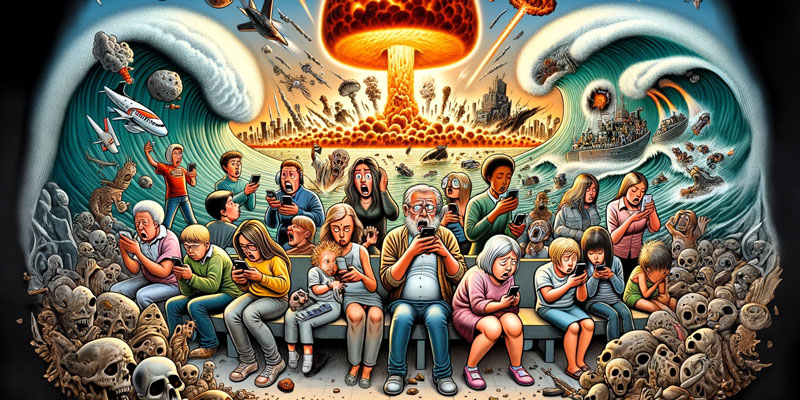
At Meet the Teacher Night, one parent asks whether translation is slowing down the classroom. Fortunately, the teacher has an app for that.

John DePetro and Justin Katz discuss the politics during primary-election-month in RI.

John DePetro and Justin Katz discuss the hot topics in RI politics.

RI’s Dem primary for governor is tackling important questions: Is McKee Rhode Island? Who’s drinking Jack all by herself? And is he choosin’ Texas?

Summer campfires on the beach are a revered tradition for Rhode Island families, but the experience has been changing lately…

John DePetro and Justin Katz review the politics of RI as the state prepares to start early and mail voting.

People are noticing that Rhode Island Republicans aren’t raising much money from political donors recently. There are reasons for that.

Providence mayoral candidate David Morales answers questions about his qualifications, experience, and plans for the city. A political comedy sketch about the young Democratic Socialist.

John DePetro and Justin Katz shine a light on ignored themes in RI politics.

Four reasons one homeschooler gives for his family’s decisions point to a real and useful direction for our “education system.”

John DePetro and Justin Katz discuss the invisible factors smacking Rhode Island.


In both cases, Rhode Island’s state government deliberately sought to collect more money from people who are less likely to be able to vote in our state, and in both cases, the result has been lawsuits. The number of people suing about the Taylor Swift tax is increasing:
The complaint, which names the state of Rhode Island, R.I. Division of Taxation and Tax Administrator Neena S. Savage, argues that the tax violates both the state and U.S. Constitution because it selectively targets a class of property owners, disproportionately affecting out-of-state residents who cannot vote in Rhode Island elections. …
The complaint disputes those claims, arguing that second-home owners generally consume fewer municipal services because they do not send children to local schools, which account for the largest portion of municipal spending. It also contends that the owners maintain their properties and contribute to higher surrounding property values.
This deliberate strategy of taxation without representation is a function of the business model of the state, which I call the “government plantation model.” The state finds constituencies to whom it can promise services, hires unionized employees to manage those services, and then seeks other people to pay the bill. This is not a healthy way to operate a government
I’ve been meaning to highlight just how remarkable this is:

Providence Mayor Brett Smiley is a very progressive Democrat. With his tweet Stanton shows just how extreme and dishonest the radicals are. We can hear in it an echo of the Soviet Communists who assassinated their slightly-less-communist allies. They will always turn on anybody to their right when they think they have the advantage. They must therefore either be insane, utterly without principle, or live in constant fear.
Making the example even more remarkable is that Stanton was once a mainstream journalist and now teaches journalism at the University of Connecticut.
Any Democrats with even the slightest bit of intellectual integrity better wake up soon.
This scene from the classic movie, Remember the Titans, was one of many to use “I’ll go to the press” as a threat against the bad guys:
When Coach Yoast looks at his daughter Sheryl (Hayden Panettiere) and realizes he’d rather be the kind of man she can look up to than take the head coaching job and Hall of Fame path by undercutting Boone. Integrity over ambition. RIP Hayden Panettiere. pic.twitter.com/YDHCZCrlOm
— JWadventurerama (@JWadventurerama) August 17, 2026
Indeed, I grew up believing that mechanism could work: Get unambiguous information about villainy, bring it to journalists, the journalists report it, and voila! “You’re finished in this town.” Now, I don’t know if it ever worked that way, although I suspect back when people lived more in and among their communities, the risk of scandal reported in a medium that most of your neighbors would read or hear about did, indeed, carry more weight.
Unfortunately, we don’t live in that world, anymore, and not only because everybody gets their news from different sources and substantively “lives” among people they’re not likely to bump into at the grocery store. What I’ve found is that “the press” is very particular about whose malfeasance is newsworthy.
In the world of Remember the Titans the threat might have been real, because there’s a fair chance the “press” would have consisted of hardscrabble reporters who (1) were motivated to get “the story” above all and (2) might have had a more-progressive attitude toward race than the community poohbahs, which was appropriate in that time and place. That description no longer describes journalists, who tend to be fully part of the same class as the insiders and who are more progressive than they are contrarian.
Consequently, the threat of going to the press only works, in our time and place, when the villain is of a particular belief group or political party. In that context, ironically, the siloed information streams may actually be a positive development, because at least the media bias is diluted.
This is a few weeks old, but it still astonishes me when I come across it, not least because I’m starting to see a theme:

During the most-recent legislative session, progressive Democrat Representative Megan Cotter (Exeter) filed legislation that would allow elderly Rhode Islanders to defer their property taxes until they sold their houses. Both policies would reduce pressure on government spending (by reducing immediate pain) while putting taxpayers in debt to the federal government.
Progressives apparently miss the reality of slavery and indentured servitude and want to bring it back. Of course, they can’t say it like that, so they come up with these schemes that, they hope, supporters will be too distracted or financially illiterate to understand.
I wish I heard more people complaining that government officials and their press teams treat spending as some sort of achievement:
The R.I. Department of Education has secured more than $18 million through a pair of federal grants to fund two literacy initiatives built around artificial intelligence, the agency said Friday.
The awards come from the U.S. Department of Education’s Education Innovation and Research program. They include $10 million for Project REACH – Responsive Evidence-based AI Coaching for High-Impact Literacy Instruction – and $8.4 million for Rhode Island Students Excel through AI, known as RISE-AI.
These grants mean next to nothing. A big portion of the money will go to pay teachers to watch presentations, often online, and sometimes not even watching them. (In other contexts, that would be called “fraud” or “theft.”) If programs are actually changed in response, our education system provides ample evidence that “evidence-based research” can lead to terrible ideas. You think schools that can’t prepare children to read or do math at grade level are going to use artificial intelligence in a way that helps students?
Many of these issues can be addressed with a simple rule of thumb: If you’re going to get nothing (or worse), then you should at least try to get it cheaply.
It seems to me these sorts of facts and figures used to be much more talked about in the news, so thanks to Andrew Morse for catching this one:

This is disturbing news for two reasons, although it does point to an opportunity.
The first reason to be disturbed is that a society’s failure to replace itself is simply not healthy. It means something is going wrong. Maybe there’s something endemic going on with our health. Maybe our collective mental health is skewed, whether by psychosis, selfishness, or some other deficiency. Maybe people have no hope or are having trouble meeting each other and establishing relationships. Something is off. (And frankly, the public school system should be part of the solution rather than, more likely, a major contributor to the problem.)
The second reason is that this trend encourages further development of the government plantation. Government and its satellites will have incentive to find new clients for their services, even if that means using their power to change the makeup and character of the society. We already see how little the preferences and needs of the people, generally, genuinely matter for policy choices.
My silver lining of optimism, however, comes with this thought: Society can be self-healing and the sense of well-being often has more to do with acceleration than status. If we can identify and repair the problem (I’ve got some clues and recommendations), things should turn around pretty quickly from such a low baseline, and it’ll feel like boomtime around here.
I’ve got nothing to go on by the account-holder’s assurance that he (or she) is a teacher, but this is a concern I’ve heard from multiple distinct sources:

It’s interesting to imaging what the response might be if our journalists and politicians didn’t consider a liberal pro-immigration stance to be a moral obligation but did consider thoroughly informing and representing the people of Rhode Island to be their vocation.
I fear we’re not even allowed (or even able) to have reasonable adult conversations about these matters anymore. If immigrants are here legally, or if citizens have children who don’t yet speak English fluently, we should find ways to help them, but that’s an objective to integrate and balance with other objectives.
It is as if our society is completely frozen by the need to have good intent in a simplistic binary opposition of good and evil.
This is one of those perspectives that has gone ’round and ’round the Internet so often for so long, I assume everybody who wades into these waters at all has come across it at some point. I suspect many simply and deliberately disregard it when they do.

I looked into the research in some depth a number of years ago, and my conclusion was that subsidized early-childhood programs are overall a negative. They do some limited good for some students, but that benefit dissipates in early grades. In effect, they move learning up a little without long-term improvement.
But the downside is that some students were better off where they were. Maybe the children’s parents made more time for them, or maybe grandmas watched them, or maybe the family found a way to pay for private services. Those kids enter the subsidized programs to their detriment.
So, politicians get talking points. Organizations relying on government subsidies get money and competitive advantage. Adults get another form of welfare for themselves. And children get nothing… or worse.
People who consider themselves truly “progressive” should want to chase this information down because progress means correcting your mistakes and finding better ways.
Commenting on a video about Appalachian poverty, Republican State Representative Marie Hopkins (Warwick) highlights “a glaring disparity” from urban poor:
What I think is overlooked is that the rural poor have NO tax base to support them. The wealthy parts of the cities willingly pay for services to the nearby struggling class. Thus, urban youth get free bus transportation, after school activities, free dental care, college opportunities, mentorships , extra funds in the TANF benefits, heating and utility subsidies, etc. All paid for by their urban tax base. Those are charitable taxes.
Meanwhile, the rural poor do not have any tax base to support them. They do not get city busing city, playgrounds, after school babysitting, or any of the tax-payer funded advantages that the urban youth have. The funds simply aren’t there to support them.
This is a great point, but it’s complicated. By definition, the rural poor are spread out, so services are less efficient. Public busses have to go farther. Playgrounds have to be smaller and/or more numerous for them to be within usable distance.
Where this gets really interesting is the interplay between the reality of the situation and the preferences of progressive planners. It’s not easy to tell which is cause and which is effect.
Progressive planners want people in cities because services can be more efficient, but this also makes it easier to track and control the population. In that sense, and in the sense that they’re embedded in a land that can provide sustenance and shelter naturally, unlike a city, they’re much freer, which is not helpful to planners.
From both directions, planners don’t want to subsidize a lifestyle that leaves people spread out, with children learning to drive motorized vehicles and hunt.
As Sholdon Daniels notes, here, abortion and euthanasia tend overlap in the Venn diagram of people’s beliefs:

These policies are much closer than their positions at opposite ends of life might at first make obvious. They’re both about eliminating the unwanted. In both cases, advocates frame the decision as “individual choice,” but scratch the surface, and you find a strong insinuation of “what you really should do in your situation.”
One interesting angle is that these policies both tend to coincide with a preference for the Government Plantation, whereby the government finds or creates constituencies for its services so it can justify charging others for their provision. You’d think this economic model would create a preference for more children (to fill public schools) and radically extended life, regardless of quality (to keep the healthcare subsidies flowing).
Here, the two policies show their difference. On the birth side, the Government Plantation’s greatest advantage comes from people’s being in the circumstances, and having the collection of beliefs, that leads to abortion; abortions typically don’t prevent women and (especially) men from continuing to have irresponsible sex. On the elder side, resources are limited, so spending too much on one hopeless case means several other people might deteriorate more quickly than is profitable. Thus, since the only importance of people is to feed the Plantation, the system is better ushering that hopeless case out the door as quickly as possible.
In a healthy, active, and competitive party, various factions would press for their priorities. Some would win some issues; some would win others; and some issues would result in a compromise. The Rhode Island right doesn’t have one center of gravity, let alone multiple, so individual candidates develop their own views even more into platforms and talking points. So, we get reactions like this from Anchor Rising contributor Andrew Morse:

An active party can help set boundaries so candidates like Guckian know where they’re pushing the edge of their coalition and where they’d be safe. Meanwhile, voters like Andrew have more incentive to work and set expectations within the framework, too.
But it all comes down to that missing center of gravity to keep people working together and dealing with, rather than stepping away from, the frustrations that come with any attempted collaboration.
At this point, it’s little more than an interesting historical note, but history is worth remembering:
Bush WH spokesman Pete Seat, sitting next to Obama strategist David Axelrod, drops this:
“Barack Obama got on the 2008 Indiana primary ballot because Democrats in St. Joseph County submitted fraudulent petition signatures. People, including the county Democratic chair, went to jail over it. He shouldn’t have been on that ballot.” …
In 2013, 4 Indiana Democrats were convicted for forging those signatures and copying names straight off old petitions, including one from a former governor who said he never signed it. County chair Butch Morgan went to prison for orchestrating it.
It’s worth remembering for two reasons. First, signatures for ballot access are the first barrier to ensure campaigns are genuine, not orchestrated manipulations by powerful interests, and there’s no reason people who cheat on them wouldn’t cheat farther along the path.
Second, this is surprising because it’s scarcely reported (if it’s been reported at all in some areas). That indicates the news media want Americans making decisions based on a false understanding of what’s possible and what’s been done.
This morning, I mentioned Antonio Damasio’s exploration of the role of emotions in decision making. How things feel is a significant filter for what we’ll consider. That includes whether something feels plausible. Whether or not you know that a monumental Democrat President was put on a state’s primary ballot illegally changes whether it feels plausible that his party would cheat in other — and even more monumental — ways.
My cultural and aesthetic sensibilities are with Rod Dreher, here, but it forces me to ask myself a question that I think remains unstated and unresolved generally:

The things on my list, below, are all debatable, but I think they’re all plausible to believe without prior malice or partisan illusion. How is one supposed to feel about a cancer diagnosis for a very elderly man who:
- Was one of the slimiest, most phony and dishonest, politicians in the country for a half century?
- Cheated his way into the White House on the strength of a corrupt, targeted pandemic response that caused untold harm?
- Used the government to prosecute his political opponents?
- Vilified Americans who disagree with him on policy?
- Harmed an unknowable number of Americans through partisan and ideological policies, from pandemic response to economic management to open-borders immigration?
- Undermined the Constitution of the United States by allowing himself to be a puppet for a shadow government as he fell into incapacity?
I could go on, but the point isn’t to beat up on Biden, whom I see as a tragic figure with bleak prospects in the hereafter.
Yes, of course we do well as much as possible to separate personal respect from political aversion, but there’s something inhuman about making that a limitless principle. If you genuinely believe Joe Biden did even one of the things I accuse him of above, is it morally just to express sadness when asked about his disease? What’s the message? “Well, he got away with it”?
I’ve been reading Descartes’ Error by neuroscientist Antonio Damasio, whose thesis is that people with brain damage that disconnects emotion from their decision-making capacities make very poor decisions. As his title indicates, Damasio disputes the intellectual principle that reasoning improves to the extent we can divest it of our animal passions.
I’d suggest this applies to society, as well. Politeness to the Bidens sends the unmistakable message either we don’t believe what we’ve said about them or we don’t think it actually matters, and if professional courtesy is a higher principle than recognizing monstrous behavior, we’re dooming our country to bad decisions.
A review of the archives will show my continual opposition to Flock police cameras, but with a discouraged sense that the ship has already sailed, because people have absorbed an expectation that cameras are everywhere. The recent surge in opposition to the devices creates some contrary encouragement, but I have to say I feel my cynicism.
Some of the most frequent anti-Flock voices of the past few weeks have been progressives, and their objection connects most prominently with their desire to protect illegal immigrants. Given their track record, I’d expect progressives to flip their script when they believe, again, that they’ll be in control of the invasive technology. It’s also giving them a handy way to beat up on their slightly less-progressive primary election opponents.
But we should take value where we can get it, and this point from the progressive UpriseRI is worth keeping in mind:
Craig Cerwonka, a board member of the ACLU of Rhode Island and a Cumberland resident, laid out four objections to the town’s proposed adoption of Flock Safety’s automated license plate reader system — ALPRs, cameras that photograph passing vehicles, read the plate, log the make, model, color, and distinguishing features, and deposit all of it in a searchable cloud database that police can query after the fact. He cited the abuses in Kansas, where a police chief in the town of Sedgwick used the system more than 200 times over four months to stalk his former partner and her new boyfriend, losing his law enforcement certification and drawing 18 months of probation. He questioned whether the ICE provision in the Cranston Police Department’s general order — the policy Chief Matthew Benson indicated Cumberland would model — actually closes the door on federal immigration requests. He objected to the provision restricting ordinary residents from obtaining data the cameras collected about their own vehicles. And he made the argument that has aged the most sharply of the four: that town taxpayers, as he put it, “would be funding a system which will only provide prosecutorial evidence against them and destroys any exculpatory evidence that could aid the defense in a judicial proceeding.”
… The evidence that convicts gets preserved. The evidence that exonerates evaporates on schedule. …
The headline on Nancy Lavin’s Rhode Island Current article puts it well: “The League of RI Businesses made a play to sidestep campaign finance limits. Now, it’s game time.” Here’s the play, in a paragraph:
The political group born out of a gun rights campaign was recruiting state legislative candidates to fill open seats and challenge incumbents whose records did not align with its “pro-business” platform. And, under an unprecedented maneuver to create 40 political action committees – one for each city and town plus a statewide organization – The League advertised up to $1 million in donations per year per endorsed candidate, circumventing state campaign finance laws that cap annual donations at $2,000 per candidate.
The article goes on to note that it works on the other end, too. Donors can give up to $9,900 spread throughout the organization and remain anonymous, so they don’t attract target signs from state insiders. Arguably, though, the biggest benefit of the strategy has been that it attracted attention and gave the League instant attention and credibility.
Two important things now matter more, now that it’s “game time.” First, the League has to raise the money. It’s raised a fair amount, as the article reports, but nothing like the potential of its structure allows. That said, an injection of $10,000 into a local General Assembly race can make a big difference.
But the second important consideration is the greater by far. Candidates and their campaign advisors have to know what to do with the money, and to be blunt, there’s a big deficit on that side of the ledger in Rhode Island. Having money can mean you are willing to pay expensive consultants for bad advice. It can mean you spend money on ads that miss their target or carry the wrong message.
Unless it’s so much it swamps the political system, money is the difference maker only when the campaign is doing everything well and just needs that extra boost.
The core distinction is not policy so much as whether policy should respond to reality. Take rent-control for example:
These two approaches are crystallized in the pair’s signature disagreement: A rent stabilization ordinance Smiley vetoed earlier this year — one Morales has promised to resurrect if elected.
“It was also sort of a bad version of what I believe is a bad policy,” Smiley said of the Providence City Council’s failed proposal to cap annual rent increases at 4% and create a new bureaucracy to administer the proposed law.
Morales responded with Zillow-based estimates that Providence rents “have increased by over 40% since 2020, which would have been prevented if we had rent stabilization in place,” and added, “Rent increases are serving as eviction notices for so many working people in the city of Providence.”
If asked, Smiley could surely explain the policy, what he thinks its effects would be, and why it was bad. Morales simply responds that rent is high and asserts government policy would fix it. That Morales gets away without having to explain his understanding of policy is an indictment of the Rhode Island media and political class more generally.
At the end of the day, however, the difference between both politicians might be a matter of degree. Both are willing to deprive the people of their city of the experience of seeing elephants at the city zoo. Categorically. They don’t pledge to seek ways to provide a more humane habitat (which they say is the problem). They just give the easy, ideological answer.
One can’t help but see the symbolism in Democrat opponents in Rhode Island coming together to agree that the government should work to keep elephants out.
Correct technical information is very important, but the execution of this post by Stephen Skoly’s CD2 campaign will hurt Republicans:

The coloring and layout of the AI-created flier is designed to discourage mail ballots. Another campaign is encouraging Republicans to apply for mail ballots, and this one uses stark colors and urgent visuals to make it seem like a risky venture. That is entirely the wrong direction for Republicans to go.
Yes, it would be better to eliminate mail-ballot-month from our electoral system, and Republicans should work toward legislation to do that, but mail ballots currently exist. Yes, we want to get people to the polls, but the uncredited letter is correct that “life happens.” A campaign might maintain contact with a strong supporter for months only to discover he or she didn’t vote. “My cat got sick.” “My car broke down.” “I got distracted and forgot.” A supporter who turns in a mail ballot is a supporter you don’t have to spend time contacting anymore.
Republicans must maximize their turnout. Mail ballots are an obvious mechanism to do that. Campaigns and the state party should be encouraging applications for mail ballots, and then taking responsibility for getting the voters to use them.
Both the uncredited letter and the Skoly flier are misleading on a very, very important point. People who want to go out to vote on election day don’t have to discard their mail ballots and vote by provisional ballot. They can bring their mail ballots to the polling places. All of them will have receptacles to turn them in.
Featured image by Justin Katz using Perplexity and Firefly.
The argument Nolan puts forward in this clip is worth considering in full, so I’m embedding the post and video rather than a screen capture with a link as I usually do:
Nolan actually voices (in part) the fundamental reason why Whites are not allowed to speak of their greatness, and why I felt compelled to write the book Greatness and Ruin (2025). pic.twitter.com/19nRzDEXVn
Nolan says that “coming from a democratic…state…where we want to view…
— Dr. Ricardo Duchesne (@dr_duchesne) August 2, 2026
The straightforward point is that the audience (by which he means the audience he is targeting, which includes his entertainment peers and their cultural niche) will reject an artistic work unless it accords with their aesthetic and moral sensibilities. In a general way, this is an unobjectionable observation. Nolan uses a lot of overly intellectualized language, but what he’s saying is that he wants to make movies, he wants people to watch those movies, he wants to make money when they watch those movies, so he has to go along with the social narratives on which they insist.
It could have been worse. He could have said he feels he has a responsibility to advance social causes and bring the audience to a more moral conclusion. At one point in his large scientific tome, The Archaeology of the Mind, neuroscientist Jaak Panksepp says directly that people with advanced scientific education have a responsibility to correct the politically incorrect thinking of the general public. Nolan’s position is preferable to that.
On the other hand, a line of cultural responsibility and personal integrity does exist that “storytellers” shouldn’t cross in their quest for money and fame, and Nolan drifted over it. For one thing, he could take the attitude that Western greatness is why he’s got the technology, the artistic freedom, and the economic wherewithal to do what he does, so he should uphold it, at least to the extent he doesn’t present it as something for which anybody must apologize. And after all, he didn’t have to appropriate one of the pillars of Western achievement for his apology.
I’ve defined the “Government Plantation” as a sort of civic business model whereby the government uses its power to create and expand customers for the services it provides and then looks to others to pay the bill (whether that means local taxpayers, federal subsidies, temporary residents, pass-through drivers, or someone else). Well, here you go:

Speaking with John DePetro earlier this week, I suggested that Hasan Piker, one of the spokespeople for the surging far-left socialists in the Democrat Party, has been sending out probes to see how far he can get Democrats to go, such as praising Mao Zedong, truly one of the great monsters of human history. So far, while many might have ignored him, relatively few have objected to his proclamations.
By way of Bill Mitchell on X, sharing a clip of Bill Maher, I note another example of the same worrying theme:
Two Democrat congressmen, Tom Suozzi and Adam Gray, put out a pledge called Promise to America. Three lines. We are capitalist, not socialist. We want safety, not lawlessness. We are proud, not ashamed of America.
That’s it. That’s the whole ask.
Eight House Democrats signed it. Out of 212! …
Sit with that for a second. Two hundred and four members of Congress looked at “proud of America” and decided that was a bridge too far. Not a policy. Not a spending bill. A sentence.
This should be low-hanging fruit. Instead of half-hearted local attempts to celebrate America’s 250th, Rhode Island Democrats could have sent out the word to make a big deal of the occasion and shored up a large liability for their party.
They can’t, though. Piker’s probes show where the energy is among Democrats. David Morales, the literal socialist running for mayor of Providence, and his allies are promoting the theme that Brett Smiley is practically a Republican. That’s delusion, propaganda, or both.
Rhode Island Democrats may not like this direction (or maybe they do), but they can’t be too vocal about their love and devotion for the United States of America out of fear they’ll lose the support of their base.
I’m very suspicious of Rhode Island’s current “affordable housing” policy. Like “green energy,” I think it distorts incentives for political and corruptly self-interested reasons. Absent the specific incentives of the state government, would the Santoro and Compagnone families really find an “affordable housing complex” to be the highest and best use of their property? Maybe, and maybe not. Either way, the policy means the government is putting its thumb on the scale in a way many Johnston residents don’t support.
That said, even if the families would never have gone this route without government incentive, and even if neighbors are very unhappy about it, the appropriate response is not for Johnston Mayor Joseph Polisena to confiscate the property for public buildings. That attempt now, predictably, leads to this point:
Rhode Island U.S. District Judge Melissa R. DuBose ruled that the town failed to meet basic constitutional requirements when it sought to take over the site of a planned 252-unit affordable housing complex on George Waterman Road. Dubose wrote that Johnston officials acted without pledging “the public faith and credit” to provide just compensation and without establishing clear enforcement procedures.
So, the state government should not put its finger on the scale to make a particular use artificially valuable, and the city government should not be a means by which neighbors can force an alternative at below market price (which price includes the state government’s bid, so to speak).
If the state officials want more affordable housing, they should first exhaust every possible change to government policy that is producing that outcome. And if local residents or officials want to use land for something else, they should weight that goal with every other priority through the budget process.
We can see, in this case, a clear example of the way each government action creates unexpected reactions. In an area where people see government as the primary means of reacting, that means we necessarily lose trust more and more that government is genuinely acting in the public interest rather than on behalf of special interests.

The radicals’ three personalities will determine what happens now in Providence.
Seeing commentary and results-night photos from the socialists happy about David Morales’s victory in Providence, it occurs to me that there are three basic types in the movement, and how they interact will determine the story for Providence over the next few years. The easiest type to address consists of, in a word, the anarchists. …

9/11 experiences bring clarity to our current situation.
Sometimes the serendipity or X’s post placement catches themes just right. First consider Spencer Pratt’s suggestion that public schools aren’t failing, per se; they’re just trying to do something other…

How does one respond to the litany strategy?
“Litany strategy” is a term I just made up. What I mean is this: In a debate, one party deploys a barrage of argument summaries, all of which have reams…

Tiverton water contamination shows the importance of slack in government.
I don’t know what I’d do if my household water tested positive for high levels of contaminants as has happened for some of my fellow Tiverton residents — probably battle…

’80s nostalgia wants the strife.
Lots of people are commenting on this clip from actor Ryan Reynolds, but I’ve got a different take: Ryan Reynolds says ’80s nostalgia “paves over all the trauma” of the…

9/11 experiences bring clarity to our current situation.
Sometimes the serendipity or X’s post placement catches themes just right. First consider Spencer Pratt’s suggestion that public schools aren’t failing, per se; they’re just trying to do something other than what most of think they should be doing: This isn’t some abstract paranoia…this was a deliberate soviet socialist strategy going back decades. It is…

How does one respond to the litany strategy?
“Litany strategy” is a term I just made up. What I mean is this: In a debate, one party deploys a barrage of argument summaries, all of which have reams of embedded assumptions, as if they constitute a serious argument, often while posing questions as if inviting a response, but really in order to prolong…

Tiverton water contamination shows the importance of slack in government.
I don’t know what I’d do if my household water tested positive for high levels of contaminants as has happened for some of my fellow Tiverton residents — probably battle a nervous breakdown over the potential harm to my family, for starters. These are the situations that show the importance of building slack into your…

’80s nostalgia wants the strife.
Lots of people are commenting on this clip from actor Ryan Reynolds, but I’ve got a different take: Ryan Reynolds says ’80s nostalgia “paves over all the trauma” of the “tumultuous” decade: “The 80s was a brutal, brutal time for people. It was a fucking mess and people forget that. It was a tremendous strife….

Notes Heading into the RI Primary
1. It’s hard to say for sure how Governor Dan McKee so thoroughly annihilated the advantages of modern incumbency, but the cause may be visible in the forest formed by the individual trees of his communication. When you combine his major themes, McKee’s overarching message unintentionally reveals itself as something like: I’m going to take…
Why should the masters of the government plantation speak English?
Because it was the original model for my thinking about the government plantation, my ears always perk up when I hear the name of Lawrence, Massachusetts. The specific context bringing Lawrence to my attention was Governor Raimondo’s bringing the Boston Fed’s “Working Cities Challenge” to Rhode Island, citing Lawrence (prematurely) as a success story. The…
In both cases, Rhode Island’s state government deliberately sought to collect more money from people who are less likely to be able to vote in our state, and in both cases, the result has been lawsuits. The number of people suing about the Taylor Swift tax is increasing:
The complaint, which names the state of Rhode Island, R.I. Division of Taxation and Tax Administrator Neena S. Savage, argues that the tax violates both the state and U.S. Constitution because it selectively targets a class of property owners, disproportionately affecting out-of-state residents who cannot vote in Rhode Island elections. …
The complaint disputes those claims, arguing that second-home owners generally consume fewer municipal services because they do not send children to local schools, which account for the largest portion of municipal spending. It also contends that the owners maintain their properties and contribute to higher surrounding property values.
This deliberate strategy of taxation without representation is a function of the business model of the state, which I call the “government plantation model.” The state finds constituencies to whom it can promise services, hires unionized employees to manage those services, and then seeks other people to pay the bill. This is not a healthy way to operate a government
I’ve been meaning to highlight just how remarkable this is:
Providence Mayor Brett Smiley is a very progressive Democrat. With his tweet Stanton shows just how extreme and dishonest the radicals are. We can hear in it an echo of the Soviet Communists who assassinated their slightly-less-communist allies. They will always turn on anybody to their right when they think they have the advantage. They must therefore either be insane, utterly without principle, or live in constant fear.
Making the example even more remarkable is that Stanton was once a mainstream journalist and now teaches journalism at the University of Connecticut.
Any Democrats with even the slightest bit of intellectual integrity better wake up soon.
This scene from the classic movie, Remember the Titans, was one of many to use “I’ll go to the press” as a threat against the bad guys:
When Coach Yoast looks at his daughter Sheryl (Hayden Panettiere) and realizes he’d rather be the kind of man she can look up to than take the head coaching job and Hall of Fame path by undercutting Boone. Integrity over ambition. RIP Hayden Panettiere. pic.twitter.com/YDHCZCrlOm
— JWadventurerama (@JWadventurerama) August 17, 2026
Indeed, I grew up believing that mechanism could work: Get unambiguous information about villainy, bring it to journalists, the journalists report it, and voila! “You’re finished in this town.” Now, I don’t know if it ever worked that way, although I suspect back when people lived more in and among their communities, the risk of scandal reported in a medium that most of your neighbors would read or hear about did, indeed, carry more weight.
Unfortunately, we don’t live in that world, anymore, and not only because everybody gets their news from different sources and substantively “lives” among people they’re not likely to bump into at the grocery store. What I’ve found is that “the press” is very particular about whose malfeasance is newsworthy.
In the world of Remember the Titans the threat might have been real, because there’s a fair chance the “press” would have consisted of hardscrabble reporters who (1) were motivated to get “the story” above all and (2) might have had a more-progressive attitude toward race than the community poohbahs, which was appropriate in that time and place. That description no longer describes journalists, who tend to be fully part of the same class as the insiders and who are more progressive than they are contrarian.
Consequently, the threat of going to the press only works, in our time and place, when the villain is of a particular belief group or political party. In that context, ironically, the siloed information streams may actually be a positive development, because at least the media bias is diluted.
This is a few weeks old, but it still astonishes me when I come across it, not least because I’m starting to see a theme:
During the most-recent legislative session, progressive Democrat Representative Megan Cotter (Exeter) filed legislation that would allow elderly Rhode Islanders to defer their property taxes until they sold their houses. Both policies would reduce pressure on government spending (by reducing immediate pain) while putting taxpayers in debt to the federal government.
Progressives apparently miss the reality of slavery and indentured servitude and want to bring it back. Of course, they can’t say it like that, so they come up with these schemes that, they hope, supporters will be too distracted or financially illiterate to understand.
I wish I heard more people complaining that government officials and their press teams treat spending as some sort of achievement:
The R.I. Department of Education has secured more than $18 million through a pair of federal grants to fund two literacy initiatives built around artificial intelligence, the agency said Friday.
The awards come from the U.S. Department of Education’s Education Innovation and Research program. They include $10 million for Project REACH – Responsive Evidence-based AI Coaching for High-Impact Literacy Instruction – and $8.4 million for Rhode Island Students Excel through AI, known as RISE-AI.
These grants mean next to nothing. A big portion of the money will go to pay teachers to watch presentations, often online, and sometimes not even watching them. (In other contexts, that would be called “fraud” or “theft.”) If programs are actually changed in response, our education system provides ample evidence that “evidence-based research” can lead to terrible ideas. You think schools that can’t prepare children to read or do math at grade level are going to use artificial intelligence in a way that helps students?
Many of these issues can be addressed with a simple rule of thumb: If you’re going to get nothing (or worse), then you should at least try to get it cheaply.
