Canto Commentary: Inferno, 30

Originally an assignment for a theology class on The Christian Imagination
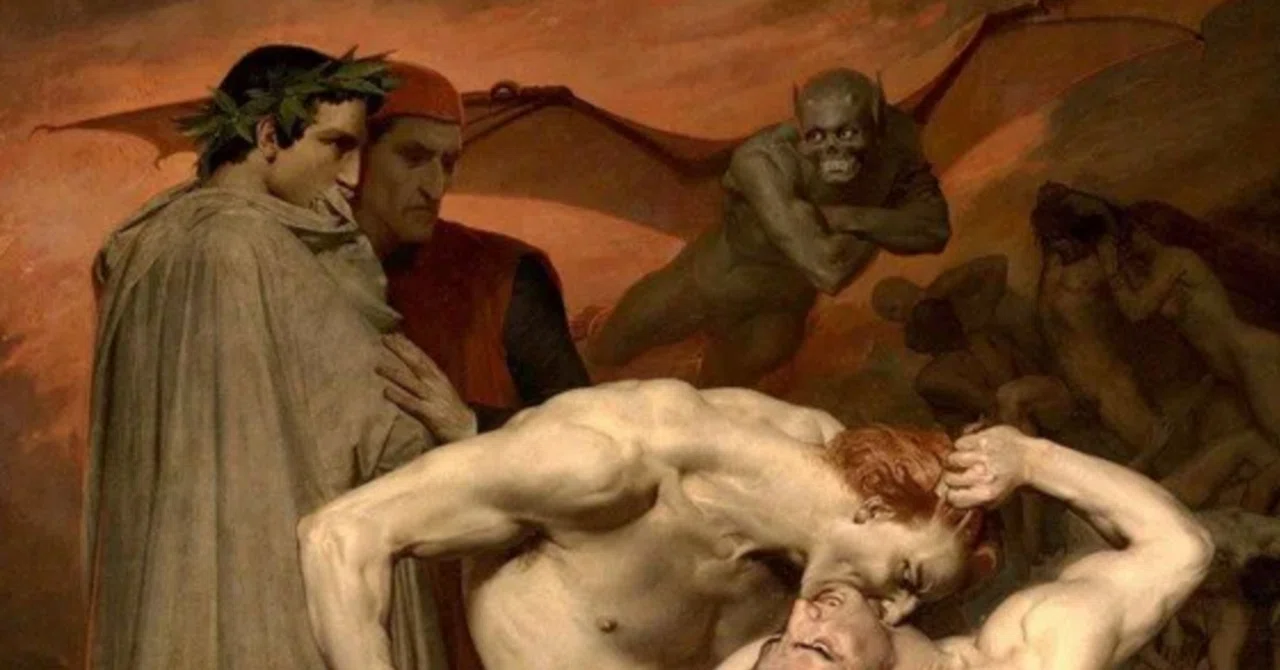
Dante and Virgile, William Bouguereau, 1850.
What we see in the lines of Canto 30, Stanzas 130-144, are ideas and images that can be found placed throughout the corners of Dante’s time in Inferno; The power and world of dreams, memory, and reality, feelings of shame and sorrow, and how we can be forgiven for the actions that have brought those aforementioned feelings upon us are all explored in this last ditch of the Malebolges in an exchange between our Pilgrim (Dante) and Virgil.
Before our journey in the Malebolge comes to close, Dante encounters an argument between two spirits who have been damned to the 10th and final Bolgia in the 8th circle of Hell: a place of punishment for Falsifiers who have committed the sin of Fraud. As Dante watches the fight with intrigue, he is reprimanded by his guide, Virgil, and is overcome with an intense sense of shame. Feeling that shame, Virgil understands that Dante has understood the wrong of his choice to use the sinful as entertainment and tells him to allow those feelings of shame and sorrow to be “cast off” (Inferno, 30.143).
Although Virgil has previously allowed Dante to speak and interact with the souls of Hell, he has more recently warned Dante against spending too much time lingering with them. Virgil, as Dante’s knowledgeable guide, knows their time in Hell is limited and that despite there being much to learn from these sinful souls, there comes a time where listening to pointless arguments is, well, pointless. Virgil’s knowledge and guidance of Dante back to the “right path” not only is representative of the purpose of Dante’s journey through the Divine Comedy, but also mirrors the parental role that Virgil seems to step into with Dante. Dante’s reaction to “hear[ing] [Virgil] speak to [him] angrily” is reminiscent of a child who has just been scolded by their father: surprised, ashamed, and upset (Inferno, 30.133) Likely due to both the importance of parental relationships in Christianity (ex. The Father and The Son, Jesus and Mary) as well as the poet Dante’s early loss of both parents, the relationship between Dante and Virgil serves as a reminder of the importance of proper guidance and familial relationships in one’s life, through both the good and bad experiences. A bad experience such as, for example, fighting with one another as the exact word Virgil uses to describe Dante’s watching is “mirae” (look), similar to the word “miraglio” (mirror), implying that if Virgil and Dante were to quarrel, “the would be a reflection of Sinon and Master Adam” (Inferno, pg. 480)
As a result of Virgil’s harsh words and reminder, Dante’s ability to feel shame differs from the spirits he watched argue who continuously put themself in a cycle of dismay and disagreement, promoting their own torture. The feeling of shame had by Dante is a manner of repentance; he recognizes his actions and the wrongness of them. The feeling of shame is so strong that Dante says he feels like someone who in dream experiences harm, wishes they were dreaming, not realizing that what they wish for is already reality. This is to say that people often crave the things they already have, even if they think they don’t have it. This could be a commentary on the concept of free will: we are born with the ability to choose whether we sin or not, whether we repent or not, confess or not. Those in Dante’s Purgatory are a clear example of people who may have done wrong, but recognize that they have the opportunity to correct those sins; they are aware they are “dreaming” and therefore don’t wish for what they have, a chance at redemption, they take the path to it.
