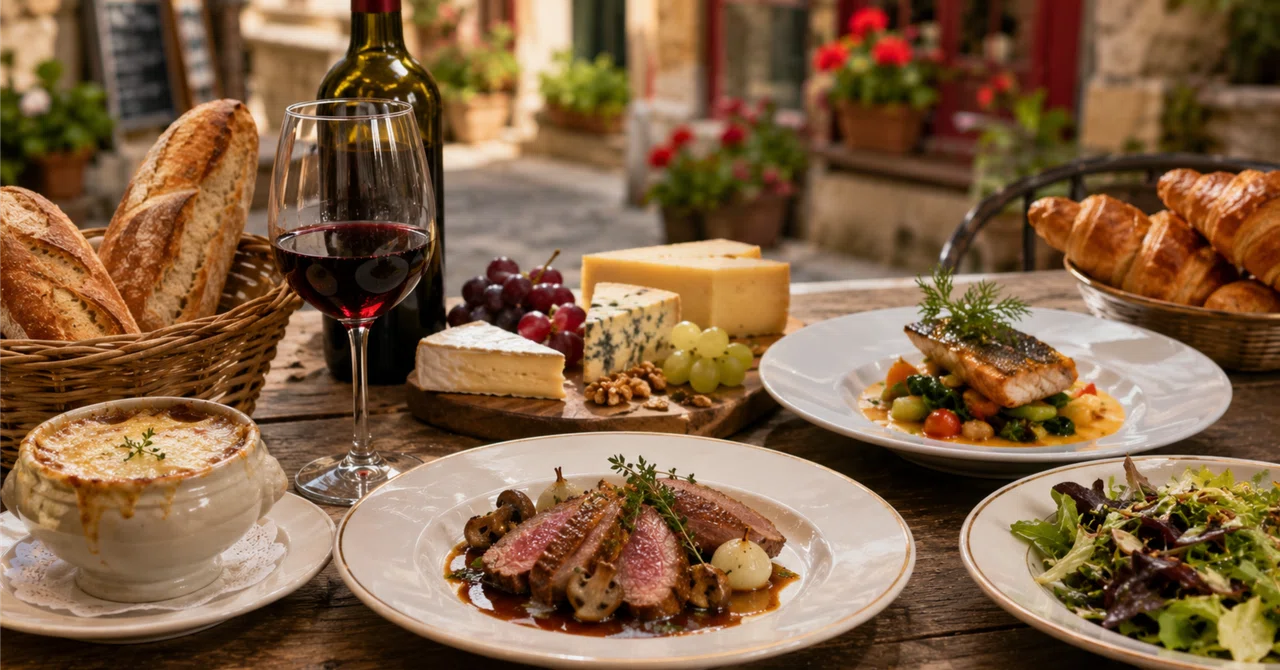
French Cuisine: A Culinary Tradition Shaped by History and Geography

Introduction
French cuisine is one of the most influential food traditions in the world. When people hear the words "French cuisine," they may imagine elegant restaurants, beautiful plates, expensive ingredients, and complicated sauces. However, French cuisine is much more than fine dining. It includes simple home cooking, regional specialties, bread, cheese, pastries, and everyday meals.
French food has developed over many centuries through the influence of geography, agriculture, history, and cultural exchange. Different regions of France have their own ingredients and cooking styles. At the same time, French chefs have developed techniques that have influenced professional cooking around the world. Understanding French cuisine therefore means studying not only food, but also French history and society.
The Importance of Regional Food
One of the most interesting features of French cuisine is its regional diversity. France has a variety of climates and landscapes, from the Atlantic coast and Mediterranean Sea to mountains, forests, and fertile agricultural areas. These geographical differences have strongly influenced local food.
For example, Provence in southern France is famous for Mediterranean ingredients such as tomatoes, olives, garlic, and herbs. Olive oil is an important part of the local cooking. Dishes such as ratatouille, made with vegetables including eggplant, zucchini, tomatoes, and peppers, reflect this Mediterranean influence.
Burgundy, in central-eastern France, is famous for rich dishes involving beef, red wine, butter, and mushrooms. A classic example is boeuf bourguignon, in which beef is slowly cooked with red wine and vegetables.
In Brittany, on the Atlantic coast, buckwheat is an important ingredient. The region is particularly famous for galettes, savory crepes traditionally made with buckwheat flour. Normandy, meanwhile, is well known for apples, butter, cream, and seafood.
These examples show an important principle: geography influences cuisine. The food people eat is closely connected to what farmers can grow, what animals can be raised, and what products are available through trade.
From Home Cooking to Fine Dining
French cuisine includes both ordinary home cooking and sophisticated restaurant food.
Many famous French dishes were originally simple meals. Pot-au-feu, for example, is a traditional dish in which beef and vegetables are slowly cooked in water or broth. Ratatouille began as a practical vegetable dish rather than an expensive restaurant creation. Quiche can also be enjoyed as a relatively simple meal.
At the same time, France developed a strong tradition of professional cooking. During the nineteenth and twentieth centuries, French chefs helped establish many of the techniques and systems used in modern Western restaurants.
One important figure was Auguste Escoffier, a famous French chef who organized professional kitchens and helped standardize many cooking methods. His influence extended far beyond France.
This history helps explain why French cuisine is often associated with professional culinary training.
The Art of the Sauce
Sauces are particularly important in traditional French cooking. A good sauce can add flavor, texture, aroma, and richness to a dish.
French cooking developed many classic sauces based on ingredients such as butter, cream, stock, wine, and vegetables. Sauces such as béchamel, velouté, espagnole, hollandaise, and tomato sauce became important parts of classical French culinary education.
Making a good sauce requires careful attention. A chef must understand how ingredients react to heat and how different flavors work together.
This is one reason French cooking is sometimes described as both an art and a science. A dish may look simple, but producing the right texture and flavor can require considerable technical knowledge.
Bread and Cheese
No discussion of French cuisine would be complete without bread and cheese.
The baguette is probably the most internationally recognizable French bread. Its crisp crust and soft interior have become symbols of French food culture. Other types of bread, including brioche and various regional loaves, are also important.
Cheese is equally significant. France has an enormous variety of cheeses, including Camembert, Brie, Roquefort, Comté, and many kinds of goat cheese.
Cheese can be eaten at different points during a meal, often before dessert. The variety of French cheese reflects the country's different climates, farming traditions, and regional cultures.
French Pastries and Desserts
French cuisine is also famous for its pastries and desserts.
Croissants, macarons, éclairs, mille-feuille, and crème brûlée are enjoyed around the world. French pastry-making requires great precision because small differences in temperature, timing, or the amount of an ingredient can change the final result.
For example, making a good croissant requires layers of dough and butter to be carefully folded together. The baker must control the temperature so that the butter remains firm enough to create distinct layers.
French pastry therefore combines creativity with technical skill.
French Cuisine and Japanese Cuisine
Interestingly, French and Japanese cuisine have some similarities despite their very different histories.
Both traditions place great importance on the quality of ingredients and careful preparation. Japanese cooks may use dashi, precise knife techniques, and seasonal ingredients to bring out natural flavors. French chefs may use stocks, sauces, controlled cooking temperatures, and careful presentation for a similar purpose.
In both cultures, cooking is not simply about making food taste stronger. It is also about understanding the ingredients and bringing out their best qualities.
French chefs have also been strongly influenced by Japanese cooking in recent decades, particularly in areas such as presentation, seasonality, and respect for high-quality ingredients.
Conclusion
French cuisine is much more than luxury food served in expensive restaurants. It is a broad culinary tradition that includes regional dishes, family meals, bread, cheese, pastries, and sophisticated professional cooking.
Its development has been shaped by France's geography, agricultural traditions, history, and cultural exchanges. At the same time, French chefs have created cooking techniques that have influenced restaurants throughout the world.
Perhaps the most important lesson of French cuisine is that food can express the character of a place. A dish made with olive oil and tomatoes tells us something about southern France, while a rich beef dish with wine can reflect the traditions of Burgundy.
For this reason, French cuisine can be studied not only as food, but also as a form of history and culture. It shows how people, landscapes, ingredients, and traditions can come together to create a culinary heritage that continues to influence the world today.
