ヤエコデマリ(京都府立植物園):2026年5月4日(月)

【要旨】
2026年5月1日,京都府立植物園に植栽されているヤエコデマリ(Spiraea cantoniensis Lour. f. plena (Koidz.) Okuyama)を観察した。本記録は,本種を春に白花を多量に咲かせる庭園低木として紹介することを目的とせず,雄しべの花弁化によって成立した八重咲きという園芸形質,白色花序が集合体として形成する視覚的量感,および自然植生の再現ではなく制度化された景観として編成された植物園空間のなかで,本種がどのような自然史的距離をもって提示されているかを読み取る試みである。花序の構造,栄養器官の形態,植栽位置を手がかりに,植物・展示空間・観察行為の関係を記録した。
【本文】
制度空間としての京都府立植物園
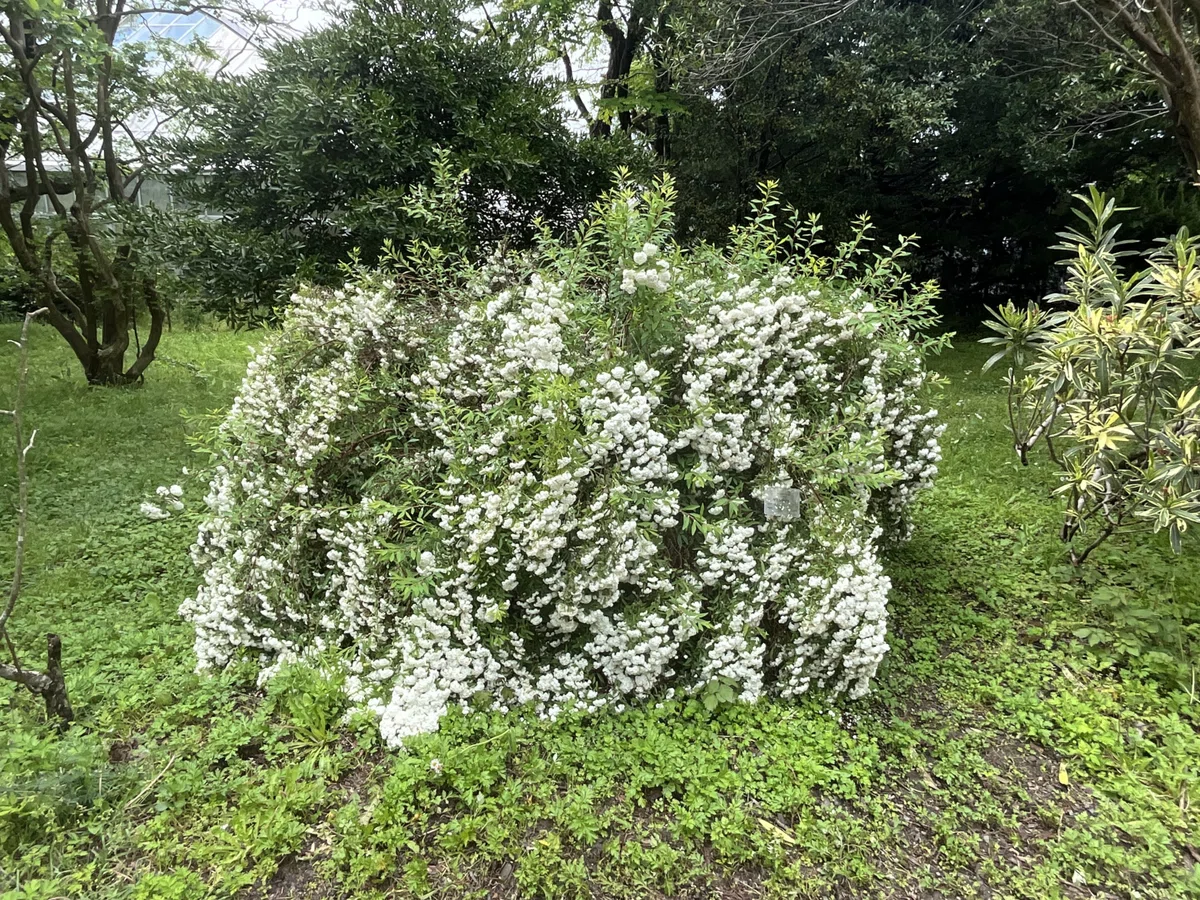
京都府立植物園は,自然植生の保存や再現のみを目的とする場ではなく,観賞用植物を通じて形態や季節の理解を導く制度空間として編成されている。園内に配置される低木の多くは,地域の自然植生を復元する要素ではなく,人為的に制御された季節性や景観のリズムを可視化するために選択されている。ヤエコデマリは,こうした文脈のなかで,象徴性の薄い園芸低木として通行動線に沿って反復的に用いられる存在である。
観察日時と環境条件
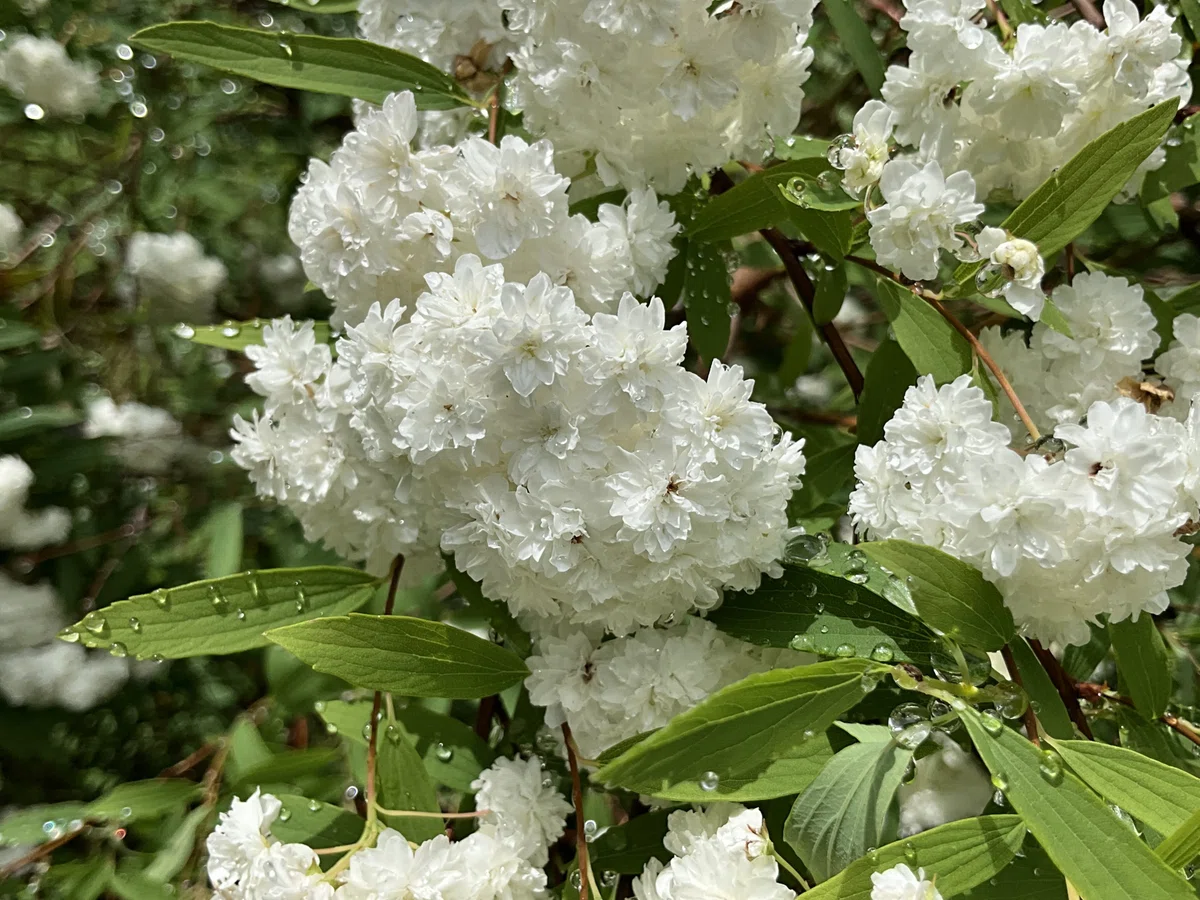
観察は2026年5月1日に行った。当日は午前中に降雨があり,空気中の湿度が高い状態が続いていた。正午前後には雲の切れ間から断続的に日差しが差し込んだが,天候は完全には安定せず,弱い風が園内を通り抜けていた。降雨の影響により,花序および葉面には水分が残り,白色花序は直射光下よりも拡散光のもとで輪郭を弱め,個々の花よりも量として知覚される傾向を示していた。
展示植物の直接観察
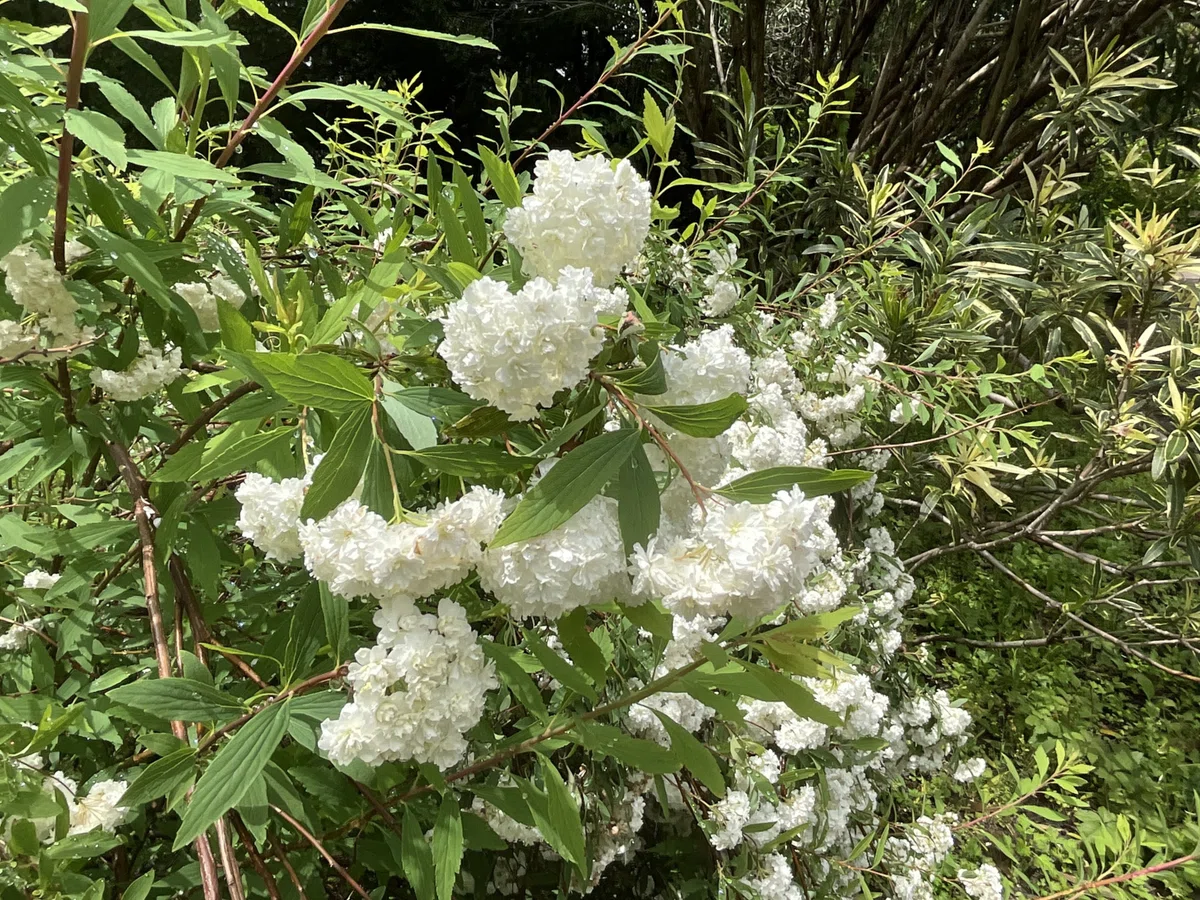
対象個体は落葉低木で,高さはおよそ1.5メートル前後であった。株は多幹性で,細い枝が多数分枝し,生育に伴って自然に外側へ弓なりに垂れる。葉は互生し,菱状楕円形から披針形で,葉縁の上半部に鋸歯が認められる。葉裏はやや白味を帯び,原種に共通する形質が保持されている。
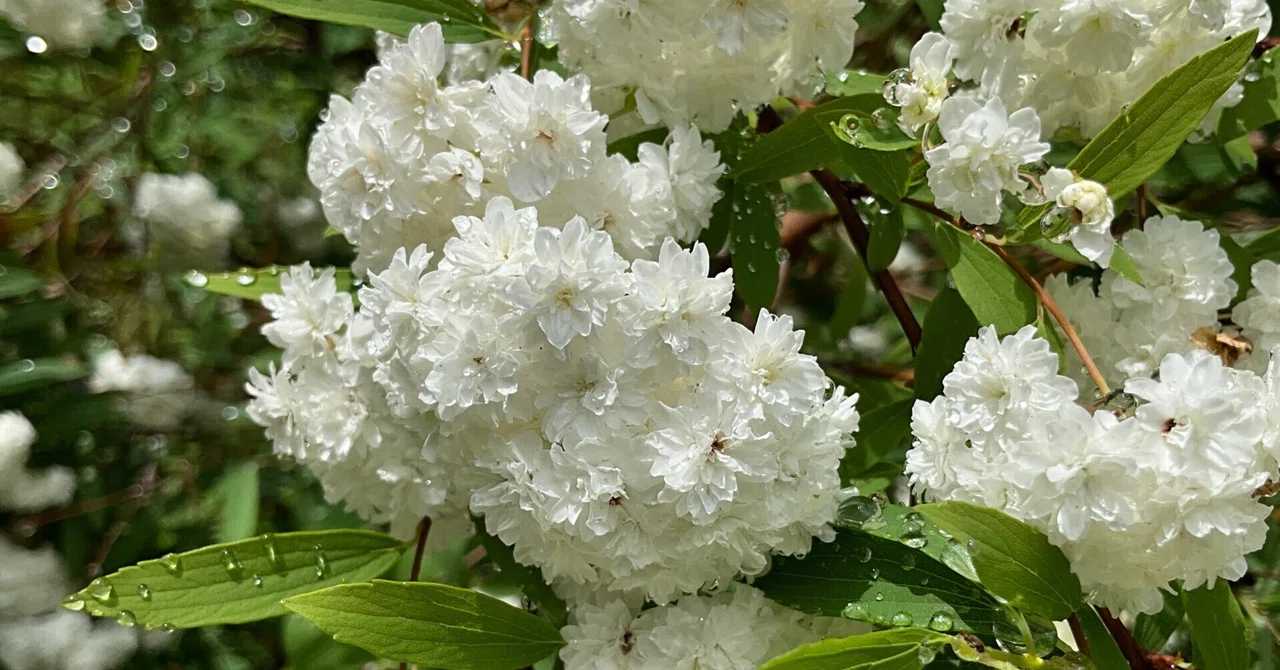
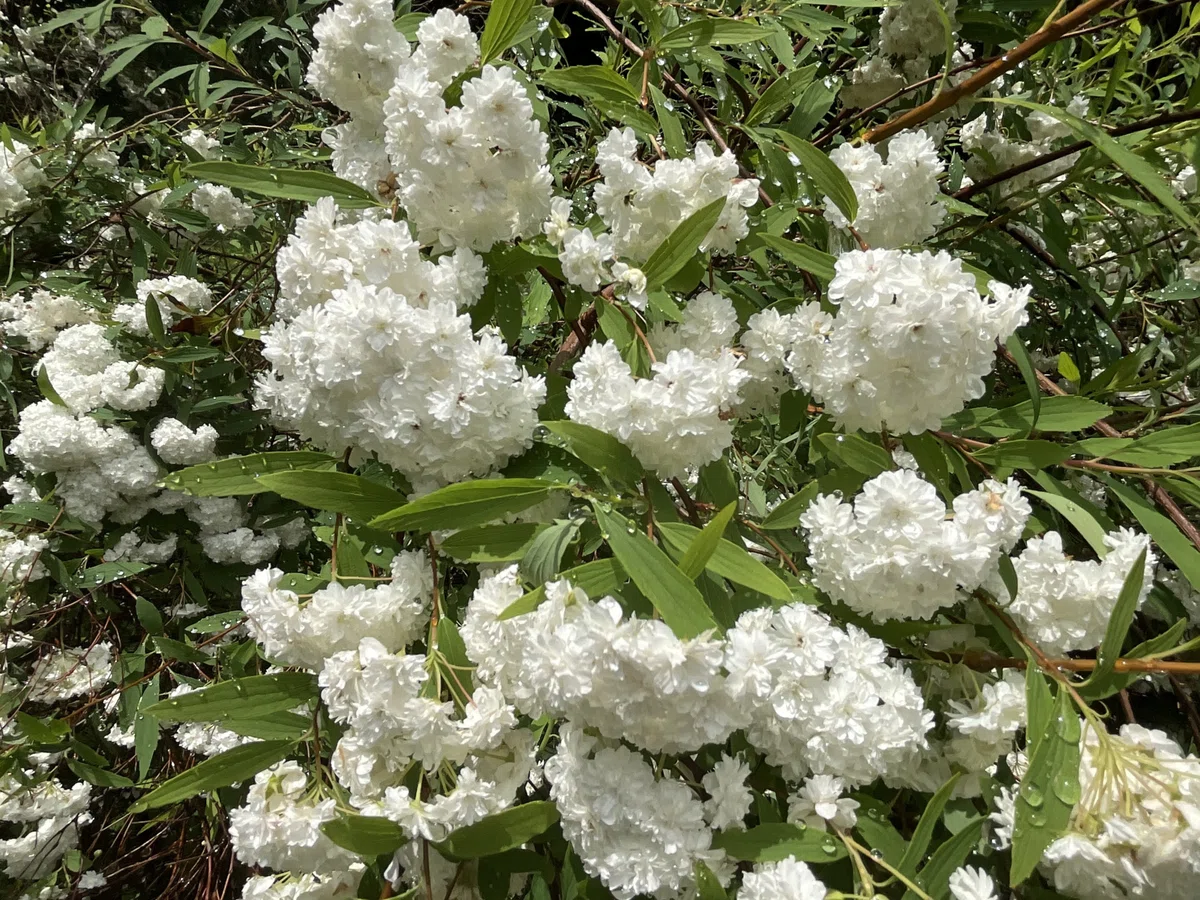
枝先には半球状の散房花序が形成され,純白色の小花が密集していた。小花はいずれも八重咲きで,原種に見られる雄しべは花弁化しており,個々の花の内部構造は視認しにくい。その結果,花序全体は点の集合ではなく,白い塊として視覚に立ち現れていた。
植物学的整理と不確実性の明示
ヤエコデマリは,バラ科シモツケ属に属する落葉低木コデマリ(Spiraea cantoniensis)の八重咲き形態である。原種は中国を原産とし,林縁や疎林に分布するが,本観察対象である f. plena は,雄しべの花弁化によって生殖機能を後退させた園芸形質であり,自然条件下での更新能力をほとんど持たない。
原種では昆虫訪花や結実が確認されているが,本個体について送粉や結実の有無は観察されていない。本記録では,園芸形質として維持される植物であるという前提を明確にし,生態的機能の回復や自然更新に関する推定は行わない。
白の量としての花序
ヤエコデマリの花は,個々の花形や内部構造によってではなく,集合体としての白さによって知覚される。雄しべの花弁化によって増幅された花弁が密集することで,花序は線や点ではなく,面あるいは塊として視野を占有する。降雨後の湿潤状態では,花弁同士が接触し,境界が曖昧になるため,白はより量感をもって立ち現れていた。この白の量は長期的に持続するものではなく,短い盛期をもって視覚的に消費される季節指標として機能している。
展示意図と人間活動
ヤエコデマリは,自然植生の構成要素としてではなく,人為的に制御された景観のなかで季節の到来を示す装置として配置されている。八重化によって生殖機能を抑制した形質は,自然史的連続性から距離を取る一方で,安定した開花景観を保証する園芸的合理性を獲得している。その存在は,植物園という場が自然の保存地であると同時に,人間が自然を選択し編集してきた過程を示す場であることを,控えめに示している。
価値の立ち現れ方
植物学的価値は,八重咲きという形態変異を通じて,自然形質と園芸形質の境界を観察できる点にある。文化的価値は,象徴的意味づけをほとんど伴わない花木が,公共空間において反復的に配置され続けてきた事実そのものに見いだされる。経済的価値は,育成・流通の容易さに支えられているが,本展示では前景には現れていない。環境資源的価値は,自然性の保存ではなく,人為的に制御された季節性の可視化にある。
観察行為への内省
ヤエコデマリの前に立つと,観察者は個々の花を読み取るというより,白い量を一括して受け取ることになる。そのとき,観察は分析よりも通過に近い行為となる。本記録は結論を与えない。花期を過ぎ,白が失われたのちに現れる枝ぶりや葉の配置を,別の時間に改めて確認することを前提として,ここではただ,制度空間のなかに置かれた八重の白が一時的につくり出していた構造を記録しておくにとどめる。
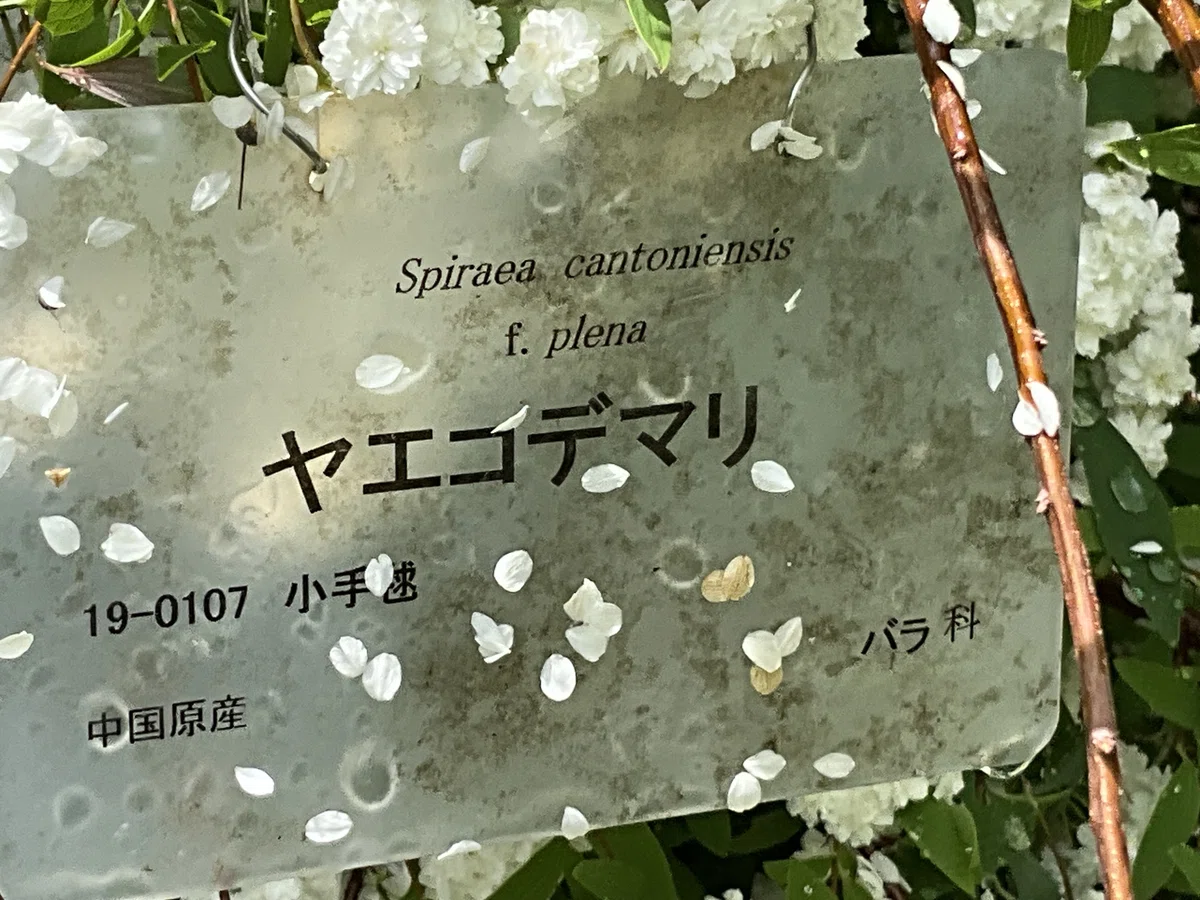
バラ科,中国原産(原種に基づく園芸形質),植物表示板
京都府立植物園
2026年5月1日,筆者撮影
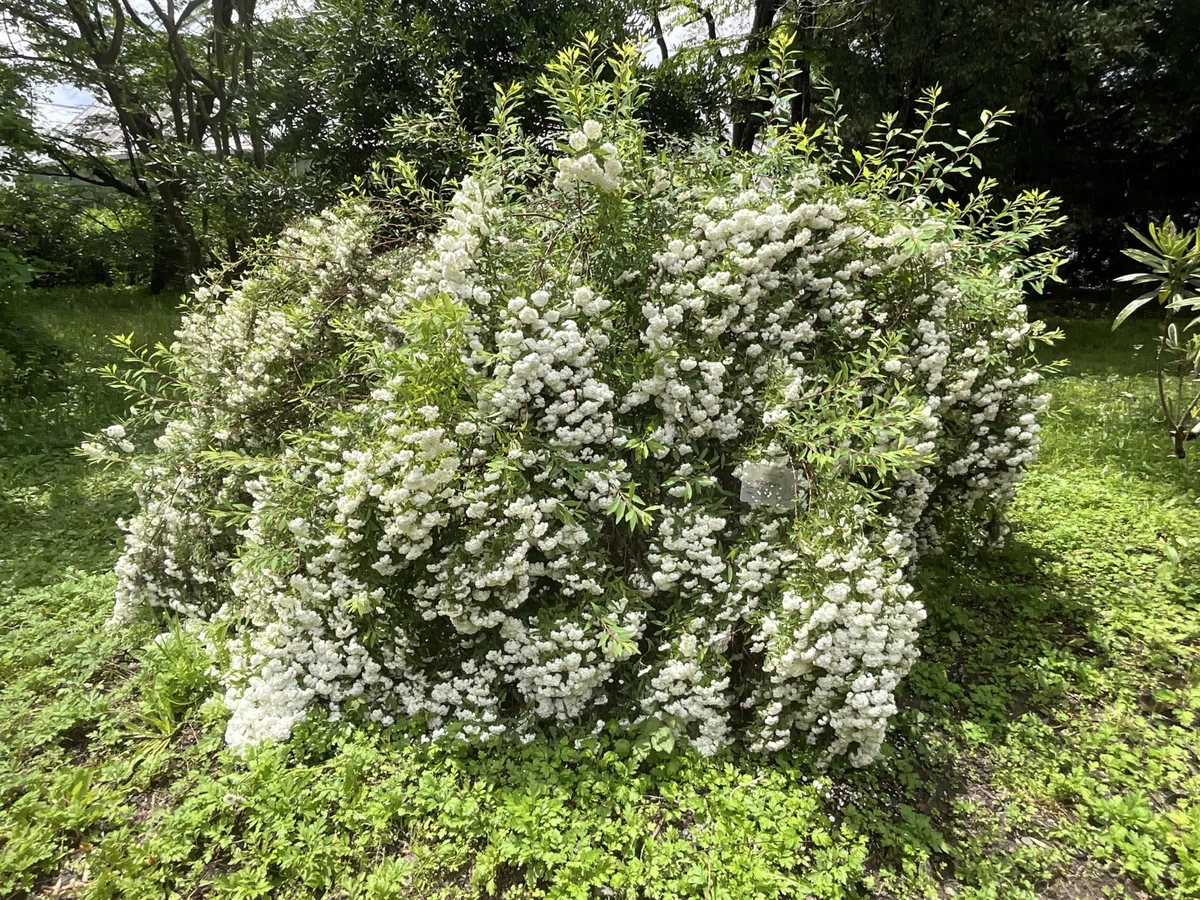
バラ科,中国原産(原種に基づく園芸形質)
京都府立植物園
2026年5月1日,筆者撮影
©️Hideaki FUJII
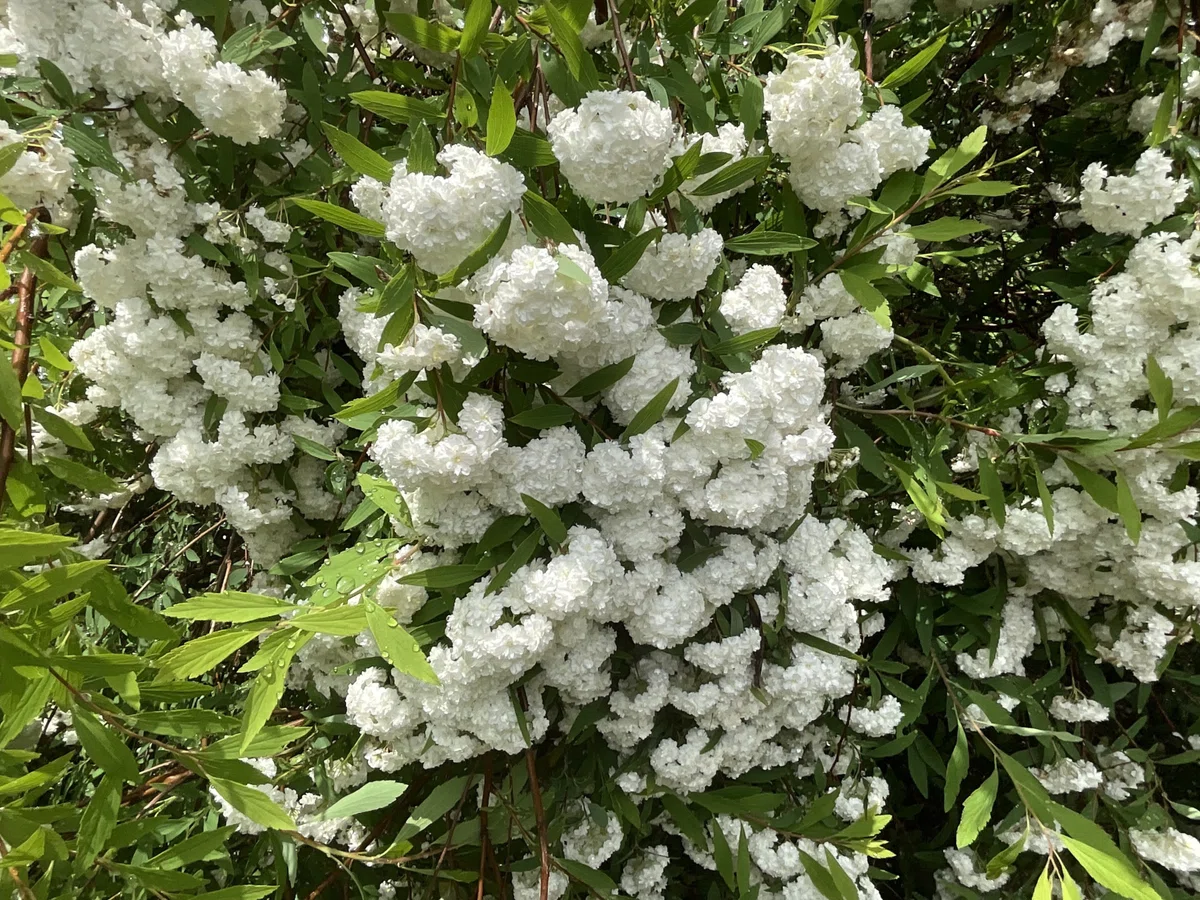
バラ科,中国原産(原種に基づく園芸形質)
京都府立植物園
2026年5月1日,筆者撮影
©️Hideaki FUJII
バラ科,中国原産(原種に基づく園芸形質)
京都府立植物園
2026年5月1日,筆者撮影
©️Hideaki FUJII
バラ科,中国原産(原種に基づく園芸形質)
京都府立植物園
2026年5月1日,筆者撮影
©️Hideaki FUJII
バラ科,中国原産(原種に基づく園芸形質)
京都府立植物園
2026年5月1日,筆者撮影
©️Hideaki FUJII
バラ科,中国原産(原種に基づく園芸形質)
京都府立植物園
2026年5月1日,筆者撮影
©️Hideaki FUJII
Yae‑kodemari (Kyoto Botanical Gardens): Monday, May 4, 2026
Abstract
On May 1, 2026, I observed Yae‑kodemari (Spiraea cantoniensis Lour. f. plena (Koidz.) Okuyama) planted at Kyoto Botanical Gardens. The purpose of this record is not to introduce this plant simply as a garden shrub that bears abundant white flowers in spring, but to examine how the horticultural trait of double flowering—established through the petalization of stamens—the visual mass produced by aggregated white inflorescences, and the presentation of the plant within a botanical garden space structured as an institutionalized landscape rather than a reproduction of natural vegetation together generate a particular distance from natural history. Using the structure of the inflorescences, the morphology of vegetative organs, and planting location as points of reference, this record documents the relationships among the plant, the exhibition space, and the act of observation.
Main Text
Kyoto Botanical Gardens as an institutional space
Kyoto Botanical Gardens is organized not solely as a place for the preservation or reproduction of natural vegetation, but as an institutional space that guides understanding of form and seasonality through ornamental plants. Many of the shrubs planted within the garden are selected not as elements that restore regional natural vegetation, but as means to visualize artificially controlled seasonality and rhythmic landscape composition. Yae‑kodemari, within this context, is repeatedly employed along pedestrian routes as an ornamental shrub with minimal symbolic load.
Date of observation and environmental conditions
The observation was conducted on May 1, 2026. Rain fell during the morning, and high atmospheric humidity persisted throughout that period. Around midday, intermittent sunlight appeared through breaks in the clouds, but weather conditions did not fully stabilize, and a light breeze continued to pass through the garden. As a result of the rainfall, moisture remained on the inflorescences and leaf surfaces, and under diffused light the white inflorescences tended to lose sharp contours and be perceived more as mass than as collections of individual flowers.
Direct observation of the exhibited plant
The observed individual is a deciduous shrub approximately 1.5 meters in height. The plant displays a multi‑stemmed form, with numerous slender branches that naturally arch outward as growth progresses. Leaves are arranged alternately, ranging from rhombic‑elliptic to lanceolate in shape, with serrations present on the upper half of the leaf margins. The abaxial leaf surfaces are slightly pale, retaining morphological traits common to the original species.
At the tips of branches, hemispherical corymbs are formed, densely packed with pure white florets. All florets are double‑flowered, with the stamens characteristic of the original species transformed into petals, making the internal floral structure difficult to discern at the level of individual flowers. As a result, the inflorescences appear not as aggregates of points, but as coherent white masses within the visual field.
Botanical context and explicit uncertainty
Yae‑kodemari represents the double‑flowered form of Kodemari (Spiraea cantoniensis), a deciduous shrub belonging to the genus Spiraea in the family Rosaceae. The original species is native to China and is distributed along forest edges and in open woodlands; however, the form f. plena observed here is a horticultural variant in which reproductive function has been reduced through the petalization of stamens and thus possesses little capacity for renewal under natural conditions.
While insect visitation and fruiting have been confirmed for the original species, neither pollination nor fruit set was observed for this individual. Accordingly, this record proceeds from the premise that the plant is maintained as a horticultural form and does not attempt to infer ecological recovery or natural regeneration.
Inflorescences as a mass of whiteness
The flowers of Yae‑kodemari are perceived not through individual floral forms or internal structures, but through whiteness as an aggregate. The dense accumulation of petals amplified by the petalization of reproductive organs causes the inflorescences to occupy the visual field as surfaces or masses rather than as lines or points. Under moist conditions following rainfall, contact between petals blurs boundaries further, allowing whiteness to emerge with greater visual mass. This mass of white does not persist over extended periods, but functions as a seasonal marker that is visually consumed within a short peak phase.
Exhibition intent and human activity
Yae‑kodemari is positioned not as a component of natural vegetation, but as a device for indicating seasonal arrival within a human‑controlled landscape. The suppression of reproductive function through double flowering increases the distance from natural historical continuity while simultaneously securing horticultural rationality by guaranteeing stable floral display. Its presence quietly demonstrates that a botanical garden is both a site for conserving nature and a place that reveals processes through which humans have selected and edited nature.
The emergence of values
Botanical value lies in the opportunity to observe, through the form of double flowering, the boundary between natural traits and horticultural traits. Cultural value is found in the very fact that a flowering shrub with minimal symbolic meaning has been repeatedly deployed within public spaces. Economic value, supported by ease of propagation and distribution, exists but is not foregrounded in this exhibition. Environmental resource value resides not in the preservation of naturalness, but in the visualization of seasonality under human control.
Reflection on the act of observation
Standing before Yae‑kodemari, the observer receives the white mass as a whole rather than reading individual flowers. At that moment, observation becomes an act closer to passage than to analysis. This record offers no conclusion. Instead, it remains as a note toward future observation, premised on revisiting the branching structure and leaf arrangement that emerge after the flowering period has passed, and on recording only the transient structure created by double white blossoms placed within an institutional space.
いいなと思ったら応援しよう!
 よろしければご応援をお願いします! いただいたチップはクリエイターとしての活動費に使わせていただきます!