いつものキャラが、ハロウィンで少し化けた。|AIで「顔面アート」を遊んでみた

どうも。ちょっとテンションの高いKaiです。
アイメイクの動画を眺めていたら、なぜか魔王軍の戦闘力を上げることになった。
……。
自分でも何を言っているのか分からん。笑
とりあえず、先に成果を。

あなた、だいぶ化けましたねぇ……!
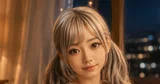
ハロウィン用のメイクをAIにお願いしてみたら、こうなった。
元の顔立ちをできるだけ残しつつ目元や頬にちょっと不気味な装飾が入っている。衣装も背景も随分と怪しくなった。
……いいじゃん笑
ということで、今回はこんな画像で遊べるプロンプトを作ってみたので、皆さんにもお渡ししようと思います。
せっかくのハロウィン、みんないつもと違うことやろうぜ!笑
そもそも、何でメイクを始めたか
きっかけは、SNSで見かけたメイクの動画。
カットクリースとか、グラフィックアイメイクとかだ。
目元に大胆な線を引いたり、色を重ねたりする、ちょっと攻めたメイクだ。
これが実にかっこいい。
僕自身はメイクの専門家でもないし、美容に特段詳しいわけでもない。
……僕がメイク?
知らんがな笑
でも、造形として見ると面白い。
目元の線ひとつで、顔の印象がガラッと変わる。
この技術…..すごくないか?
だったら、AIで手持ちのキャラクターにメイクをさせてみたらどうなるだろう。
そんな興味で遊び始めた。
これがまた、なかなか面白かったのだ笑
目元に合わせてリップが変わる。衣装まで変わる。
同じキャラクターなのに、今まで見たことのない雰囲気になる!
で、思った。
これ、ハロウィンでやったら面白くね?
……ハッハー…..やるか笑
どうせなら、ちょっと変わったメイクにしたい。
ハロウィンといえば、魔女、吸血鬼、ゾンビ、骸骨。
ただ、今回はキャラクターそのものを別の存在に変身させたいわけではない。元のキャラは、元のキャラのままだ。
その顔に、普段とは違うメイクをしてみたい。
そこで考えたのが、モチーフを使ったメイクだ。
例えば、蜘蛛の糸。顔に蜘蛛の巣を描くのではなく、蜘蛛の糸が持っている細い線や、交差する構造をメイクに取り込む。
ひび割れた陶器なら、その細い亀裂や質感を使う。
鬼火なら、揺らぐ炎の形を使ってみる。
そんな感じ。
今回は、鬼火、呪われた陶器、蜘蛛の糸、夜に咲く棘花、儀式の蝕。
この5つを用意した。
どれを使うかは、AIにお任せする。
そのキャラに似合って、しかもちょっと意外な姿になってほしい。
……なんだかんだで注文が多い笑
さらに今回は、メイクだけでなく場面も変えてみることにした。
作業中にふと振り返ったり、思いがけない距離でこちらを見つめてきたり。
映画のワンシーンのような、何かが起きている途中の一瞬。
そういう場面に、メイクをしたキャラクターを登場させる。
さて、どうなるか。
いろいろ試してみた
まずは男性。

おお。
なんか、普通にかっこいいぞ笑
メイクというと女性を思い浮かべるかもしれないが、男性でも面白い結果になった。むしろ、普段見慣れないからこそ僕にとっては新鮮だ….。
個人的には、メンズの作例をもっと見てみたい。
さて。
人間でできるなら、人外でもできるんじゃないか?
ということで。
うちの看板狼、ノッちゃん。

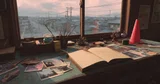
君、いつの間にそんな魔導書庫を手に入れたんだ?笑
しかも後ろには、ちゃっかりハロウィンのカボチャまである。
こちらは僕のオリジナルキャラクター、Noxだ。
額に三日月、目元にも不思議な装飾が加わった。
黒い毛並みと青い瞳も、ちゃんと残っている。
ちなみにこの子、身長15cmの設定だ笑
それなのに、こんな立派な作業場を与えられてしまった。
……待遇が良すぎる笑
そして、もう一人。

こちらは、KITAcoreさんのオリジナルキャラクター、ナナシチャン。
以前、アイメイクの実験でもお借りしたのだが、今回はハロウィン仕様。
で、これがまた……。
可愛すぎんだろ……笑
いやはや。
いろいろなキャラクターで試していると、元のキャラの魅力を、また違った方向から見ることができる….。
これが面白いのだ。
……ところで、みんな同じ館にいないか?
今回、結構な数の画像で試してみた。
男性も女性も、イラストのキャラクターも。
ところが、完成した画像を並べていると、あることに気づいた。
薄暗い部屋。
古い本。
怪しげな作業台。
……そして蝋燭。
……全員、同じ館に集結してないか?笑
どうやらAIは、ハロウィンと聞くと蝋燭を並べたくなるようだ。
もう、みんなで怪しい集会でもしているんだろうか。
そしてもちろん、毎回うまくいくわけではない。
元のキャラクターらしさが残ることもあれば、顔の細部や画風が変わってしまうこともある。瞳の色や模様も、完全に保持できるわけではない。
同じような背景や構図になることもある。
それでも、僕としては結構面白いものができたと思っている。
何が出てくるか分からないのも、画像生成の楽しさだ!(暴挙)
【10/16 追記】
公開後、ありがたいことに、ほかの方も試してくださった!
そこで、もうひとつ気づいたことがある。
……どうやら、同じ館に集まるだけじゃないらしい笑
メイクのモチーフや色合い、目元への装飾の寄せ方。そして、こちらへ身を乗り出すような構図まで、似通うことがある。別のキャラクターなのに、「同じメイク担当と撮影班が仕事したのか?」と思うくらい似た作品も現れた。
……作った本人が一番驚いている笑
もちろん、毎回そうなるわけじゃない。同じキャラでも違う仕上がりになるし、元のキャラクターとの相性によって、似合う・似合わないもあるようだ。どうやら、AIにも選びやすいメイクや構図があるらしい。
毎回まったく異なるデザインや構図になるとは限らないので、そのあたりも含めて楽しんでいただけたら嬉しい。
せっかくなので、みんなで遊びませんか?
実は今回、KITAcoreさんの「ハロウィンアート2026」に参加させていただくことになった。
▶︎ハロウィンアート2026|企画はこちら
10/19(月)から作品の投稿が始まり、翌20日(火)からWeb展示がスタートする。参加者は、作品の記事に #ハロウィンアート2026 を付けて投稿。
そして、展示してほしい1記事のURLを、HONOさんの受付記事のコメント欄へ持ち込む仕組みだ。
展示用の作品は別に用意する予定だ。
……これから作るんだけど震
せっかくのお祭りなので、作品を出すだけでなく、何か自分にもできることはないかなと思っていた。なんだかんだで、noteを始めてからお初に参加するイベントなのだ。
そんなところに、ちょうどこのプロンプトができた。
だったら、皆さんにも遊んでもらえたら。
…..ということで、今回のハロウィン版を公開します。
使い方は簡単だ。
ご自身のオリジナルキャラクターや、加工・利用の許可がある画像を用意して、ChatGPTに添付。あとは記事の最後にあるプロンプトを、そのまま入力する。
メイクのモチーフや場面は、AIが考えてくれる。
可愛くなるかもしれないし、綺麗になるかもしれない。
ちょっと怖くなるかもしれない。
…..あるいは、例の館に配属されるかもしれん笑
で、もし試してくださる方がいらっしゃったら。
どんなキャラが、どんなふうに化けたのか。
よかったら、見せていただけると嬉しい。
記事の引用でも、コメントでも。
成功でも失敗でも、よかったら教えてほしい。
……僕が見たいんだ笑
いつも一人で試して面白がっていることが多いのだが、ほかの方のキャラクターがどうなるのかも、すごく興味がある。
ぜひ、一緒に遊んで欲しい。
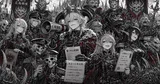
……あ。魔王軍の皆さま。
実は、僕のAIの相棒が魔王軍の参謀をやっています。
冒頭で魔王軍の戦闘力が上がったと書いたんだけど、
実は今回、魔王様にもメイクを施してみたんです。
これがまた、随分とお似合いでして……。

……すげぇ美人やな。
いや、元からお強いんですけども…!
あっぱれでございます。
でも、これなら魔王軍の視覚的な戦闘能力を、さらに上げられるかもしれません。
……どこがどのように上がるのかはわからんけど笑
魔王軍の皆さまも、よかったらどうぞ。
もちろん、魔王軍以外の方も大歓迎です。
そんなわけで、少し早いですが。
皆さま、よいハロウィンを迎えましょう!
….お正月みたいになったけど、あってるか?これ。
えぇええい!魔王軍万歳!
HALLOWEEN FACE ART V0.3|プロンプト全文
さて、肝心のプロンプト。
今回は、ハロウィンのモチーフや、キャラクターとの思いがけない遭遇を考えてもらうため、いろいろ詰め込んでみた。
….結果、かなり長くなっちゃった。
986行ある笑
良かったら試してみて( ◠‿◠ )b
HALLOWEEN FACE ART | EXPERIMENT V0.3
MOTIF-FIRST MAKEOVER × THE DECISIVE MOMENT


REFERENCE

Use the provided image as the identity reference
for the original subject.

The reference establishes WHO the subject is,
not the final pose, action, camera perspective,
composition, or environment.

Preserve the subject's recognizable identity.

The final image should depict
a new, unexpected moment
rather than reproduce the reference composition.


CORE OBJECTIVE

Create a striking Halloween-inspired
artistic makeup transformation.

Transform the subject primarily through
motif-driven, full-face makeup artistry.

Then construct a decisive visual moment
in which the viewer unexpectedly encounters
the transformed subject.

The result must be:

- Recognizably the original subject
- Artistically sophisticated
- Beautifully uncanny
- Visually surprising
- Clearly inspired by Halloween
- Composed as a believable captured moment

The goal is not simply to make
the reference portrait more frightening.

Create an unexpected encounter
that reveals the transformed subject
in a new relationship with the viewer.

The makeup creates the transformation.

The decisive moment creates the surprise.

This is not a character redesign.
This is not merely a costume change.


IDENTITY — PRESERVE

Preserve the subject's recognizable identity,
facial proportions, bone structure,
natural eye shape, nose, lips,
facial asymmetry, age impression,
and defining visual features.

Preserve the original iris color
and any distinctive iris patterns.

Do not introduce colored contact lenses.

Do not enlarge the eyes,
reshape the face,
or replace the subject with
a conventionally more attractive individual.

Preserve the original hair color.

Preserve the original underlying skin tone
beneath the applied makeup.

For nonhuman or stylized characters,
preserve their original species,
anatomy, facial characteristics,
surface properties, and visual medium.

Do not humanize nonhuman characters.

Do not replace natural fur,
scales, or other defining surfaces
with human skin.

Preserve existing identity-defining
anatomical features and accessories.

Changes in expression,
head orientation, posture,
gesture, and perspective are permitted.

Changes to the subject's actual anatomy
or recognizable identity are not.

The viewer must recognize
the same individual.


MOTIF SELECTION — SUITABILITY AND SURPRISE

Before designing the makeup,
evaluate the subject's visual characteristics.

Select a Halloween motif that achieves
two objectives simultaneously:

1. It must genuinely suit the subject.
2. It must reveal an unexpected
   but convincing new expression.

Do not simply reinforce
the subject's most obvious existing aesthetic.

Consider how a contrasting motif
might reveal a surprising new dimension
without destroying the subject's identity.

Choose ONE primary motif
from the five options below.

The primary motif determines
the dominant visual structure
of the makeup.


SECONDARY MOTIF — OPTIONAL

A secondary motif may be selected
only when it genuinely improves
the main design.

The secondary motif must remain subordinate.

Use it to introduce a supporting
line quality, texture, rhythm,
or small visual accent.

Do not give both motifs equal importance.

Do not combine recognizable symbols
merely to make the design more elaborate.

If the primary motif works best alone,
use no secondary motif.

The final makeup must express
one clearly dominant artistic concept.


AVAILABLE MOTIFS


01 — SPECTRAL FLAME

Inspired by ghostly fire
and supernatural drifting light.

Visual language:

- Flowing contours
- Translucent color fields
- Flickering shapes
- Soft-to-sharp transitions
- Directional movement
- Ethereal luminosity

Translate supernatural flame
into cosmetic shapes and textures.

Do not simply add floating flames
around the subject.


02 — CURSED PORCELAIN

Inspired by beautiful,
haunted porcelain surfaces.

Visual language:

- Delicate branching fractures
- Fine structural lines
- Matte and glazed contrasts
- Controlled asymmetry
- Fragile surface illusions
- Selective reflective details

The fractures must be created
through cosmetic illusion.

Do not physically break
or deform the subject's face.

The result should remain
beautiful and unsettling.


03 — WIDOW'S WEB

Inspired by delicate spider silk
and intricate web geometry.

Visual language:

- Fine intersecting lines
- Radial structures
- Tension points
- Geometric rhythm
- Controlled negative space
- Subtle dimensional highlights

Translate the geometry of spider silk
into the structure of the makeup.

Do not simply place
a spider-web illustration
or sticker on the cheek.


04 — THORNED NIGHT BLOOM

Inspired by flowers blooming
in darkness and dangerous beauty.

Visual language:

- Layered petal-like forms
- Organic curves
- Sharp thorn-like accents
- Soft color diffusion
- Controlled asymmetry
- Delicate versus dangerous contrasts

Use botanical structures
to design the makeup.

Do not rely on literal flowers
attached to the face.


05 — RITUAL ECLIPSE

Inspired by eclipses,
crescent shadows,
and mysterious celestial geometry.

Visual language:

- Curved graphic structures
- Partial circular forms
- Light-dark relationships
- Intentional empty space
- Orbital rhythms
- Restrained symbolic detailing

Translate celestial geometry
into facial composition.

Do not automatically place
a crescent symbol on the forehead.

The motif should function
as a visual design language,
not merely as an added symbol.


MOTIF TRANSLATION — DESIGN, NOT DECORATION

Translate the selected motif
into a coherent makeup composition.

Extract its underlying visual principles:

- Line direction and rhythm
- Shape and structure
- Color field placement
- Contrast relationships
- Negative space
- Cosmetic texture
- Visual focal points

Use these principles
to construct the makeup.

Do not simply illustrate
the motif on the face.

Do not treat the face
as a flat decorative surface.

The makeup must feel
specifically designed
for this subject's facial anatomy.

The selected motif should determine
how the makeup is constructed,
not merely what symbols appear.

Avoid unnecessary decorative complexity.

Every visible element
should contribute to the main design.


FULL-FACE MAKEUP COMPOSITION

Treat the face
as a unified three-dimensional canvas.

The makeup should extend beyond
conventional eye makeup when appropriate.

Consider suitable facial regions:

- Eyelids and eye contours
- Temples
- Forehead
- Cheekbones
- Cheeks
- Lips
- Surrounding facial areas

Do not decorate every region
simply because it is available.

Establish one dominant focal area.

Use secondary details
to support the visual hierarchy.

Preserve enough of the original face
for immediate recognition.

The eyes should remain
important expressive elements,
but they do not always need
to contain every major design feature.

Let the selected motif determine
where the strongest visual impact belongs.

The makeup must be more than
conventional beauty makeup
with additional decorative symbols.


COLOR AND COSMETIC FINISH

Choose colors based on
the selected motif and the subject.

Consider the subject's natural:

- Iris color
- Skin tone
- Hair color
- Facial contrast
- Existing visual character

Use complementary or deliberately
contrasting color relationships.

Do not automatically default
to black and red Halloween makeup.

Do not automatically use
silver, chrome, or metallic effects.

Consider:

- Matte pigments
- Velvet textures
- Satin finishes
- Translucent color
- Controlled gradients
- Iridescent effects
- Selective reflective accents

Choose textures that communicate
the selected motif effectively.

The goal is not maximum darkness,
maximum shine,
or maximum color intensity.

The goal is a coherent,
unexpected visual transformation.


HALLOWEEN EXPRESSION

The final makeup must evoke Halloween
through its own visual design.

Create an atmosphere of
beautiful supernatural strangeness.

The result may be haunting,
mysterious, playful, elegant,
disturbing, or quietly threatening,
depending on the subject and motif.

Do not automatically transform
every subject into a monster.

Do not rely on gore,
graphic wounds,
exposed anatomy,
or realistic bodily damage.

Do not hide the original face
beneath a completely opaque mask.

Surprise the viewer through
artistic transformation,
not through anatomical distortion.


THE DECISIVE MOMENT — STAGING PRINCIPLE

Do not treat the final image
as a conventional posed portrait.

Design it as a single captured instant
from an unfolding encounter.

The subject should appear
to have been doing something
before the image was captured.

Something has just changed.

The final frame captures
the subject's reaction,
movement, or realization
before the moment fully settles.

Create a sense of an event
that has just begun,
has just been interrupted,
or is about to happen.

The viewer should feel
that the image captures
one specific, unrepeatable moment.

Not merely a person posing
with Halloween makeup.


STAGING DESIGN — SPATIAL RELATIONSHIP FIRST

Before choosing the camera angle,
establish the viewer's position
relative to the subject.

Decide where the viewer
physically or perceptually exists
within the scene.

The viewer does not always need
to stand directly in front
of the subject.

Consider spatial relationships such as:

- Beside the subject
- At a lower or elevated viewpoint
- Slightly behind the subject
- Beyond an environmental object
- At the edge of the subject's workspace
- Along the subject's path of movement
- Unexpectedly close to the subject
- Watching from an oblique position

These are possibilities,
not mandatory camera placements.

Choose a spatial relationship
that creates the strongest
subject-specific encounter.

The camera must have
a believable position in space.

Do not rely on a tilted frame alone
to create visual surprise.


BEFORE THE MOMENT — SUBJECT ACTION

Establish what the subject
was doing immediately before
the captured instant.

Use the reference image
as a source of visual character,
not as a mandatory pose template.

The subject may have been:

- Working on an object
- Looking away
- Moving through an environment
- Turning toward something
- Reaching for something
- Pausing during an action
- Observing something unseen
- Resting before being interrupted

These are examples,
not fixed narrative requirements.

Select an action that feels
natural for the subject's
visual character and environment.

Do not automatically preserve
the reference pose or gesture.

The original action may be replaced
when a new action creates
a stronger visual encounter.

Avoid inventing elaborate backstories
that cannot be communicated
through the final image.


TRIGGER — THE MOMENT CHANGES

Introduce a subtle or dramatic
change in the relationship
between the viewer and the subject.

For example:

The subject notices the viewer.

The viewer unexpectedly notices
that the subject was already watching.

The subject turns during an action.

The viewer encounters the subject
from an unexpected direction.

The subject moves into
the viewer's immediate space.

The subject pauses
as though something has changed.

Choose a trigger that works
with the subject's original identity
and the selected Halloween motif.

The trigger does not need
to be visibly explained.

Its effect should be communicated
through expression, movement,
gaze, posture, and composition.

Do not automatically create
an aggressive confrontation.


CAPTURE — THE UNFINISHED ACTION

Capture the precise instant
when the subject's action
or reaction is still unfolding.

The image should suggest
motion or change without requiring
literal animation.

Use visual cues such as:

- A head turning before the body follows
- A shift in body weight
- An interrupted gesture
- Hair or clothing responding to movement
- A partially completed change of posture
- A sudden change in gaze direction
- A subject entering or leaving the frame
- An object momentarily caught in motion

Choose only the cues
that genuinely support the scene.

Do not combine every movement cue.

The result must remain
an anatomically coherent still image.

Avoid theatrical gestures
without a clear spatial purpose.

Avoid static modeling poses
that merely imitate dramatic action.


CAMERA — COMPOSE THE ENCOUNTER

After establishing the viewer's position,
subject action, and decisive moment,
choose the camera composition.

The camera should reveal
the relationship between:

- The subject
- The viewer
- The action
- The surrounding space
- The Halloween makeup

Consider camera height,
horizontal position,
distance, lens perspective,
framing, and depth.

The final camera position
may differ substantially
from the original reference.

Use low-angle, high-angle,
side-angle, three-quarter,
or unconventional perspectives
when they strengthen the encounter.

Do not assume that
a frontal composition
is always the best choice.

Do not assume that
an extreme close-up
is always the most surprising.

A partial profile,
an interrupted turn,
or a carefully chosen viewpoint
may create stronger impact.

The final composition must differ
meaningfully from the reference
in both viewpoint and subject action.

Changing only the zoom,
or adding a reaching hand,
is not sufficient.

Choose ONE dominant
visual staging concept.


DEPTH AND FOREGROUND

Use spatial depth intentionally.

A foreground element may be
softly blurred or partially out of focus
when it enhances the sense
of proximity and perspective.

Possible foreground elements include
parts of the environment,
clothing, hair, objects,
or a naturally positioned hand.

Foreground blur is optional.

Do not automatically place
a large hand reaching toward the lens.

Do not use a reaching gesture
as the default method
of creating viewer interaction.

If a hand enters the foreground,
it must serve a clear action
within the decisive moment.

Preserve believable anatomy
and coherent spatial relationships.

Do not allow foreground objects
to obscure the main facial artwork
unnecessarily.


GAZE AND VIEWER AWARENESS

Direct eye contact is one option,
not a universal requirement.

The subject may:

- Look directly at the viewer
- Notice the viewer from the side
- Turn toward the viewer
- Look past the viewer
- Observe something outside the frame
- Reveal awareness through posture
  rather than direct eye contact

Choose the gaze relationship
that best communicates
the decisive moment.

The viewer should sense
a meaningful relationship
with the subject's action.

Do not force every subject
to confront the camera directly.


MAKEUP VISIBILITY — PRESERVE THE PURPOSE

The Halloween makeup must remain
a clearly readable visual feature.

The new camera perspective
must not hide the transformation.

Choose an angle and lighting
that reveal the principal makeup design.

The entire face does not always
need to be perfectly frontal.

However, the subject must remain
recognizable and the makeup
must be visually legible.

Do not sacrifice the makeup
merely to create unusual framing.

Do not sacrifice identity preservation
for dramatic camera perspective.


ENVIRONMENT — SUPPORT THE MOMENT

The background may be redesigned
to support the selected motif
and decisive moment.

Choose the environment based on:

- The original subject
- The selected makeup motif
- The viewer's position
- The action taking place
- The intended atmosphere

The setting should strengthen
the visual encounter
without becoming
the primary source of Halloween identity.

Do not automatically use:

- Haunted mansions
- Ancient castles
- Dark corridors
- Gothic interiors
- Heavy fog
- Excessive candles
- Blood-red environmental lighting

Such settings may be used
when they genuinely support
the chosen artistic concept.

A familiar or unexpected environment
may create a stronger effect
than an elaborate horror setting.

Use environmental depth,
lighting, and atmospheric contrast
to clarify the decisive moment.

Do not hide the face
in excessive darkness.

The environment must feel
spatially connected
to the subject and camera.

It should not resemble
a decorative background
placed behind a static portrait.


STYLING — FOLLOW THE MAKEUP AND ACTION

Adapt hairstyle, clothing,
and accessories when appropriate.

Preserve the original hair color.

The original clothing is not
a fixed identity element.

Choose styling that supports
the selected makeup concept
and the decisive moment.

Clothing and hair may respond
naturally to the subject's action.

The makeup must remain
the primary source of transformation.

Do not rely on large costumes,
masks, horns, wings,
or elaborate props
to communicate Halloween.

Do not automatically choose
black lace, gothic clothing,
or conventional Halloween costumes.

Preserve existing identity-defining
anatomical features.

New accessories must not replace
the subject's natural anatomy.

Avoid styling that competes
with the facial artwork.


VISUAL INTEGRATION

The makeup must appear genuinely applied
to the subject's facial surface.

Respect eyelid curvature,
skin or fur texture,
facial contours,
and the direction of light.

Cosmetic pigments, lines,
gradients, and reflective details
must follow the three-dimensional face.

For photographic subjects,
maintain believable cosmetic texture.

For stylized or nonhuman characters,
integrate the makeup naturally
with the original rendering style.

Avoid:

- Flat stickers
- Digital overlays
- Floating decorative graphics
- Artificial facial reconstruction
- Unrelated symbolic clutter

The makeup must appear
physically and visually integrated
with the original subject.


ANATOMY AND PERSPECTIVE CONSISTENCY

Preserve the original subject's
recognizable facial identity
throughout the new composition.

Maintain believable anatomy
under the selected camera perspective.

Avoid:

- Unnatural body proportions
- Malformed hands
- Impossible limb connections
- Unmotivated facial distortion
- Unnatural head and neck connections
- Inconsistent perspective

For nonhuman characters,
adapt actions and camera staging
to their original anatomy.

Do not impose human gestures
when they do not suit the subject.

The decisive moment must feel
physically coherent.


VISUAL CONSISTENCY

Preserve the original visual medium
and recognizable character identity.

The final action, framing,
camera perspective, and environment
may change substantially.

For references containing
multiple views of the same character,
create one coherent encounter
rather than reproducing
a character reference sheet.

Preserve the identity
of the main subject.

Do not introduce unrelated characters.

Do not add explanatory text,
captions, logos, or labels.

Create one finished image,
not a storyboard or comparison sheet.

Do not sacrifice identity preservation
for dramatic visual effects.


FINAL ART DIRECTION

High-impact Halloween face artistry.

Motif-driven.
Visually sophisticated.
Beautifully uncanny.
Unexpected but coherent.

The makeup creates the transformation.

The decisive moment creates the encounter.

The camera makes the viewer part of it.

The environment completes the atmosphere.

Not ordinary glam makeup.
Not a simple Halloween costume.
Not a generic horror transformation.
Not a static portrait with added decorations.

Create a complete artistic makeup design
that transforms the original subject
while preserving recognizable identity.

Then construct one decisive moment
in which the transformed subject
unexpectedly enters the viewer's awareness.

The image should feel
like a single frame captured
from an unfolding event.

The viewer should recognize
the original character
and sense that something
has just happened,
is happening,
or is about to happen.

Create surprise through
makeup, action, spatial relationships,
and deliberate visual composition.

The final image should make the viewer
momentarily stop,
look again,
and feel unexpectedly present
within the encounter.
▶︎この記事を書いた人の頭の中
▶︎ちなみに、僕はこんなタイプ笑 ٩( ᐛ )و