秋葉原ぶらぶらスナップ

Wandering Through Akihabara with My Camera
※English version follows the Japanese text.
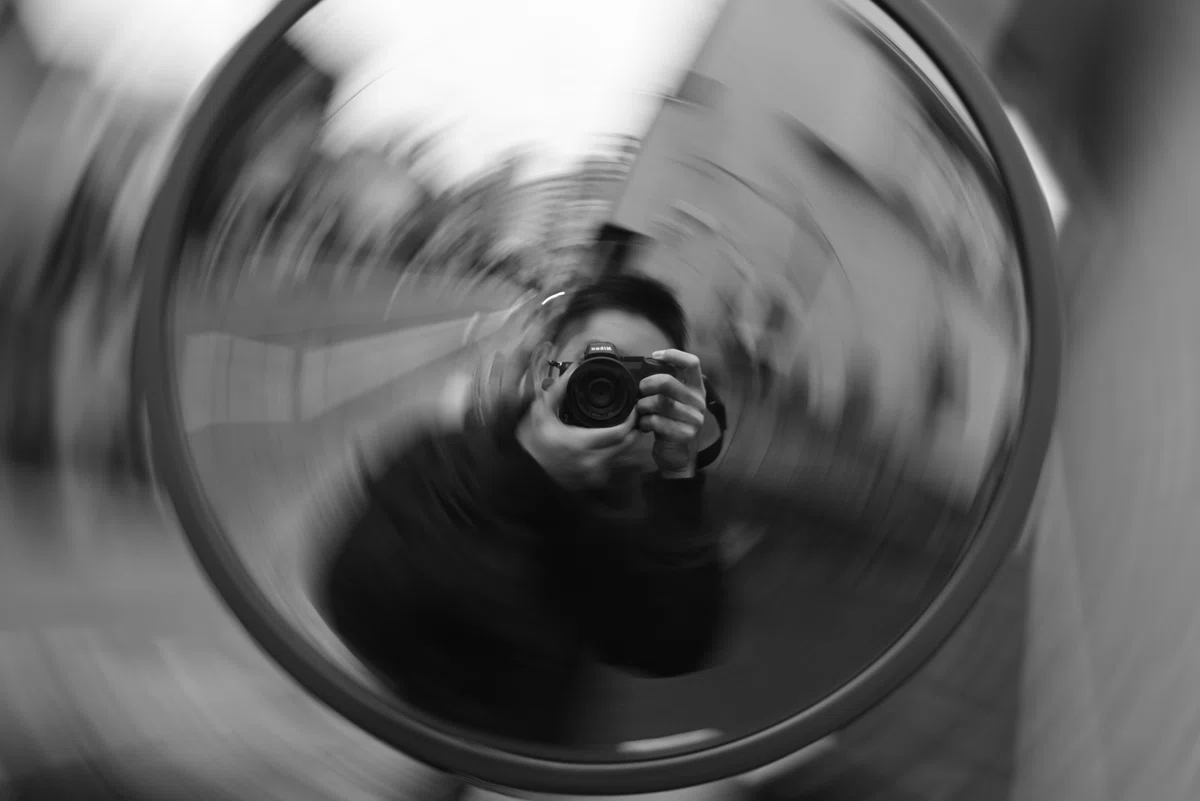
カメラを持って、秋葉原をぶらぶら歩くのが好き。
今年に入ってからの秋葉原スナップをまとめてみようと思った。
毎回、特に撮りたいものを決めていたわけではない。
目的地を決めず、気になった路地に入り、目の前に現れた景色にカメラを向ける。
そんな気ままなスナップ撮影だった。
秋葉原といえば、電気街やアニメ、ゲーム、たくさんの看板が並ぶ街というイメージが強い。
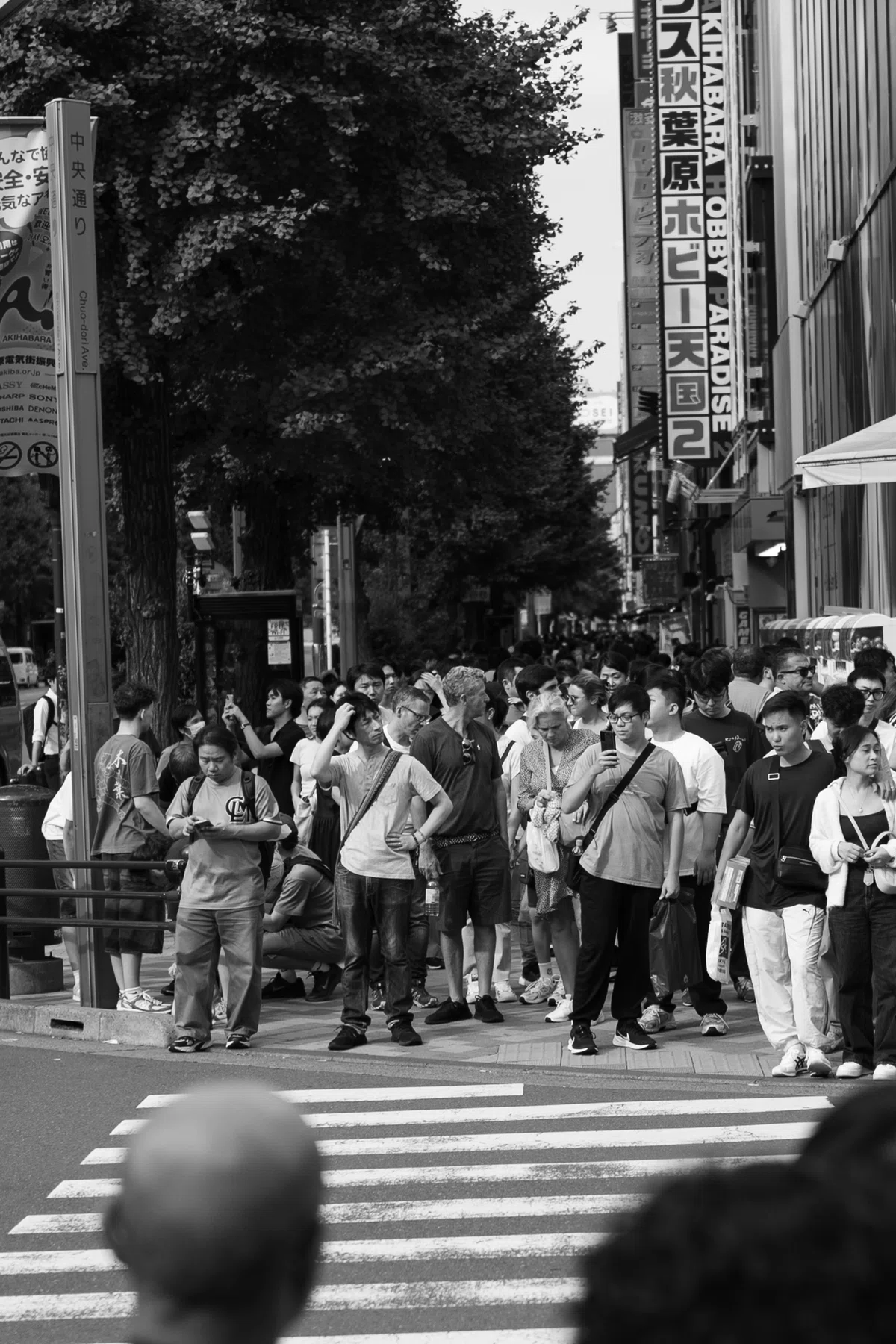
実際に歩いてみると、鮮やかな広告や商品が視界いっぱいに飛び込んでくる。
人通りも多く、同じ場所に立っていても、目の前の景色は数秒ごとに変わっていく。
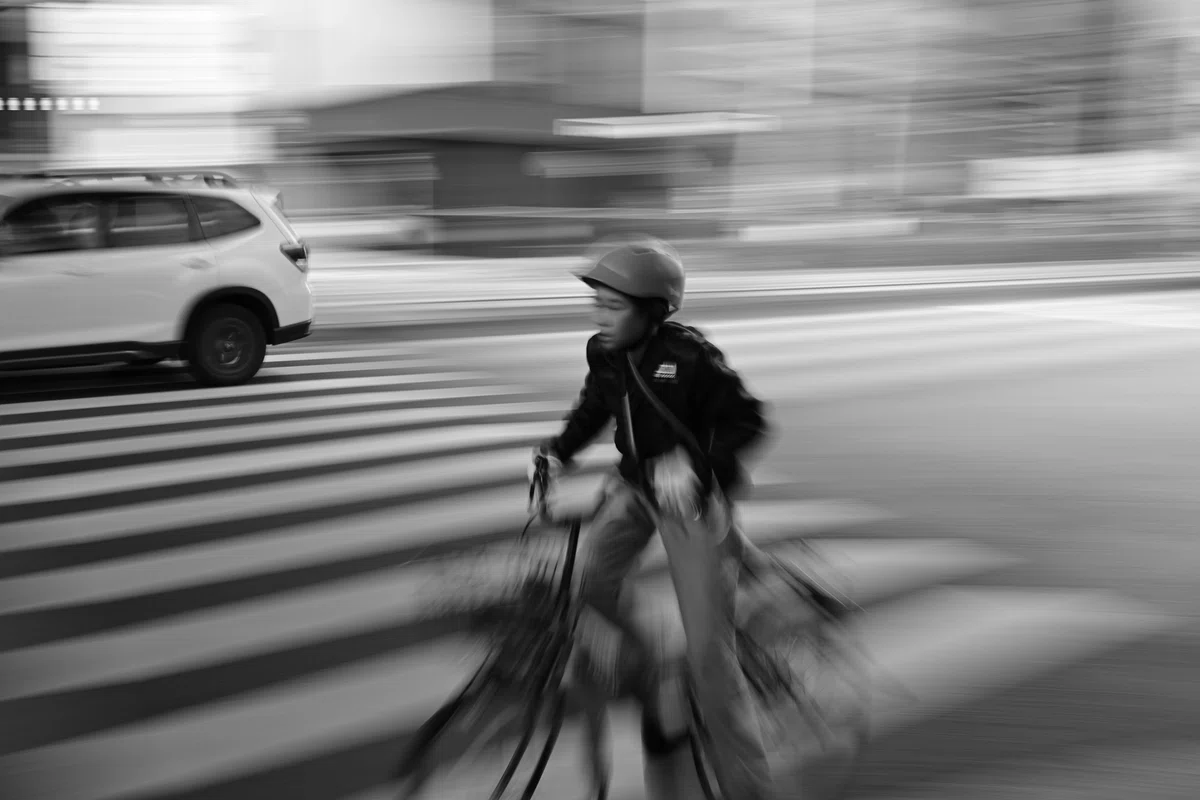
街のにぎやかさをそのまま残したくて、カラーで撮った写真もあれば、
色を抜くことで人の姿や光と影を際立たせたくなった写真もある。
歩きながら、そのとき目の前にある景色に合わせて、カラーとモノクロを使い分けた。
人が集まる大通りを少し離れると、秋葉原の印象も変わってくる。
建物の間に伸びる細い路地。
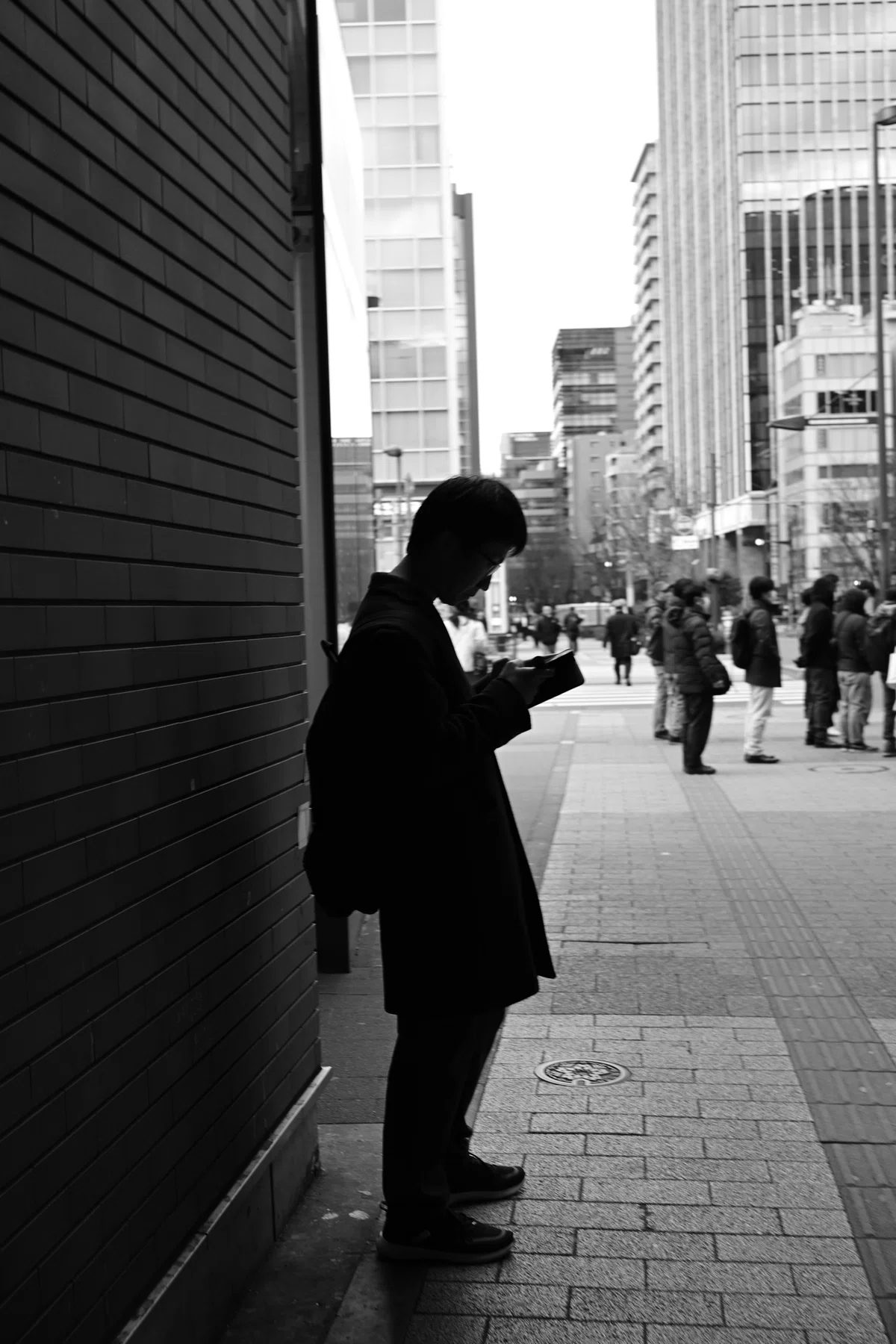
ひとりで歩く人。
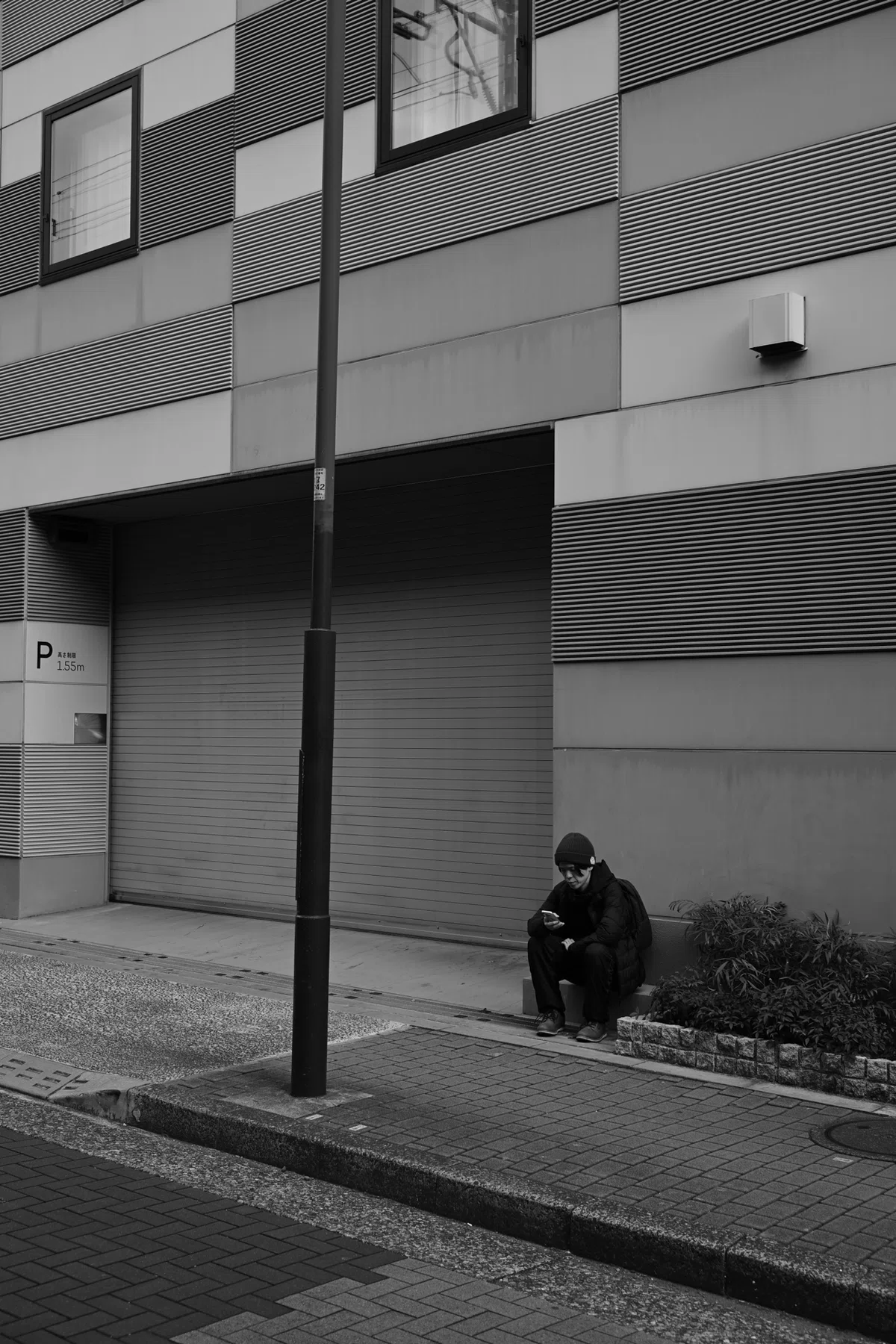
街角に腰を下ろし、少し疲れた様子で休んでいる人。
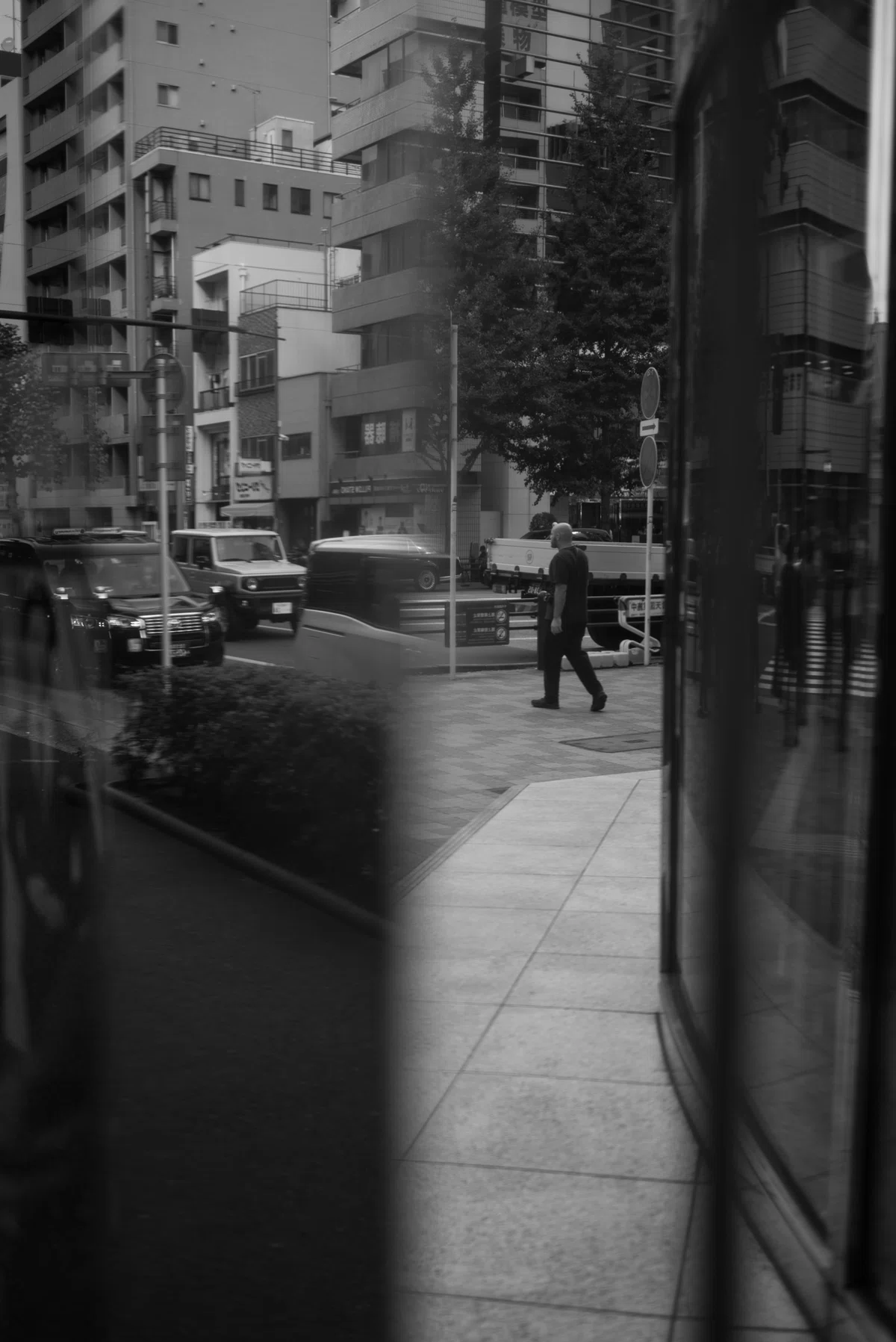
ガラスに映り込む街と、その向こうを通り過ぎる人。
名前も知らない誰かの、ほんの一瞬の日常。
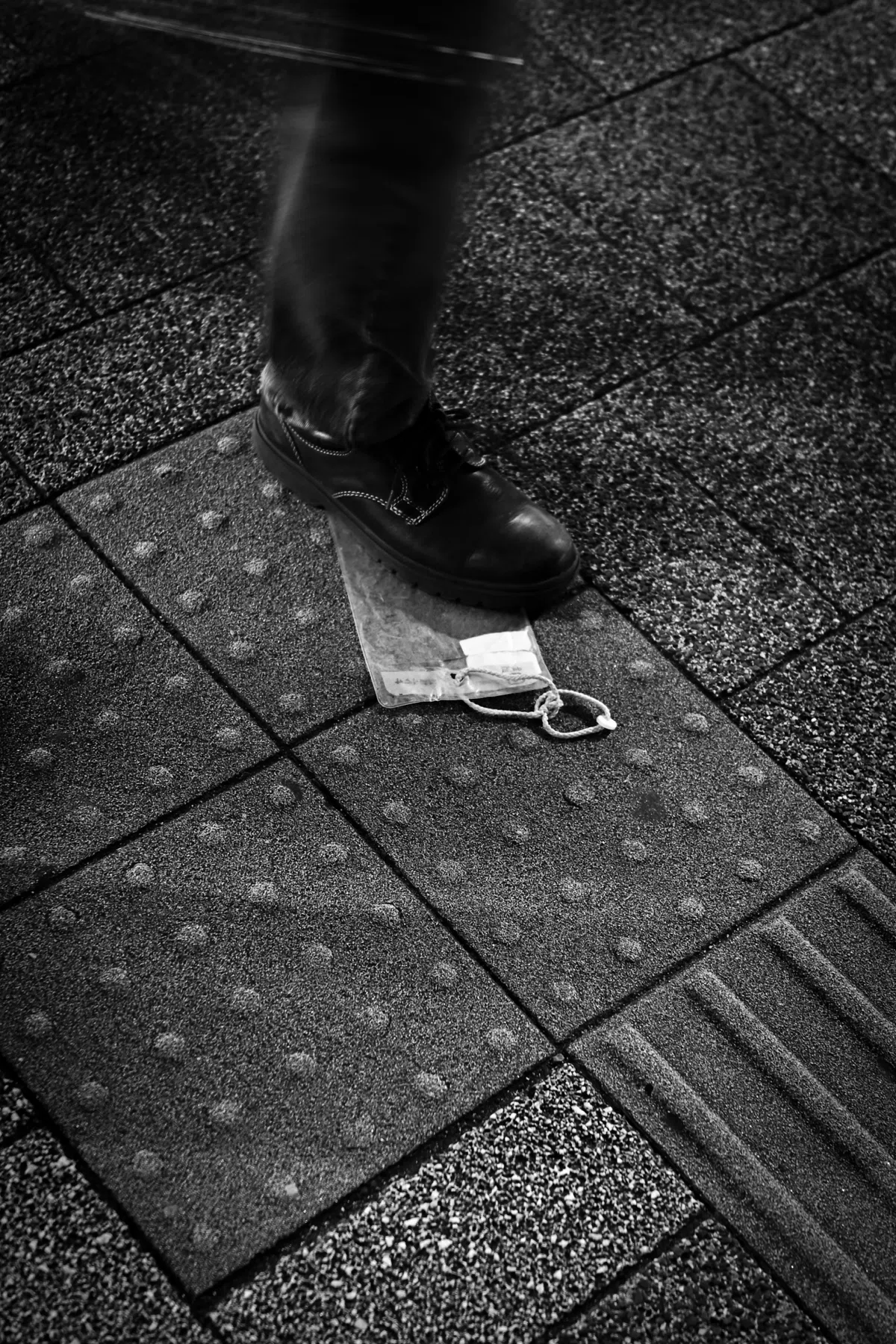
落とし物を見つけファインダーを覗きシャッターを切る瞬間、サラリーマンの方がそれを踏むというまさに偶然が生んだ1枚。
こういう瞬間があるからスナップはたまらない。
スナップ写真を撮っていると、普段なら見過ごしてしまうような場面が気になってくるもの。
光の差し方。
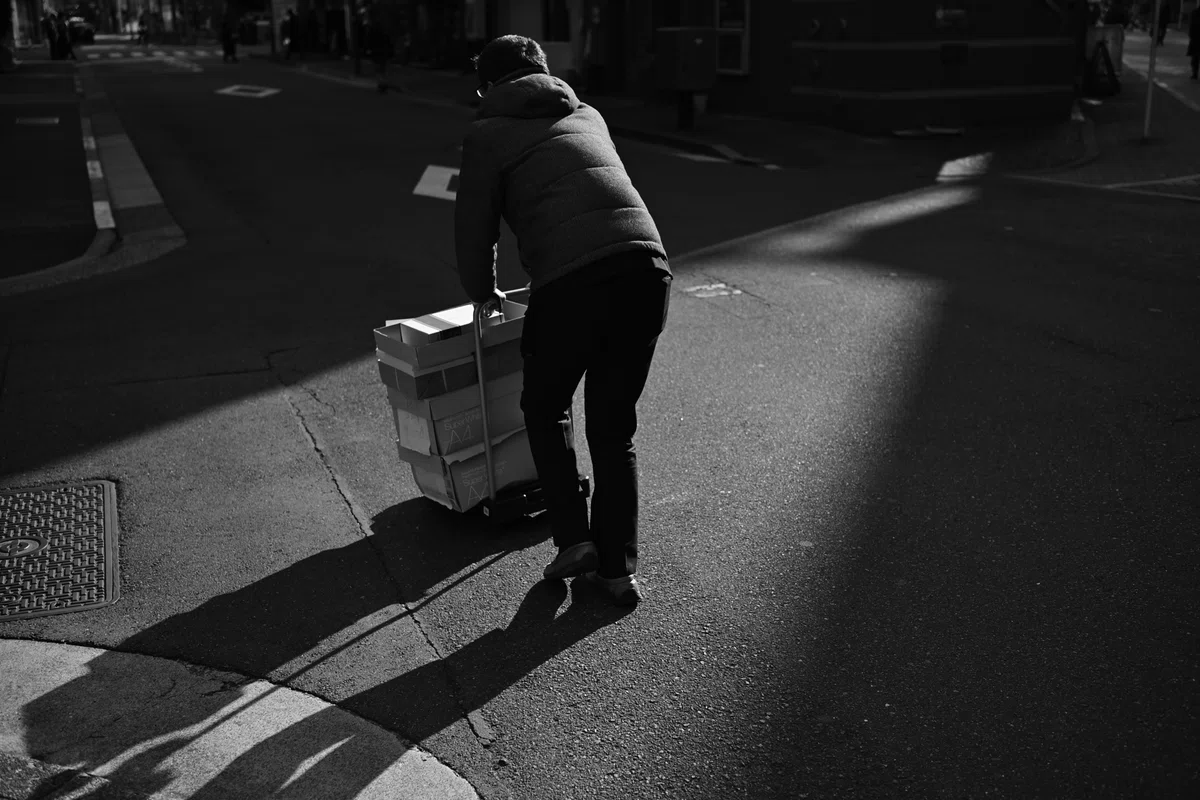
道に伸びる影。
建物と人との距離。
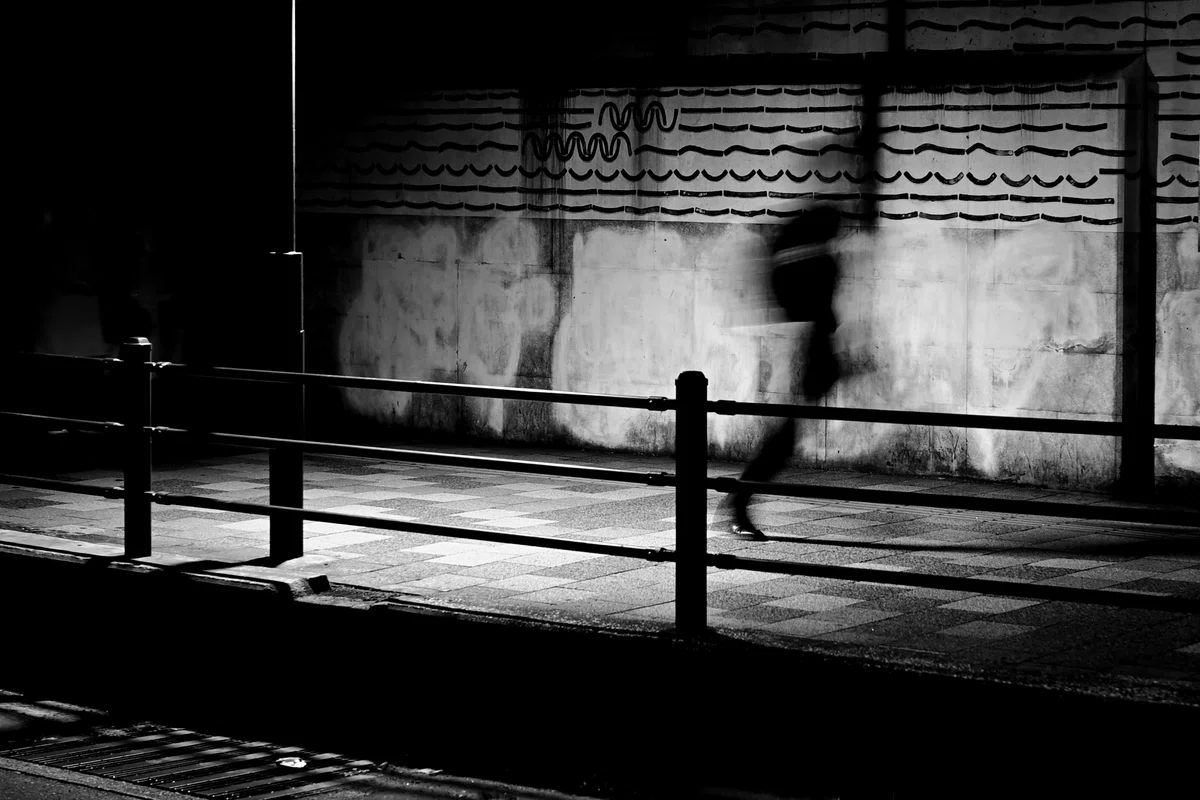
人混みの中で立ち止まる人と、その横をすり抜けていく人たち。
撮影を続けるうちに、秋葉原という街そのものよりも、そこにいる一人ひとりの姿へ自然と目が向くようになっていった。
カラフルに装飾された自動販売機も印象に残った。
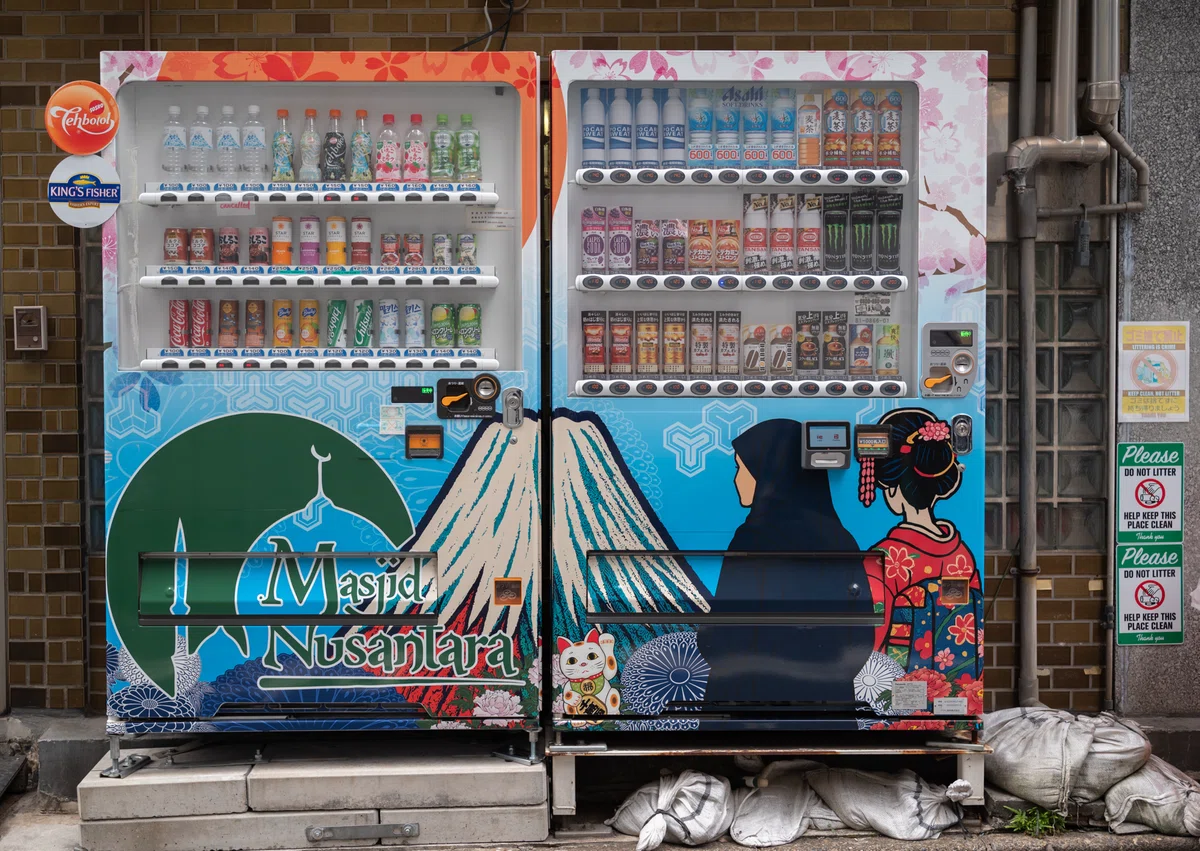
飲み物を買うための機械なのに、街角に置かれた大きな作品のようにも見えてくる。
日本らしいものと異なる文化が同じ画面に収まる光景も、この街を歩いていたからこそ出会えた瞬間だった。
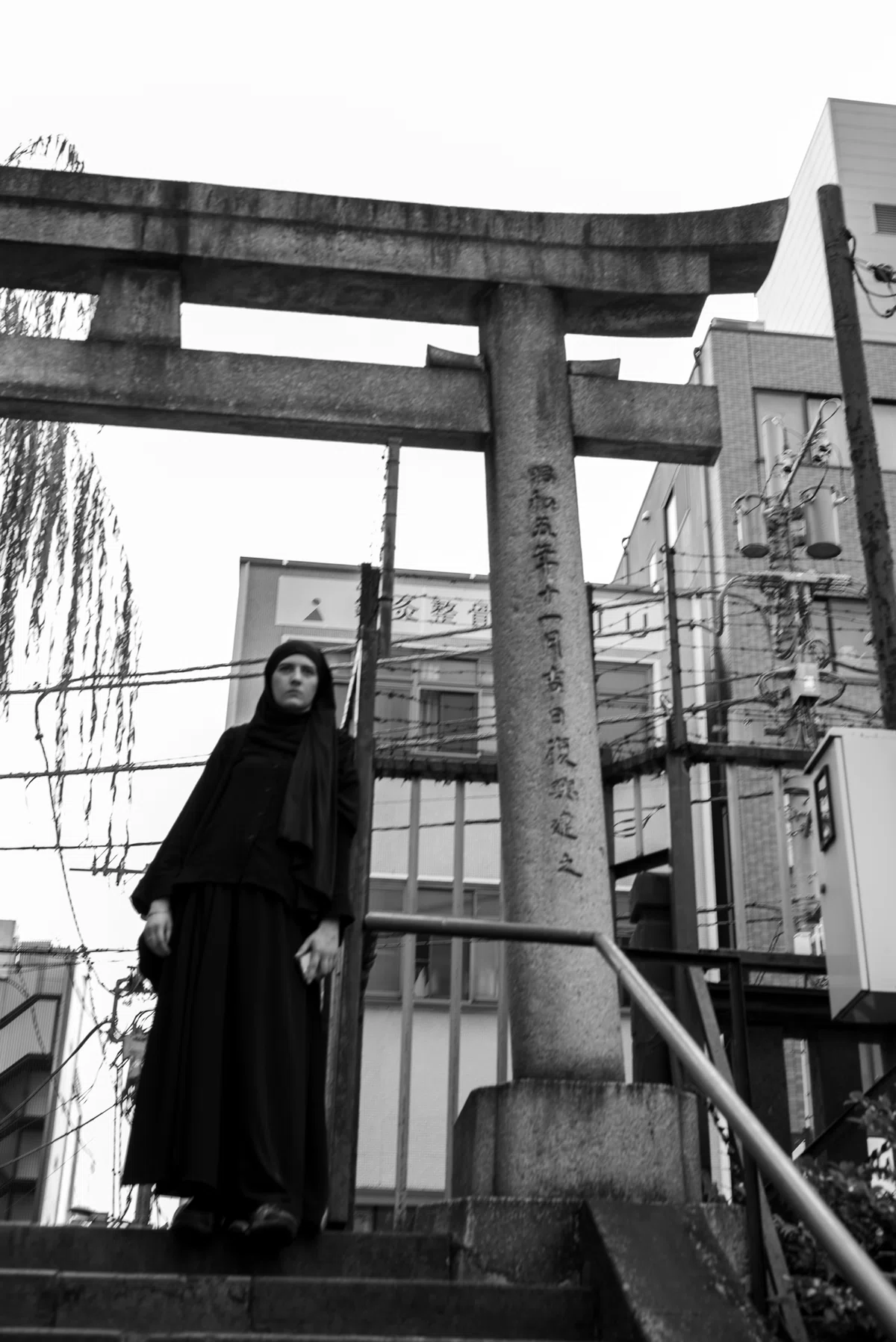
秋葉原には、たくさんの人と文化が集まっている。
そのにぎやかさの中には、派手な看板だけでなく、静かな時間も流れていた。
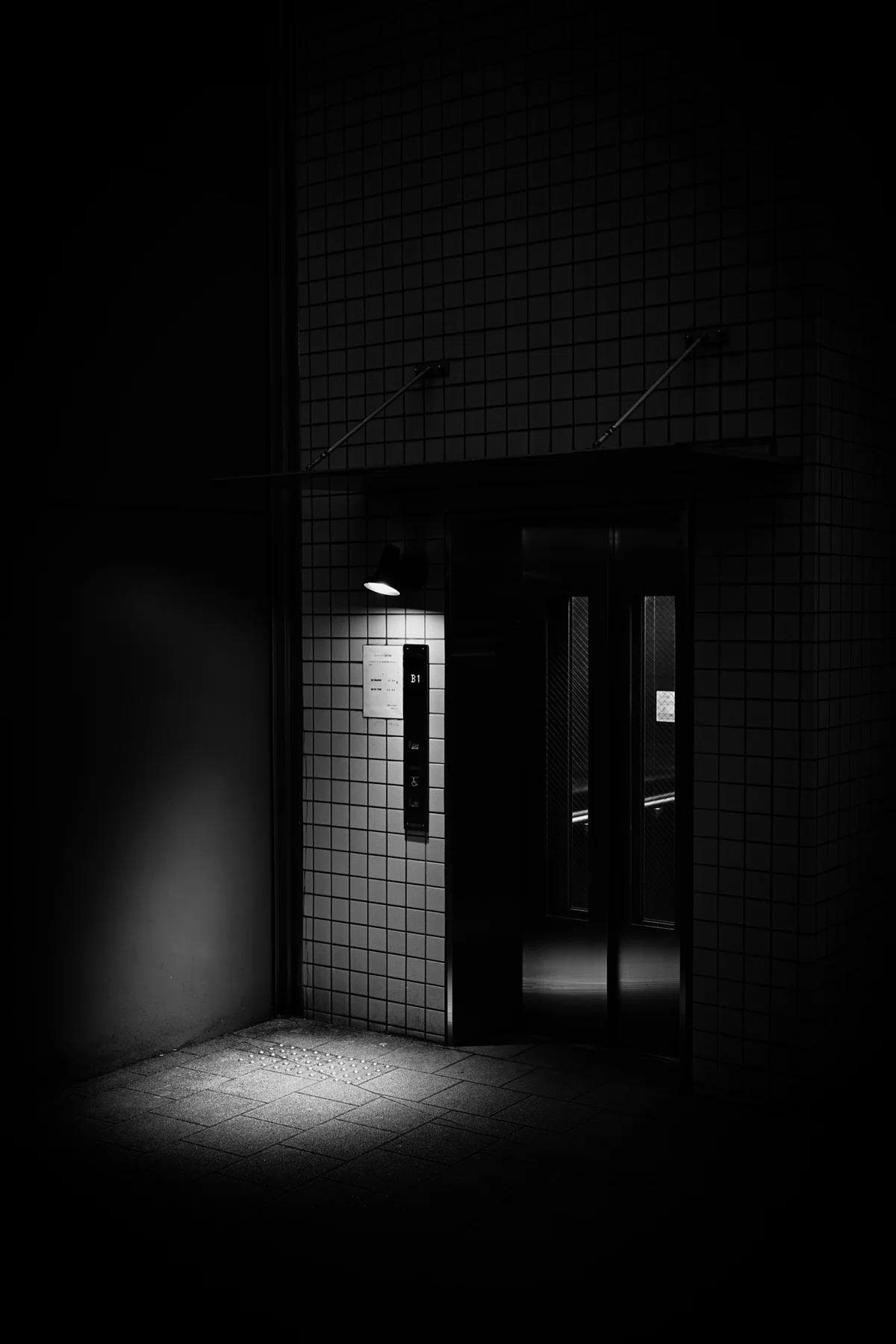
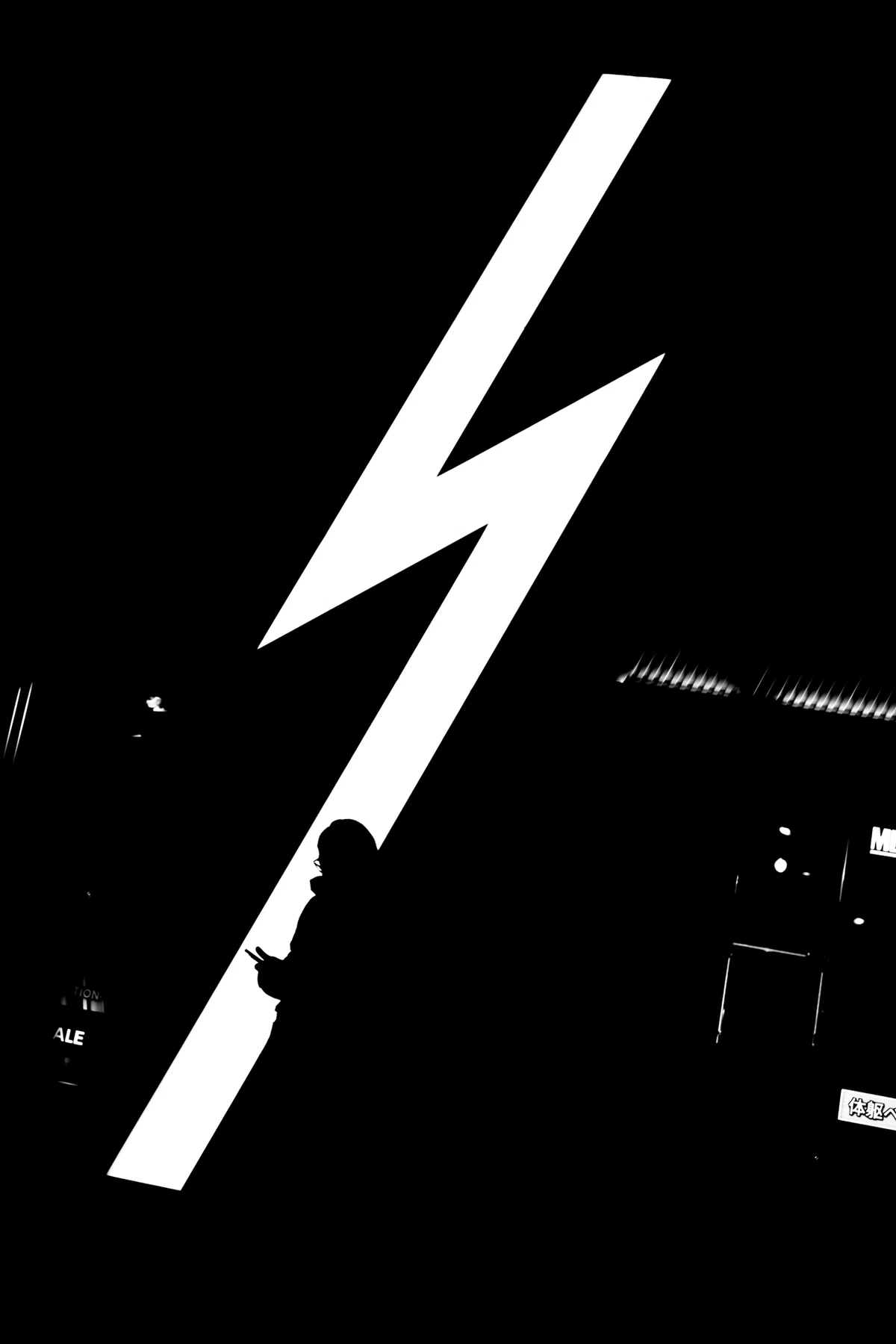
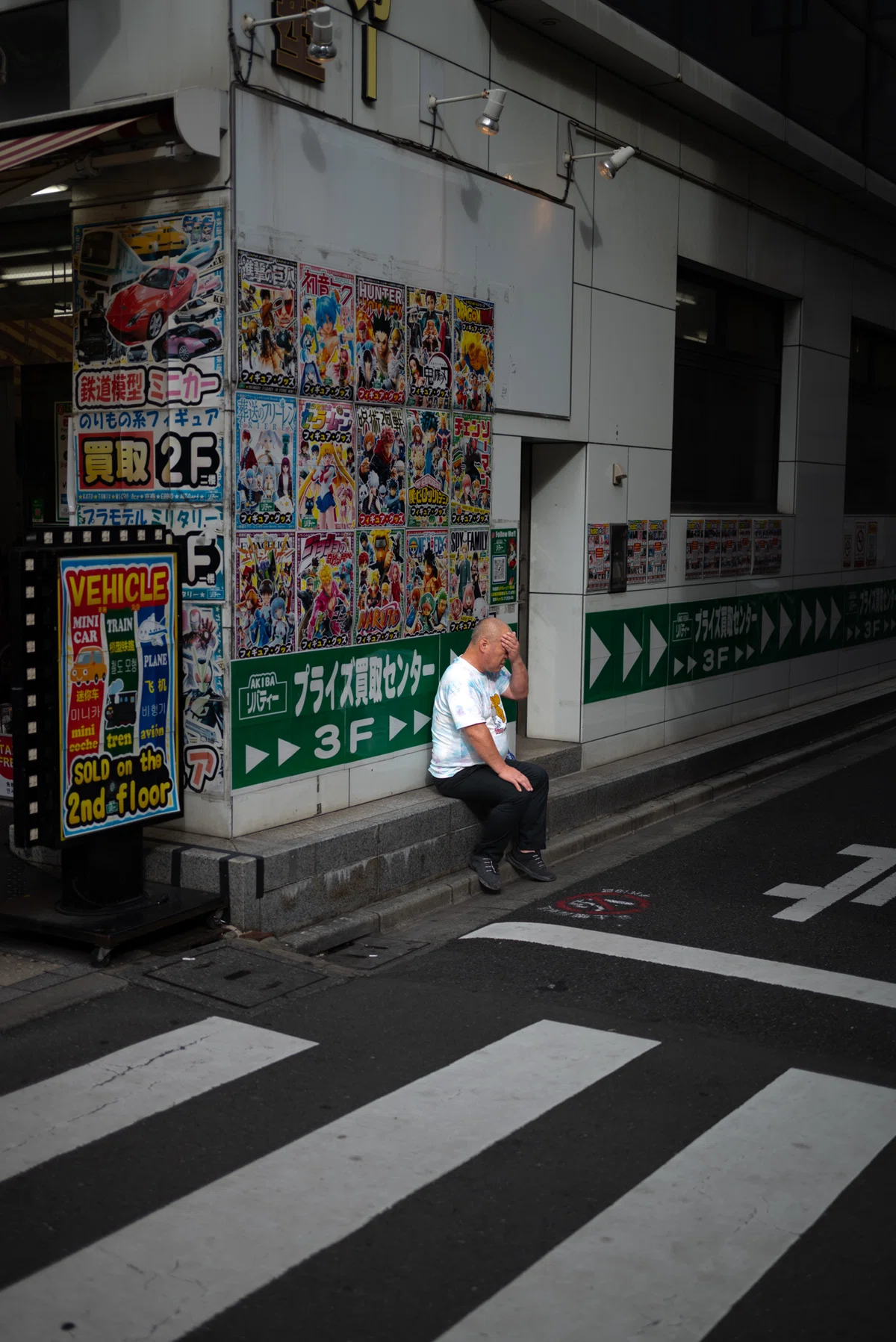
どれも特別な出来事ではない。
でも、同じ瞬間は、もう一度撮ろうとしても撮れない。
だから僕は、目的を決めずにカメラを持って歩く時間が好きなのだと思う。
有名な場所をきれいに撮ることだけが、街の写真ではない。
その日に偶然出会った光や人の姿もまた、自分がその街を歩いた記憶になる。
秋葉原をぶらぶら歩きながら撮った、何気ない街の断片。
この日出会った秋葉原は、にぎやかで、少し不思議で、ところどころ静かな街だった。
皆さんは、街を歩くとき、どんな瞬間に目が向きますか?
海外からこの記事を見てくださった方は、写真からどんな東京を感じたか、ぜひコメントで教えてください。
⸻
## Wandering Through Akihabara with My Camera
I wandered through Akihabara with my camera.
I had no particular subject or destination in mind that day — I simply followed whichever street caught my eye and photographed whatever made me stop.
It was a casual photo walk with no real plan.
Akihabara is best known for its electronics, anime, games, and streets lined with colorful signs. Walking through it, the advertisements and products seem to fill your entire field of vision.
The streets are crowded too, so even standing in one spot, the scene in front of you shifts every few seconds.
Some photos felt right in color, since I wanted to hold onto the city's energy. Others called for black and white, so that the people, light, and shadows would stand out more clearly.
As I walked, I switched between color and monochrome depending on what each moment seemed to need.
Step away from the busiest streets, though, and Akihabara starts to show a different side.
Narrow alleys tucked between buildings.
Someone walking alone.
A tired-looking man resting by the roadside.
The city reflected in glass, with another person passing beyond it.
Brief glimpses into the everyday lives of people whose names I'll never know.
Street photography has a way of drawing my attention to scenes I'd normally walk right past —
the direction of the light,
shadows stretching across the road,
the distance between a person and the buildings around them,
someone standing still in a crowd while everyone else keeps moving.
The longer I photographed, the more my attention drifted away from Akihabara as a place and toward the individuals moving through it.
The brightly decorated vending machines also caught my eye — simple machines for selling drinks, yet they looked almost like small works of street art.
I also came across moments where different cultures overlapped in a single frame, a reminder of how much this city draws together in one place.
Akihabara is crowded, colorful, and constantly in motion. But beneath the bright signs and busy streets, quiet moments still slip through —
a crowd waiting to cross the road,
someone walking through an alley,
a person taking a short break from the flow of people.
None of these moments were extraordinary. But even returning to the same spot, I could never capture that exact scene again.
That's probably why I enjoy walking without a destination, camera in hand.
Street photography isn't only about capturing beautiful shots of famous places — the light and people we encounter by chance can become part of how we remember a city too.
These photographs are fragments of Akihabara I found while wandering its streets.
The Akihabara I saw that day was lively, a little mysterious, and quiet in unexpected corners.
What kinds of moments catch your eye when you walk through a city?
If you're reading this from outside Japan, I'd love to hear what kind of Tokyo you see in these photos.
