The Psychology of "The Spider's Thread": Why Did the Thread Really Break?

Published in 1918 by the great Japanese author Ryunosuke Akutagawa, "The Spider's Thread" is a very short tale that takes only a few minutes to read. However, hidden within it is a profound exploration of human egoism and Eastern philosophy.
Today, let's break down this masterpiece from three different perspectives to appreciate it on a deeper level.
1. The Contrast Between the Lotus, Paradise, and Hell
First, pay attention to the setting. In Eastern Buddhist cosmology, Paradise and Hell are not entirely separate dimensions; they are directly connected, separated only by the waters of a lotus pond.
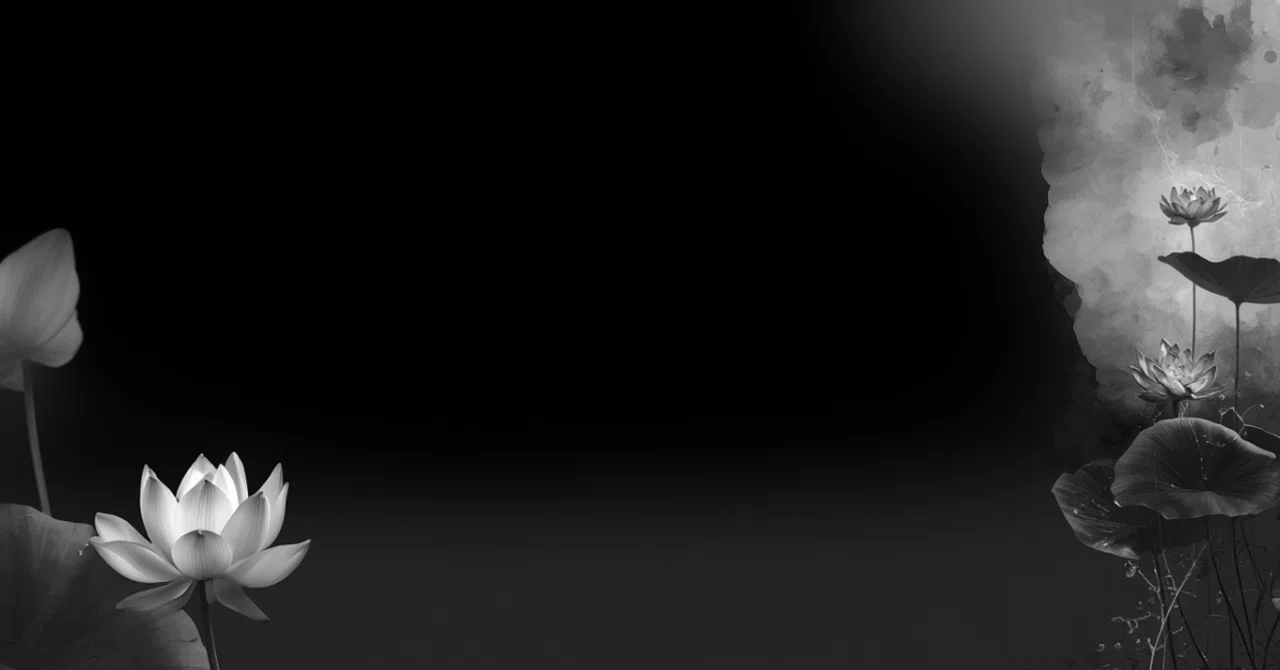
In Buddhism, the lotus is a powerful symbol of purity and enlightenment. It roots itself deep in the muddy water, yet its stem rises above the surface to bloom into a perfectly pure, unstained flower. The contrast between the sinners suffering in the ugly, pitch-black Pool of Blood and the pure white, sweet-smelling lotus flowers in Heaven above is stark. This ultimate contrast between "beauty" and "ugliness" makes the cruelty of the story stand out even more.
2. Why Did the Thread Break? (The Law of Karma)
Kandata, the great thief, performed only one good deed in his past: he spared the life of a tiny spider. In Buddhism, there is a concept called Inga-oho, which translates to the law of Karma, or Karmic retribution. It teaches that even the smallest act of mercy toward a living creature will eventually return to you.
But the most crucial detail is where the thread broke. Even with thousands of sinners hanging from it, that slender silver thread did not snap. But the moment Kandata yelled, "This thread is mine! Get down!", it didn't break from the top where the Buddha held it, nor from the bottom under the weight of the crowd. It snapped with a ping exactly at the spot where Kandata was hanging.
It didn't break because of physical weight. The moment his selfish ego was exposed—the moment he tried to kick others down to save only himself—his own heart severed the thread.
3. The Terrifying Indifference of the Final Scene
Finally, the most beautiful, yet most terrifying part of this story is the ending. After Kandata falls back into Hell, the Buddha looks somewhat sorrowful. However, the lotus flowers in Paradise pay absolutely no attention to Kandata's tragedy. They show no concern at all, simply continuing to release their beautiful fragrance.
No matter how dramatic human desires, shallowness, or life-and-death struggles may seem to us, from the perspective of the great universe and the laws of nature, they are nothing more than trivial events. Akutagawa concludes the story by painting a picture of this cold, ruthless beauty of the world.
Now, let me ask you: If you were in Kandata's position, looking down at the countless people climbing up after you, what words would you have spoken?
🎙️ Listen to the full Audiobook & Commentary: Immerse yourself in the breathtaking contrast between the serene beauty of Heaven and the gruesome despair of Hell through an immersive Japanese reading.
👉 Watch on YouTube:
Let me know your thoughts in the comments section!
