
Personal Color Market Trends and Opportunities 3

👀 Here is the link to the previous article: https://note.com/orchidia_journal/n/n1ffe9dad275a
Competitive Landscape and Key Players
・Consulting Services: In Japan, companies like Personal Beauty Research Institute (e.g., Niewo, Color of Happiness) offer certification and salon franchises. In Korea, mkhackness, Cocokore, Color Me are big names. Globally, Color Me Beautiful (USA, 1960s) still exists, and new players like Dressika (app) provide DIY services. The market remains fragmented with many small consultancies.
・Brands & Retailers: Major cosmetics groups (L’Oreal, Shiseido, P&G) often incorporate personal-color in product development. For example, Shiseido’s foundation lines cover multiple undertone ranges. Fast-fashion retailers (Uniqlo, Zara) are beginning to account for color appeal in designs (Uniqlo’s “#31 Shades of Beige for Cool/Warm” was a viral example). Online, e-commerce platforms like Shopee and Amazon indirectly compete by curating personalized recommendations.
・Tech Companies: AI/AR technology providers (e.g. ModiFace, Perfect Corp, Shiseido SkinVisual/Skingen ) enable virtual color analysis. Startups like Colorwise.me, Personal Color & Style, Jamface (Korea), and StyleMe (Taiwan) offer apps and matching engines. These are increasingly partnering with retailers.
・Differentiators: Key competitive factors include accuracy of diagnosis, user experience, scope (do you advise only color or full style?), and integration with commerce. Companies that can turn analysis into product sales (e.g. personalized shopping lists) have an edge. Tech-based players also face potential competition from general AI (e.g. ChatGPT plug-ins for color advice) or large fashion/beauty platforms.
Regulatory and Ethical Considerations
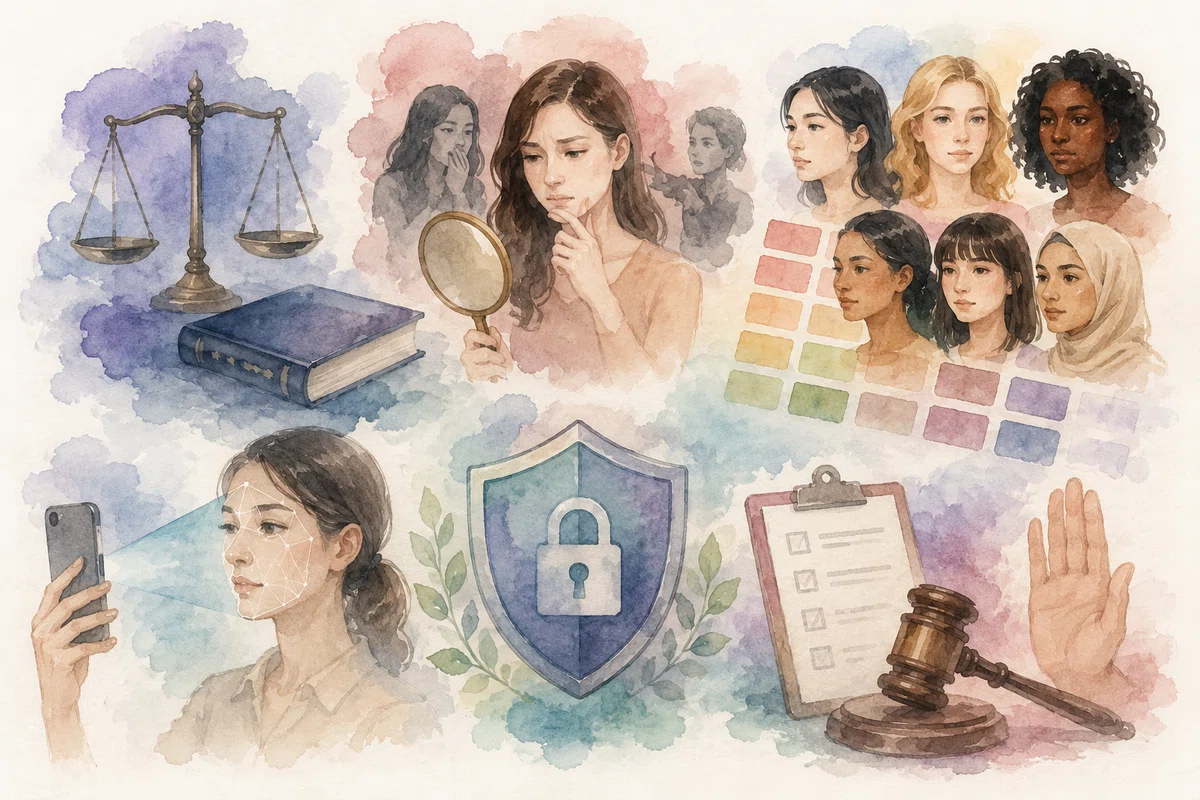
Currently, there are no formal regulations specifically on personal-color classification. However, general advertising and anti-discrimination rules apply. Ethical issues have been raised:
① Colorism & Bias: Critics argue personal-color systems can reinforce colorism (skin-tone prejudice). A Korean student journalism piece notes that personal-color mania in Korea led to public shaming of “warm-tone” individuals (accused of having yellow/brown skin). The Jets Flyover article explains how the trend dovetailed with an existing Korean bias for “rosy-clear” fair skin, causing warm-toned people to be ridiculed as having “inferior” complexions. Such backlash is now dubbed “cool-tone syndrome” among netizens. Experts caution that personal color lacks scientific evidence and should be taken as a guideline, not an absolute. Overemphasis can lead consumers to obsess over their “type” or discriminate against certain colors.
② Inclusivity: Traditional personal-color palettes were developed largely for East Asian or Western Caucasian features. They may not capture darker or multiracial complexions well. Companies must ensure marketing language doesn’t marginalize groups (e.g. avoid implying one “palette” is more beautiful). So far, mainstream campaigns in Asia have not faced legal action on this, but social media critique is common.
③ Privacy/Data: AI-based tools require facial images. Companies must handle this biometric data responsibly (complying with local privacy laws like GDPR, PIPL). A malicious use risk is low, but safeguards should be noted.
Risks and Challenges
・Trend Saturation: There is evidence of “analysis fatigue.” A Japanese consumer survey found ~60% of women interested in PC but not yet acted, and many admit preferring their own intuition over strict advice. About 38% said the surge of analyses (“self-diagnoses”) leaves them overwhelmed. If every brand and salon pushes personal-color, consumers may grow tired of constant reclassification.
・Consumer Skepticism: While awareness is high, actual conversion to paid services is modest (~14% in Japan). Some people may distrust an algorithm or consultant telling them what to wear. Brands must ensure tools are user-friendly (the success of apps like LIPS suggests ease-of-use is key).
・Market Fragmentation: Unlike a regulated category, “personal color” systems vary (4-seasons vs 12, Japanese vs Korean vs Western approaches). Consumers may receive conflicting advice. This inconsistency could confuse buyers and slow uptake.
・Economic Factors: If a global recession occurs, discretionary spending on salon diagnostics or specialized purchases may drop. Personal color could be seen as a luxury. Conversely, it might persist if consumers use it to shop smarter (avoid mistakes). The key risk is economic sustainability of service providers: do salons and certifiers have a steady customer base?
・Reputational Risks: Missteps (e.g. an influencer labelled wrongly, or a brand making an insensitive ad) could trigger backlash and tarnish the concept. We’ve seen online drama around celebrities’ tone categories. Brands must manage this narrative carefully.
Comparative Data Tables
Table 1: Regional Adoption and Market Indicators
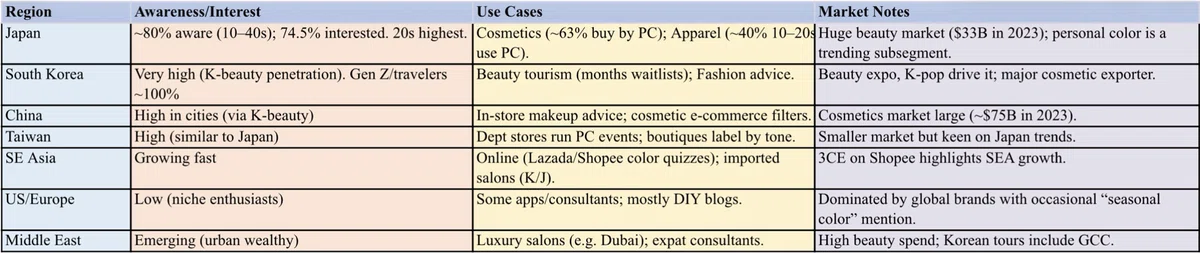
Table 2: Personal-Color Consideration by Category (Japan)

Actionable Recommendations
① Integrate Personal Color into Marketing and Product Lines: Brands should develop products explicitly labeled for personal-color segments (e.g. “Warm/Spring palette foundation”). Cosmetics R&D can create complementary color sets. Apparel retailers might use PC tagging in online catalogs. Advertising should educate customers on how products match their tone.
② Leverage Technology: Invest in AI/AR apps and online tools. For e-commerce, add filters (“Show me clothes that suit my Autumn-tone”) or virtual try-on that aligns with warm/cool categories. Collaborate with tech firms (e.g. ModiFace, Perfect Corp) to embed personal-color features. Ensure mobile apps are free or low-friction, as high interest does not yet translate to paid usage for many.
③ Train and Deploy Specialists: Upskill beauty salon staff in basic personal-color consulting. Consider partnerships with certification bodies (like ColorMeTokyo Academy) to certify consultants. Salons could bundle a mini-PC test with hair or makeup services as a differentiation. In tourist markets, advertise personal-color as a unique experience (as Korea has done).
④ Monitor Ethical Concerns: Establish a code of conduct for personal-color communications (e.g. “no implying one type is superior”). Train AI tools with diverse skin tones. Proactively address any backlash if a campaign is perceived as exclusionary. Communicate the science (or lack thereof) carefully: emphasize personal color as a fun style guide, not a medical fact.
⑤ Consumer Education (without Overwhelming): Provide easy-to-understand guides and quick online quizzes to reduce “analysis fatigue.” Focus messaging on the positive – confidence, better color choice – and caution against obsession. Brands should highlight inclusivity (e.g., “All palettes are beautiful”) to avoid any hint of colorism.
⑥ Research & Data Collection: Conduct more surveys in key markets (China, SEA, US) to quantify demand and segment by generation/gender. Measure ROI: e.g., do customers who know their PC buy more items or higher-value items?
⑦ Prepare for Multiple Futures: Our scenarios below outline possible developments. Businesses should remain flexible – for example, building modular personal-color capabilities that can scale if needed, or pivot to broader personalization if consumer tastes shift.
Future Scenarios (3 Possible Paths)
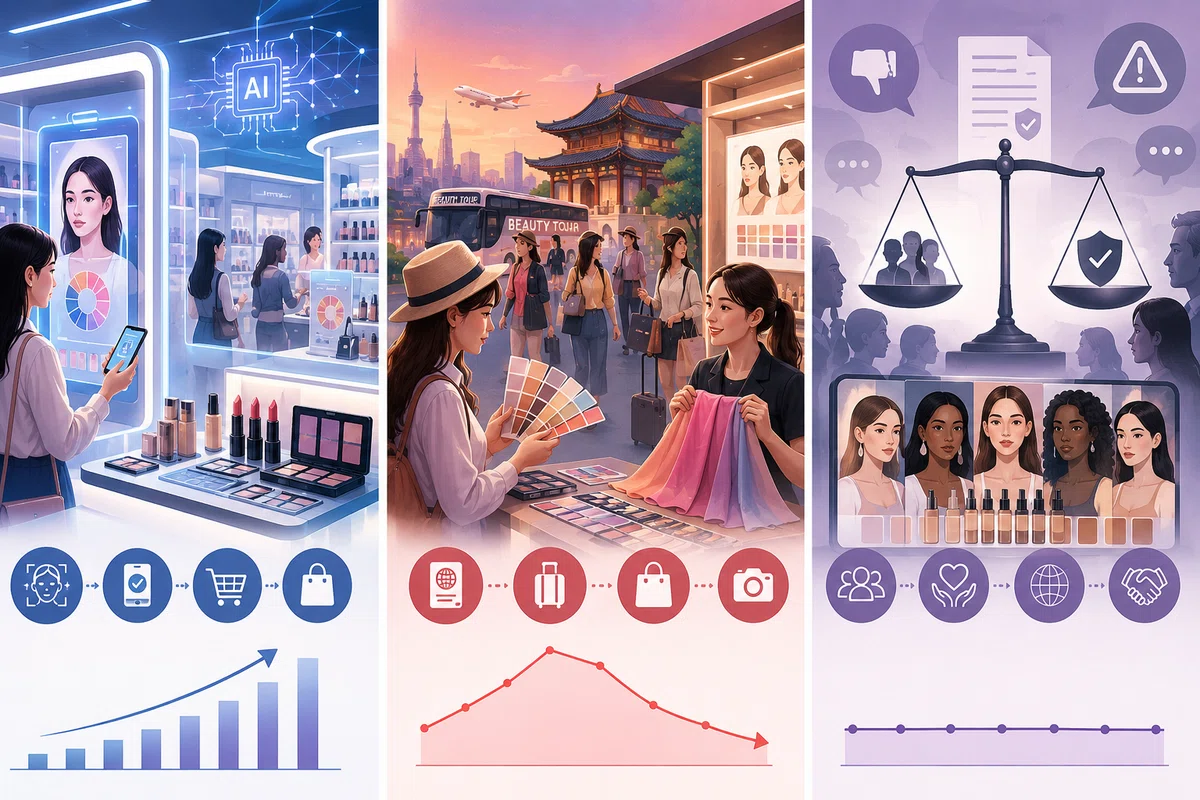
a) Mainstream Personalization Boom:Personal color becomes a standard part of global beauty/fashion retail, akin to skincare personalization today. AI-driven tools give instant recommendations, and major ecommerce sites default to “seasonal match” filters. Physical stores offer free PC scans as lead magnets. In this scenario, brands that master tone-based segmentation gain market share. The industry sees strong sustained growth (high teens % CAGR) in services and products tailored by color.
b) Regional Niche with Touristic Appeal:Personal color remains a major trend only in Asia (especially among tourists), and is treated elsewhere as an exotic or occasional service. In the West, interest plateaus at a niche level (influencer-driven). Beauty/tech companies integrate the idea tangentially (one option among many in apps). Growth slows as the fad peaks; industry response shifts to cost-control (e.g., simplifying offerings). Companies might then target travel/experiential markets, partnering with tourism (like K-beauty tours).
c) Backlash and Ethical Rebound: After a surge, public discourse turns negative (fueled by online criticisms of colorism and over-consumerism). Regulatory scrutiny appears (e.g. advertising standards cautioning against discrimination). Brands pull back on overt PC messaging. The concept survives quietly (people still care about colors) but without aggressive marketing. Growth flattens, and focus moves to inclusivity and authenticity (e.g. “we have shades for every skin, no one type is best”). Companies reframe personalization as positive diversity guidance rather than strict categories.
Each scenario suggests different strategies: Tech investment suits Scenario 1; luxury-tourist collaborations suit Scenario 2; brand reputation management suits Scenario 3.
Conclusion
In conclusion, personal color has opened new avenues in the beauty and fashion markets, especially in Asia. For businesses and investors, the key is to treat it as part of the larger personalization trend – leveraging data and tech, but also attending to cultural sensitivities. If managed well, personal-color initiatives can deepen customer engagement and unlock sales across cosmetics, apparel, and accessories. As this niche evolves, companies should prepare by building flexible color-analytics capabilities, forging beauty-tech partnerships, and keeping a close eye on shifting consumer attitudes.
(1665 Words)
May wonderful learning and discoveries come youy way!✨
- Orchidia

