Personal Color Market Trends and Opportunities 1

Executive Summary
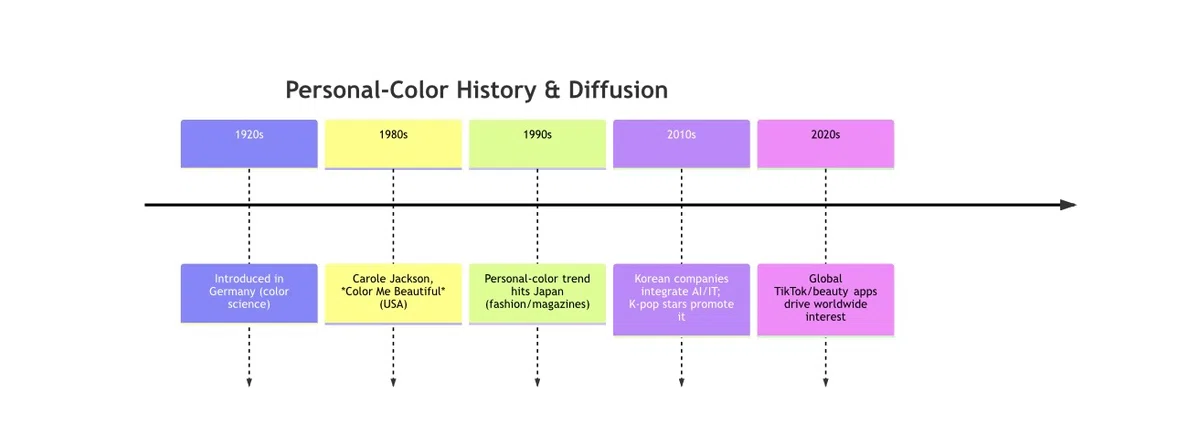
Personal color (a method of identifying an individual’s best colors based on skin tone, hair, etc.) has become a major consumer trend in Asia and is spreading globally. Historically rooted in European color theory (1920s) and popularized by Carole Jackson’s Color Me Beautiful in the 1980s, personal-color diagnosis spread in Japan in the 1990s and later exploded in Korea in the 2010s. Today in Japan and Korea over 60–80% of consumers recognize the concept, especially younger generations (teens and 20s). Surveys show 50–70% of women aged 20–40 use their personal color when buying cosmetics or clothes. Many beauty and fashion brands now label products by “warm” (Warm tone) or “cool” (Cool tone) categories. Digital technologies (AI apps, AR try-ons, Shopee filters) are rapidly emerging to analyze personal color and recommend products. The global color-cosmetics market is enormous (~$92B in 2025, projected $143B by 2034), and personalization is a key growth driver in beauty and fashion. The image-consulting sector (which includes personal-color services) was ~$4.5B in 2025 and growing. However, critics warn of “colorism” and over-reliance on such systems. This report analyzes personal-color adoption by region and age, consumer behavior by category, related market developments (services, tech, products), and identifies new opportunities. It concludes with strategic recommendations and scenario analysis for businesses and investors.
Definition and History (Timeline of Personal Color)
Personal color analysis is a form of beauty/image consultancy that categorizes individuals (often by “warm・cool” undertones and seasonal color palettes) to identify the most flattering colors for clothing, makeup and accessories. It builds on century-old color theory (e.g. Chevreul, 1839), was formalized in the West (Carole Jackson’s Color Me Beautiful, 1980s) and became popular in Japan in the 1990s. Japan and Korea became epicenters of personal-color culture. In Korea the concept is called 퍼스널컬러 (personal color analysis) and was modernized with computer analysis and celebrity endorsements. In 2024–25 Korean salons reported thousands of foreign tourists seeking personal color analysis services, making it a “must-do” K-beauty experience. By 2025, global media and social platforms (e.g. Bloomberg, SCMP) highlighted a “personal-color tourism boom” in Seoul (often led by Gen Z travelers). Elsewhere, personal-color theories exist (e.g. “four seasons” in Brazil, US), but have remained niche outside Asia.
Current Global Adoption and Regional Differences
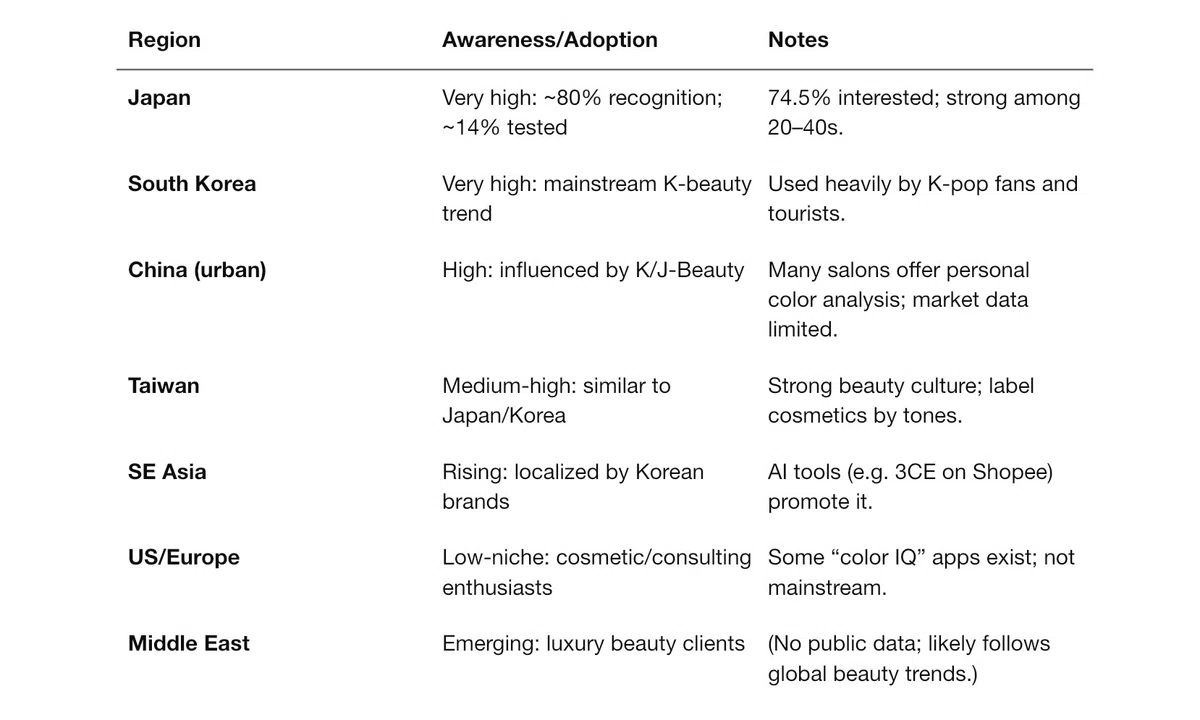
Awareness of personal color analysis is particularly high in East Asia. In Japan, surveys show that around 80% of salon-going women aged 10–40 have heard of personal color diagnosis, while approximately 74% of women aged 20–49 express interest in related services. However, only about 10–15% have actually undergone a professional consultation, suggesting considerable room for market growth. Similar trends can be observed in South Korea, where personal color analysis has become a mainstream part of the beauty industry. In China, Taiwan, and Hong Kong, the concept has gained popularity through the influence of Korean and Japanese beauty culture, especially among younger consumers in urban areas. Meanwhile, Southeast Asian markets are also seeing growing interest, with beauty brands increasingly promoting personal color concepts through AI-powered tools and e-commerce platforms.
By contrast, personal color analysis remains a niche practice in most Western countries. Although seasonal color consultations enjoyed some popularity in the United States several decades ago, consumer interest later declined. More recently, social media platforms have helped revive awareness of personal color theory in North America and Europe, but adoption rates remain far lower than those seen in East Asia. Overall, Japan and South Korea appear to have the highest levels of awareness and engagement, followed by other Asia-Pacific markets, while Western countries remain comparatively underpenetrated.
The tables below summarize known regional trends:
Generational Adoption Rates
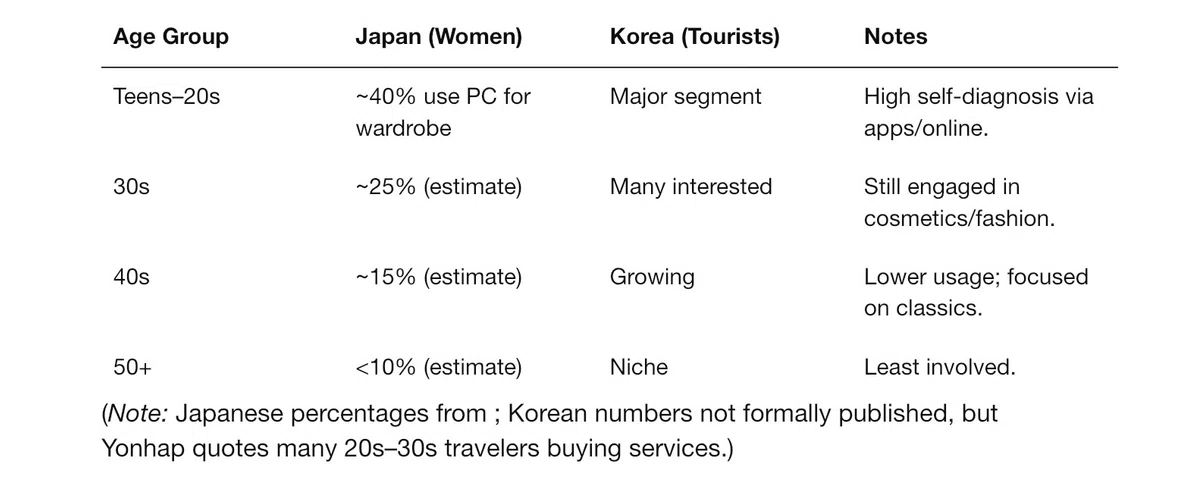
Younger consumers dominate interest in personal color analysis. Multiple surveys in Japan show that women in their teens and twenties are much more likely to engage with personal color analysis than older generations. For example, a study by Loyalty Marketing found that more than 40% of Japanese women in their teens and twenties use personal color and/or body-type diagnosis when choosing clothes. In contrast, fewer than 20% of middle-aged women reported using these services. Similarly, a survey conducted by the fashion subscription service DROBE found that 74.5% of women aged 20 to 49 were interested in personal color analysis, with women in their twenties showing the highest level of interest. Research by Hot Pepper Beauty also found that awareness of personal color analysis exceeds 60% among people in their teens through forties.
These findings suggest that Generation Z and younger Millennials are the primary users of personal color services. The popularity of social media platforms and the growth of fast-fashion culture have encouraged younger consumers to explore personal color analysis as a way to improve their appearance and shopping choices. Although interest is gradually spreading to older age groups, they remain less involved in the trend overall.
(832 words)
May wonderful learning and discoveries come youy way!✨
- Orchidia
→To be continued in Part 2.
いいなと思ったら応援しよう!
この記事が参加している募集
この記事は noteマネー にピックアップされました

