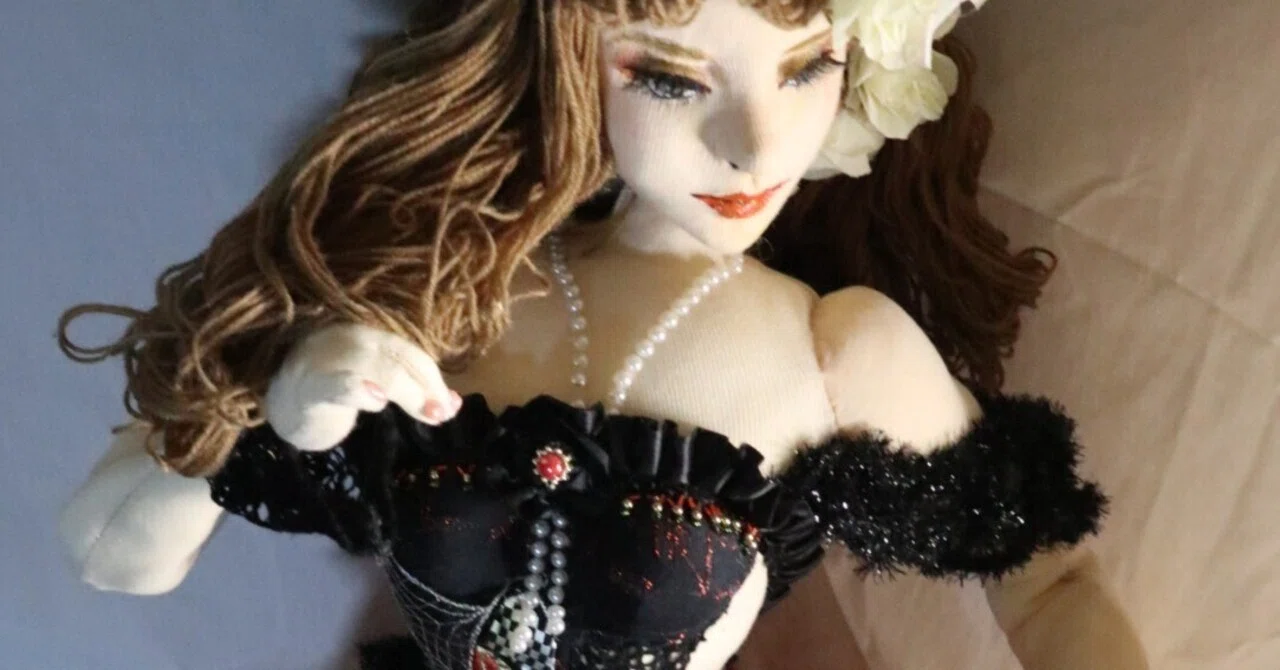
Stigma — Episode V: “Festival Fare”

Rendered in the Prose Style of the 19th‑Century Victorian Era
“Are you quite well?”
Supported by Louis’s steady hand as we ascended the stair, I found my footing still uncertain; the wine I had taken earlier lingered unpleasantly in my veins.
“Still, we ought to avoid drawing attention. The stands will offer better shelter than the open grounds. And Louis—your attire is far too heavy for such weather.”
Louis’s body bore countless scars, relics of a father long dead, whose cruelty had carved them into his flesh. Many had risen into grotesque keloids, most grievously upon his abdomen, where the skin had twisted into shapes no passage of years could soften. Louis abhorred them with a shame that ran deep, and to ensure they never met the gaze of strangers, he clothed himself in thick, dark garments—even on a day such as this, when the sun burned with summer’s early fervour.
Thus he appeared far warmer than I, his black attire absorbing the heat like a shroud.
“You are right,” he said. “The temperature has not yet reached thirty degrees, but it is a summer’s day nonetheless. Even a patch of shade is a blessing. And it is already noon. Shall we eat first? Eiji, would a box of fried chicken sit too heavily upon your stomach? Festival fare is notoriously rich—there will be no salads such as you prefer.”
I accepted the meal.
“My thanks. The breeze here is pleasant, and merely having a seat improves my spirits. I believe I can manage this.”
“Good. Then I shall partake as well.”
As we sat side by side upon the narrow chairs, my telephone rang. Masa, in his usual fashion, complained at length that we had entered the stands and begun our meal without him. Yet he declared he would join us after the next song—one he refused to miss under any circumstance. He insisted I wait for him, and then ended the call. Ever the same, that man.
“Will you not wait?” Louis asked.
“No. Let us eat.” I squeezed lemon over the chicken and took a bite with the rice. Delicious. Had I not been drunk, it would have tasted even finer.
“It is good,” I murmured aloud, unable to restrain the words. It seemed I had been hungrier than I realised, for we finished our meals in short order.
“I am glad,” Louis said. “I thought no man alive disliked fried chicken.”
His smile shone with a brightness that struck me painfully.
“If I were…” But the rest would not come. The drink had loosened thoughts I ought not to entertain.
A couple passed before us, hand in hand, descending the stairs. Such a gesture was beyond me. And to ask it of Louis— that was further still.
“What troubles you?” he asked.
“Nothing. Give me your rubbish. I shall sort it and dispose of it.”
Taking the bag of refuse, I walked alone down the corridor beneath the stands.
If I were someone else— if I were not myself— might there have been a dream I could have attained? If I possessed greater talent, or finer gifts— or even if I possessed none at all?
I feared that if my foolishness, my lack of worth, were ever exposed, everything would end. Thus I strove always to be useful, attentive, gentle— a man of worth, or at least the semblance of it.
If I failed— if I could not be such a man— would Louis still smile upon me?
The thought struck me with a force I could not bear.
“Disgraceful… utterly disgraceful. It sickens me.”
I despised myself— every trembling, wretched part of me.
日本語版はこちらからお読みいただけます⤵
いいなと思ったら応援しよう!
 よろしければ応援お願いします!頂いたチップは、私の創作活動費に使わせていただきます!