

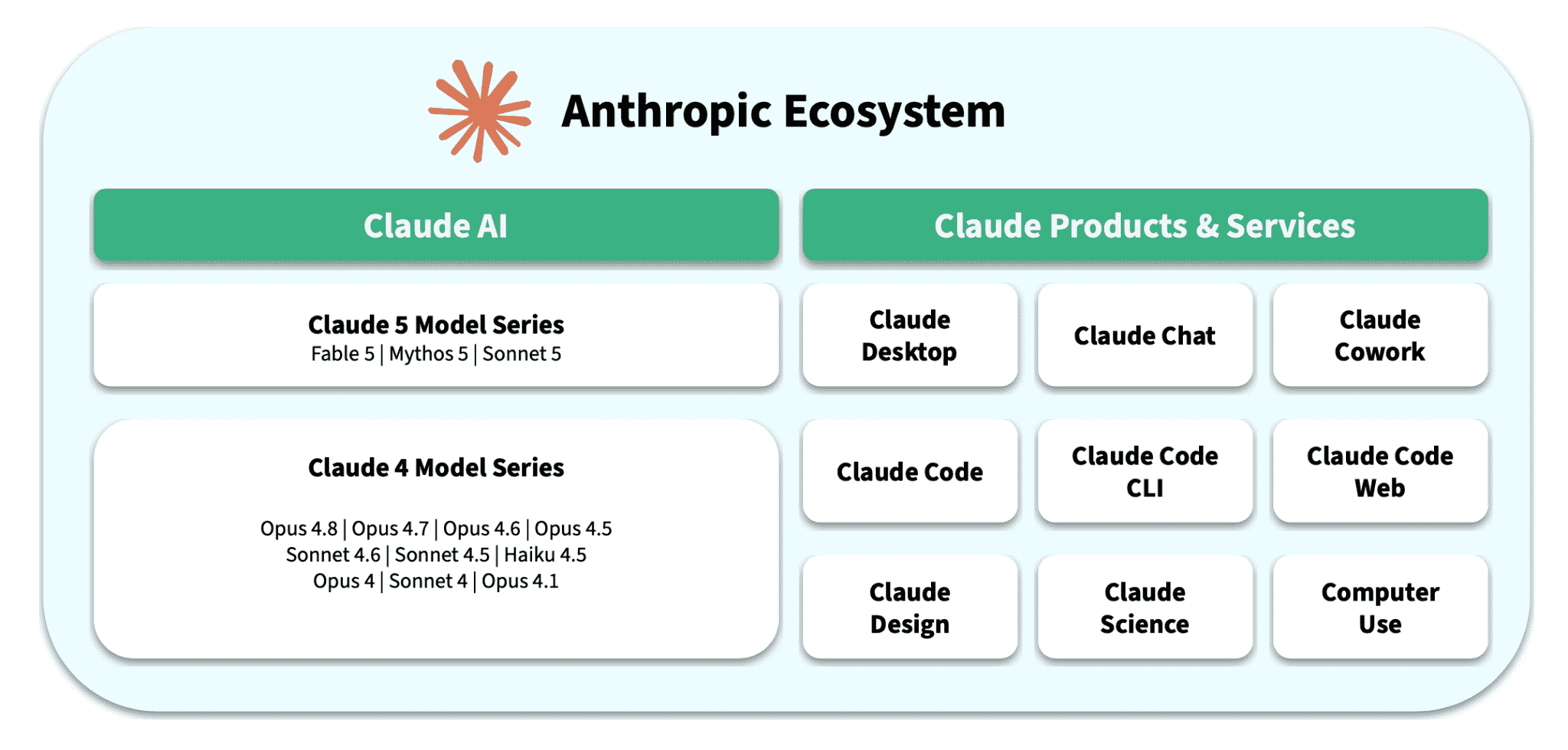
Anthropic is an AI safety and research company based in San Francisco that built Claude. Claude started as a chat product, but now it has grown into something closer to an agent — it plans multi-step work, executes it, and checks its own output, across coding, research and general desktop tasks.
- Understand and generate context-aware text based on large-scale training.
- Handle diverse tasks including research, creative writing, coding, data analysis and problem-solving across multiple domains.
- Operate across platforms including web, mobile, desktop and API, making it accessible to students, professionals and enterprises alike.
Key Differentiator
One of the biggest reasons Anthropic stands out from other AI companies is its Constitutional AI approach. Instead of relying only on human feedback, Anthropic trains its AI models using a predefined set of principles that guide their behavior.
- Anthropic's unique AI training method designed to make AI systems safer and more reliable.
- Company creates a "constitution" which is a set of rules and ethical principles for the AI to follow.
- These principles were initially inspired by documents such as the UN Universal Declaration of Human Rights.
- During training, the AI evaluates its own responses against these principles and improves them when necessary.
- This self-evaluation process reduces the need for humans to manually review every possible scenario.
- As a result, Anthropic can build AI models that are better aligned with human values while scaling the training process efficiently.
- Rather than simply predicting the next word, Claude is trained to reason through problems carefully using large-scale pre-training and fine-tuning.
How Does Claude AI Work
- Constitutional AI (CAI): Claude self-evaluates every response against a set of guiding ethical principleS.
- Pattern Recognition: Claude analyses input text to identify patterns, relationships and contextual cues, enabling a nuanced understanding of complex queries and long documents.
- Context-Aware Predictions: Based on recognised patterns, Claude predicts the most relevant and coherent responses while maintaining appropriate tone, style and clarity.
- Hybrid Reasoning: Claude toggles between fast replies for simple prompts and deep, step-by-step thinking for complex tasks, making it effective across a wide range of use cases.
- Large-Scale Pre-Training: Claude is trained on a vast amount of textual data, giving it a broad knowledge base across research, coding, creative writing, science and more.
Claude AI & Models
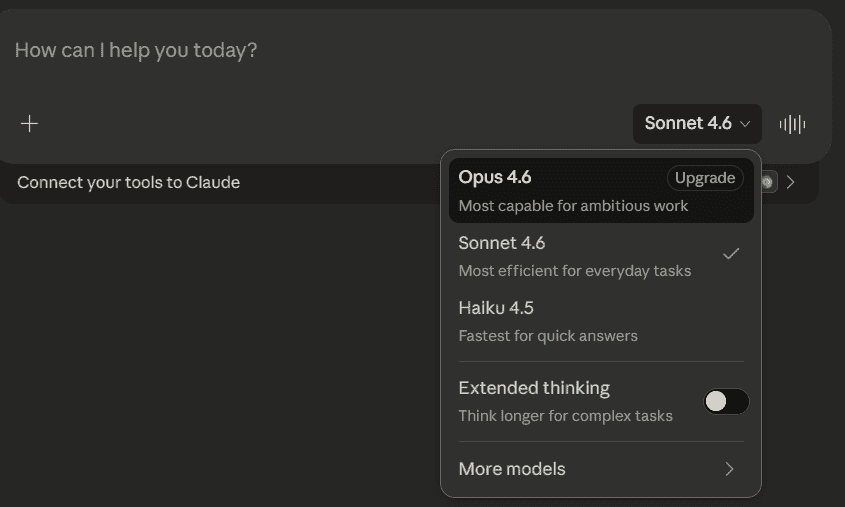
Claude AI is available in a family of models, each designed to serve different needs, use cases and budgets. Models are typically released in three sizes ranging from smallest and most affordable to the largest and most capable, allowing individuals, developers and enterprises to choose the right fit for their requirements.
Claude 5 Generation
- Sonnet 5: The flagship agentic model, built for sustained autonomous coding, tool use and debugging, with adaptive thinking on by default and a lower cost than Opus-tier models.
- Fable 5: Targets long-horizon workflows and demanding reasoning tasks, with safety classifiers built in to decline high-risk requests.
- Mythos 5: Shares Fable 5's capabilities but drops some safety classifiers, and is limited to vetted, high-trust environments.
Claude 4 Generation
- Opus 4.8: Adaptive thinking, a 1-million-token context window and stronger long-horizon agentic coding.
- Opus 4.7: Aimed at advanced software engineering, complex workflows, and high-resolution vision.
- Opus 4.6 & Sonnet 4.6: Introduced agent teams and broad gains in long-context reasoning.
- Opus 4.5 (Nov 2025), Sonnet 4.5 (Sep 2025), Haiku 4.5 (Oct 2025): The 4.5 cycle gave Haiku a fast, low-cost option while Sonnet and Opus picked up major upgrades to agentic computer use, spreadsheets, and long-running chat.
- Opus 4.1: Targeted gains in coding precision and agentic tasks.
- Opus 4 & Sonnet 4: Anthropic's first generation-4 models.
How to Access Claude AI
Accessing Claude AI through the official Anthropic website is straightforward. Follow these steps:
Step 1: Visit the Official Website
Open your preferred web browser and navigate to claude.ai, the official platform developed and maintained by Anthropic. This portal gives you access to Claude AI's full range of features, tools and capabilities.
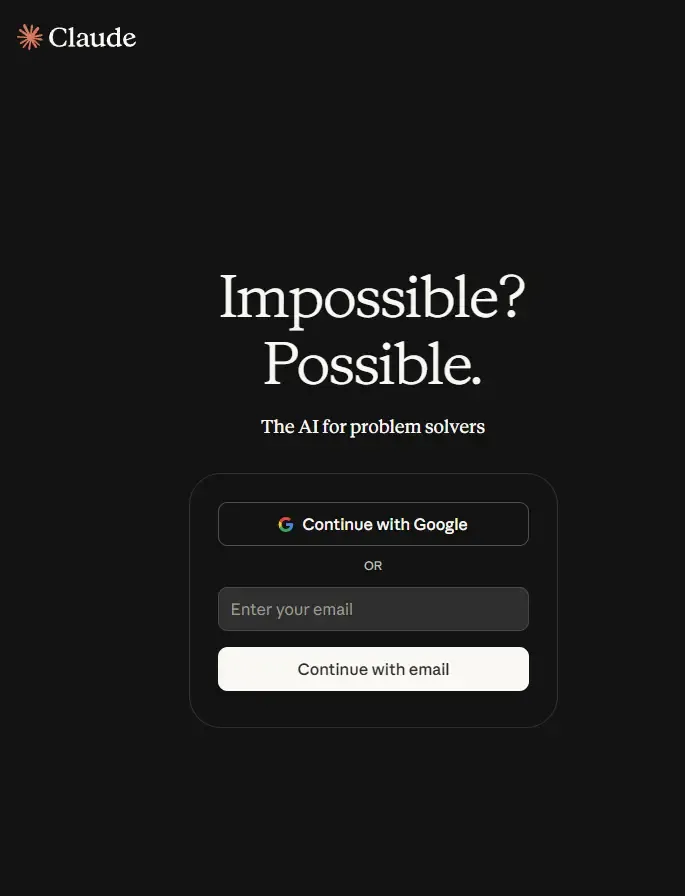
Step 2: Sign Up or Log In
Next step is to create a account or log in if you are an existing user.
Step 3: Access Claude AI
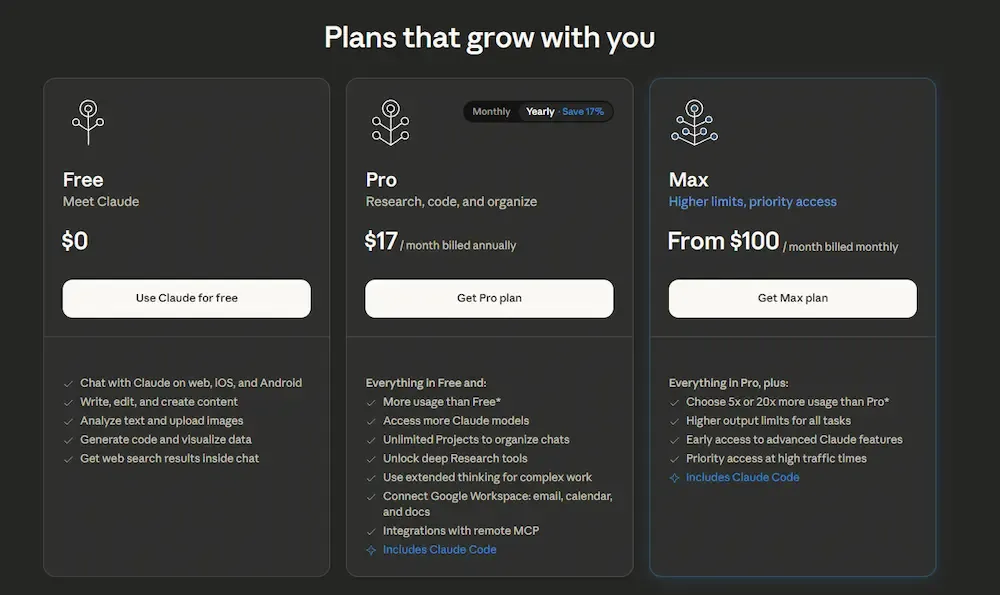
Once logged in, you will be directed to the Claude AI interface where you can begin exploring its features and choose a plan that best suits your needs.
- Select a desired plan from the available options including Free, Pro, Team or Enterprise based on your requirements.
- Navigate to the chat interface to begin interacting with Claude AI instantly.
Step 4: Enter Your Query
The input box at the bottom of the chat interface is where you type your question, request or task to get a response from Claude AI.
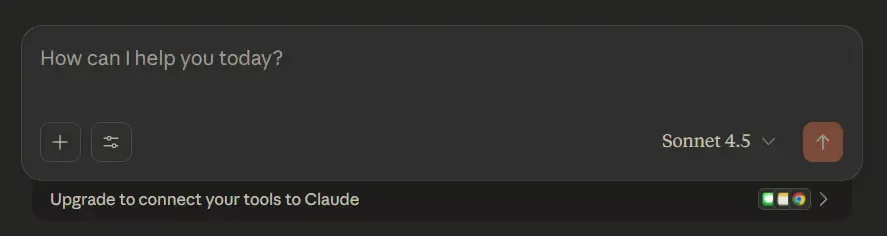
Type your query clearly and be as specific as possible to receive the most accurate and relevant response.
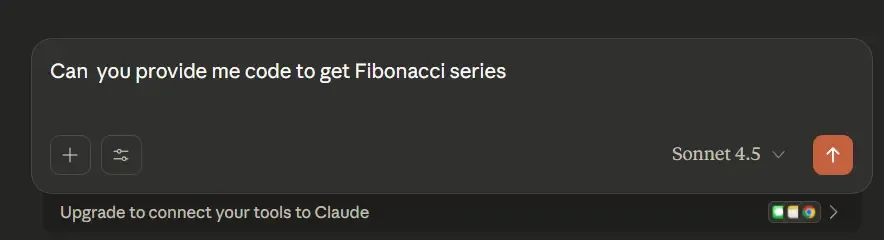
Step 5: Submit Your Query
After typing your question or request, press the Enter key or click the Send button to submit your query to Claude AI.
Step 6: Review Claude’s Response
Claude will deliver a clear, structured and well-reasoned response to your query in a natural, human-like manner. Read through the response carefully to extract the information, insights or answers most relevant to your question or task.
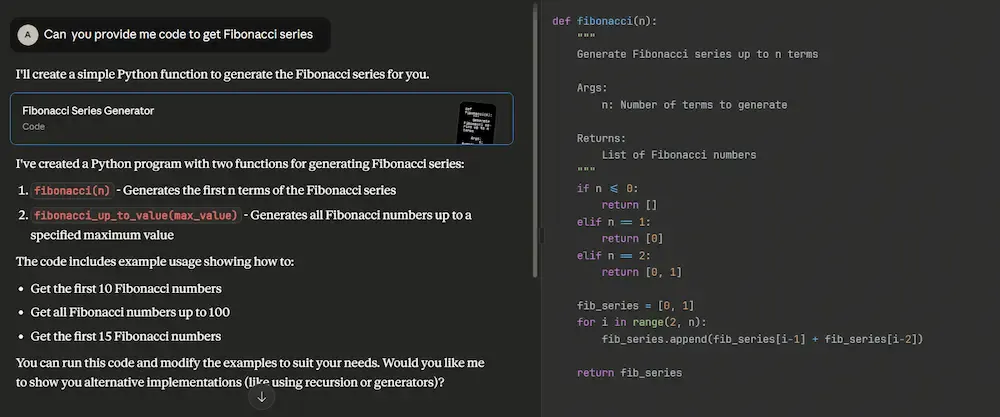
You can easily copy the response, take notes or save the information for future reference and use.
Step 7: Refine and Iterate
If the response needs more detail or clarification, simply type a follow-up question and Claude will build upon the previous exchange intelligently. Claude maintains context across the conversation within its context window, enabling effective follow-up interactions.
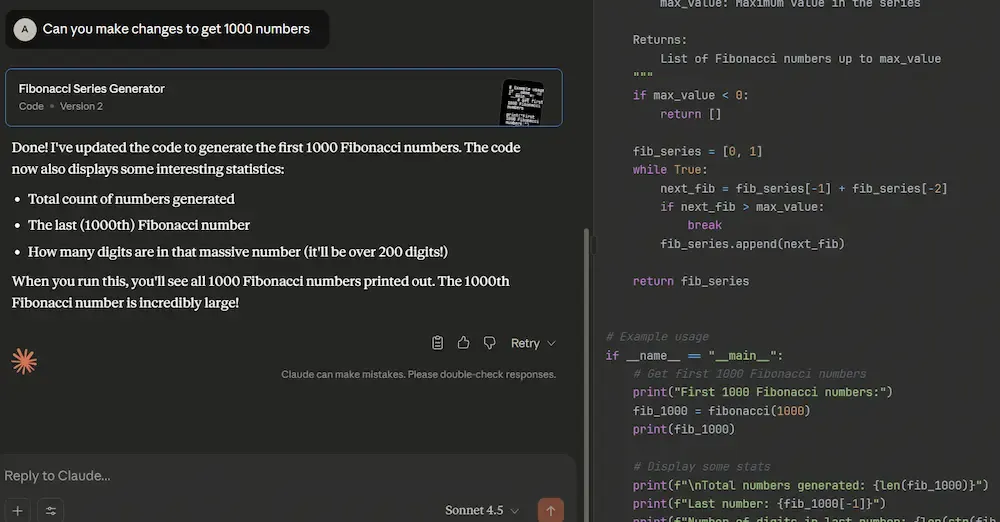
Refining your queries helps Claude deliver increasingly focused and relevant answers with every response.
Claude AI API Access
Claude AI can be integrated into our applications and workflows using its API, lets see the steps to access it,
- Go to the anthropic Console and login with the account.
- After the successful login, you will land on the welcome page.
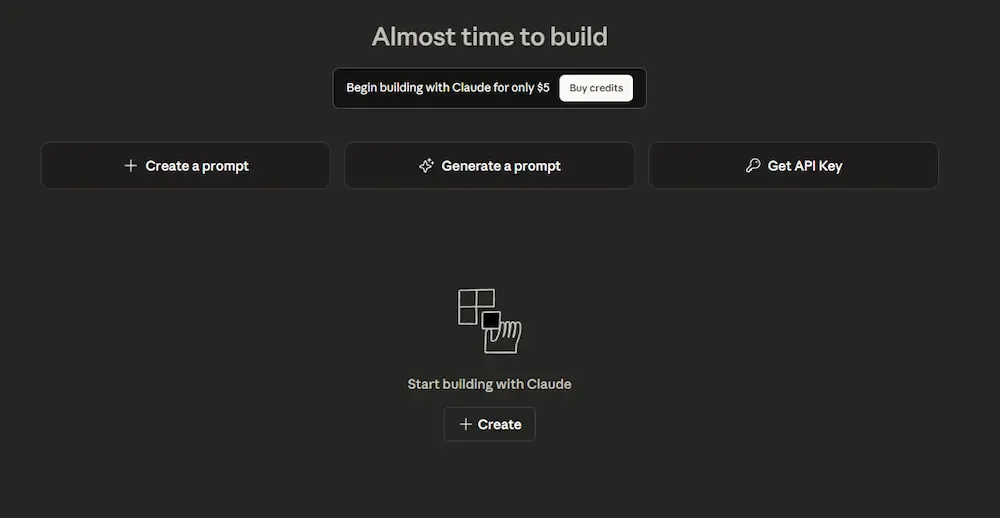
- Select the Get API Key option and then we can access and use that API key.
Claude Products and Services
Anthropic has spread Claude across several work surfaces, each shaped around how a particular kind of user actually works, rather than cramming everything into one interface.
- Desktop: It is the hub for Anthropic's local agentic tools, giving users one place to reach them on macOS and Windows.
- Chat & Artifacts: The standard chat interface, paired with Artifacts — a workspace panel where Claude can generate code, documents, and small web apps that users can view and interact with directly.
- Cowork: An autonomous desktop agent for non-technical knowledge workers. It works directly on the user's local files to organize folders, pull together research across documents, and extract data from unstructured files.
- Code: An agentic coding tool for developers, living in the terminal and modern IDEs. It reads codebases, plans changes, edits files, runs tests, and can stage commits on its own.
- Design: A visual creation tool powered by the Opus models, for generating UI designs, prototypes, and marketing materials from natural language.
- Science: An AI workbench for researchers that ties together literature review, local code execution, scientific databases, and HPC jobs to produce reproducible scientific output.
Other Technical Innovations
Two research developments from Anthropic are worth knowing about, separate from the product lineup.
- Computer Use: First introduced with the Sonnet models, this lets Claude read a screen and use mouse and keyboard input to carry out repetitive digital tasks the way a person would.
- J-Space: A small internal workspace inside Claude where it holds and manipulates concepts before writing anything down. This lets the model work through reasoning steps like spotting a bug or planning a multi-part answer that never show up directly in its output.
Main Competitors
Here's how Anthropic's main competitors compare:
| Company | Primary Differentiator |
|---|---|
| Anthropic | Strong focus on AI safety, Constitutional AI, and enterprise-grade AI solutions. |
| OpenAI | Broad multimodal capabilities, large consumer user base, and deep Microsoft integration. |
| Seamless integration with Google Workspace and support for very large context windows. | |
| Meta | Open-weight models that developers can run locally and customize at a lower cost. |
| Mistral AI | Efficient AI models with a strong focus on open-source development and European data compliance. |
