

Identity theft is a cybercrime where an attacker steals and misuses a person’s personal, financial or identity information without permission. This data is often used for fraud, impersonation or other illegal activities. With growing digital dependence, such attacks are becoming more frequent and can result in financial loss, legal trouble and reputational damage.
- Involves the theft and misuse of personally identifiable information (PII), financial details or login credentials.
- Commonly carried out through phishing, malware, social engineering and data breaches.
Example: Attackers may steal credit card data from a compromised database and use it to make unauthorized purchases or apply for loans in the victim’s name. This can negatively impact the victim’s financial standing and credit history.
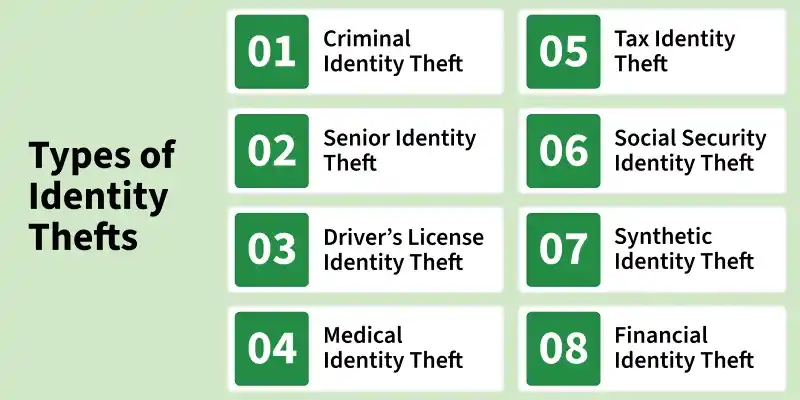
Types of Identity Thefts
There are various amount of threats but some common ones are:
1. Criminal Identity Theft
Criminal identity theft is a type of theft where someone uses another person’s identity to commit crimes.
- Criminal uses stolen ID or verification documents.
- Example: An attacker uses a stolen driver's license during a traffic stop, causing the offense to be recorded under the victim's name.
2. Senior Identity Theft
In this type of theft, attackers mainly target elderly people to steal their personal information.
- Attackers target elderly individuals using social engineering techniques, such as fraudulent phone calls, emails, or messages, to obtain personal and identity-related information for unauthorized use.
- Example: A scammer impersonates a bank representative and convinces an elderly person to disclose online banking credentials.
3. Medical Identity Theft
Medical identity theft is a type of fraud where someone uses another person’s health information.
- Health records and insurance details are stolen.
- Fake treatments and claims are created.
- Example: An attacker uses a stolen health insurance ID to receive expensive medical treatment billed to the victim.
4. Tax Identity Theft
In this type of attack, personal information is used to commit tax-related fraud.
- Fake tax returns are filed to claim refunds.
- Example: A criminal files a fake tax return using a victim's tax ID and receives the refund before the legitimate taxpayer files.
5. Social Security Identity Theft
This type of theft involves stealing a person’s Social Security Number (SSN).
- Creates long-term security risks.
- Example: An attacker uses a stolen SSN to open multiple credit accounts in the victim's name.
6. Synthetic Identity Theft
Synthetic identity theft is a type of fraud where real and fake information are combined.
- Used for illegal financial activities.
- Example: A fraudster combines a real SSN with a fictitious name and address to establish a new credit identity.
7. Financial Identity Theft
In this type of theft, stolen financial information is used for monetary gain.
- Includes unauthorized transactions and purchases.
- Example: A phishing attack captures online banking credentials, allowing the attacker to transfer funds from the victim's account.
Techniques of Identity Thefts
- Pretext Calling: Attackers pretend to be bank or company officials and call victims to gain trust. They convince users to share personal or financial details using polite or urgent requests.
- Mail Theft: Sensitive information like credit card details and transaction records are stolen from mailboxes. Attackers target public or unsecured mail to collect important documents.
- Phishing: Fake emails are sent pretending to be from trusted organizations like banks. These emails contain malicious links or attachments to steal user information.
- Internet-Based Theft: Attackers create fake or unsecured networks to trap users online. Users unknowingly install spyware or malware through downloads or websites.
- Dumpster Diving: Attackers search garbage to find documents containing personal or financial data. Happens when important papers are not properly destroyed before disposal.
- CVV Code Requests: Attackers pretend to be bank officials and ask for CVV details. This information is used to perform unauthorized online transactions.
Steps of Prevention From Identity Theft
Following are some methods by which you can enhance your security for identity thefts:
- Use strong, unique passwords: Avoid simple passwords; use a mix of letters, numbers and symbols.
- Enable two-factor authentication (2FA): Add an extra layer of security with OTPs or authentication apps.
- Secure your devices: Use PINs, passwords or biometrics (fingerprint/face lock).
- Avoid untrusted software and websites: Don’t download cracked apps or click on suspicious links.
- Protect and limit sharing of personal information: Avoid sharing sensitive details (Aadhaar, PAN, bank info) online, over calls/messages or with untrusted sources.
- Verify website authenticity: Check for “https://” and trusted sources before entering personal or payment details.
- Handle documents carefully: Carry only necessary ID and avoid sharing copies unless absolutely required and with trusted entities.
- Manage passwords regularly: Update passwords periodically and avoid reusing them.
- Never share OTPs: Do not disclose OTPs, even to someone claiming to be from a bank or service provider.
