

One of the best CRM platforms is Salesforce, which has sophisticated mechanisms for managing user access and enabling data visibility. Roles, profiles, and Permission sets are fundamental concepts in terms of data security and organizational operational effectiveness.
What is a Salesforce Profile?
A profile may be characterized as a collection of configurations and authorization levels that specify the level of access users have to information and features inside the salesforce system. It functions similarly to a template by specifying what a user may view, modify, and do inside the system.
Profile Controls
- Profiles define a user's baseline permissions.
- They limit the actions that users may perform on various Salesforce sections, such as leads and opportunities (creation, reading, editing, and deletion).
- Profiles determine which tabs, applications, and record types are shown to users.
-660.jpg)
What is a Salesforce Permission Set?
A Permission Set gives users access to additional rights beyond what their profile permits. It provides comprehensive control over designated spaces, fields of data, and features. However, permission sets cannot remove rights from users' profiles; they only add new permissions.
Permission Set Features
- Permission sets grant individuals additional access to objects beyond what their profiles allow.
- Permission sets offer additional access + profile access.

What is a Salesforce Role and the Role Hierarchy ?
Roles provide restrictions on what users may view in Salesforce; they do not allow editing or data manipulation rights. In order to provide precise control over data accessibility according to user rank, roles are frequently utilised in a hierarchical fashion.
A "Sales Rep" position, for instance, might only view the transactions that are allocated to them, whereas a "Sales Manager" role might see every deal on their team.
Difference Between Profiles, Permission Sets, and Roles
Profiles
- Establish the basis for user rights by managing visibility and basic CRUD access.
- Think of it as a broad job description defining essential duties.
Permission Sets
- Add further permissions on top of profiles for specific actions or data fields.
- Permissions cannot be taken away from a profile.
- Consider them as specialty qualifications that bestow extra abilities for particular tasks.
Roles
- Roles do not change permissions; instead, they define data visibility inside a hierarchy.
- Think of roles as a department or team affiliation determining which data is relevant to their work.
Features of Profiles, Permission Sets, and Roles
What users can view and do on Salesforce is controlled by their permission sets and profiles. Key characteristics include:
- Profiles: Define fundamental permissions and access.
- Permission Sets: Expand user permissions beyond what their profiles grant.
- Roles: Manage the hierarchy's visibility of data.
Syntax
No extra code is required; profiles and permission sets are configured via the Salesforce interface. They are customized via point-and-click actions within the platform.
Setting Up the Environment
Salesforce comes with built-in profiles and permission sets, so no additional setup is required. Here's how to configure them:
Setting Up Profiles
- Login In salesforce Org.
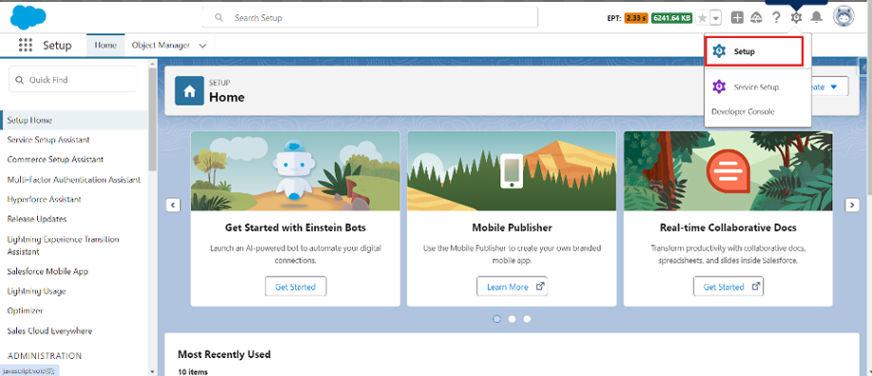
- Click the gear icon at the top right corner and select Setup.
- In the Quick Find box, type Profiles.
.png)
- Select Profiles under Users.
- Click on the Edit of the profile you want to edit (e.g., System Admin).
.png)
- Scroll down to the Object Settings section and click on the object you want to modify permissions for (e.g., Custom Object).
.png)
- Click Save.
Setting Up Profiles
- Login In salesforce Org.
- Click the gear icon at the top right corner and select Setup.
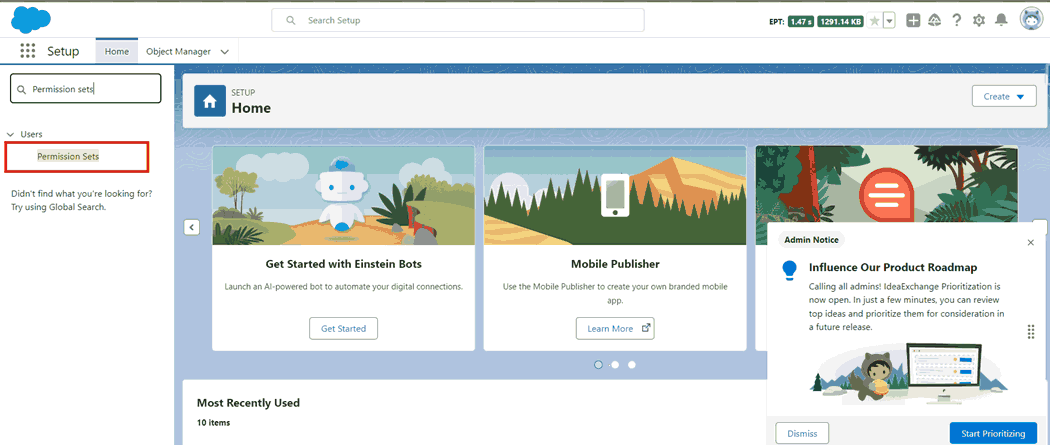
- In the Quick Find box, type Permission Sets and Click on this.
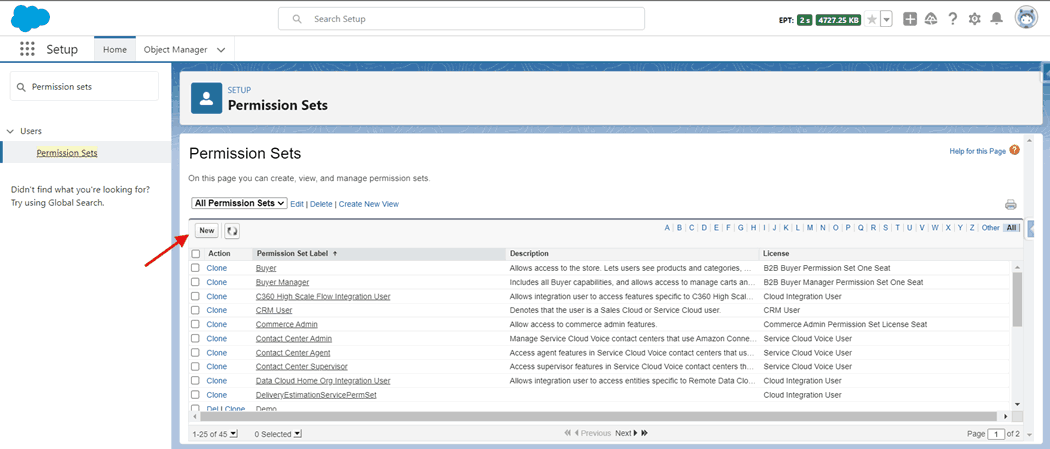
- Click on New
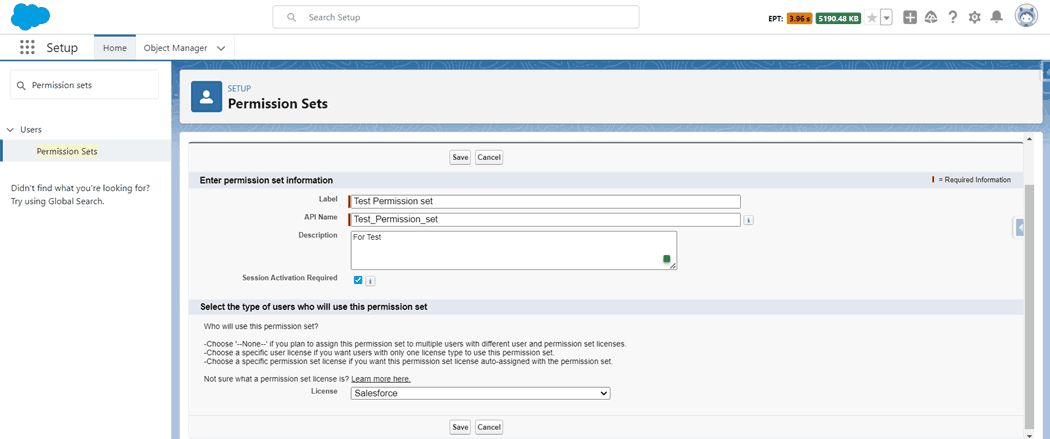
- Give the Label and description to Permission Set and Save
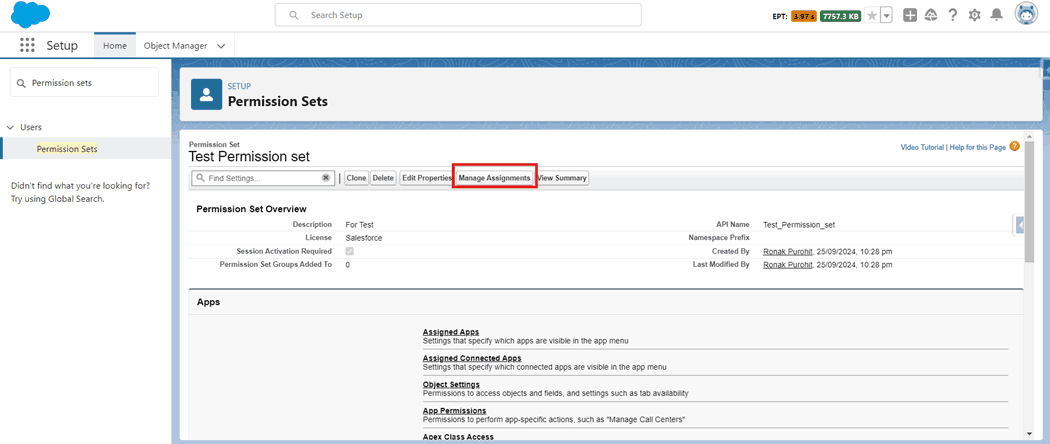
- Click on Manage Assignmennt
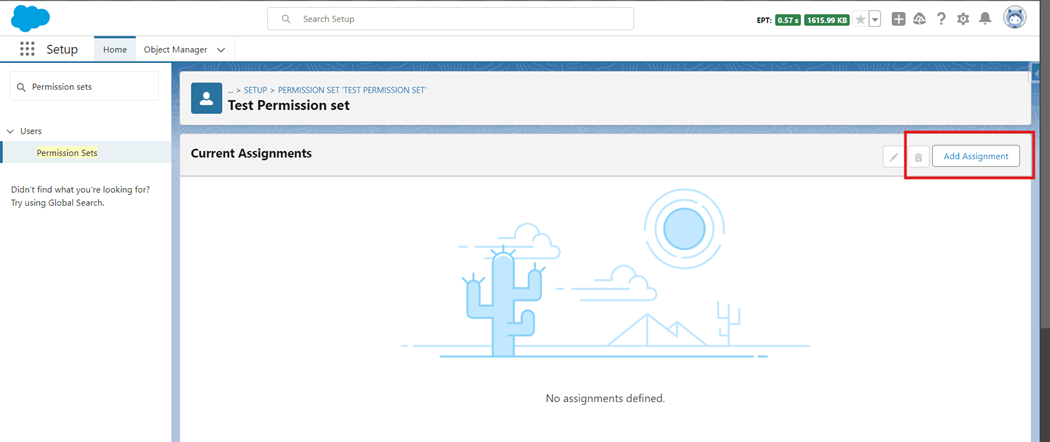
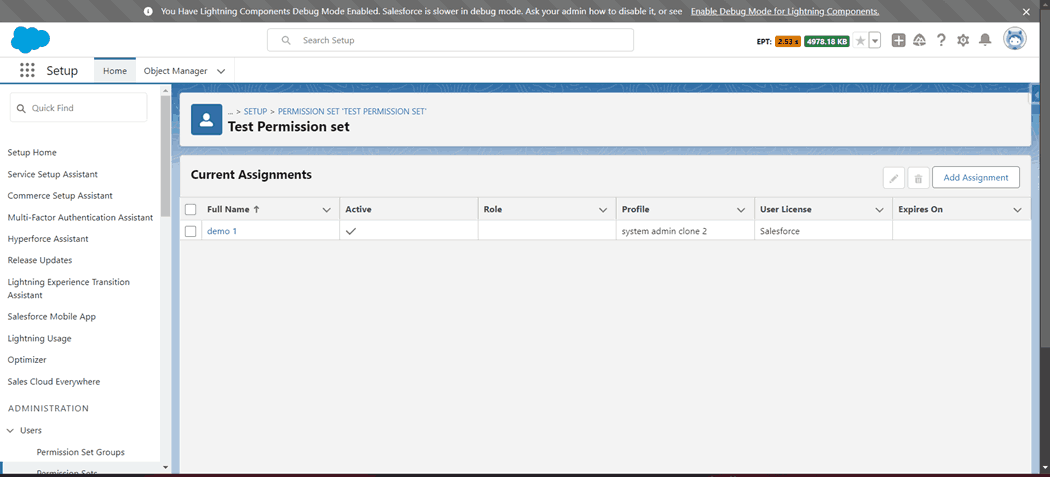
- Add Assignmennt
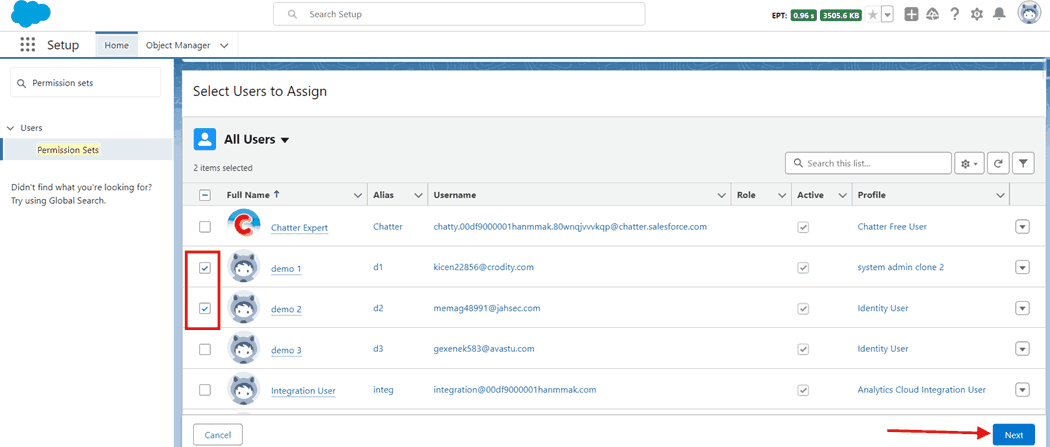
- Select the User which You want to Assign Permissoin set and Next
- Here you can save with and with our expire date and Click on Assign
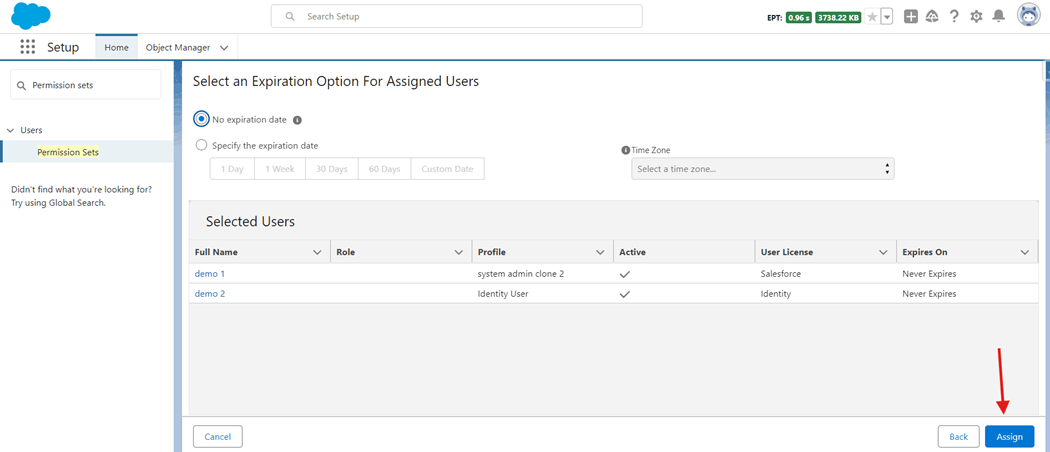
- Here You can show Assign Users
Challenges with Salesforce Profiles
Managing numerous profiles in large organizations can be complex. Assigning too many permissions can compromise data security. Permission Sets offer a more granular and scalable approach to user access control.
Transitioning from Profiles to Permission Sets
Permission Sets allow for assigning specific permissions to users based on their needs, reducing the need for complex profiles. This approach is more scalable and efficient for larger organizations.
Basic Example and Explanation
Example: Sales User Profile
- A Sales User Profile might allow them to view and edit leads and opportunities.
- This lets them see existing leads and opportunities, change details, and create new records.
Advantages of User Profiles and Permission Sets
- Security: Controlled access reduces the chances of unauthorized viewing or tampering with sensitive data.
- Efficiency: Profiles and permission settings ensure that users have the resources they need to perform their duties effectively.
- Scalability: More profiles and access settings can be added as the company grows.
Disadvantages
- Complexity: Using too many permission sets and profiles can become difficult to manage in large organizations.
- Over-Granting of Access Rights: Giving too much access can compromise data integrity. Strategic planning is essential.
Conclusion
In Salesforce, Profiles and Permission Sets are essential tools for managing access and permissions across an organization. Profiles are the primary means of defining users' baseline permissions, including access to apps, tabs, and system-wide settings. They are associated with user roles and determine the standard permissions for each role within an organization. Permission Sets, on the other hand, provide flexibility by allowing additional permissions beyond what is set by the user’s Profile without creating new profiles for minor variations in access needs. This model supports scalability, security, and a tailored user experience, making it easier to manage permissions as teams grow and roles evolve.
