

Blockchain is a distributed digital ledger that stores information in blocks linked together in chronological order. Each block contains transaction data secured using cryptographic techniques, making the records difficult to alter or manipulate.
- Enabling secure, transparent and decentralized digital systems.
- It allows data and transactions to be recorded in a tamper-resistant ledger shared across multiple computers.
- Eliminating the need for a central authority
- Blockchain improves trust, efficiency and security in modern digital operations.
There are some major benefits:
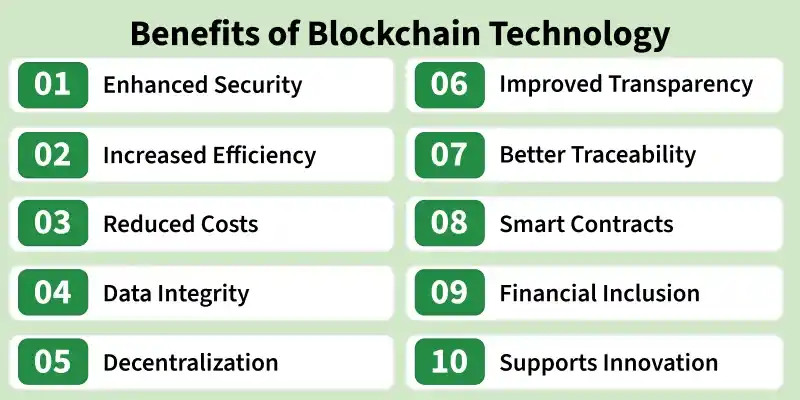
1. Enhanced Security
Blockchain uses cryptographic encryption, decentralization and consensus mechanisms to secure data and transactions. Because every transaction is verified by network participants, blockchain creates a highly secure environment for digital operations.
- Protects against unauthorized access and data tampering.
- Reduces risks of cyberattacks and fraud.
- Ensures secure peer-to-peer transactions.
- Provides immutable records that cannot easily be altered.
2. Improved Transparency
Every transaction recorded on a blockchain can be tracked and verified by authorized participants. Industries like supply chain management and finance use blockchain to improve visibility and reduce disputes.
- Creates trust among users and organizations.
- Enables real-time tracking of transactions.
- Improves accountability in business operations.
- Simplifies auditing and compliance processes.
3. Increased Efficiency and Speed
Traditional systems often rely on intermediaries and manual verification processes that slow transactions. Blockchain automates verification and enables faster data sharing.
- Faster transaction processing.
- Reduced paperwork and manual tasks.
- Real-time settlement of payments.
- Lower operational delays.
4. Reduced Costs
By removing intermediaries such as banks, brokers, or third-party verification services, blockchain helps reduce operational expenses. Businesses can streamline operations while improving overall productivity.
- Lower transaction fees.
- Reduced administrative costs.
- Less dependency on third-party services.
- Minimized infrastructure expenses.
5. Data Integrity and Immutability
Once data is added to the blockchain, it becomes extremely difficult to modify or delete. Immutable records are especially useful in healthcare, legal documentation and financial systems.
- Prevents unauthorized record changes.
- Maintains accurate historical data.
- Enhances trust in digital records.
- Improves reliability of stored information.
6. Decentralization
Blockchain networks operate without a central authority controlling the system. Decentralization also reduces censorship and dependency on centralized institutions.
- Eliminates single points of failure.
- Improves system reliability.
- Increases network resilience.
- Gives users greater control over data.
7. Better Traceability
Blockchain creates a permanent and traceable history of transactions and asset movement. Companies can identify issues quickly and improve supply chain transparency.
- Tracking products in supply chains.
- Verifying product authenticity.
- Monitoring food safety.
- Preventing counterfeit goods.
8. Smart Contract Automation
Smart contracts are self-executing digital agreements stored on the blockchain. They automatically perform actions when predefined conditions are met. Smart contracts are widely used in finance, real estate, insurance and decentralized applications.
- Automates workflows and agreements.
- Reduces human intervention.
- Minimizes errors and delays.
- Increases transaction reliability.
9. Improved Financial Inclusion
Blockchain enables secure financial services without requiring traditional banking infrastructure. This can help expand financial opportunities worldwide.
- Access to digital payments and banking.
- Cross-border transactions with lower fees.
- Services for unbanked populations.
- Greater accessibility to decentralized finance (DeFi).
10. Support for Innovation
Blockchain supports the development of new digital ecosystems and technologies. Its flexibility allows businesses to create innovative and transparent digital solutions.
- Decentralized applications (dApps).
- Digital identity systems.
- Tokenized assets.
- Secure voting systems.
- NFT marketplaces.
