


Ukraine has approved its long-range operations for October and mapped out how supplies for its F-16 fighter jets will reach the country by the end of the year, President Volodymyr Zelensky said.
Zelensky made the announcement in a statement on Tuesday, Sept. 29, following what he called a detailed discussion with Ukraine’s Defense Ministry and the military officials responsible for planning domestic weapons production.
JOIN US ON TELEGRAM
Follow our coverage of the war on the @Kyivpost_official.
The meeting also covered a new system to counter Russia’s jet-powered Shahed drones.
“There are specific countries with which we are negotiating concrete aviation packages. Reinforcements will arrive in the near future,” Zelensky said, without publicly revealing the countries involved or disclosing what the packages would include.
Belgian jets and ammunition
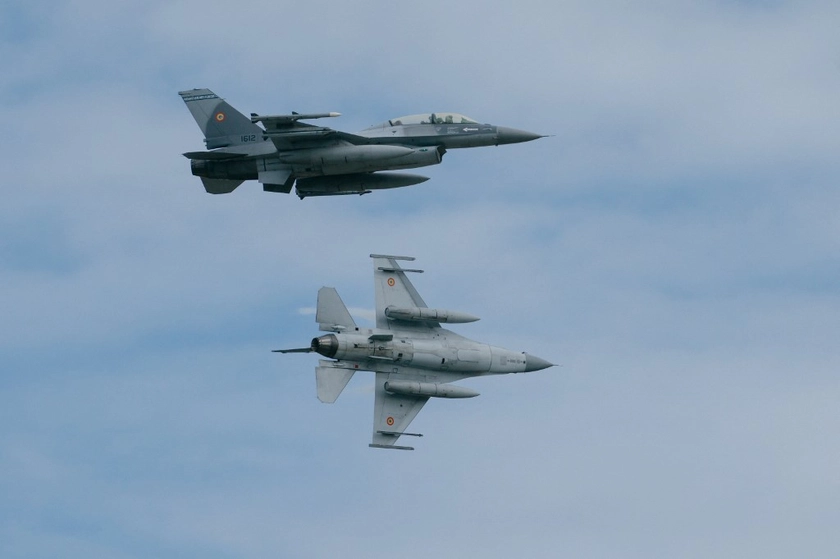
Zelensky’s most recent remarks come hours after he announced a deal with Belgium, which agreed to transfer three F-16 fighter jets to Ukraine by the end of 2026.
He said Kyiv would work to receive the aircraft through an accelerated procedure and that Ukraine had already received urgent deliveries of F-16 ammunition from Belgium and Spain.
“As Russia escalates its attacks every day, we need to add more capabilities to shoot down aerial targets and protect people,” he said, without providing the delivery timeline.
Prototypes to counter jet-powered drones
Ukraine has agreed on the first prototypes of a system designed to down jet-powered Shaheds, which are faster (reaching speeds of up to 230-270 miles per hour) and significantly more difficult to intercept than the older propeller-driven models.

Belgium to Transfer F-16 Fighter Jets to Ukraine by End of Year
“We have identified the first prototypes that can already become an effective weapon,” Zelensky said, adding that there are “clear timelines, funding, and production volumes that must be secured specifically for this type of weapon.”
The announcement follows a frank admission from the president a day earlier.
On Monday, Sept. 28, Zelensky said Ukraine’s overall drone interception rate stood at 70%, but only 57% for jet-powered Shaheds – a figure he described as far below what is needed, according to Ukrinform.
Meanwhile, Ukrainian manufacturers have been racing to close that gap ahead of winter.
On Sept. 15, Ukraine successfully tested another interceptor against the jet-powered drones, hitting a Shahed target. Zelensky, however, said that the system’s controls still needed work before it could be considered ready.
At times when other means fell short, Ukraine has also sent the F-16 fighter jets against the drones.
Russia’s winter strategy
The push comes as Moscow intensifies its daily campaigns, following what appeared to be positive and successful meetings with senior US envoys Steve Witkoff and Jared Kushner, who visited both Moscow and Kyiv in early September with new proposals to end the war.
According to the Institute for the Study of War (ISW) on Monday, Russian President Vladimir Putin’s strategy now relies on large-scale combined strikes with ballistic missiles and jet-powered drones to force Ukraine to capitulate over the winter.
However, Ukraine is significantly prepared for its fifth winter of war, Prime Minister Serhii Koretskyi said.
Since his appointment to the post on July 16 amid a broader cabinet reshuffle, Koretskyi has made winter preparation a central focus, particularly because Ukrainian authorities expect Russia to continue targeting critical infrastructure, including the power grid and water supplies.
During his address at the United Nations General Assembly (UNGA) in New York, Zelensky acknowledged the approaching winter could prove extremely difficult for Ukrainians, but warned that Russia would face consequences of its own if it kept striking Ukraine’s energy system.
He called for de-escalation steps before winter but argued that Kyiv could not be expected to hold back while Russia keeps targeting civilian infrastructure.
Ukraine’s strikes, he added, are aimed largely at Moscow’s ability to finance the war.
During the same summit in New York, 51 countries signed a joint statement urging the Kremlin to agree to a full ceasefire and enter meaningful negotiations.
Zelensky also met with US President Donald Trump on the sidelines of the UNGA, calling on partners to organize trilateral talks to continue the diplomatic momentum gained by the discussion with US envoys, while reiterating that Ukraine is ready for a ceasefire.
Russian Foreign Minister Sergey Lavrov attended the summit as well, presenting Russia instead of Putin, who last attended the UNGA in 2015 and has avoided direct meetings with Western leaders since the beginning of Russia’s full–scale invasion in 2022.
Lavrov said that the Kremlin will not pause its “special military operation” even during negotiations, adding that Ukraine would have kept its 1991 borders if the European nations had not “engaged in their shenanigans.”
You can also highlight the text and press Ctrl + Enter

Did Ukraine Use Pelican Ballistic Missile to Strike Moscow?