Tim Shipman

Tim Shipman

Tim Shipman is political editor of The Spectator.

Burnham’s Brexit dream collides with reality

From our UK edition

Andy Burnham turned up in Brussels with a shopping list of things he’d ideally like to secure from the EU but seemed a tad surprised when he was presented with a bill. Not the kind of bill you get from a salesman in a souk either – a bill that’s negotiable. It’s a fixed catalogue of prices if we want to get much more access to the European market. I understand why Farage cried betrayal, but I actually think there’s a very good case that today revealed how unlikely it actually is that we rejoin The Prime Minister (accompanied by a ludicrous charabanc full of ministers: Ed Miliband, John Healey, Louise Haigh and even the chief whip sat down at the big summit table) set off promising to draw a line under ‘a decade of drift’.

The return of Brexit, Bond and… Boris? | with Jon Sopel

The return of Brexit, Bond and… Boris? | with Jon Sopel

From our UK edition

35 min listen

Lara Prendergast is joined by The Spectator's political editor Tim Shipman, broadcaster Jon Sopel and Noble Rot founder Dan Keeling to discuss Andy Burnham's plans to get closer to the EU, Nigel Farage's renewed Brexit campaign and whether Boris Johnson could be tempted back onto the battle bus. Plus, why are so many young men turning to influencing instead of traditional careers? Is Robert Pattinson the right choice for the next James Bond? And Dan shares his tips for finding a great bottle of wine without breaking the bank.

The battle lines of Brexit 2.0 | with Anand Menon

From our UK edition

15 min listen

Ahead of today's UK-EU summit, Andy Burnham is pushing for closer ties with Brussels. But is the Prime Minister laying the groundwork for Britain to rejoin the EU - and does he have a plan to get there?   James Heale and Tim Shipman speak to Anand Menon, director of UK in a Changing Europe, to discuss Burnham’s Brexit ambitions, the political risks of reopening the debate and whether public opinion has really shifted.   Could Britain be heading towards another referendum? And what would Brussels demand in return?   Produced by Abigail Brierley.

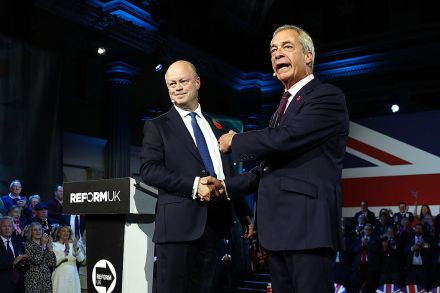
Shippers meets Reform’s new defence chief

From our UK edition

23 min listen

Reform UK's new defence spokesman, Angus McIntyre, joins Tim Shipman to discuss his move from a 40-year military career into politics. Why has he lost faith in the Conservatives? And can Reform deliver on its promises to rebuild Britain's armed forces? McIntyre warns that Britain is dangerously unprepared for the threats it faces. He discusses the need to overhaul defence procurement, increase military spending and confront the growing threat from Russia. Plus: what does McIntyre make of Nigel Farage's position on Ukraine, the government's plans to take in people from Gaza, and the treatment of British veterans over historic allegations? Produced by Oscar Edmondson & Abigail Brierley.

From Brussels with love: they’ve been expecting you, Mr Burnham

From our UK edition

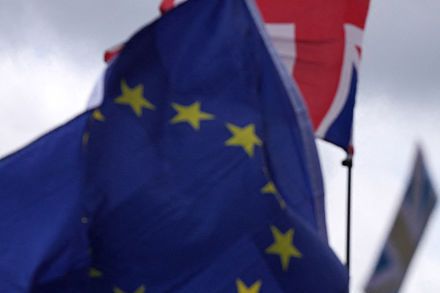
The day after Vote Leave’s victory in the 2016 EU referendum, the campaign director Dominic Cummings turned to a colleague and said: ‘It’s great. We’ve taken back control. The only thing that worries me is who we’re handing control back to.’ This week, that colleague reflected on the ‘prescience’ of these words. Polls show voters do not believe Brexit was handled well over the past decade – something which Andy Burnham has used to justify thrusting Brexit back onto the political battleground. ‘For me it’s déjà-vu on steroids,’ says Nigel Farage who, like a lot of Brexit-eers this week, seems torn between outrage and excitement at the need to get back in the arena and fight. ‘Burnham has decided to poison the well of British politics.’ https://www.

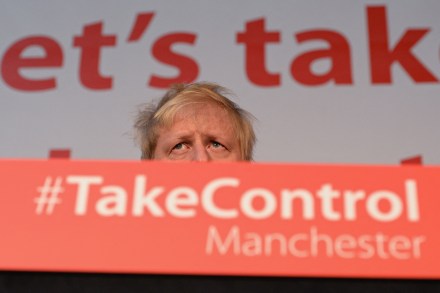
Vote Leave is back!

From our UK edition

13 min listen

As Andy Burnham looks to reignite the Brexit wars, the old Vote Leave campaign has regenerated as Stay Out. Oscar Edmondson is joined by Tim Shipman and Noa Hoffman to unpack the state of the nation ahead of this week’s UK-EU summit.

Tom Tugendhat: ‘China is a bigger threat than Russia’

From our UK edition

In this special edition of Coffee House Shots, Tim Shipman is joined by shadow foreign secretary Tom Tugendhat to discuss Britain's place in an increasingly dangerous world. Why does he believe China poses a greater long-term threat than Russia? Has the government lost sight of Britain's national interests? And why, despite voting Remain in 2016, would he now refuse to vote to rejoin the EU? They also discuss the future of NATO, the war in Ukraine, the European Convention on Human Rights and Britain's relationship with Donald Trump's America.

Rejoining the EU would cost £750m a week

From our UK edition

Brexiteers behind Vote Leave’s victory in the 2016 referendum launched a new campaign group to keep the UK out of the European Union – by hitting Andy Burnham with the claim that going back in would cost Britain £750 million a week. Vote Leave’s internal mantra was always ‘double down’ when under pressure, so rather than resile from the notorious (but perfectly defendable) claim on the side of the famous red campaign bus, that EU membership in 2016 cost £350 million a week, they have come out firing, with calculations that changes to the EU would be more than double. The £750 million a week figure is based on expected gross budget contributions to Brussels of £39 billion a year, up from £19.

Pat McFadden on his plans to get the young into work

From our UK edition

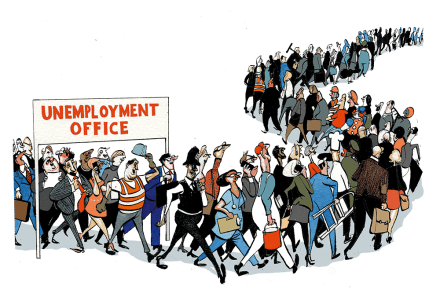
Pat McFadden, the Work and Pensions Secretary, was in a Job Centre in Bellshill, outside Glasgow, when he realised the urgency of the task he had assigned to Alan Milburn, the youth benefits tsar whose report will be published on Tuesday – the first step to reducing the burgeoning benefits budget. ‘The area manager said to me she ran a network of 13 Job Centres across central and east Scotland,’ he says. ‘Over 40 per cent of the young people that she was dealing with were what they call “on the health journey”, which is DWP’s term for either claiming or on the way to claiming long-term sickness benefits. That’s people under 25. I was really struck by that.’ Close to one million young people are not in education, employment or training (Neets).

Burnham has finally come clean about the welfare bill

From our UK edition

Andy Burnham has this afternoon admitted the least well-kept secret in Whitehall – that his planned changes to benefits will at first see costs rise. In a succession of broadcast interviews, the PM pointedly did not say when the overall bill would start to fall. We are now clearly in the run-up to the publication of the Milburn review into the million young people who are not in education, employment or training (otherwise known as Neets). Burnham told Times Radio that this state of affairs left these youngsters ‘without hope’ and that ‘wholesale change’ would be needed.  ‘Of course, in time, the savings will come, and there will be a crossover point,’ he said, ‘but there will be a need to invest up front in young people.

Kim Darroch: ‘Trump was conned by Netanyahu’ over Iran

From our UK edition

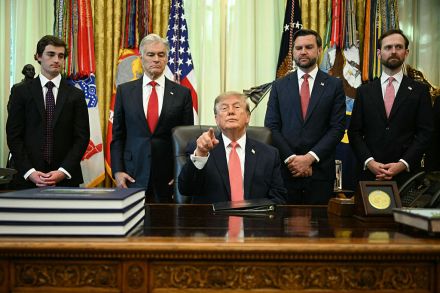
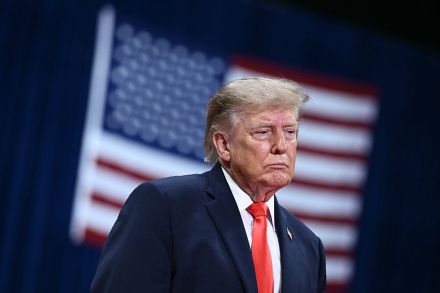
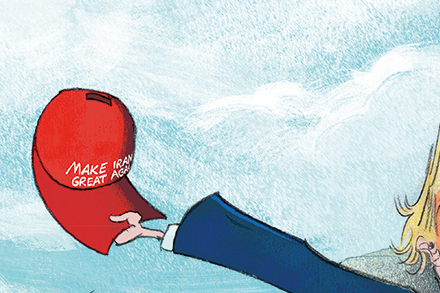
Donald Trump’s midterm defeat has thrown fresh uncertainty over the future of his presidency – and his foreign policy.On today’s Coffee House Shots, Tim Shipman speaks to Lord Kim Darroch, former British ambassador to Washington, about what happens next. With JD Vance already positioning himself for 2028, could the MAGA movement be starting to fracture? And how much damage has Trump’s approach to Iran done to his standing at home?They also discuss whether Andy Burnham can turn the crisis into an opportunity for Britain, who might succeed Trump in the White House, and why a deal to end the war in Ukraine still looks a long way off.Produced by Abigail Brierley. audio_URL:https://assets.pippa.io/shows/68359028e1abc4be6b032cd1/1793884037895-7a57add2-6ee8-4318-b899-04491b2c6ff3.

The blue tsunami: what does it mean for Britain?

From our UK edition

12 min listen

Donald Trump has suffered a generational defeat in the US midterms, with Democrats making sweeping gains across the country. Has the Trump coalition finally fallen apart? And what does the result mean for the future of the Republican Party?James Heale is joined by US Editor Freddy Gray and Political Editor Tim Shipman to discuss the fallout. Is this a vote against Trump rather than an endorsement of the Democrats? And could the result pave the way for a 2028 presidential run by Ron DeSantis or JD Vance?Plus: could Trump's response to the defeat reignite tensions with Iran, and what might that mean for Britain? And in Westminster, who came out on top at PMQs, as Alex Burghart faced Louise Haigh?Produced by Abigail Brierley. audio_URL:https://assets.pippa.

Will Trump and Netanyahu launch another round of strikes on Iran?

An American political operator contacted me last week, before the blue tidal wave swept aside Donald Trump’s Republicans in Congress, with his favourite quote from the 1997 movie Wag the Dog, about an American president starting a war to distract from domestic difficulties: ‘Change the story, change the lead,’ Robert De Niro’s character declares.  The politico, who once ran an abortive Democrat campaign for president, then predicted: ‘The bigger the defeat, the bigger the bombs Trump drops on Iran.’ At that point, the results of the Israeli elections had already eroded Benjamin Netanyahu’s chances of remaining Prime Minister and left two of the most dominant leaders of the last decade with their backs to the wall.

Goodbye to hardline immigration reforms

From our UK edition

Shabana Mahmood has unveiled her long-awaited reforms to immigration rules, including on indefinite leave to remain, and with them the partial climbdown briefed over the past few days. Noa Hoffman is joined by Tim Shipman and James Heale to examine what has and has not changed in the new plans.

The real meaning of the Budget

From our UK edition

I’ve been writing about politics for 25 years and, putting aside the two years (2007-09) I was based in Washington, John Healey’s first Budget on Wednesday was by some distance the most boring I have sat through. As I wrote in my column this week and explained in our live Budget event on Wednesday evening, one possible explanation is that Andy Burnham wants to keep the window open for an early general election, keeping the show on the road and not spooking the markets, while Labour’s poll numbers creep upwards. The markets gave a shrug, but so did everyone else. This was not the end to 40 years of neo-liberalism or the transformation of the British economy and society that Burnham promised. So what is he up to?

The OBR’s verdict on Healey

From our UK edition

John Healey’s budget on Wednesday contained 98 measures, the most since 2010, and yet the OBR appears to be questioning the extent of his £15 billion in headroom. Tim Shipman speaks to the OBR’s David Miles about a tax take heading for a post-war high, the cuts pencilled in for the end of the parliament, and why, by his reckoning, Britain is 25% poorer than it expected to be in 2008.

The Spectator post-Budget briefing

From our UK edition

29 min listen

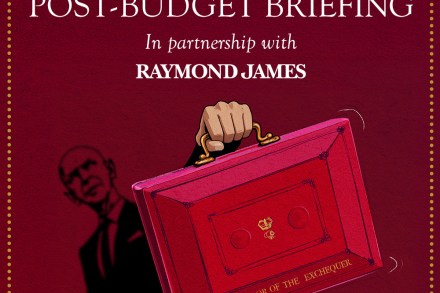
The Spectator’s editor Michael Gove, political editor Tim Shipman, economics editor Michael Simmons, economist and CEO of the Great British Business Council Catherine McBride and Harry Bell, director of financial planning at Raymond James, will give their insights into the autumn Budget, just hours after it is announced.

Is Burnham preparing to call a December election?

What is the purpose of a Budget? To stabilise the national finances? To kickstart economic growth? If you’re John Healey, it may be to show the markets that you’re fiscally responsible and the public finances are safe in your hands. If you’re Andy Burnham, the goal is to show the public that you’re trying to do something about the rising cost of living – and to convince Labour MPs that they were right to give you the job. But Burnham also has big plans to transform the country and this was a Budget more about tinkering than transformation. Yes, defence will get £5 billion more by letting the National Wealth Fund borrow off the public balance sheet to invest in defence companies.

SAS witch hunt: is Britain betraying its own special forces?

From our UK edition

30 min listen

Just days after The Sunday Times revealed that five SAS soldiers were sent back into the war zone while under a three-year murder investigation, MPs passed the Northern Ireland Troubles Bill, which the SAS Regimental Association has threatened to challenge in the High Court. To understand it's implications, Tim Shipman speaks to Richard Williams, former commanding officer of the SAS, about lawfare, the chain of command and what it means for Britain’s standing with Washington. Produced by Oscar Edmondson and Henry Lloyd.