Showing posts with label reading. Show all posts

10 January 2026

Abandoned books

There are many reasons one might abandon a book before finishing it. When I do, it is usually because I find it boring, or because I have a lot to do and after a few busy days or weeks have lost the urge to read it. But here is a book that put me off before I reached the end of the first page.

A Discovery of Witches (All Souls Trilogy, #1)A Discovery of Witches by Deborah Harkness


I'm not going to rate it, because I haven't read it.

I don't usually write reviews for books I haven't read, but I thought I would say why I don't think I'll finish this one, and in fact I didn't get further than the first page. There were two things on the first page that put me off.

"...the summer crush of visiting scholars was over and the madness of fall term had not yet begun."

The speaker, the first person protagonist, is apparently something like a visiting scholar, and is in the Bodleian Library at Oxford University in England. Oxford University does not have a "fall term"; it has a Michaelmas Term. Calling it a "fall term" tells me either that the supposed scholarship of the protagonist is phony, or the author has done a poor job of research for the book.

I suppose one could argue that the author is American, the character is American, and the envisaged (or should that be envisioned?) readers are American, so "fall term" would be understood by them all, whereas "Michaelmas term" might not be. But what would be wrong with "...the summer crush of visiting scholars was over and the madness of Michaelmas term (as the fall term is called at Oxford) had not yet begun." It makes the characters and the setting more authentic, and the readers learn something about the setting. 

And then the visiting scholar or whatever she is thanks the librarian for getting the books she had ordered, "flashing him a grateful smile". I'm not quite sure why, but that phrase put me off completely. It's the kind of language I associate with badly-written and poorly-edited self-published Y/A fantasy novels (for an example, see my review of The Enchanted Crossroads).

I found more examples of such usage in another such book I read recently, The Raven Moonstone, which had phrases like I tossed Jesse a questioning look and Jesse shot me a dopey grin

The thought of another nearly 700 pages of the same put me off. If it were 200 or even 250 pages I might persevere in the hope that it would improve, but this fat book is just too long. I read one Twilight book, and that was enough.

But perhaps if I post this here someone who has read it might tell me that my judgement is too hasty, and if I read on it might improve, and I might even enjoy it.

I read somewhere that Stephen King said that Fritz Leiber had written some good books, so when I found Ill Met in Lankhmar in the library I took it out and began to read it, but didn't finish it. Leiber may have written a good book, but this wasn't it.

But there are some bad books (or at least books that I have thought bad) that I've not only finished, but have actually read twice, mainly because I couldn't believe they were as bad as I thought them after the first reading. More on that here: On Reading Unbelievably Bad Books

05 September 2025

A Literary Mystery

 Now here is a literary mystery that puzzles me, and if you are reading this I hope you might try to help me solve it, especially if you enjoy reading books and use the GoodReads web site.

I've written four novels, three for children and one for adults, and some people who've read them have written reviews and posted them on the GoodReads web site. If a book on the GoodReads web site gets ten or more ratings (books are rated with from one to five stars), it gets a list of other books attached -- "readers who enjoyed this book also enjoyed".

I was hoping to see such lists for my books, partly because I thought that if people who enjoyed my books liked them, I might like them too. And also because, knowing what readers of my books liked could help me to know what kind of books I should write in future. So I was very pleased when one of my books, The Enchanted Grove, got the required 10 ratings and I could see what other books its readers liked.

But the result was weird:

 I can't imagine any readers of my books liking those two books, which I've never heard of. So if you've read The Enchanted Grove (ISBN 978-1-920707-65-1), or any others of my books, and rated them on GoodReads, please let me know if you're read either of those two.
 
Also, if you've read any of my books and have not rated th em on GoodReads I'd be very grateful if you would rate them, and better still, write a review, and check to see if any of your favourite books appear on this list.
 
What I think may have happened is this: I got a couple of spammy emails from people asking for a link to my book. I gave them a link, and then a couple of reviews appeared. Both were filled with fulsome praise for the book which I was pretty sure were written by AI, and that the people who had posted these reviews had not read the book at all. It looks like some kind of scam to get the two books shown above listed on my book's page as a means of promoting them. The implication is that most of the readers of The Enchanted Grove had those two books as their favourites, which I find very hard to believe. 
 
If you haven't read The Enchanted Grove, and would like to, you can find out more about it, including where to get a copy, here.

28 March 2025

Abyss

Abyss by Paul Bryers
My rating: 4 of 5 stars

I discovered, after taking this book out of the library, that it was the third book in a trilogy, and I haven't read the first two, so I've missed much of the backstory, and I'm not really qualified to review it. What drew me to it was reading the blurb and seeing that it was more or less in the same genre as most of the books I've written and am writing, so I was interested in seeing how other people do it.

In this story Jade runs away from her boarding school in Cumbria, England, just before being expelled, and her foster mother Emily meets her, and they are then chased by Jade's real father, Kobal, and escape from him with some difficulty, and they are joined by a Benedict, a long-lived member of a miliary monastic order. Benedict believes that Kobal wants to use his seven children, by seven different mothers, for an evil purpose. He had gathered six of them, but Jade had escaped (presumably in one of the earlier books) and Kobal was looking for the seventh. So the three of them set out to travel to Romania, where they hope to find the seventh child.

It was quite a pleasant read, with lots of adventures during the travels, though the denouement was a bit over the top.

One of the things I found rather disappointing is that Jade, the main character has superpowers. In this case it was integral to the plot in that she was bred for this by her father, who wanted to use her and her siblings for nefarious purposes, so she was not altogether happy about having these powers, and would probably have been happier without them, and in the earlier part of the story she rather regretted use them against bullying school fellows.

It may be just me, having this aversion to superpowers, at least for my main characters. Perhaps that is what  most readers want. Perhaps they like to picture themselves as having superpowers, and that is the attraction of such books. I suppose I was a bit like that as a teenager too. Up to the age of 12 most of my reading was of things like Biggles and Enid Blyton's adventure stories. Biggles & Co had one super skill, which made them different from most people, and that was the ability to fly aeroplanes, but it was a skill that anyone who really wanted to might be able to learn. Enid Blyton's characters were ordinary children who got into trouble and ether got out of it by their own ingenuity or by the intervention of adults.

When I was 13, however, we stayed with friends whose son, then a university student, had a huge collection of comics which he had been dumped in the garage. There was a run of Hotspur covering several years, so I was able to read complete runs of several serial stories, with each weekly episode followed by the next. Several characters in those stories either had superpowers, or access to gadgets which, like Aladdin's lamp, gave them superpowers while the possessed it. Some of the plots involved how they lost and regained possession of the gadgets. And so I pictured myself, like Jade in this story, having such a gadget, and picturing myself using it as protection or revenge against schoolfellows I feared or disliked. It was really a kind of excuse for misanthropy. A couple of years later, when I was about 15, I got similar satisfaction out of reading Gulliver's Travels, a kind of "the more I see of some people, the more I like my horse kind of thing. But it seems there are some people who never grow out of the desire for superpowers, and I wonder if they grow up to be people like Elon Musk.

View all my reviews

05 February 2025

The Drawing of the Dark

The Drawing of the Dark

The Drawing of the Dark by Tim Powers
My rating: 4 of 5 stars

I have often expressed the wish to be able to read more novels of the kind written by Charles Williams and various people have been recommending books by Tim Powers, telling me that they are a similar genre. After searching in vain in bookshops and libraries for years, I was given some money and got the ebook version of this one. and yes, I can say it is in the genre of Williams's novels, which means that in writing about this one, I'm inevitably comparing it with Williams. Another book one could say is in a similar genre is Jonathan Strange & Mr Norrell, which I tried to read and didn't finish.

In The Drawing of the Dark Brian Duffy, an Irish mercenary soldier of the 16th century, is down-and-out in a port town somewhere in southern Europe (I've forgotten the name of the town, and Kindle won't let me page back to look it up, perhaps it was Trieste or Venice) when he is recruited by a strange character as a bouncer for his pub in Vienna. Duffy travels to Vienna to take up his employment, with several strange adventures on the way.

On arriving in Vienna, he is not welcomed by the manager of the pub, but is pleased to meet an old girlfriend. Epiphany, who had married someone else, but her first husband had died, giving him something to hope for. When his employer eventually arrives in Vienna, Brian Duffy discovers that being a bouncer is only the start of his duties. The year is 1529 and Suleiman the Magnificent in Constantinople is preparing to send his army to capture Vienna. His object however, seems to be not so much the city itself as a certain barrel of beer, which it is said, will revive the Fisher King of Arthurian legend and give magical powers to those who drink it. The army of the Sultan approaches, the city is besieged, but behind the conventional battle to attack the city walls, there is a magical battle for control of the beer, with rival magicians on each side seeking to control armies of supernatural creatures.

There are physical battles with swords and cannons and mines and sorties, so there is plenty of action in the story. There are also the magical battles between the rival magicians and characters channelling Merlin and King Arthur. But though the elements are there, Charles Williams it isn't. The appearance of the supernatural creatures is described, but they don't seem to mean anything. In Williams's story the supernatural creatures are significant in themselves, but in The Drawing of the Dark they are simply tools in the hands of the rival magicians. And the ending was disappointing -- the title suggested it would end with the drawing of the dark beer, but that happens offstage, as it were, if it happened at all. The dark is never actually drawn.

In Charles Williams's novels, "magicians" of the kind portrayed here are usually evil, with evil intentions, the prime example being Sir Giles Tumulty. I don't know about Tim Powers, but Charles Williams seems to have moved in circles of magicians or would-be magicians, and his portrait of them in his novels is not flattering. The world of Tim Powers seems to be driven by Renaissance magic, and so this book, at least, seems to resemble Jonathan Strange & Mr Norrell more than anything Williams wrote. Merlin and Ibrahim are magicians or witches rather than wizards.


View all my reviews

25 December 2024

Two very different books: Mr Mercedes and 1001 Nights

I've just finished reading two very different books, one a crime novel by Stephen King, which I finished in less than a week, and the other an anthology of short stories compiled about a millennium earlier, which took me nine months to read.

Mr. Mercedes (Bill Hodges Trilogy, #1)Mr. Mercedes by Stephen King
My rating: 4 of 5 stars

Bill Hodges is a retired detective, bored with his retirement, facing the question "why kill time when you can kill yourself" when a letter drops into his mail box, claiming to me from the perpetrator of one of his biggest unsolved cases, a mass murder in which a stolen car was driven into a queue of job seekers.

Bill knows he should take the letter to his old colleagues in the police, but the letter invites him to an internet chat site, where the killer taunts him, and he turns private detective, seriously seeking to catch the killer before he kills again. And the closer he gets, they more it becomes clear that only he, and his associates, a young black student and a middle-aged woman with mental health problems, will be in a position to stop the killer before he kills again.

It's not a whodunit, since the reader knows who that is all along, but rather the story of a race against time to find where the killer is going to strike next, and to stop him.

Tales from the Thousand and One NightsTales from the Thousand and One Nights by Anonymous
My rating: 3 of 5 stars

This is the kind of book one hears about long before one actually reads it. I saw it in the library and thought such a book of short stories would be nice to read before going to bed.

I'd read bowdlerised versions of some of them as a child, such as the story of Aladdin and the magic lamp, which has found its way into children's anthologies of short stories, as have some of the others, such as those concerning Sindbad the Sailor; actually he wasn't a sailor, he was a businessman who chartered ships to carry his merchandise, but the ships invariably got wrecked, casting him up on a strange shore, where after some hardships he usually acquired more merchandise, and restored to prosperity, returned home.

Most of the stories have the same or similar tropes, which can be summarised by the song from Gilbert & Sullivan's comic opera "The Mikado" --
Taken from the county jail
By a set of curious chances
Liberated then on bail
On my own recognizances
Wafted by a favouring gale
As one sometimes is in trances
To a height that few can scale
Save by long and weary dances
Surely never had a male
Under such-like circumstances
So adventurous a tale
Which may rank with most romances.
And many of the romances that it may rank with are those in this book.

View all my reviews

15 July 2024

A Gentleman in Moscow -- the mind and face of Bolshevism

A Gentleman in MoscowA Gentleman in Moscow by Amor Towles
My rating: 5 of 5 stars

The best book I've read so far this year.

Count Alexander Rostov is sentenced by the Bolsheviks to indefinite house arrest in the Hotel Metropole in Moscow's theatre district. He becomes head waiter of the hotel, with friends among the staff and some of the regular guests, including an actress and a nine-year-old girl who has acquired a master key to all the hotel rooms, and shows him all the secret places. His life is so bound up with the hotel that it almost becomes a character in the story.

Through the life of the hotel Count Rostov (and the reader) learn of the changes of Soviet society. Once, many years ago, I read a book called The Mind and Face of Bolshevism and this book reminded me of that one at several points, in that it actually gives one a fairly good picture of Soviet life during that period. The Mind and Face of Bolshevism must be a fairly rare book. The copy I read was at the library of the KwaNzimela Centre in Zululand, but when we visited it in 2012 about three-quarters of the books had disappeared from the library, including that one.

It is also a book to savour, like a good wine. I found I only wanted to read a chapter, or sometimes a scene or two, and think about them before reading on, so I interspersed my reading of it with several other books. One needs to pause after each scene to think about it.

View all my reviews

08 May 2024

Travelling through southern Africa in the 19th & 21st Centuries

Footing with Sir Richard's Ghost

Footing with Sir Richard's Ghost by Patricia Glyn
My rating: 5 of 5 stars

Patricia Glyn, having heard about the travels of her great grand uncle Sir Richard Glyn, decides to walk the trail of his 19th-century journey from Durban to the Victoria Falls. This is the diary of her journey, with excerpts from his diary, and notes on the places they passed through, and historical events that had taken place there.

Sir Richard Glyn and his English companion were that comparatively rare species of traveller, the British "sportsman", who came to Africa primarily to hunt animals for sport, and left with their trophies. Though comparatively rare, however, unlike most other travellers they kept comparatively good written records in the form of diaries, and so their travels are better documented than most.

The book was a toss-out from the Alkantrant Library, probably a donation from a deceased estate. I hope the reason that the library tossed it out was that they already had a copy, and not just that they didn't think they needed one because it would be a pity if this book were not available. Just as her relative's diary is a valuable account of how people travelled and lived in the 1860s, so hers is a record of how people travelled and lived in the same parts of the world in the early 21st century.

In the 1860s the travellers relied of paid local guides, accounts of other travellers, or local advice or knowledge. In the 21st century this was supplemented by cell- and satellite phones and more accurate maps.

One of the reasons I found it interesting was that in 2013 my wife Val and I went on a similar journey, following in the footsteps of her great-great-grandfather Fred Green, who travelled through much of the same region, and also that to the west, from the 1850s until his death in 1870. Unlike the Glyns, he was not a sportsman, but a professional hunter, trader and explorers, his main source of income being ivory for which he hunted and traded. Unlike Patricia Glyn, however, we did not walk, but drove by car, taking three weeks instead of five months.

The book is illustrated with photos and maps, and has side panels with historical and geographical notes drawn from a variety of sources, which are all listed in the copious bibliography.

View all my reviews

05 February 2024

A Quiet Belief in Angels

A Quiet Belief in Angels

A Quiet Belief in Angels by R.J. Ellory
My rating: 4 of 5 stars

Given the title, it was not quite what I expected.

It starts off with this kid, Joseph Vaughan, who's 11 going on 12, and in love with his teacher and half in love with the girl who sits next to him in class. But his father dies and the girl is murdered, and someone tells him about dead people becoming angels so he gets interested in the topic and tells his teacher all about the Celestial Hierarchy -- the works. Like he's read Dionysus the Areopagite (Pseudo, if you insist) and all that stuff, but he says he got it from the Bible.


But after that there's not much mention of angels, apart from a few feathers. Joseph's teacher encourages him to become a writer, and give him books to read.

A lot more girls get murdered, and Joseph and his friends vow to protect them, but fail to do so, and his friends grow up and forget their promise, but Joseph persists, and his life is pretty sad. It's a sad story, but worth reading, only not for the reason I thought.

View all my reviews

30 January 2024

Winds of Evil: a Christian urban fantasy novel (incomplete)

Winds of Evil (Book One of The Laodicea Chronicles)Winds of Evil by Sharon K. Gilbert
My rating: 3 of 5 stars

I have not finished the story, this book is not a stand-alone, or part of a series. It is a long book published in several volumes, but as I didn't see the next part in the library, I probably never will finish it, and so this is not a review, but just a few observations.

The book is billed as a "supernatural thriller", which immediately makes me think of Charles Williams, whose novels have been described as such.

But the back cover blurb begins "what would you do if your town was infested with demons?" -- to which my answer would be "Thank God they were exorcised." And it immediately makes the think of Frank Peretti whose "supernatural thrillers" have very materialistic demons.

Fortunately the demons in this story (or at least the first volume of it) are not as materialistic as Frank Peretti's. The story is set in a town called Eden, in Indiana on the banks of the Ohio River. Katherine Adamson, now a successful author, returns to her home town after the death of the aunt who brought her up after the death of her parents, and everyone tells her that the town is much worse than when she left it. There seems to be endemic corruption in local government and local business. On the outskirts of town there is a sinister Institute reminiscent of the N.I.C.E. in That Hideous Strength by C.S. Lewis. And a child who was among the first to see one of the infesting demons compared it with the description of a balrog from The Lord of the Rings.

So far, so good. I'd be interested to see how the story develops in subsequent volumes, though I would hope it didn't go on for ever, like The Game of Thrones, which I gave up halfway through the second volume.

View all my reviews

14 November 2023

Now that I have an ebook reader...

My daughter had a spare Kindle, and when I mentioned that such a thing might be useful for reading during load shedding, she sent it to me, and I've just finished reading this book on it:

The Book of Three (The Chronicles of Prydain, #1)The Book of Three by Lloyd Alexander
My rating: 5 of 5 stars

Not quite fan fiction, but a story in the setting of the Mabinogion with some of its characters, like Math, son of Mathonwy, in background roles. I found it an enjoyable read, so I gave it 5 stars on GoodReads.

It's a book I've been hearing about for a long time. On GoodReads, people who liked books I liked also liked this one. In online forums where people discuss books, several people have mentioned this one, but I've not been able to find a copy in a library or bookshop. But I found one for the Kindle reader, which could also be read during load shedding.

I won't go on to the next book in the series immediately, because there are other series that I want to read as well, like The Dark is Rising. That one interests me more, not because it's better written or anything, but because several readers have compared my children's books to it.

Some people have asked why, if we can't find books locally, we don't just order them from suppliers like Amazon, which seem to have everything. Well, yes, that is where I got the first two books in the The Dark is Rising series, but getting physical copies of books from overseas is very expensive and a big schlep. If you don't collect them from the post office within a certain time, they send them back, and we don't go to the post office very often, partly because there isn't much post, and partly because the City Council of Tshwane has turned most of the parking space near the post office into no-stopping zones, and the few parking spaces left are 15 minutes only, if they aren't full, and it takes more than 15 minutes to collect overseas parcels from  the post office, so you are likely to return and find your car has already been towed away. So fetching the post is such a schlep we don't do it very often, and most of it is commercial bumpf anyway. 

So that gives ebooks two big advantages right now: (1) you can read them during load shedding and (2) you can get books that are unobtainable in hard copy.

But I still prefer hard copy books when I can get them, and when there's light to read them by.

View all my reviews

26 September 2023

Coming to faith through Dawkins

Coming to Faith Through Dawkins: 12 Essays on the Pathway from New Atheism to Christianity

Coming to Faith Through Dawkins: 12 Essays on the Pathway from New Atheism to Christianity by Denis Alexander
My rating: 5 of 5 stars

I thought this was a very good book and well worth reading.

A couple of weeks ago I was at the book launch where Denis Alexander, one of the editors, introduced it by interviewing three of the authors, and the following morning I heard him speak on genetic determinism, which happens to be his academic field. Dr Alexander, and the authors, made the book sound interesting, and so it was.

What bothers me a bit about writing a review, no matter how much I enjoyed the book, is that it is in effect a collection of twelve reviews of a book that I haven't read, The God Delusion by Richard Dawkins. Note: Though this piece is based on a review I wrote on GoodReads, it goes beyond the review in being more wide-ranging, and also more personal

The God Delusion is a polemic against religion in general and Christianity in particular, and in this book all twelve authors describe how reading it had the opposite of the intended effect on them.

Obviously not all readers will find Dawkins's book counterproductive, and indeed for some of these authors it initially wasn't; but in all of them it ultimately produced the opposite effect to what the author intended. Many of these authors were looking for something to confirm or reinforce their atheism, but instead The God Delusion had the opposite effect and made them doubt it.

Several of the authors had also read, and been similarly influenced by others of the so-called New Atheists, notably Sam Harris and Christopher Hitchens. I haven't read any of their books either. The nearest I got was picking up The Moral Landscape by Sam Harris in a book shop one day, and glancing through it. I was curious to read what he had to say on the topic, but I didn't want to spend any money on it, so thought I'd wait till I could find someone who had a copy of the book and was willing to lend it to me. From my skimming through it I couldn't see anything new about the "new" atheism though; it all looked very much like the "old" atheism I'd learned about as a first-year university student through the arguments and the tracts handed out by members of the university Rationalist Society led by the redoubtable Dr Eddie Roux. These arguments and tracts were more rational, more logical, and more coherent than a lot of the stuff put out by the "New Atheists" and their followers seems to be.

Some of the contributors to Coming to Faith through Dawkins are working in the same or related academic fields as Richard Dawkins, and admire his work as an evolutionary biologist, and say how disappointed they were when they read The God Delusion, which fell far below the standard of his scientific works. Celebrity in one discipline does not necessarily make one an expert in another, unrelated, field. For more on that, see here.

Though I haven't read any of the works of the "New Atheists", I have encountered some of their disciples and fans online. I usually try to avoid being drawn into arguments with them, as most of them tend to be more dogmatic than their heroes, and their logic tends to be even more simplistic, so that the arguments go round in circles. They love to recite the creed of valid and invalid arguments, often just before asking question-begging questions or setting up a straw man, so one thing I learned from this book was that even the models they base themselves on do that.

One of the best examples of that came from a colleague at work who was an agnostic, and tried to join an online group for discussing atheism, agnosticism and so on. But he was blackballed because he had a heretical view of the nature of God. It turned out that in order to join the group one had to not believe in the god that Sam Harris didn't believe in, having exactly the same nature and characteristics. No other god would do. 

One reason I haven't read any of the works of the New Atheists is that I'm not much interested in the question of the "existence" of God. I have never been convinced by any of the arguments for the existence of God, and I suspect that most Christians are unaware of them, much less convinced by them. Some parts of Coming to Faith through Dawkins mentioned the Cosmological Argument and a couple of others. I'd have to look them up to find what they are, so I just skimmed through those parts of the book. 

That is also another of the reasons I try not to get involved in arguments with soap-box atheists online or in person. The arguments wouldn't convince me, so why would they convince them? The only times I do comment are when the atheist asks a question-begging question, or demonstrates some other logical flaws.

One such question, however, I did relay to Dr Denis Alexander when he spoke on genetic determinism, because it seemed to be right in his field. Someone who bills himself as a talented sceptic asked on Twitter (alias X) "What is the biological cause of the fear of death?"

I took his question at face value, and answered: "Natural Selection. Those who do not fear death do not survive long enough to reproduce."

He didn't comment, but I suspect that that was not the kind of answer he was looking for. There may have been a hidden sub-text; there usually is a hidden sub-text to such questions.

And most questions asked by soap-box atheists seem to start in the wrong place and with questionable assumptions, like "What evidence do you have for the existence of God?" (I learned from Coming to Faith Through Dawkins that the demand for "evidence" is a prominent characteristic of the New Atheists).

Any response is likely to be met with "The onus is on you to provide evidence." But who determined the onus? The onus-putters. The question belongs to Humpty Dumpty; it's really "Who is to be master? That's all."

The authors of Coming to Faith through Dawkins come from many different Christian traditions, and many different academic fields. They come from five different countries (three of them are South Africans -- the ones who were at the book launch). Some of the contributions appealed to me more than others, but because of the variety anyone who has any interest in questions of science and faith, or related questions, should find this book interesting.


View all my reviews

28 January 2023

What a drag it is getting old

The Extra Ordinary Life of Frank Derrick, Age 81

The Extra Ordinary Life of Frank Derrick, Age 81 by J.B. Morrison
My rating: 4 of 5 stars
What a drag it is getting old.

Actually that is one of the few songs that I don't recall being mentioned in the book, but it sums up the theme pretty well. Frank Derrick is an 81-year-old pensioner who is harassed by people trying to sell him stair lifts, and ends up in hospital after being run over by a milk float. When he is released from hospital with an arm and a foot in plaster his daughter in America thinks he needs home care, and so he has a nurse visit him once a week to see that he is OK and help with the housework.

He looks forward to the visits and so enjoys the company that he doesn't want the visits to end, and spends most of his time planning how to raise money to continue the care.

When I found the book on the library shelf I nearly put it back. I'd read other similar books, like The 100-year-old Man who Climbed out of the Window and Disappeared and I Didn't Know You Cared. But then I thought, the bloke in the story is 81, I'm 81. What better time to read it than now, before I turn 82? I'm not lonely and living on my own like the bloke in the book: I have a wife and two sons and a daughter-in-law (who happens to be a caregiver, like the other main character in the book). But yes, I have known people like that. And it seemed appropriate to finish reading it on the 70th anniversary of the day I started high school, at a brand new school -- new not just to me, but to everyone there. So the school has been going for 70 years now, a good pensionable age.

So I've read it, and quite enjoyed it, but I don't think I'd want to read it again, as I have re-read I didn't know you cared. But it's worth one read at least.


View all my reviews

25 November 2022

1950s sf written in the 1960s: Chocky, by John Wyndham

ChockyChocky by John Wyndham
My rating: 4 of 5 stars

Back in the 1960s, when I was young, I read quite a lot of science fiction. and in many ways the 1950s and 1960s were vintage decades for science fiction. Later I rather lost my taste for it, or else the genre itself changed, and the newer productions did not appeal to me so much. One of the sf authors I liked most was John Wyndham. I recently re-read a couple of his novels to see how well they had stood the test of time, and found them surprisingly old-fashioned. In hindsight, the writing seemed to have the flavour of the 1940s, very much mired in the time it was written, like the writing of Nevil Shute.

But when I found Chocky in a second-hand bookshop, I was interested because I had not read it before, and it was also published later than most of the others, in 1968, which was the year of student power and student revolution. So I wondered what the atmosphere of the story would be like. And it seemed to be describing British middle-class life in the mid-1950s.

One of my reasons for reading it now is that I am writing a series of children's novels set in the 1960s, and so I am interested in books published in that period, and the kind of language they used. One of the ones I've looked at is The Weirdstone of Brisingamen by Alan Garner. In that one, the language has hardly dated at all, and it could have been written in almost any decade since then. Not so the works of John Wyndham.

Another thing that I found interesting from the point of view of a writer is that several of the people who have read my children's books have commented that in the stories the children seem to have a lot of freedom, and are allowed to roam around freely without adult supervision. They have suggested that this makes the stories seem rather unrealistic. So I was interested to see that in Chocky Matthew and his sister Polly are given what is possibly an even more unrealistic degree of freedom, even after being in danger. And this in a book that is not merely written about the period, but in the period itself.

In the story an 11-year-old boy, Matthew Gore, starts talking to an invisible friend. His parents are concerned, because though his younger sister had an invisible friend, it was at a much earlier age, and she had already got over it. Also, as the younger sister Polly informs the family, when she had an invisible friend, she talked to her friend, her friend did not talk back to her. Matthew, however, is heard arguing with his invisible friend as though the friend is talking back to him.

His parents are worried because "hearing voices" could be a sign of mental disorder, and their concern makes Matthew sometimes wonder if he is going mad. Then his teachers at school start complaining about his school work. He starts solving mathematical problems using unorthodoc methods, he argues with his geography teacher about the location of earth, and with his physics teacher about the speed of light.

The end of the story is predictable and slightly disappointing, and the thing I liked most about the story was the attitude and character of Matthew himself.

There is one other respect, however, in which the story seems dated, and especially not fitting its 1968 publication date, and that is the sexist language. I've read many other 1960s authors, and few of them are as sexist as this. Yet another characteristic that adds to the 1950s "feel" of the book.


View all my reviews

14 September 2022

The Dispossessed: an sf novel on two dystopian cultures

The DispossessedThe Dispossessed by Ursula K. Le Guin
My rating: 4 of 5 stars

One of Ursula le Guin's better novels, I think.

Two planets orbiting the same sun act as moons to each other, and the inhabitants have split because of political and cultural differences. Anarres is dry and austere, and its inhabitants are libertarian and socialist. Urras is lush and green, and its inhabitants are authoritarian and capitalist, or propertarian, as the Anarresti like to call them.

Shevek, a physicist on Anarres , feels that his research and discoveries are unappreciated at home, and makes a journey to Urras to meet physicists there, but finds that the Urrasti want to use his discoveries to increase their own power.

The people of both Anarres and Urras have adopted a kind of apartheid, and want to keep their cultures and political systems separate, so that neither will be contaminated by the views and principles of the other. . The culture of Urras is closer to that of the world we live in and so is easier to depict; the culture of Anarres has no real life model, though certain aspects of it have been advocated by some anarcho-syndicalists, thus it is harder to depict in a convincing way. But authoritarianism manages to creep in there, under the guise of protection of liberty. Though I'm inclined to favour anarcho-syndicalism myself, I've never really tried to envisage just how such a society would work. Ursula le Guin makes a valiant attempt, but it is not quite convincing enough. For the most part Ursula le Guin does a fairly convincing job of showing how such diverse cultures might interact with each other.

Apart from space travel, le Guin does not envisage much technological development in society, and most of the technology -- transport, communications, computers, and the like, are much as they were in the mid-20th century on earth. Anarres has abandoned the week, and based its time measurement on units called decads, presumably of 10 days. But they also speak of "years" when referring to the age of people, and though it seems that these years must be fairly similar to earth years, it is nowhere stated that they are, or how it relates to the orbits of Anarres and Urras.


View all my reviews

04 August 2022

Fever: a Dystopian Novel about a Pandemic and its Aftermath

FeverFever by Deon Meyer
My rating: 4 of 5 stars

I've read and enjoyed several books that envisage a scenario in which the world's human population is drastically reduced following some cataclysmic event. In Fever the cataclysmic event is a pandemic which seems uncanny in the light of the Covid-19 pandemic, which started two years after the book was published, and the book also predicted a Covid variant.

I can't help comparing it with others in the sub-genre that I have read, Earth Abides by George Stewart and The Stand by Stephen King. Earth Abides, which I read in the early 1960s, introduced me to the concept of ecology and the effects that the presence (or absence) of human beings have on the environment.

One effect of such a cataclysm, envisaged by all three of the authors I have mentioned, is a new Dark Age, where humanity is divided into isolated pockets of people struggling to develop a new community. In Fever some of these attempts were constructive, and others destructive. As in the European Dark Ages, there is an incipient feudalism, with marauding predatory gangs of bikers, who might, if they developed along those lines, become warlords and protectors that evolved into the aristocracy of the High Middle Ages. Meyer reminds us that most of the aristocracies of Europe originated in the medieval equivalents of the leaders of biker gangs.

The story is told mainly from the point of view of a teenager, Nico Storm, whose father, Willem, is aware of this danger, and tries to gather people who want to rebuild a productive community, and chooses a site by a dam on the Gariep (Orange) River which has hydro-electricity, plentiful water, and potential for irrigation of crops. They produce leaflets to inform other survivors of their community, and distribute them as widely as they can, as a result of which small and large groups of people join them.

Some of the people who join them have useful skills for maintaining the electrical generating equipment, or producing diesel fuel from plants. One, who chooses to be known only as Domingo, has military skills, to ward off the attacks of biker gangs,

The different characters of the leaders of the community also reflect different trends in society. Willem Storm, the ethical humanist, wants an inclusive society in which people of different backgrounds and interests can live together in peace and freedom, and wants the community to be governed democratically. Domingo, the militarist, thinks a benevolent dictatorship would be better, especially in the chaotic times in which they are living, Pastor Nkosi, representing the religious interest, longs for a utopian community of dedicated Christians living in a theocracy. But somehow they manage for the most part to balance these different visions.

Nico Storm sees all this through the eyes of an impetuous teenager, with volatile emotions, whose loyalties and suspicions keep jumping from one person to another. Willem Storm, perhaps aware that the Dark Ages got that label because of the absence of historical information about them, is determined to prevent that happening in their community, which they call Amanzi (Zulu/Xhosa for "water"), and starts a history project of recording the history of the community and its members, and so the story is not told entirely from the point of view of Nico Storm, whose impetuous judgements and misjudgements and mood swings could give a distorted picture.

I thought Deon Meyer told the story very well, and found it an enjoyable read. The events all seemed believable in the context of the story, until the last 25 pages or so. Then it jumped the shark, and I found the ending of the story disappointing, and almost an anticlimax. It reminded me of another TV series, Dallas, which did something similar when one of the characters returned from the dead. If it weren't for the weak ending, I would have given it 5 stars on GoodReads.

 But I also found The Stand by Stephen King disappointing, and more disappointing than this one, because the disappointment came much earlier in the story -- it was the introduction of a villain who smacked of cheap melodrama, the kind of opponent that Batman would have to deal with, rather than the characters in Stephen King's novel. The villains in Fever are far more convincing, and just as villainous.

In Earth Abides George Stewart has, in some ways a more pessimistic vision, though there is less overt violence than there is in the other two books. But in that book the random survivors have no special skills, and when a community does form, it takes longer, and there is no Willem Storm to provide the vision and lead it. Most attempts to rebuild a community according to a plan fail, because there are simply not enough people with the necessary skills to carry out anything planned, and the community develops in a largely unplanned but possibly more organic way.

Earth Abides was first published in 1947, and is set on the west coast of the USA, and for years after reading it I tried to imagine what I would do in similar circumstances, if such a cataclysm occurred in South Africa. Deon Meyer was obviously wondering the same thing, and his book is the result. My imaginings were similar in some ways, but different in others. I pictured roads deteriorating rapidly, as they tend to do without traffic, and envisaged travelling by rail, using steam engines, which could be made to burn wood if necessary, and so be less dependent on imported fossil fuel.

View all my reviews

14 July 2022

The taking of Annie Thorne (book review)

The Taking of Annie ThorneThe Taking of Annie Thorne by C.J. Tudor
My rating: 4 of 5 stars

A horror story.

Like Stephen King.

After reading the blurb and the first couple of chapters it is clear that this story shares tropes with some of Stephen King's horror novels. From It comes the trope of middle-aged people being summoned back to their old home town to face an old evil that they had had to deal with when they were at school there. And from Pet Sematary comes the trope of the revenant, someone who returns from the dead, but is not quite the same.

That isn't a spoiler, it's right there in the blurb, and becomes evident in the first couple of chapters. And in the acknowledgements the author acknowledges her debt to Stephen King, and he himself wrote an endorsement of the book. So if you liked those two books by Stephen King, you'll probably like this one, and if you didn't, you probably won't.

Having said that, it also isn't written by Stephen King. The setting is different, the characters are different, and the way they interact is different. Above all, the style is different.

It is set in a small former coal-mining village called Amhill or Arnhill (the typeface isn't clear) in Nottinghamshire in England. It is written in a first-person, present-tense style, though the flashbacks to the past are written in the past tense, and the narrator, who is the protagonist ("hero" would be something of a misnomer) lies not only to most of the people he meets, but also to the reader as well. And most of the other characters lie to him too. As a result there are several unexpected plot twists, with some suspected villains turning out to be less villainous than the unsuspected ones.

It's a good story, if you like that kind of thing, and I do.


View all my reviews

06 May 2022

A Dystopian View of the Generation Gap: The Midwich Cuckoos by John Wyndham

The Midwich Cuckoos

The Midwich Cuckoos by John Wyndham
My rating: 5 of 5 stars

When I first read The Midwich Cuckoos, sixty years ago, I thought it was one of the better sf novels I had read. That was so long ago that I'd forgotten most of it except the main plot outline. Now it reminds me of Arthur C. Clarke's Childhood's End -- both are about a strange generation of children appearing in the world.

I thought John Wyndham was one of the better science fiction writers, though in re-reading The Kraken Wakes I found it rather pedestrian. The Midwich Cuckoos is better, but still slower paced than I remembered.

What I liked about Wyndham's books, however, is the same thing that I liked about Charles Williams's books - they are set in this world. As with fantasy, so with science fiction, I'm not particularly interested in outer space -- the sf books I've enjoyed most have all been set in this world -- Brave New World, A Canticle for Leibowitz and so on. And I read them all in the early 1960s, and have reread most of them several times since.

But John Wyndham belonged to my father's generation, and now I notice that many popular British novels of the 1940s and 1950s have characteristics that strike me as odd now. Not Tolkien and C.S. Lewis, but John Wyndham, Nevil Shute and others. Apart from all their descriptions of people smoking, they are all conscious of class, and written from a self-consciously upper middle-class point of view, seeing themselves as the "educated class" and the others as uneducated. They often have a Sir Somebody-or-Other in them who is respected for his expertise in a particular field, almost as though one cannot be an expert in anything unless one is a Sir. Wyndham would have been at school during the First World War, and was in the army in the Second, and so in addition to the division between the "educated class" and the rest, there is also a "Service" point of view that the main characters identify with.

Wyndham also now appears to me as sexist, not overtly, but quite subtly so. One of the minor characters in The Midwich Cuckoos has a PhD, and I get the feeling that Wyndham sees her as an oddity. That is a perhaps a generational thing, and perhaps The Midwich Cuckoos and Childhood's End speak of how people of Wyndham and Clarke's generation approached the generation gap.

In my own life, the 1950s now seem a foreign world to me. That was when I was at school, and the adult world of "business" seemed strange and alien to me. My mother used to dress up to go to town, and to go to church, and I hated dressing up, from about the age of 11 onwards. I was most comfortable in khaki shirt and shorts, which we wore at Mountain Lodge school most of the time. Shorts were uncomfortable for riding horses, and at first I went for jodhpurs, because that is what one did, but Mr Groos, who taught me riding, wore riding breeches. But later I found jeans more comfortable. And perhaps our whole generation was like that, because by the late 1960s everyone was dressing as I had imagined I would like to dress when I was 11 or 12.

In 1962 when we went to church in casual clothes people stared at us, but now everyone dresses like that, and most people I know tend to speak rather disparagingly of "suits". The change came between 1962 and 1967, and has persisted ever since. But perhaps Wyndham and Clarke could see it coming in the 1950s, a strange and alien generation of children growing up to become flower children rather than "Service" children. Books written before 1962 have a different style. Nowadays people speak a lot of different generations, giving them letters, X, Y, Z and so on and I have little idea of what they mean. My own generation seems to have no name and no letter. Back in the day of Childhood's End and The Midwich Cuckoos we did have a name, however. Those born after The War were "baby boomers", and we were "war babies", but since the 1950s no one has spoken of that distinction much, yet for me, at least, that distinction is far more real than the XYZ one, which seem quite indistinquishable to me. If one wanted to give our generation a name today, I suppose it would be the Beat-Hip generation, falling between the Beat Generation and the hippies. Roughly the time when "hipster" got shortened to "hippie", and before it go lengthened again.


View all my reviews

23 March 2022

Searching for Zion

Searching for Zion: The Quest for Home in the African Diaspora

Searching for Zion: The Quest for Home in the African Diaspora by Emily Raboteau
My rating: 5 of 5 stars

A history of people who are searching for a lost home and for the promised land.

Emily Raboteau, daughter of an eminent historian and herself a student of history, writes a personal and family history as well as a story of people searching for the promised land.

I saw it displayed on a stand of new acquisitions in our local library, and grabbed it. Since the book is an intensely personal one, I'm making this a personal review, or rather reaction, so I'll explain why it attracted my attention. The first thing was the word "Zion". I've been interested in Zionist churches since the age of 14, when I met a Zionist minister who mentored me in the Christian faith, which was then a fairly new discovery for me, having had an almost entirely secular upbringing. So I wanted to see if the book said anything about Zionist Christians (it didn't). 

The second thing that attracted me was the name of the author. I knew of Albert Raboteau, the church historian, who, having been raised a Roman Catholic, later became Orthodox, so I wondered if the author was related to him. It turned out that she was his daughter.

An African-American, of mixed race, she grows up envying her childhood best friend, a Jew, who emigrates to Israel to find her promised land. So she travels to Israel to visit her friend, and see if she found the promised land, and that sparks off her interest in other people looking for a promised land, and what she finds is ambiguous.

The trouble with a promised land it that one usually finds other people already living there, and so it is and was with modern and ancient Israel. Raboteau meets "Black Jews" who came from Ethiopia, and had left Ethiopia because they saw Mount Zion in Jerusalem as the promised land.

But for Rastafarians, Ethiopia itself is the promised land, so her journey takes her to Jamaica, drawn partly by her interest in Bob Marley's music, and the fact that Marley, like herself, was of "mixed" ancestry. Raboteau did not mention in her book, however, that in the end Bob Marley found his personal Zion in the Ethiopian Orthodox Tewahedo Church, into which he was baptised  not long before his death. It seems a rather strange omission, given the theme of the book.

Raboteau then visits Ethiopia, and Rastafarian settlements there, and looks at the relations between the incomers and the native Ethiopians. Then Ghana, where many African-Americans, influenced by Marcus Garvey, sought their home and promised land, only to find that most the the Ghanaians saw America as the promised land, and would sacrifice a great deal to go there.

What I found particularly interesting there was her descriptions of different perceptions of history. I've never been to West Africa, but did read something of its history both for a university degree and afterwards. West Africa is where many of the slaves who were taken to the Americas in the 17th to 19th centuries came from. And African Americans, many of whom were descended from those slaves, had n inaccurate perception of the slave trade. 

That was something I became aware of through participating in the question & answer web site Quora, where many of the questions asked about the slave trade showed an anachronistic understanding of history. Emily Raboteau, as a historian, is aware of these attitudes, and examines them critically, from both a historical and personal point of view. The perception of many African Americans seems to be that slavery was a result of racism. But it is really the other way round -- racism is, in many cases, particularly in North America, a result of slavery. The slave trade was in fact an example of entrepreneurship, and slave traders, both black and white, were in it for the money (those words are mine, not Raboteau's, but it is my summary of what she was saying on the subject).

Emily Raboteau returns to the USA, and visits a Neopentecostal prosperity church, which for many black Americans seems to offer a different kind of promised land, exalting exactly the same human impulses that led to the slave trade. And finally she visits the US South, recently ravaged by Hurricane Katrina, where many of her own relatives have become displaced people, but her cousin refuses to speak the language of victimhood and says they are not victims, but survivors.

In reading it, I was reminded of some other books I had read: The long Road Home by Ben Shephard, about people who were displaced after the Second World War, many of whom had no homes to return to. The second is From the Holy Mountain by William Dalrymple. about following in the footsteps of a couple of pilgrims of antiquity, and visiting the places they visited in modern times. It, like Searching for Zion, bring the personal touch to history, and Emily Raboteau's odyssey is a personal pilgrimage as well as a study of other pilgrims. 

Another book that this one reminded me of was The Anatomy of Exile, which I read just after being deported from Namibia in 1972. That was the second major occasion in my life that I was driven to wonder who I was and where I belonged. The first was when I had to leave South Africa in a hurry to travel to the UK to study in 1966. Themes of home, identity, exile, belonging and pilgrimage became prominent then, but I have dealt with these in other blog posts, like What is African: race and identity.

Other historians, and sociologists and anthropologists have written about displaced people, or people searching for a promised land, or people wondering where they belong, in a dry, objective and academic manner. But Emily Raboteau does not. She looks at the history from both sides, and analyses her own reactions, and this is what makes the book really worth reading. She tells other people's stories well, but gives her own reactions to those stories and weaves them with her own story. People talk about narrative theology; this is narrative history.

View all my reviews

18 February 2022

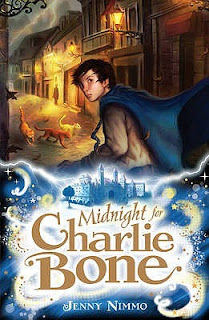
Midnight for Charlie Bone

Midnight for Charlie Bone (The Children of the Red King, #1)

Midnight for Charlie Bone by Jenny Nimmo
My rating: 4 of 5 stars

It seems, from other reviews on GoodReads, that a lot of readers expected this book to be like the Harry Potter books, and judged it largely by comparison with them; they were the current literary sensation at the time this one was published, and it seems to have suffered by the comparison in not living up to some people's expectations, though others seem to have overhyped the comparison.

I didn't have any such expectations, having plucked it off a library shelf and briefly looking at the blurb. I doubt that I'll read any more of the series, because I didn't see any of the others in the library, and |I've never seen any of the others, or even this one, in a bookshop. It did occur to me, after reading a few chapters, that it might appeal to people who enjoyed the Harry Potter books, because it uses some of the same tropes -- boy from dysfunctional home goes to boarding school, makes friends and enemies, drama ensues, often involving magic.

Some tropes may have been inspired by the Harry Potter books -- the lost-in-a-maze one, for example, which appeared in Harry Potter and the Goblet of Fire, which was published two years before this one. And I don't think either of them handled it particularly well. In this book it was the denouement, and it was a bit sketchy and could have gone into a little more detail.

Charlie Bone is about 10 years old (his best friend Benjamin Brown has his 10th birthday at the beginning of the book) Charlie lives with his mother, two grandmothers, and a reclusive and eccentric great-uncle. One grandmother, his mother's mother, is kind and friendly and does most of the cooking and housekeeping. His father's mother is cross and grumpy and rather strict, but it is her money that has kept the family going since Charlie's father died when he was two years old.

When the strict grandmother's sisters, the Yewbeam aunts, visit, after hearing that he has a special gift for hearing people speaking in photographs, they decide that Charlie must go to boarding school. Charlie doesn't want to go to a different school from his friend Benjamin, but the Yewbeams hold the purse strings, and get their way.

The main characters are children of 10-11 years old, and the book is clearly written for children of that age or a little younger. I found it an interesting and enjoyable read and I suspect that most kids of that age would too.

Not everyone thinks so, though. If you want negative view of the book, try this review, from a 16-year-old, which is particularly critical of the style. I found her comments on the style interesting, but also rather puzzling.

I have only a few things to comment on, the first being Jenny Nimmo’s writing style. Yes, I understand that this is a fantasy written for children younger than I am (I’m sixteen, by the way). But honestly, this gives her no excuse to write in the way that she does. What is it, exactly, that I am referring to? Simple—and believe me when I say that “simple” is the right word to use in this situation. Nimmo never gives her characters a chance to express themselves, instead speaking in their place and telling the readers about their actions. Never does Charlie “clench his fists and stare ahead through narrowed eyes”. He is merely described as angry. There is no indication of what he does when he’s angry, how he reacts, or even what he is thinking (more often than not). It isn’t only Charlie, however; every character you come into contact with is practically a cardboard cut out with a narrator following him/her around to explain how they feel. Even young children like to experience the characters’ emotions along with them, and Nimmo seems to think that young equals stupid. Along with this, the sentences she uses are awfully short and rather choppy as well. Yes, children are used to reading such things, but taking the content of the Charlie Bone books into account, the kids reading them are at least able to understand what sentence variety is. Meaning, of course, that they should be able to handle it. In my opinion, this book would have been much better had the author allowed her characters to speak for themselves, and if she’d varied her sentences to include compounds.
It makes me very curious to know what that reviewer thinks is good style. I would like to see some examples. Not everyone gives expression to their emotions by actions, gestures and attitudes, and I can't recall anyone who would "clench his fists and stare4 ahead with narrowed eyes". I don't think I've ever clenched my fists when I've been angry. I think there is a scene in the book somewhere where someone rolls their eyes. It's a description that I find rather embarrassing. I don't know anyone who rolls their eyes. Perhaps that gesture is confined to a particular culture. But the biggest puzzle is the criticism that the style is too simple. Perhaps I've been brainwashed by the "plain English| movement, and had derived my notions of good style from crusty old fogies like Fowler and Sir Ernest Gowers. I've also perhaps been corrupted by having worked too long as an editor of academic texts, whose writers are often seem to think that the more difficult a text is to read and understand, the more "scientific" it is, A few of their fellow academics have criticised that view, for example:
The attraction of jargon and obfuscating convolutions can be fully explained by the normal striving of humans for emoluments and prestige at the least cost to themselves, the cost in question consisting of the mental effort and danger of 'sticking one's neck out' or 'putting one's foot in it'. In addition to eliminating such risks, as well as the need to learn much, nebulous verbosity opens a road to the most prestigious academic posts to people of small intelligence whose limitations would stand naked if they had to state what they have to say clearly and succinctly (Quoted from Social Sciences as Sorcery by Stansilav Andreski.

Is that kind of complex writing what is needed for ten-year-olds? 

So while I didn't think the sty;e of Midnight for Charlie Bone was outstandingly brilliant, I didn't see anything particularly wrong with it, nor with that of the Harry Potter books, and both were a considerable improvement on Enid Blyton, which several generations of kids have enjoyed.

View all my reviews

05 February 2022

The Spire

The Spire by William Golding
My rating: 3 of 5 stars

Not sure what to say about this book, except that it reminded me a bit of Malone Dies, which I re-read last year. 

I kept thinking I was missing something, and went back to read certain bits, and then back to the beginning to see if I could pin it down, but I haven't been able to so far. 

One of my first impressions, when I started reading it, was that it was a kind of parable for the Covid pandemic. The builders kept warning the dead, ?Jocelin, that it was not possible to build such a spire on such shaky foundations, but he urged them to go ahead anyway. And I thought of Donald Trump in the USA, telling people that it wasn't serious, and that anyway a vaccine would soon be developed that would solve the problem, and when the vaccine was developed, many of his supporters refused to take it. It seemed to be that kind of folly. 

Experts on writing fiction (often self-proclaimed experts) warn against including too much of the backstory in a novel -- get on with the action. But reading The Spire I keep wishing for more of the backstory. Jocelin thinks about his angel, his demon, a witch and other things, as if the author expects readers to be familiar with the background, background that I seem to have missed on my first reading, and am still missing in the second.

Eventually there is some kind of commission of inquiry, and they tell him that he can go back to the deanery, where he goes, apparently to die. Other than that, we are not told their findings. Is he still dean, or has he been replaced? But he goes to his room, like in Malone Dies, but keeps getting up and wandering around, and eventually gets taken back to bed to die. Like Malone.  

What have I missed?


View all my reviews

LinkWithin

Related Posts with Thumbnails