
Clapper Rail Rallus crepitans Scientific name definitions
- LC Least Concern
- Names (34)
- Subspecies (11)
Text last updated March 21, 2018
Sign in to see your badges
Species names in eBird-supported languages
| Language | Common name |
|---|---|
| Afrikaans | Kusriethaan |
| Azerbaijani | Çəpikçalan su sərəsi |
| Bulgarian | Карибски дърдавец |
| Catalan | rascló sorollós |
| Chinese (SIM) | 长嘴秧鸡 |
| Croatian | obalna kokošica |
| Czech | chřástal atlantický |
| Danish | Connecticut Klapperrikse |
| Dutch | Klapperral |
| English | Clapper Rail |
| English (AVI) | Clapper Rail |
| English (United States) | Clapper Rail |
| Finnish | räikkäluhtakana |
| French | Râle tapageur |
| German | Klapperralle |
| Haitian Creole (Haiti) | Rato |
| Icelandic | Klapprella |
| Japanese | ヒガシオニクイナ |
| Norwegian | klaprerikse |
| Polish | wodnik karoliński |
| Russian | Карибский пастушок |
| Serbian | Klepetavi petlovan |
| Slovak | chriašteľ atlantický |
| Spanish | Rascón crepitante |
| Spanish (Costa Rica) | Clapper Rail |
| Spanish (Cuba) | Gallinuela de Manglar |
| Spanish (Dominican Republic) | Pollo de Manglar |
| Spanish (Mexico) | Rascón Costero del Atlántico |
| Spanish (Panama) | Rascón Picudo |
| Spanish (Puerto Rico) | Pollo de Mangle |
| Spanish (Spain) | Rascón crepitante |
| Swedish | kustrall |
| Turkish | Alkışçı Sukılavuzu |
| Ukrainian | Пастушок узбережний |
Rallus crepitans Gmelin, 1789
Definitions
- RALLUS
- crepitans
The Key to Scientific Names
Legend Overview
Originally Appeared in
Content Partner

Full content is available exclusively to Birds of the World subscribers. Sign in Learn more
Introduction
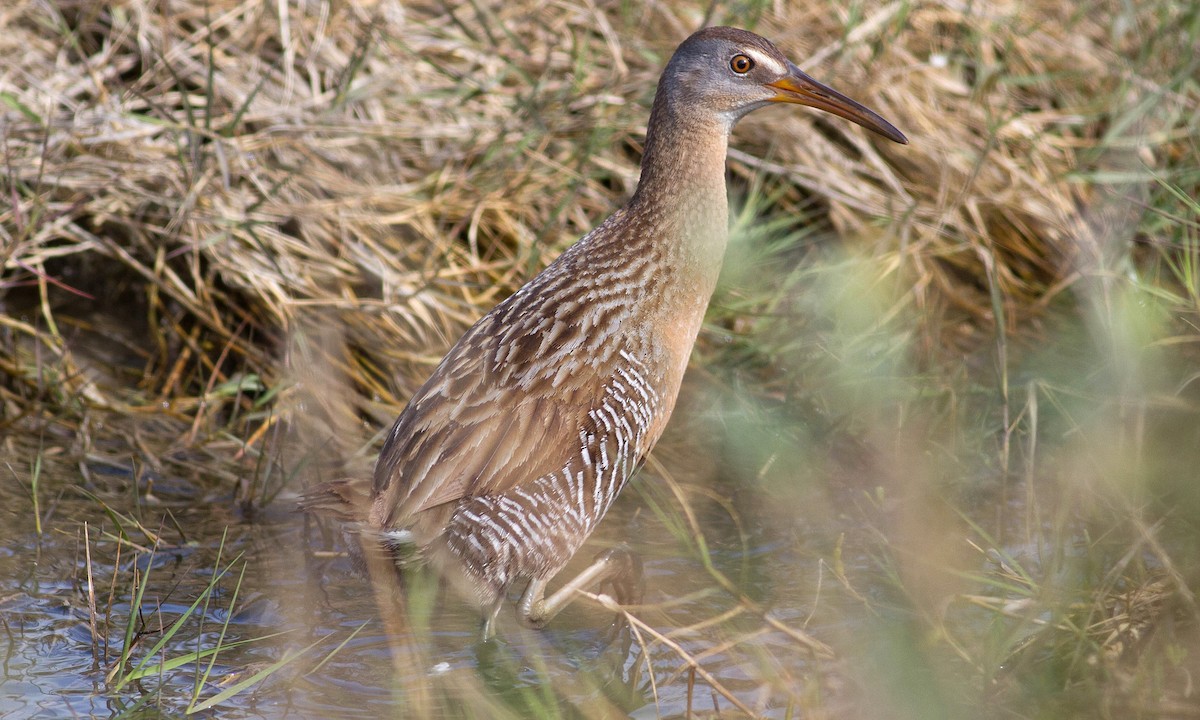
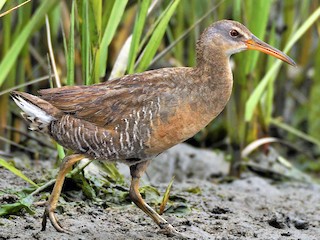
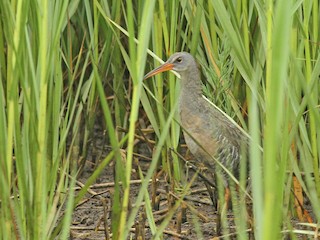
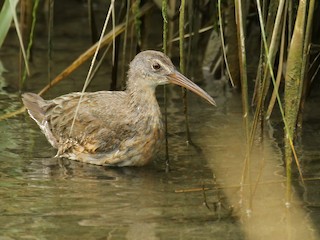
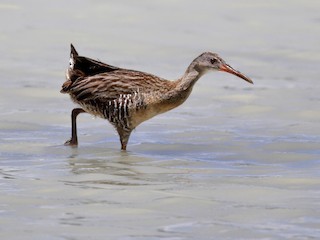
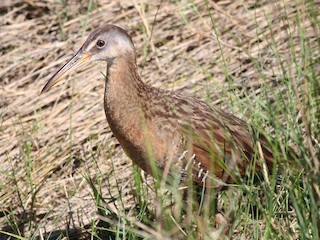
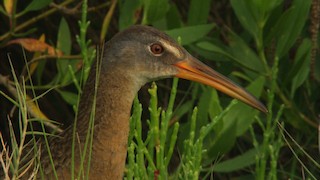
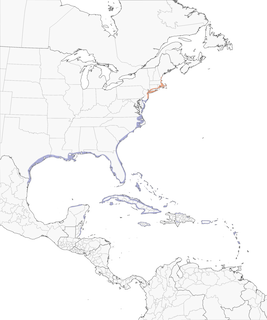
A characteristic species of salt marshes and mangrove swamps, the Clapper Rail is a large, gray to dull cinnamon-buff rail that breeds in coastal wetlands along the Atlantic and Gulf coasts of the United States, and also in the Yucatan and Caribbean. Although it is widely distributed and often locally abundant, little is known about many aspects of its biology because the Clapper Rail is difficult to observe in its dense marsh habitats. Its characteristic loud advertising and territorial vocalizations, often heard, give the species its name.
The taxonomy of the Clapper Rail and the closely related King Rail (Rallus elegans) is complex, the 2 species having been considered conspecific by some authorities. However, the King Rail was recently split into 2 species, the King Rail and Aztec Rail (R. tenuirostris) of central Mexico, and the Clapper Rail was split into 3 species, including the Clapper Rail (see above), the Ridgway's Rail (R. obsoletus) of the southwestern U.S. and northwestern Mexico, and the Mangrove Rail (R. longirostris), of southern Central America and coastal South America. The Clapper Rail varies considerably over its range, with 8 reported subspecies. Most subspecies are sedentary, but breeding populations from southern New England to the Mid-Atlantic region generally migrate south to overwinter along the southern Atlantic Coast. The species may exhibit erratic dispersal movements both before and after nesting, as indicated by radio-telemetry studies and by occasional inland or extralimital records.
The Clapper Rail typically feeds on crustaceans, but will take a variety of other foods if crustaceans are unavailable. Males average larger in size and mass than females, and slightly brighter in plumage. Both sexes assist in incubation and brood rearing, suggesting that the species is socially monogamous. Nest success is typically high in quality habitats, with flooding and depredation being the principal causes of nest failure. Clapper Rail pairs may renest up to five times after failure of previous nests, allowing populations to withstand significant nest loss. The species is hunted locally in many states on the Atlantic and Gulf coasts, but little is known about how hunting influences adult and juvenile survivorship.
Clapper Rail populations in the eastern United States appear stable, although periodic storms may cause local populations to decline temporarily.
- Year-round
- Migration
- Breeding
- Non-Breeding