ePaperNew
Nifty24,175.6584.81
Sensex77,264.51330.92
Gold (MCX) (Rs/10g.)1,56,400.00-2,596.00
USD/INR95.38-0.17

The Morning BriefTune in now for news, views & cues

Morning Brief Podcast

Aug 28, 2026, 10.04 AM IST
Morning Brief Podcast: What It Really Takes To Vibe Code
LISTEN11:16LISTENING...
ET’s Swathi Moorthy cannot code. Yet she has built four web applications using AI. That is the seductive promise of vibe coding: describe what you want and let the machine build it. The reality involves muddled prompts, unreliable advice, stubborn bugs, confusing backends, hosting headaches and subscription bills. In this episode, Moorthy joins Anirban Chowdhury to explain how a non-coder can create and publish an app, which tools make it easiest, and where human expertise remains indispensable. It is a candid account of what AI has democratised and what it still cannot do on its own for ordinary aspiring app builders.
Host: Anirban Chowdhury
Morning Brief Podcast
LISTENLISTENING...
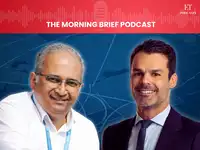
Trilegal began as an outsider in a legal industry dominated by closely held, family-run firms. More than two decades later, it has become one of India’s largest law firms—and part of the establishment it once challenged. Partners Nishant Parikh and Sridhar Gorthi talk to ET’s Vinod Mahanta and Maulik Vyas about the model behind that rise, the founder-rainmaker trap holding back midsized firms, competition from global firms and the Big Four, and why AI could reshape both fees and the traditional associate pyramid. They also confront two deeper questions: whether elite credentials still determine who enters corporate law, and whether Trilegal’s founders can truly surrender power when success arrives.
Morning Brief Podcast

Aug 23, 2026, 06.24 AM IST
Morning Brief Podcast: Love, Inheritance & the Second Innings
LISTEN11:28LISTENING...
Love can arrive at any age. But when it arrives after 60, it often comes with decades of accumulated wealth, grown-up children and expectations about inheritance. As more Indians seek companionship, remarry or choose live-in relationships later in life, families are confronting difficult questions around homes, wills, trusts and succession. Based on Lijee Philip’s report, this episode explores India’s emerging world of silver romance—and the financial negotiations that accompany it. Can older Indians build a new life without unsettling the families and fortunes built in the old one? And can love and inheritance peacefully coexist? Lijee Philp reports, Anirban Chowdhury narrates.
Morning Brief Podcast

Aug 21, 2026, 06.19 AM IST
Morning Brief Podcast: India’s Costly Crude Problem
LISTENLISTENING...
Brent above $90 doesn’t tell the full story of India’s oil bill. Tight physical supplies have pushed some Gulf crude to a hefty premium, while the Russian discounts that helped Indian refiners after the Ukraine war have largely vanished. Disruptions in West Asia have also forced India to source more oil from farther-flung suppliers, adding freight costs. Anirban Chowdhury speaks to ICRA’s, senior VP and Co-Group Chair Prashant Vasisht about why the physical crude market has diverged from benchmark prices, what it means for refinery and marketing margins, whether consumers could eventually feel the pain, and what could bring India’s crude costs down. Listen in
Morning Brief Podcast

Aug 20, 2026, 06.03 AM IST
Morning Brief Podcast: Who Must File Their ITR by August 31?
LISTEN17:48LISTENING...
India’s tax calendar looks different this year. While most salaried taxpayers wrapped up their returns by July 31, taxpayers with certain business or professional income have until August 31. But who exactly qualifies? What happens if you earn a salary alongside income from F&O trading, consulting, freelancing or content creation? Which ITR should you file, and how is F&O turnover calculated? In this episode of The Morning Brief, ET Wealth’s Preeti K talks to with Aarti Raote, Partner, Deloitte about ITR-3 versus ITR-4, presumptive taxation, reconciling AIS and brokerage statements, and the expensive mistakes taxpayers should avoid before the deadline.Listen in.
Morning Brief Podcast
LISTEN09:44LISTENING...
For Indian professionals chasing a US green card, even the fast lane is getting harder. Approval rates for EB-1A — the category reserved for people with extraordinary ability — have fallen sharply, from 49% to 35% in a year. That compounds an already punishing green-card backlog for Indians on H-1B visas, many of whom face waits stretching decades. So what is driving the tougher scrutiny? Can legal challenges change the trajectory? And are Canada, the UK or the investment-linked EB-5 route credible alternatives? On The Morning Brief Swathi Moorthy joins Anirban Chowdhury to unpack America’s tightening immigration maze.
Morning Brief Podcast

Aug 16, 2026, 06.25 AM IST
Morning Brief Podcast: 75 Days in a War Zone
LISTEN12:46LISTENING...
For 75 days, an Indian oil tanker captain and his 23-member crew were stranded in the Strait of Hormuz as war raged around them. Missiles flew overhead. Explosions shook the ship. Supplies dwindled, families waited anxiously and the crew faced pressure to carry out a risky cargo transfer. Through it all, the tanker remained loaded with 110,000 tonnes of cargo. This episode is a first-hand account of life aboard a merchant vessel caught in a conflict it had no part in — and of the seafarers who keep global trade moving while remaining largely invisible, unarmed and vulnerable. Raman Kapoor’s first person account, narrated by Anirban Chowdhury.
Morning Brief Podcast
LISTEN15:19LISTENING...
N Chandrasekaran’s decision not to seek another term as Tata Sons chairman brings an extraordinary year of tensions inside the Tata Group to a head. Behind the succession question lies a deeper struggle over how Tata Trusts exercises control over Tata Sons, how much capital the group should commit to businesses such as Air India, digital and semiconductors, whether Tata Sons should remain private, and how the Shapoorji Pallonji Group gets liquidity from its stake. Anirban Chowdhury speaks to governance experts Amit Tandon, founder and MD IiAS and Shriram Subramanian, founder and MD, InGovern about what Chandra leaves behind and the problems awaiting Tata’s next chairman.Listen in
Morning Brief Podcast

Aug 11, 2026, 08.55 AM IST
Morning Brief Podcast: India’s Export Traffic Jam
LISTEN08:54LISTENING...
Indian exporters are facing a fresh shipping squeeze. Congestion at major transhipment hubs such as Singapore and Colombo is delaying cargo, disrupting schedules and pushing up costs, just as global trade routes are being reshaped by geopolitical tensions and shifting freight demand. But the disruption exposes a deeper weakness in India’s export infrastructure. Despite its vast coastline — and the arrival of the Vizhinjam transhipment port — much of India’s cargo still relies on overseas hubs before heading to global markets. Anirban Chowdhury speaks to ET’s Twesh Mishra about what’s causing the jam, what exporters are losing, and whether India can finally bring its transhipment business home.
Morning Brief Podcast
LISTEN11:37LISTENING...
India’s humble autorickshaw is getting its biggest reinvention in decades. Electric three-wheelers are surging because the economics work: lower running costs, less maintenance and better predictability for drivers and fleets. But the real disruption goes deeper. As Bajaj Auto defends its turf and Mahindra, TVS and others push harder, competition is shifting from price and mileage to range, comfort, software, financing, service and uptime. Lijee Philip reports, Anirban Chowdhury narrates how electrification is rewriting the rules of India’s three-wheeler industry—and why the winners may be those who rethink the autorickshaw itself.
Morning Brief Podcast
LISTENLISTENING...
In this candid interview, ET's tech editor Surabhi Agarwal and Subhayan Chakraborty sit down with India's IT Secretary to discuss ISM 2.0, the government's $13 billion second phase of the India Semiconductor Mission. He breaks down lessons from ISM 1.0's 12 approved projects, the new market-linked funding model for chip design startups, and why silicon fabs now get differentiated incentives over other packaging units. The conversation also covers the government's approach to regulating social media platforms under the IT Act, recent friction with Meta and X over content takedowns, and where India stands in the intensifying global AI race between the US and China. Listen in
Morning Brief Podcast

How Prashant Kishor Shocked the BJP

Aug 06, 2026, 06.22 AM IST
Morning Brief Podcast: How Prashant Kishor Shocked the BJP
LISTEN18:45LISTENING...
Prashant Kishor has spent years shaping election victories for others. Now, he has delivered one of his own. In this episode of The Morning Brief, Nidhi Sharma speaks with Economic Times’ Kumar Anshuman to unpack Jan Suraaj Party’s stunning victory in Bankipur, a BJP bastion for more than three decades. How did Kishor engineer a massive electoral swing just months after his party failed to win a single Assembly seat? What does this upset reveal about the BJP’s vulnerabilities, the RJD’s shrinking space, and the changing political mood in Bihar? And should this bypoll be seen as an anomaly—or an early warning?
Morning Brief Podcast
LISTEN21:55LISTENING...
In the second part of the series, Ratna Bhushan, ET's FMCG Editor, brings in two industry voices to dissect the impact of FSSAI and Maharashtra FDA's crackdowns. Anjan Chatterjee, founder of Speciality Restaurants, argues surprise audits are overdue but says license suspension should be a last resort, not a first response. Ashwin Bhadri, founder of Equinox Labs, backs the enforcement push while calling for improvement notices before suspensions, faster novel-ingredient approvals, and mandatory food-safety education in schools. With the Cricket Club of India already in Bombay High Court challenging its suspension, and more legal disputes brewing, this episode asks: can India's food and drink industry clean up fast enough, without the crackdown becoming counterproductive? Listen in.
Morning Brief Podcast
LISTEN12:51LISTENING...
Private equity is expanding into India’s K-12 school sector, following the same playbook it used to reshape private hospitals. Since Indian schools must legally operate as not-for-profit trusts, PE firms like KKR, Blackstone, and Kedaara invest indirectly through separate for-profit “OpCo” service companies that charge trusts for management, infrastructure, and operations—mirroring hospital structures. The appeal: predictable, long-term cash flow from families who rarely withdraw children mid-cycle, rising fees, and unmet demand for quality private education. Regulatory hurdles, fee caps, and mandated free seats for low-income students complicate profitability. Unlike hospitals, no major PE-backed education platform has yet achieved a successful exit, leaving the model’s long-term viability untested. Alenjith K Johny and Mohit Bhalla report; Anirban Chowdhury narrates for audio.
Morning Brief Podcast
LISTENLISTENING...
Since late May 2026, Maharashtra has been in the middle of one of its most aggressive food and drug enforcement drives in years — adulterated prasad seized near Shirdi, synthetic milk units shut down, the license of Mumbai’s Parsi Dairy Farm suspended, hospitals pulled up for forcing patients to buy from in-house pharmacies, and over 1,100 raids conducted statewide in just two months. The trigger: a widening gap between food safety standards on paper and enforcement on the ground, rising antimicrobial resistance from unchecked antibiotic sales, and a regulator willing to finally use the full force of the law.This is the first of a two-part series on that crackdown. In this episode, ET’s pharma editor Vikas Dandekar speaks to the man driving it: Tukaram Mundhe, Commissioner of Maharashtra FDA. A 2005-batch IAS officer transferred 25 times in 21 years, Mundhe is known for his uncompromising style. They discuss what’s fueling the crackdown, whether it can survive political pressure, and if this enforcement is sustainable.Listen in
Morning Brief Podcast
LISTEN18:12LISTENING...
In this conversation with ET's editor technology Surabhi Agarwal, Google Cloud CEO Thomas Kurian discusses the company's expanding footprint in India, including bringing Gemini Flash 3.5 and Gemini Enterprise to sovereign infrastructure, and scaling local engineering talent through forward-deployed teams and partnerships like Mission Karmayogi. Kurian addresses the $15 billion investment with Adani and Airtel, India's growing role as an AI export hub, and ambitions around server manufacturing. He also weighs in on sovereign AI becoming a global norm, Google Cloud's $460 billion order backlog, competition with AI-native challengers, and how the company plans to strengthen its position against larger rivals like Microsoft and Amazon. Listen in
Morning Brief Podcast
LISTEN31:42LISTENING...
We look back at the Jantar Mantar protests through the lens of media, technology and youth agency. What began as a Chief Justice’s jibe calling unemployed young Indians “cockroaches” turned into a movement that forced a Union minister’s resignation — powered by satire, memes and a 26-day hunger strike, and a social media following that outgrew the ruling party’s own. As the government rolls out fast-track courts, a tougher anti-cheating law and a Nilekani-led task force, the question is whether this marks a genuine break from the past or a repeat of 2024 — when a similar paper leak led to the Radhakrishnan committee's 101 recommendations, many of which remain only partially implemented two years on. Anirban Chowdhury speaks to Dr Anindya Kundu, sociologist, best-selling writer, Assistant Professor at Florida International University, Dr Usha Raman, former professor,Dept of Communication, University of Hyderabad and ET’s Anubhuti Vishnoi on virality, power, protest and reforms.
Morning Brief Podcast

The East’s Own Overdose

Jul 26, 2026, 06.26 AM IST
Morning Brief Podcast: The East’s Own Overdose
LISTEN15:11LISTENING...
For decades, Northeast India was seen mainly as a corridor for drugs flowing out of Myanmar’s Golden Triangle. That has changed. The transit route is becoming a destination. In this episode of ET Deep Dive, we travel to the Assam–Arunachal Pradesh border, speaking to recovering heroin users, anti-drug volunteers and communities confronting a crisis that is quietly tearing families apart. From schoolchildren drawn into addiction to tribal justice systems stepping in where institutions struggle, this is a story of shifting narcotics networks, broken lives, and remarkable resilience. The battle against drugs is no longer only at the border—it is inside homes. Shantanu Nandan Sharma reports, Anirban Chowdhury narrates for audio.
Glenmark Chief on Cracking the Multi-Specific Code
LISTEN31:22LISTENING...
Glenmark Chairman and Managing Director Glen Saldanha joins Vikas Dandekar and Rica Bhattacharyya to discuss the company’s 25-year innovation bet, and why it’s finally paying off. At the center is ISB2001, a tri-specific antibody partnered with AbbVie, born out of Glenmark’s IGI platform after fifteen years of R&D. Saldanha talks through the platform’s pipeline, why Glenmark stays out of ADCs and CAR-T, how it’s building “Glenmark 3.0” across oncology, dermatology and respiratory, and why he still rates the US well ahead of China on innovation. The conversation also covers India’s licensing deals with Chinese biotechs, AI in drug discovery, and the GLP-1 market.
Morning Brief Podcast
LISTEN21:03LISTENING...
ISRO is losing people faster than it can hire them. Around 100 scientists and engineers have resigned or taken voluntary retirement recently, with the bulk of the exits from URSC, ISRO's satellite hub, and VSSC, its rocket-making centre. More worryingly, the agency's on-roll strength is now lower than it was in 2001-02, even as its workload has multiplied with Gaganyaan, Chandrayaan-4 and-5, and Venus and Mars missions on the table. TOI's Chethan Kumar, who broke both stories, joins Anirban Chowdhury to unpack what's really driving the attrition, why the private space boom is only part of the story, and what it means for India's space ambitions.
Morning Brief Podcast

Of Movements And Math

Jul 21, 2026, 06.22 AM IST
Morning Brief Podcast: Of Movements And Math
LISTEN17:56LISTENING...
On the first day of Parliament’s Monsoon Session, two very different upheavals converged in Delhi. Outside Parliament, young protesters demanding accountability over examination failures faced barricades, detentions and police force. Inside the political establishment, the BJP was pursuing a quieter but equally consequential project: building the numbers needed to reshape India’s constitutional and electoral future. One conflict is being fought through slogans, crowds and public anger. The other through alliances, arithmetic and long-term strategy. Anirban Chowdhury speaks to Jatin Takkar and Pratishtha Bagai to examine the pressures confronting the government and ask whether India’s future will be shaped by the unrest on its streets or the numbers inside Parliament.
ET Deep Dive
LISTEN14:26LISTENING...
Indian IT built its empire on one formula: throw armies of low-cost engineers at repeatable work, and scale relentlessly. That formula survived Y2K, the dot-com crash, and cloud computing. But AI attacks the model’s foundation itself — the cheap, standardized labor that made the industry’s pyramid structure work. In this episode, we trace how Indian IT industrialized itself, why its biggest strength is now becoming a liability, and what happens when top AI talent refuses to work inside rigid, hierarchical systems. We hear from industry analysts and former CEOs on whether IT giants can rebuild their culture fast enough — or whether this disruption is one wave they can’t ride out. Jochelle Mendonca reports, Anirban Chowdhury narrates for audio.
Morning Brief Podcast
LISTENLISTENING...
Virat Kohli's slick Oakley Meta ad made smart glasses look effortless. But behind the "Hey Meta" voice commands lies a growing privacy crisis. From Nairobi outsourcing workers reviewing graphic footage to women being filmed without consent on beaches and in stairwells, the harms are real and disproportionately gendered. Host Dia Rekhi talks to Dr Milica Stilinovic, Postdoctoral Research Associate at the University of Sydney, and ET's tech expert Suraksha P, who break down how these devices erode democratic privacy norms, Meta's controversial pilot with the Gujarat government to aid visually impaired citizens, and why experts call it closer to coerced consent than genuine choice.
Morning Brief Podcast

Who Pays For Ethanol?

Jul 16, 2026, 06.48 AM IST
Morning Brief Podcast: Who Pays For Ethanol?
LISTENLISTENING...
India rolled out E20 ethanol petrol five years ahead of schedule, and consumer complaints followed just as fast: mileage drops, rusted tanks, replaced parts. But how much of that is the fuel, and how much is old fuel systems never built for it? Government and industry voices point to savings, farmer income, and lower emissions; consumers point to unchanged prices and vague warranty coverage. Neither side fully answers the other. What's missing is clarity: who tested what, who pays when parts fail, and whether the timeline moved faster than the safeguards meant to accompany it. In this episode of The Morning Brief, ET's energy and auto experts Kalpana Pathak and Shally Seth Mohile speak to Randheer Singh, former Director at NITI Aayog and CEO of ForeSee Advisors and Bharati Balaji, Deputy Director General of the All India Distillers Association about the concerns, economics, trade-offs and future of India's ethanol programme.
Morning Brief Podcast
LISTEN23:33LISTENING...
When a recommendation system pushes child sexual abuse material to a user, who answers for it: the algorithm or the company behind it? Host Anirban Chowdhury speaks with Supreme Court of India lawyer Sajan Poovayya, who breaks down India's evolving liability framework for platforms, from the strict liability standard around CSAM ( Child Sexual Abuse Material) to the tricky question of proving corporate intent through POCSO, the IT Act and the Bharatiya Nyaya Sanhita. He unpacks the Supreme Court's take on constructive possession, why safe harbor may not apply when engagement-driven design pushes harmful content, and how India's dark pattern penalties could offer a blueprint for regulating platform accountability.
Morning Brief Podcast

ET Deep Dive: Melting The Vault

Jul 12, 2026, 06.52 AM IST
Morning Brief Podcast: ET Deep Dive: Melting The Vault
LISTEN13:00LISTENING...
Gold has always been India’s emotional anchor — heirlooms passed down for weddings, festivals, and hard times. But soaring prices are rewriting that relationship. This episode looks at why Gen Z and millennials are increasingly selling or exchanging inherited jewellery: a Mumbai couple who funded their first home, a Bengaluru banker who redirected proceeds into equities, a family that turned gold into a son’s US master’s degree and his father’s new business. We unpack the data behind the shift — jewellery demand falling as investment demand in bars and coins rises — and ask who really benefits when old gold gets recycled: the customer, or the jeweller. Lijee Philip and Shantanu Nandan Sharma report, Anirban Chowdhury narrates.
Morning Brief Podcast
LISTEN14:44LISTENING...
Influencer marketing has exploded into a serious revenue stream, but legal awareness hasn't kept pace. Hosts Anirban Chowdhury and Rajesh N Naidu speak to Ishan Johri, Partner, Khaitan & Co, who breaks down who actually bears responsibility when a promotional post goes wrong: the brand, the influencer, or the agency in between. He explains why disclosing a free product matters just as much as disclosing a cash payment, why beauty and health content attracts the most legal complaints, and how SEBI is cracking down on unqualified finfluencers. From copyright grey zones to what a legal notice actually looks like, this is a masterclass in the risks creators overlook.
Morning Brief Podcast
LISTEN10:51LISTENING...
Foreign capital is back in India — but not the way it used to be. In June, overseas funds poured a record Rs 41,773 crore into Indian government debt, even as they pulled nearly Rs 49,340 crore out of equities. What's driving this split? A stabilising rupee, tax breaks on bond returns, and hopes that India will finally enter Bloomberg's global bond index. But risks remain — a hawkish Fed, a deferred index decision, or weak Q1 earnings could change everything fast. ET's Rozebud Gonsalves breaks down what this debt-versus-equity divide really means for India's markets and the rupee.
ET Deep Dive

The Water in the Vial

Jul 06, 2026, 06.07 AM IST
ET Deep Dive:  The Water in the Vial
LISTEN19:11LISTENING...
Five young mothers in Kota died within twelve days after a routine oxytocin shot. The vials meant to stop bleeding after childbirth had no drug in them at all, just water. What followed was an investigation that tore open a Punjab manufacturer's records: fabricated test data, tampered machines, missing safety checks, and a company that had been ordered to stop production three years ago and simply ignored it. Reported by Teena Thacker narrated by Anirban Chowdhury this epiosde traces the deaths, the daily-wage families left behind, and how a tiny, poorly regulated oxytocin market let a repeat offender keep supplying hospitals until it turned fatal.
Morning Brief Podcast

WhatsApp Users’ New Identity Crisis

Jul 03, 2026, 06.22 AM IST
Morning Brief Podcast: WhatsApp Users’ New Identity Crisis
LISTEN17:41LISTENING...
The Indian government has issued a notice to Meta over WhatsApp’s planned username feature, warning that it could fuel impersonation and online fraud. Meta maintains usernames are a privacy feature designed to let users connect without sharing phone numbers. But the dispute runs much deeper. In this episode, host Anirban Chowdhury talks to Apar Gupta, co-founder, Internet Freedom Foundation about the government’s concerns, Meta’s response, the first-originator rule, end-to-end encryption, the limits of India’s IT Rules and DPDP Act, and why the bigger question is whether governments will ever lead—rather than merely react to—the future of digital identity.
Morning Brief Podcast
LISTENLISTENING...
Europe's latest heatwave is expected to leave behind a staggering human toll. But beyond the immediate crisis, it is raising a broader question: are countries prepared for a world where extreme heat becomes routine? While much of the conversation around climate change focuses on emissions, a parallel challenge is emerging around adaptation. From city design and public health systems to early warning mechanisms and heat action plans, governments are being forced to rethink how they prepare for rising temperatures. In this episode of The Morning Brief, Anirban Chowdhury sits down with Karsten Haustein, a Research Scientist at Leipzig University, and Vishwas Chitale, Chairman of the GHHIN South Asia Heat Health Hub. Together, they discuss the science behind Europe's heatwave, why humidity and warm nights are making heat more dangerous, and what lessons other countries can learn from India's growing experience in managing extreme heat."
Morning Brief Podcast
LISTEN14:32LISTENING...
India’s startup ecosystem is sending mixed signals. Funding deals are at a decade low, yet tech IPOs are breaking records. Investors are writing bigger cheques but backing fewer companies, while deep tech, AI and space tech are quietly reshaping the next phase of innovation. Host Anirban Chowdhury talks to Tracxn co-founder Neha Singh about what the data really reveals: why average deal sizes have doubled, whether the era of growth-at-all-costs is over, why India’s AI funding still lags global peers despite its talent pool, and what founders, investors and policymakers should watch as the country’s startup ecosystem enters a more disciplined phase. Listen in:
Morning Brief Podcast
LISTEN14:33LISTENING...
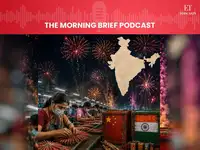
Nestled in Virudhunagar district of Tamil Nadu, Sivakasi is India’s undisputed firecracker capital. What began as a humble cottage industry thrived in the region’s hot, dry climate — conditions too harsh for agriculture but perfect for manufacturing matches and firecrackers. Over decades, this unlikely desert town grew into a Rs 6,000 crore industry, supplying the bulk of India’s fireworks. Now, the newly elected Vijay government has set its sights higher, pushing Sivakasi to compete on the world stage and challenge China’s dominance in global fireworks. But transforming political ambition into industrial reality is a challenge that remains to be seen. Dia Rekhi reports and narrates for audio.
Morning Brief Podcast
LISTENLISTENING...
For decades, regional aviation in India has been a story of false starts, grounded ambitions and struggling airlines. But that may finally be changing. India makes more than 4 billion intercity trips every year. Yet only 3% happen by air. That gap may be the single biggest untapped opportunity in Indian aviation — and airlines like Fly91 and aircraft maker ATR believe they are perfectly positioned to capture it. In this episode of The Morning Brief, Anirban Chowdhury and ET's Forum Gandhi speak with Alexis Vidal, Chief Commercial Officer of ATR, and Manoj Chacko, Managing Director of Fly91, about why regional aviation has historically failed to scale, what has changed in India's smaller cities, and whether the economics finally work. From eliminating check-in entirely and operating with fuel costs at just 22% of revenue, to filling flights with business travellers in places few expected, the conversation explores the opportunities, bottlenecks and big bets shaping India's next aviation frontier.
Morning Brief Podcast
LISTEN28:33LISTENING...
Eighty percent of Dr Ramakanta Panda's young cardiac patients — below 35, below 40 — work in IT or finance. Late nights, processed food, 2 AM pizza, secondhand smoke, and a generation that doesn't sleep before midnight. The Padma Bhushan awardee and Chairman of Asian Heart Institute, Mumbai has performed over 30,000 cardiac surgeries with a 99.8% bypass success rate and zero MRSA in his ICU — all from one hospital he has refused to franchise, refused to debt-finance, and refused to sell to private equity. Every week, he says no. In this episode of The Morning Brief, ET's pharma editor Vikas Dandekar and Rica Bhattacharyya sit down with Dr. Panda on why India cannot fix its healthcare issues by solely relying on private healthcare — and whether one hospital built on culture can set standards an industry built on capital never will.
Morning Brief Podcast

Jio’s Historic IPO and Next Act

Jun 23, 2026, 06.19 AM IST
Morning Brief Podcast: Jio’s Historic IPO and Next Act
LISTEN18:36LISTENING...
Jio Platforms is set to file what could be India's largest-ever IPO. But the story goes far beyond the listing. Senior telecom consultant Kalyan Parbat joins host Anirban Chowdhury to break down what the DRHP really signals. From prepaying debt to funding a sovereign LEO satellite constellation, building a homegrown AI agent called Hey Jio, and exporting its indigenous 5G stack to global operators, Jio's ambitions are staggering. But questions remain. Competition pressure, privacy concerns around AI on mobile networks, net neutrality risks from network slicing. This is a deep dive into what Jio's public market debut means for India's digital future.
Morning Brief Podcast

ET Deep Dive: The DNA Fix

Jun 21, 2026, 06.11 AM IST
Morning Brief Podcast: ET Deep Dive: The DNA Fix
LISTENLISTENING...
A revolution is underway in cancer diagnosis. A gene-based test called next-generation sequencing can identify precise mutations in a patient’s DNA, which can then be treated with targeted therapies instead of painful chemotherapy. For an 80-year-old woman with stage 4 lung cancer, it meant walking again. For a 24-year-old with breast cancer, it meant a normal life. But since NGS tests can cost up to Rs 4 lakh, a unique collaboration called LuNGS Alliance is making it free for lung cancer patients across India — offering a glimpse of how medical breakthroughs can be made accessible and affordable for all. Vikas Dandekar and Arijit Barman report. Anirban Chowdhury narrates for audio. Listen in.
Morning Brief Podcast
LISTENLISTENING...
India's media and entertainment industry is actively exploring new frontiers in AI. From JioHotstar's dedicated AI content division to Kishore Lulla's $150 million Eros Innovation play, the country's biggest streaming and production companies are building AI studios from the ground up. The economics are hard to ignore, production costs down 60-70%, delivery timelines cut by half. But beyond micro dramas, the ambition stretches to web series, animation, and films. Host Anirban Chowdhury, ET's in house entertainment journalist and film critic Rajesh N Naidu and JioHotstar's chief architect Vijay Seshadri explains the three pillars powering the platform's AI strategy.
Morning Brief Podcast
LISTENLISTENING...
On June 12, the US government forced Anthropic to shut off its most powerful AI models Fable 5 and Mythos 5 for every foreign national on earth, citing national security. The trigger was a claimed jailbreak. The fallout was immediate. India, which had only just gained access to Mythos through Project Glasswing, was suddenly cut off. Host Anirban Chowdhury talks to Dr Rumman Chowdhury, co-founder CEO of Humane Intelligence and Nikhil Narendran, partner at TMT Trilegal and president of ITechLaw Association about if AI access the new arms race? What does this mean for Indian startups, critical infrastructure and digital sovereignty? And when Indian data trained these models, but Indian users can't use them, who really owns artificial intelligence?
Morning Brief Podcast
LISTENLISTENING...
Three Indian mariners are dead, killed by US Navy strikes on a commercial tanker in the Gulf of Oman. Host Anirban Chowdhury talks to Abhijit Singh, a retired naval officer and former head of the maritime policy initiative at ORF, to break down what we know and what remains contested about the MT Settebello incident. Was it a legitimate blockade enforcement or an unprovoked attack on a stationary vessel? And does the timing make it worse? A US-Iran truce and deal was reportedly already in the works when the precision strikes hit. Abhijit examines India's structural vulnerability in global shipping, the limits of diplomatic protests, and what New Delhi must demand now before this becomes just another forgotten episode. Listen in.
Morning Brief Podcast

Hills of Brew

Jun 16, 2026, 10.13 AM IST
Morning Brief Podcast: Hills of Brew
LISTENLISTENING...
From the hills of Nagaland, once rattled by insurgency, comes an unlikely revolution — specialty coffee. In this episode of ET Deep Dive, we trace how a state better known for decades of conflict is quietly reinventing itself, one arabica bean at a time. From smallholder farmers in the mist-covered hills of Wokha to young entrepreneurs who studied abroad and came home to build brands, Nagaland’s coffee story is as much about identity as it is about agriculture. With government backing, global ambitions and a target of fifty thousand hectares by 2047, could this be India’s next great coffee country?
Morning Brief Podcast

How Long Should You Stay in an SIP?

Jun 16, 2026, 10.12 AM IST

Morning Brief Podcast: How Long Should You Stay in an SIP?
LISTEN14:23LISTENING...
Every month, millions of Indians put money into mutual funds through SIPs without really knowing how long to stay invested or what happens when markets crash. ET Wealth's annual SIP study with Crisil Intelligence finally puts hard numbers to these questions. Host and editor ET Wealth Kayezad E Adajania talks to Piyush Gupta, Director at Crisil Intelligence about what 15 years of data across 120 schemes actually shows — the magic of a 10-year SIP, what the COVID crash revealed about short versus long-term investors, why higher returns and more predictable returns are not the same thing, and the basic housekeeping every SIP investor should be doing right now.Kayezad E Adajania
Morning Brief Podcast

RBI's Rupee Rx

Jun 16, 2026, 10.12 AM IST

Morning Brief Podcast: RBI's Rupee Rx
LISTEN14:56LISTENING...
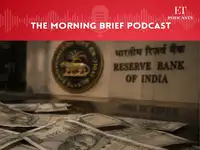
The rupee has been on a sharp slide, moving from 90 to nearly 97 in just a few months. On Friday, the RBI stepped in with two major measures a concessional FCNR deposit window for NRIs and a subsidised swap facility for ECB borrowings by PSUs effectively absorbing the hedging costs to pull in foreign capital. But how much of a difference will it make, and for how long? Host Rozebud Gonsalves speaks with Sakshi Gupta, Principal Economist at HDFC Bank, on the rupee's initial reaction, expected capital inflows and the forward book.
Morning Brief Podcast
LISTEN17:55LISTENING...
SEBI has accused Rajesh Exports and its promoter Rajesh Mehta of one of India's most brazen alleged financial frauds — inflating revenues by fifteen lakh crore, claiming ownership of African gold mines that don't exist, and siphoning funds through a web of overseas entities while auditors looked the other way. On this episode of The Morning Brief, Anirban Chowdhury, N Sundaresha Subramanian, and JN Gupta of Stakeholders Empowerment Services break down how the alleged scheme worked, what investors actually stand to lose, and whether a company that has already shed eighty percent of its market cap has any reason left to come clean..
Morning Brief Podcast | ET Deep Dive

Lock, Stock and Worry

Jun 07, 2026, 12.54 PM IST

Morning Brief Podcast | ET Deep Dive: Lock, Stock and Worry
LISTEN12:44LISTENING...
India's locker economy is booming — and buckling. Bank vaults remain the default choice for storing gold, heirlooms and family documents, but chronic shortages, inheritance disputes and a trust deficit are cracking the system open. Private vault operators are muscling in with biometric access and extended hours. Home-safe manufacturers are selling the idea of keeping wealth closer. And regulators are struggling to keep pace. As gold prices soar and household wealth rises, the question of who safeguards India's physical assets has never been more urgent — or more contested. This is the story of India's locker economy, and the battle to control it. Lijee Philip reports, Anirban Chowdhury narrates. Listen in:
Morning Brief Podcast
LISTENLISTENING...
As Anthropic files confidentially for an IPO with a reported valuation nearing $1 trillion, markets are watching closely. Host Anirban Chowdhury talks to Daniel Newman, CEO at data intellegince, research and advisory firm The Futurum Group to break down what investors should really scrutinise from enterprise attrition data to compute cost commitments. They unpack the revenue optics inflated by cloud credits, the profitability timeline that could stretch years, and why buying on Day One may be a risky bet. Newman also weighs in on whether going public will force Anthropic into a tension between quarterly expectations and long-horizon research and what OpenAI can learn from watching Anthropic go first.
Morning Brief Podcast
LISTENLISTENING...
Is the psychological 100-to-the-dollar mark now inevitable? In this episode of The Morning Brief, Rozebud Gonsalves speaks to economists from leading financial institutions–Gaura Sengupta, chief economist at IDFC First Bank, Kanika Pasricha, chief economic advisor, Union Bank of India, Madhavi Arora, chief economist, Emkay Global Financial Services and Dhiraj Nim, economist and FX Strategist, ANZ–about where the rupee is headed, the role of oil prices, tariffs, geopolitics and capital flows, who benefits from a weaker currency, and whether the RBI can slow the slide. Most importantly, is this depreciation a warning sign—or simply the cost of India's integration with a changing global economy? Listen in.
Morning Brief Podcast

ET Deep Dive: Operation Octopus

May 31, 2026, 06.19 AM IST

Morning Brief Podcast: ET Deep Dive: Operation Octopus

LISTEN15:42LISTENING...
Operation Octopus is Hyderabad Police’s ambitious multi-phase crackdown on the infrastructure behind cyber fraud — not just the small fish, but the entire ecosystem. From mule accounts and rogue bank employees to ghost SIMs and crypto networks, each phase peels back a new layer of a sprawling criminal enterprise spanning multiple states and international actors. Commissioner VC Sajjanar estimates four hundred crore rupees is lost annually in Hyderabad alone. Yet kingpins remain at large. Based on Shilpa Ranipeta’s ground investigation, Anirban Chowdhury narrates how a single Facebook scam unravelled into one of India’s most complex cybercrime investigations.
Morning Brief Podcast
LISTEN34:47LISTENING...
India has 80 million stray dogs and accounts for 30 percent of the world's rabies deaths. The Supreme Court's latest judgment proposes capturing and relocating strays from schools, hospitals, religious and tourism sites but the experts on this episode argue it may do more harm than the problem it set out to solve. Host Anirban Chowdhury sits down with Gauri Maulekhi, Trustee of People for Animals, Alokparna Sengupta, Managing Director of Humane World for Animals India, and Luke Gamble, Founder and CEO of Mission Rabies, on why India's animal birth control programme collapsed despite 25 years of policy, what Malawi's rabies elimination model teaches us about structural solutions, and whether a judgment meant to protect citizens is quietly pushing India toward a less humane future.
Morning Brief Podcast
LISTEN11:42LISTENING...
Physical AI is being seen as the next frontier of artificial intelligence. Not AI that lives on screens. But AI that can navigate and operate in the real world — from humanoid robots and warehouses to factories and homes. But these systems need enormous amounts of real-world human activity data to learn movement and physical tasks. And increasingly, India is emerging as a low-cost training ground for that data collection. In this episode, Host Anirban Chowdhury talks to ET’s Puran Choudhary and Disha Acharya on wearable cameras, AI data pipelines, privacy risks, regulatory gaps and the hidden human layer powering the next AI boom.

The Morning Brief