


The irrationality measure of a real number  is defined using the set
 of positive real
numbers
 for which
 |
(1)
|
has (at most) finitely many solutions  for
 and
 integers. Then the irrationality
measure, sometimes called the Liouville-Roth constant or irrationality exponent,
is defined as the threshold at which Liouville's
approximation theorem kicks in and
 is no longer approximable by rational
numbers,
 |
(2)
|
where  is the infimum. If the set
 is the empty
set, then
 is defined to be
 ,
and
 is called a Liouville number. There are three
possible regimes for
 a nonempty set:
 |
(3)
|
where the transitional case  can correspond to
 being either algebraic
of degree
 or
 being transcendental.
Showing that
 for
 an algebraic number is a difficult result for
which Roth was awarded the Fields medal.
Equivalently, for irrational  ,
 is the supremum of the exponents for which rational
approximations satisfying (2) occur infinitely often (Sondow
2004). Dirichlet's approximation theorem
implies that
 for every irrational
 .
The definition of irrationality measure is equivalent to the statement that if  has irrationality measure
 , then
 is the smallest number such that the inequality
 |
(4)
|
holds for any  and all integers
 and
 with
 sufficiently large.
The irrationality measure of an irrational number  can be given in terms of its simple
continued fraction expansion
 and its convergents
 as
 |  |  |
(5)
|
 |  |  |
(6)
|
(Sondow 2004). For example, the golden ratio  has
 |
(7)
|
which follows immediately from (6) and the simple continued fraction expansion  .
Exact values include  for
 Liouville's constant
and
 (Borwein and Borwein 1987, pp. 364-365). The Minkowski-Bower
constant
 also satisfies
 (Gayfulin and Shulga 2020). Selected upper bounds for other common constants and
subsequent improvements are summarized in the following table, including the bound
for
 reported by Fauzan (2026), where
 is Apéry's constant,
 and
 are q-harmonic series, and the lower
bounds are 2.
constant  | upper bound | reference |
 |  | Salikhov (2008) |
 | 7.10320534 | Zeilberger and Zudilin (2020) |
 | 5.441243 | Rhin and Viola (1996) |
 | 5.09541179 | Zudilin (2013) |
 | 5.0193784 | Niedbala Giraudin (2026) |
 | 4.62675 | Leibtag et al. (2026) |
 | 3.57455391 | Marcovecchio (2009) |
 | 5.116201 | Bondareva et al. (2018) |
 | 5.513891 | Rhin and Viola (2001) |
 | 5.4197 | Leibtag et al. (2026) |
 | 260 | Fauzan (2026), reported |
 | 2.9384 | Matala-Aho et al. (2006) |
 | 2.4650 | Zudilin (2004) |
Niedbala Giraudin (2026) proved that
 |
(8)
|
where  is a value of the Riemann zeta function.
Fauzan (2026) reports the upper bound
 |
(9)
|
where zeta(5) is a value of the Riemann zeta function. The bound follows from the estimate  for every integer
 and all sufficiently large positive
integer denominators
 .
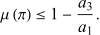
The bound for  due to Zeilberger and Zudilin (2020) improves on the value
 previously found by Salikhov (2008). It has exact
value given as follows. Let
 be the complex conjugate roots of
 |
(10)
|
let  be the positive real root,
and let
 |  |  |
(11)
|
 |  |  |
(12)
|
 |  |  |
(13)
|
 |  |  |
(14)
|
then the bound is given by
 |
(15)
|
Alekseyev (2011) has shown that the question of the convergence of the Flint Hills series is related to the
irrationality measure of  , and in particular, convergence
would imply
 ,
which is much stronger than the best currently known upper
bound. Meiburg (2022) proved that
 implies convergence
of the Flint Hills series. The boundary case
 is not settled by these implications.
An application outside number theory occurs in the semigroup stability of coupled partial differential equations. For a serially connected magnetizable piezoelectric-elastic beam model, the arithmetic nature of a quotient involving its physical parameters determines whether energy decay can be exponential or polynomial. In a class of irrational cases, the irrationality measure of this quotient gives an explicit polynomial decay exponent (Akil et al. 2024). This provides an example in which rational approximation properties of material-dependent parameters control the long-time behavior of a physical system.
OpenAI (2026) announced the exact value  . This would mean that, for every
 ,
 for every integer
 and all sufficiently large positive
integer denominators
 . It does not assert a bound
 with fixed
 . The release attributes the argument to an unreleased
internal OpenAI model and supplies a Lean formalization of the stated irrationality
measure. As of Oct. 7, 2026, VibeMathed (2026) had read the formal statement
but had not independently rebuilt it, and independent specialist verification of
the complete proof had not been reported. The established upper
bound above is separate from this claim.
Casper (2026) reported that every nonzero rational number  satisfies
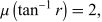 |
(16)
|
where  is the principal real inverse tangent. The argument
extends OpenAI's interpolation and determinant method
using Gaussian integers. The cases
 use the earlier claimed irrationality measure of
 .
Casper credits OpenAI coding agents with substantive proof development and formalization.
As of Oct. 25, 2026, the author reported Lean and exported-proof checks, but
publication of the retained proof export awaited repository repairs and independent
specialist review had not been reported.
Leibtag et al. (2026) improved the bounds for Riemann zeta function values to
 |
(17)
|
Since  ,
the first bound also holds for
 . They additionally proved
 for every nonzero rational pair
 .
Leibtag et al. (2026) report AI assistance with technical arithmetic estimates
and formalization, while distinguishing their human-developed main independence construction.
For multiplicatively independent positive rational numbers  ,
Chudnovsky (2026) reported
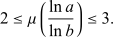 |
(18)
|
Multiplicative independence means  for integers
 only when
 . In particular, the claimed bound applies to
 . Chudnovsky (2026) reports substantive ChatGPT assistance
and a Lean formalization of this rational-logarithm-ratio theorem. That statement
does not imply that every result in the broader manuscript has a complete formalization.
The full argument and the reported Lean formalization have not been independently
checked here.

 ."
Chebyshevskiĭ Sb. 19, 15-25, 2018.Borwein, J.; Bailey,
D.; and Girgensohn, R.
 Is Irrational." Preprint. 17 Sep 2026.
 and
 ." Proc. Japan. Acad. Ser. A Math. Sci. 68,
283-286, 1992.Hata, M. "Rational Approximations to
 and Some Other Numbers." Acta Arith. 63,
335-349, 1993.Hata, M. "A Note on Beuker's Integral." J.
Austral. Math. Soc. 58, 143-153, 1995.Hata, M. "A New
Irrationality Measure for
 ." Acta Arith. 92, 47-57, 2000.Leibtag,
E.; Barkan, H.; Kalisch, R.; Weinbaum, S.; Shalyt, M.; and Kaminer, I. "New
Directions in Irrationality." 20 Oct 2026.
 ." Acta Arith. 139, 147-184, 2009.Matala-Aho,
T.; Väänänen, K.; and Zudilin, W. "New Irrationality Measures
for
 -Logarithms."
Math. Comput. 75, 879-889, 2006.Meiburg, A. "Bounds
on Irrationality Measures and the Flint-Hills Series." 29 Aug 2022.
 ." 2 Oct 2026.
 Is 2." Sep. 24, 2026.
 ." Acta Arith. 77, 23-56, 1996.
 ." Acta Arith. 97, 269-293, 2001.Rukhadze,
E. A. "A Lower Bound for the Rational Approximation of
 by Rational Numbers." [In Russian]. Vestnik Moskov
Univ. Ser. I Math. Mekh., No. 6, 25-29 and 97, 1987.Salikhov,
V. Kh. "On the Irrationality Measure of
 ."Dokl. Akad. Nauk 417, 753-755, 2007.
Translation in Dokl. Math. 76, No. 3, 955-957, 2007.Salikhov,
V. Kh. "On the Irrationality Measure of
 ." Usp. Mat. Nauk 63, 163-164, 2008. English
transl. in Russ. Math. Surv. 63, 570-572, 2008.
 -Legendre Polynomials and Irrationality of Certain Lambert
Series." Jan. 23, 2001.
 Is 2." Oct. 7, 2026.
 Is at Most 7.103205334137...." 8 Jan 2020.
 and Other Logarithms." Chebyshevskiĭ Sb. 5,
49-65, 2004.Zudilin, V. V. "On the Irrationality Measure of
 ."
Russian Math. Surveys 68, 1133-1135, 2013.
