一休に聞く🎤破戒の僧は、なぜ人の心を打つのか🌙千夜一夜物語第145夜 英語版

【千夜一夜物語の行先】
英語を身につけるには洋書の多読が効果的ですが、難易度差が大きく途中で挫折しやすいものです。
この「千夜一夜物語」はCEFR A2レベルから始め、歴史人物のインタビュー形式で英語を自然に定着させることを目的としています。
【千夜一夜物語第145夜 CEFR-A2〜B1 英文ストーリー674語 一休に聞く🎤破戒の僧は、なぜ人の心を打つのか】
【英文ストーリー】
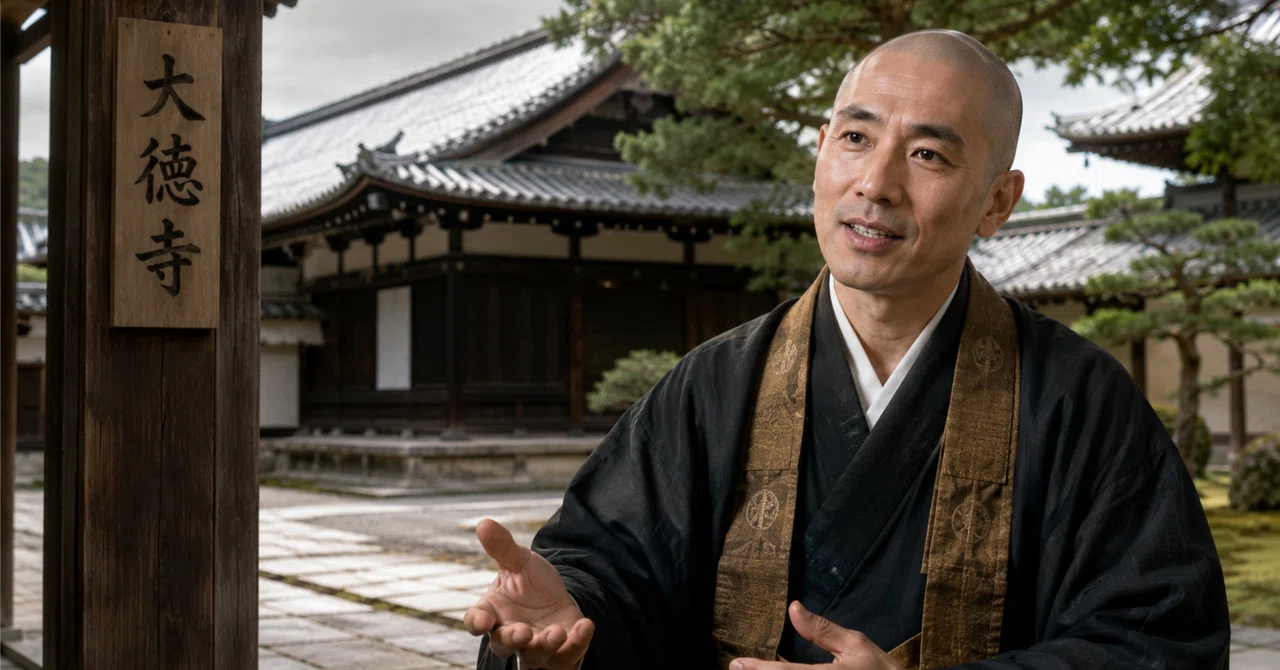
◆ Kyoto, in the fifteenth century. The age is bright and troubled. Temples are rich, warriors fight for power, and many people bow before beautiful rules. In a small room near Daitoku-ji, a monk sits with a cup of tea. His robe is old, his eyes are sharp, and his smile looks almost dangerous.
◇ My name is Ikkyu Sojun. People call me a Zen monk, a poet, a strange man, and sometimes a bad monk. I do not mind. A name is only a small cage. If you look only at the cage, you will miss the bird.
◆ Tonight’s question is simple. You were called a rule-breaking monk. Why do people still feel moved by you?
◇ Because people know that a perfect mask is not the same as a true face. In my time, many monks looked pure outside. They wore fine robes, spoke holy words, and loved high rank. But inside, some hearts were hungry for money, power, and praise. I could not bow to that lie.
◆ So you hated religion?
◇ No. I hated dead religion. A living teaching wakes the heart. A dead teaching only decorates the body. Zen is not a clean robe. Zen is seeing directly. If a man uses religion to hide his greed, he is farther from the Way than a poor drunk who still knows he is weak.
◆ You wrote poems about love, wine, old age, and death. Was that unusual for a monk?
◇ Perhaps. But life is not divided so neatly. Love, desire, loneliness, sickness, laughter, and death all enter the same human heart. If a monk speaks only about heaven and never about human pain, who will listen? The truth must be able to sit beside human weakness.
◆ Many people know funny stories about you as a clever child.
◇ Those stories are light doors. They help people enter. But do not stop there. Wit is useful because it cuts pride. A sharp joke can do what a long sermon cannot do. It can make a powerful person suddenly see his own foolishness.
◆ Did you enjoy shocking people?
◇ Sometimes. But shock is not the goal. If a house is full of smoke, you must open a window. People may complain about the cold air, but they also begin to breathe. My rough words were often that cold air.
◆ Why did you value directness so much?
◇ Because life is short. We grow old, lose friends, and meet death. There is no time to polish lies. A simple word, spoken from the bones, can save more than a thousand elegant phrases.
◆ You also loved ordinary people.
◇ Yes. The market, the street, children, singers, women, workers, and lonely old men taught me much. A temple can be useful, but truth does not live only in temples. Sometimes it laughs in the street, cries in a small house, or sleeps under a torn blanket.
◆ What should modern readers learn from you?
◇ Do not worship form. Forms are useful, but they are not the heart. A school, a company, a temple, or even an English lesson can become empty if people forget why they do it. Ask, “Is this alive?” If it is alive, keep it. If it is dead, wake it up.
◆ That is useful for English learners too.
◇ Of course. Do not make English a beautiful dead thing in a notebook. Speak it, hear it, laugh with it, make mistakes with it. A living sentence has breath. A dead sentence has only ink.
◆ One last question. What is real freedom?
◇ Real freedom is not doing anything you like. That is only another kind of slavery. Real freedom is not being ruled by fear, pride, or empty honor. When you can see your own weakness and still laugh, pray, and love, your heart becomes light.
◆ Outside, the evening bell sounds over Daitoku-ji. Ikkyu lifts his tea and smiles. He looks neither holy nor unholy. He looks human. Perhaps that is why his voice still reaches us. He broke rules not to destroy the Way, but to rescue it from beautiful cages.
【日本語訳】
◆ 十五世紀の京都。時代は華やかでありながら、乱れている。寺は豊かで、武士たちは権力をめぐって争い、多くの人々は美しい規則の前で頭を下げている。大徳寺の近くの小さな部屋で、一人の僧が茶碗を手に座っている。袈裟は古く、目は鋭く、その笑みはどこか危うくも見える。
◇ 私は一休宗純。人は私を禅僧、詩人、奇妙な男、時には悪い僧と呼びます。かまいません。名前とは小さな檻にすぎません。檻ばかり見ていれば、その中の鳥を見失うでしょう。
◆ 今夜の質問は単純です。あなたは破戒の僧と呼ばれました。なぜ今も人の心を打つのでしょうか。
◇ 人は、完璧な仮面が本当の顔と同じではないことを知っているからです。私の時代、多くの僧は外側では清らかに見えました。立派な袈裟をまとい、神聖な言葉を語り、高い位を好みました。しかし内側では、金、権力、称賛に飢えている心もありました。私はその嘘に頭を下げることができなかったのです。
◆ では、宗教を憎んでいたのですか。
◇ いいえ。私が憎んだのは、死んだ宗教です。生きた教えは心を目覚めさせます。死んだ教えは身体を飾るだけです。禅は清潔な袈裟ではありません。禅とは、直接見ることです。もし人が宗教を使って自分の欲を隠すなら、その人は、自分の弱さをまだ知っている貧しい酔っぱらいよりも、はるかに道から遠いのです。
◆ あなたは恋、酒、老い、死について詩を書きました。僧としては珍しかったのではありませんか。
◇ おそらくそうでしょう。しかし人生は、それほどきれいに分けられるものではありません。恋、欲望、孤独、病、笑い、死は、すべて同じ人間の心に入ってきます。もし僧が天国についてだけ語り、人間の痛みについてまったく語らないなら、誰が耳を傾けるでしょうか。真実は、人間の弱さのそばに座ることができなければならないのです。
◆ 多くの人は、とんちの利いた子どもとしてのあなたの話を知っています。
◇ そうした話は、軽やかな入口です。人が入る助けになります。しかしそこで止まってはいけません。機知が役に立つのは、それが高慢を切るからです。鋭い冗談は、長い説教にできないことをすることがあります。権力のある人に、自分の愚かさを突然見せることができるのです。
◆ 人を驚かせるのが好きだったのですか。
◇ 時にはそうです。しかし驚かせることが目的ではありません。家の中が煙でいっぱいなら、窓を開けなければなりません。人々は冷たい空気に文句を言うかもしれません。しかし同時に、息ができるようにもなります。私の荒い言葉は、しばしばその冷たい空気だったのです。
◆ なぜそれほど率直さを大切にしたのですか。
◇ 人生は短いからです。私たちは老い、友を失い、死に出会います。嘘を磨いている時間などありません。骨から出た一つの素朴な言葉は、千の優雅な言い回しよりも人を救うことがあります。
◆ あなたは庶民も愛していました。
◇ はい。市場、通り、子ども、歌う人、女性、働く人、孤独な老人たちは、多くのことを私に教えてくれました。寺は役に立つことがあります。しかし真実は寺の中だけに住んでいるわけではありません。時には通りで笑い、小さな家で泣き、破れた毛布の下で眠っているのです。
◆ 現代の読者は、あなたから何を学べるでしょうか。
◇ 形式を拝んではいけない、ということです。形式は役に立ちます。しかし形式は心そのものではありません。学校、会社、寺、あるいは英語のレッスンでさえ、人がなぜそれをするのかを忘れれば、空っぽになります。「これは生きているか」と問うことです。生きているなら残しなさい。死んでいるなら、目覚めさせなさい。
◆ それは英語学習者にも役立ちますね。
◇ もちろんです。英語をノートの中の美しく死んだものにしてはいけません。話し、聞き、笑い、間違えなさい。生きた文には呼吸があります。死んだ文にはインクしかありません。
◆ 最後に。本当の自由とは何ですか。
◇ 本当の自由とは、好きなことを何でもすることではありません。それは別の種類の奴隷状態にすぎません。本当の自由とは、恐れ、高慢、空っぽの名誉に支配されないことです。自分の弱さを見て、それでも笑い、祈り、愛することができる時、心は軽くなるのです。
◆ 外では、大徳寺の上に夕方の鐘が響いている。一休は茶碗を持ち上げて笑う。聖人にも見えず、破戒者にも見えない。ただ人間に見える。おそらくそれこそが、彼の声が今も私たちに届く理由なのだろう。一休は道を壊すために規則を破ったのではない。美しい檻から、道を救い出すために破ったのだ。
【音読・多読のポイント】
今回は「破戒」「形式」「生きた宗教」「人間の弱さ」「自由」がテーマです。一休の言葉は、ただ乱暴に読むのではなく、鋭さとユーモアを含んだ声として読むと合います。特に A name is only a small cage、a perfect mask is not the same as a true face、The truth must be able to sit beside human weakness、Do not worship form、A living sentence has breath は重要チャンクです。truth / heart / form / freedom / living を少し強めると、本文の芯が伝わりやすくなります。
【語句の解説】
fifteenth century:B1目安。「十五世紀」。一休が生きた室町時代の時代感を示す表現。
用例:Ikkyu lived in the fifteenth century.(一休は十五世紀に生きた。)
rule-breaking monk:B2チャンク。「規則を破る僧、破戒の僧」。本文では、形式に従わない一休の姿を表す。
用例:People called him a rule-breaking monk.(人々は彼を破戒の僧と呼んだ。)
mask / true face:B1〜B2チャンク。「仮面/本当の顔」。外側の立派さと内面の真実の対比を表す。
用例:A smile can be a mask, not a true face.(笑顔は本当の顔ではなく、仮面であることもある。)
dead religion:B2チャンク。「死んだ宗教」。形だけで心を目覚めさせない宗教を批判する表現。
用例:He did not want dead religion.(彼は死んだ宗教を望まなかった。)
seeing directly:B2チャンク。「直接見ること」。禅の文脈では、飾りや言葉を通さず本質を見ること。
用例:Zen begins with seeing directly.(禅は直接見ることから始まる。)
human weakness:B2チャンク。「人間の弱さ」。欲望、孤独、恐れ、迷いなど、人間が持つ避けがたい弱さ。
用例:Good stories understand human weakness.(よい物語は人間の弱さを理解している。)
wit:B2目安。「機知、とんち」。一休の鋭い冗談や知恵を表す語。
用例:His wit made people laugh and think.(彼の機知は人々を笑わせ、考えさせた。)
sermon:B2目安。「説教」。本文では、長い説教より鋭い冗談の方が高慢を切ることがある、という流れで使う。
用例:A short joke can teach more than a long sermon.(短い冗談が長い説教より多くを教えることがある。)
worship form:B2チャンク。「形式を拝む、形式を絶対視する」。形式そのものを目的にしてしまうことへの批判。
用例:Do not worship form. Look for the heart.(形式を拝んではいけない。心を探しなさい。)
living sentence:B2チャンク。「生きた文」。ノートの中だけでなく、声に出され、使われる文を表す。
用例:A living sentence has sound and breath.(生きた文には音と呼吸がある。)
