

From the raw, ephemeral energy of underground graffiti to celebrated large-scale murals, Denver native Chris Haven opens up about the organic rise of his iconic “Pyramid People,” the therapeutic rhythm of his studio process, and how he leverages new mediums to expand his creative canvas.

For years, Denver artist Chris Haven has transformed the city’s walls into vibrant landmarks, best known for his playful “Pyramid People” that have become an unmistakable part of the local landscape. But behind the cheerful characters is an artist whose roots in graffiti, skate culture, and fine art continue to shape an ever-evolving creative practice. From large-scale murals and intricate cityscapes to augmented reality and sculpture, Haven constantly pushes the boundaries of his work while staying grounded in the belief that art should be accessible to everyone. Ahead of Rooster ArtFest, he reflects on creativity, community, and Denver’s artistic evolution.
Your “Pyramid People” have become a massive, cheerful staple of Denver’s urban landscape. Where did the original spark for those characters come from, and why do you think they resonate so deeply with the community?
The Pyramid People originated organically from our crew symbol and the want to have a recognizable character. I think they resonate with the community well because they are happy, funny, and playful. They have also become a fun search to find them, and since they are all different, they are relatable to many different types of people.

You are well known for two very distinct signature styles: the playful “Pyramid People” and your highly intricate, abstract “Cityscapes”. How do you balance those two worlds, and do they ever cross over in your mind?
I love to create both pyramid people and cityscapes. Generally, the wall or job will dictate which one I choose to paint. Lately I have been combining both styles together, but my original thought was for the pyramids to be accessible to everyone and the cityscapes to be more of a fine art style.
You started out heavily influenced by traditional art and graffiti before evolving into murals, digital art, and installations. How does the raw, ephemeral energy of street graffiti still influence your studio or commercial work today?
Street graffiti taught me to create art because you want to, and make it accessible for everyone, not just in a gallery. I still believe in this philosophy of free art even though it has become a job and there needs to be some sort of monetization. It still influences me today to try new things with my commercial jobs or in the studio. It also mentally helps me, through gratitude of this culture, to be thankful for how far this art form has taken me.
As a Denver native, you’ve watched the city change rapidly over the years. How has the physical and cultural evolution of Denver impacted the stories you try to tell on its walls?
I have seen Denver change a lot, but as far as inspiration, I try to draw that from a broader scale than just regionally, but the evolution of Denver has provided more opportunity and expanded the success and love of this type of art.
If you had to pick one wall or mural you’ve painted in Denver that feels the most personal or significant to your journey, which one is it and why?
It’s too hard to pick just one. Each one tells a different story or holds a place in my heart that captures that moment in time. It may be a person I was painting with, a notable cultural event, or a company I was proud to create for. But if I had to choose a couple I would say the Method Man mural because it was one of my first realisms that I got good feedback from and felt accomplished on the results—and the Denver city scape on the side of Dio Mio because it was a larger city scape, and at the time, I painted it for a big company I thought I would never work with.

You’ve built a style people instantly recognize. Is it freeing, or does it ever feel like a box?
It does feel like a box sometimes because you’re asked to create the same thing, generally speaking, but you can always change things like color or layout to make them different and new. On the other side of it, it’s great to have a style easily recognizable and a want for its creation. As an artist, it’s important to have that, to stand out and have a style that defines you.
Where do you create your art? In a studio, your home, etc., and what does your studio look like when you’re posted up on a random Wednesday making art?
I create art in a studio, at home, and honestly wherever. You never know when creativity will strike, so it’s important you’re ready to do that any place, anytime. I usually put on some music or just tune out and let the art be therapeutic. Sometimes I’ll have markers or paint everywhere, but I generally like to stay organized. Everyone has their own process, so just do whatever feels best for you to make your best and feel good about it.
Beyond standard murals, you’ve dipped your toes into augmented reality (AR) and toy design. How does messing around with new tech or 3D mediums stretch your creativity compared to a standard spray can or canvas?
As an artist, I always want to better my creations or take them to the next level. Using these new tools or expanding your creative output through different mediums has allowed me to dream bigger and has given me more opportunity to express creating and reach a broader platform for people to enjoy my work.
Rooster Art Fest brings together artists from all different mediums and styles. When you’re walking through an art event like this, what makes you stop and admire someone else’s work?
At any festival, I try to check out all the artists that are there. You may find inspiration in something you see, and it’s always good to support people who are trying to make it doing what they love. Art is so personalized; it’s hard to be specific about what may catch my eye. Sometimes it will be details or different mediums other times it will be clean work or maybe something new I have never seen. I also just appreciate the grind of people pushing their art, so that is always admirable.

Similarly, the event combines music, art, and culture. As a musician and skater yourself, how do these other elements of culture influence or appear in your artwork?
Music, skating, and art have always been intertwined in my creative process. I started graffiti through skating. I have worked with skate brands, and I have also worked with musicians to create covers. I am always bouncing ideas from one to the other and using them as releases when I get stuck in one area.
Looking back the last five or ten years, what about your art has changed the most? Your technique, taste, approach, reason to create, etc?
I think just trying to refine it more and make it cleaner. Also to expand and try new things. I’m getting bigger walls now and different festivals, so the output of my work is different and needs to hold a standard for everything I produce. I still try to channel the feeling I had when I first started to keep it real and raw.
You’re a Denver native and have been able to see the city’s art world go from underground to celebrated. What’s been gained and what’s been lost?
Street art in general has gone from underground to more celebrated, and there’s more opportunity out there now, although on the downside there is more saturation. Good art will always stand the test of time and there will always be an underground scene popping up, so I think the cycle of these two will always continue on.

What is a dream project or a massive “bucket list” canvas—whether a specific building, a certain city, or a new medium—that you haven’t had the chance to conquer yet?
Dream projects, always to work with bigger companies and specific companies that I like. I think to be in more festivals and traveling to spread my art is always something I want to achieve. Medium-wise maybe more sculpture work and installation scenarios, both of which I have only dabbled in.
Any upcoming projects you’re excited about?
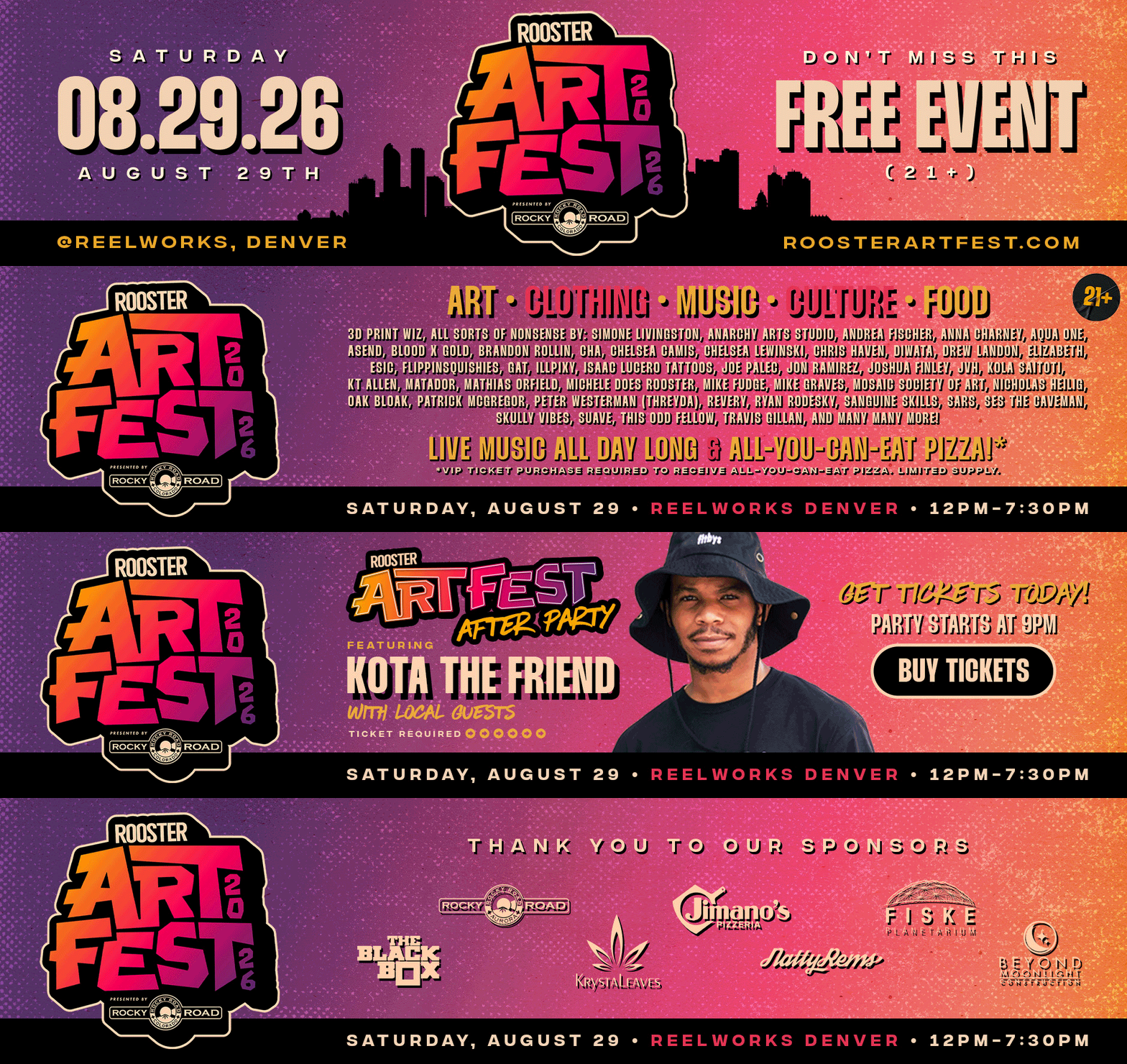
Excited for Rooster Art Fest!!

Leave a Reply
You must be logged in to post a comment.