


The activities are as follows: Climate change is affecting our world in many ways. Globally, we are experiencing more droughts and wildfires, shifting seasons, and rising sea levels. Species are responding as well. Some can shift their ranges to follow cooler temperatures. But what about organisms, like fish, that cannot easily move to a new
fish
Catching fish with sound
The activities are as follows: In our ocean, the connections between the environment and marine organisms are intricate and complex. The watery surroundings connect each level of the food web – including marine mammals, large fish, schooling fish, phytoplankton, and more. Climate change is causing our ocean to become warmer, and organisms are already starting to
Round goby, skinny goby
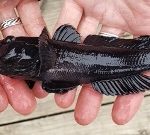
The activities are as follows: Teacher Guide Student activity, Graph Type A, Level 3 Student activity, Graph Type B, Level 3 Student activity, Graph Type C, Level 3 Full dataset available Grading Rubric Animals often have adaptations, or traits that help them live in certain environments. For fish, that can mean having a body shape that
Fishy origins
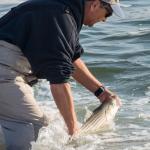
The activities are as follows: Striped bass, or stripers, make up one of the most important fisheries for seafood and sport fishing on the East Coast of the United States. Carleigh and Chelsea, biology teachers in New Jersey, were at the beach one day when they saw a couple of stripers in the Barnegat Bay Inlet. Both
All washed up? The effect of floods on cutthroat trout
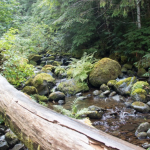
The activities are as follows: Streams are tough places to live. Fish living in streams have to survive droughts, floods, debris flows, falling trees, and cold and warm temperatures. In Oregon, cutthroat trout make streams their home. Cutthroat trout are sensitive to disturbances in the stream, such as pollution and sediment. This means that when trout
Clique wars: social conflict in daffodil cichlids
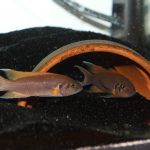
The activities are as follows: Teacher Guide Student activity, Graph Type A, Level 4 Student activity, Graph Type B, Level 4 Student activity, Graph Type C, Level 4 Grading Rubric Digital Data Nugget on DataClassroom Have you ever thought about what it would be like to live completely alone, without contact with other people? Nowadays, humans are
Are you my species?
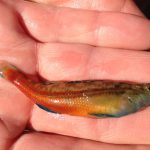
The activities are as follows: Teacher Guide Student activity, Graph Type A, Level 3 Student activity, Graph Type B, Level 3 Student activity, Graph Type C, Level 3 Grading Rubric Digital Data Nugget on DataClassroom What is a species? The biological species concept says species are groups of organisms that can mate with each other but
Why so blue? The determinants of color pattern in killifish, Part II
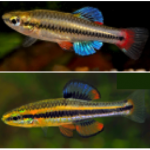
In Part 1, you examined the effects of genetics and environment on anal fin color in male bluefin killifish. The data from Becky’s experiment showed that both genetics and environment work together to determine whether male offspring had blue, yellow, or red anal fins. You will now examine how the father’s genetics, specifically their fin
Why so blue? The determinants of color pattern in killifish, Part I
The activities are as follows: Teacher Guide Student activity, Graph Type A, Level 4 Student activity, Graph Type B, Level 4 Student activity, Graph Type C, Level 4 Reading Activity Grading Rubric In nature, animals can be found in a dazzling display of different colors and patterns. Color patterns serve as signals to members of the animal’s
Raising Nemo: Parental care in the clown anemonefish
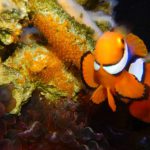
The activities are as follows: Teacher Guide Student activity, Graph Type A, Level 3 Student activity, Graph Type B, Level 3 Student activity, Graph Type C, Level 3 PowerPoint of Images Scientist Profile on Project Biodiversify Grading Rubric When animals are born, some offspring are able to survive on their own, while others rely on parental
