
Arfvedsonite
A valid IMA mineral species - grandfathered
This page is currently not sponsored. Click here to sponsor this page.


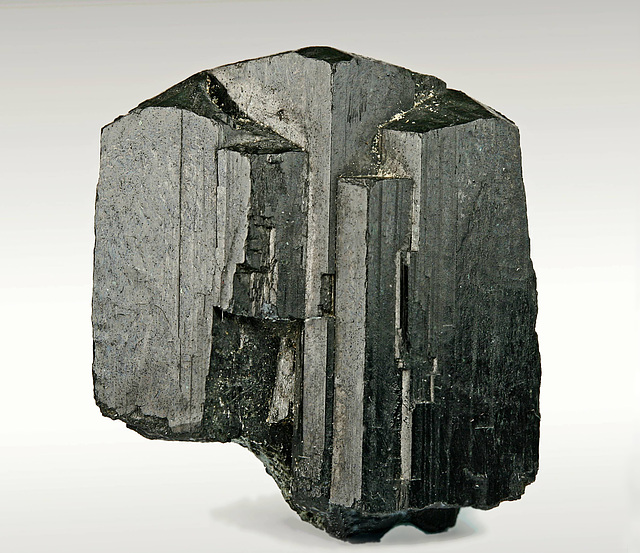


About Arfvedsonite

Johan August Arfwedson
Formula:
NaNa2(Fe2+4Fe3+)Si8O22(OH)2
The arfvedsonite group minerals are sodium amphiboles defined with A(Na+K+2Ca)> 0.5 apfu and 0.5 apfu < C(Al+Fe3++2Ti) < 1.5 apfu with Fe as the dominant element in the C3+ position.
Arfvedsonite is defined with
A position: Na dominant
C2+ position: Fe dominant
C3+ position: Fe dominant
W position: (OH) dominant
Arfvedsonite is defined with
A position: Na dominant
C2+ position: Fe dominant
C3+ position: Fe dominant
W position: (OH) dominant
Colour:
Bluish-black to black.
Lustre:
Vitreous
Hardness:
5 - 6
Specific Gravity:
3.3 - 3.5
Crystal System:
Monoclinic
Member of:
Name:
Named for Johan August Arfvedson (Arfwedson) (12 January 1792, Sweden - 28 October 1841, Hedensö, Sweden), a Swedish chemist. He discovered the chemical element lithium in 1817.
Unique Identifiers
Mindat ID:
325
Long-form identifier:
mindat:1:1:325:2
Similar Names
| Arfvedsonite (of Beudant) | A synonym of Petalite |
IMA Classification of Arfvedsonite
Approved, 'Grandfathered' (first described prior to 1959)
Classification of Arfvedsonite
9.DE.25
9 : SILICATES (Germanates)
D : Inosilicates
E : Inosilicates with 2-periodic double chains, Si4O11; Clinoamphiboles
9 : SILICATES (Germanates)
D : Inosilicates
E : Inosilicates with 2-periodic double chains, Si4O11; Clinoamphiboles
14.25.6
14 : Silicates not Containing Aluminum
25 : Silicates of Fe, Ca and alkalis and of Fe, Mg, Ca and alkalis
14 : Silicates not Containing Aluminum
25 : Silicates of Fe, Ca and alkalis and of Fe, Mg, Ca and alkalis
Mineral Symbols
As of 2021 there are now IMA–CNMNC approved mineral symbols (abbreviations) for each mineral species, useful for tables and diagrams.
Please only use the official IMA–CNMNC symbol. Older variants are listed for historical use only.
Please only use the official IMA–CNMNC symbol. Older variants are listed for historical use only.
| Symbol | Source | Reference for Standard |
|---|---|---|
| Arf | IMA–CNMNC | Warr, L.N. (2021). IMA–CNMNC approved mineral symbols. Mineralogical Magazine, 85(3), 291-320. doi:10.1180/mgm.2021.43 |
| Arf | Kretz (1983) | Kretz, R. (1983) Symbols of rock-forming minerals. American Mineralogist, 68, 277–279. |
| Arf | Siivolam & Schmid (2007) | Siivolam, J. and Schmid, R. (2007) Recommendations by the IUGS Subcommission on the Systematics of Metamorphic Rocks: List of mineral abbreviations. Web-version 01.02.07. IUGS Commission on the Systematics in Petrology. download |
| Arf | Whitney & Evans (2010) | Whitney, D.L. and Evans, B.W. (2010) Abbreviations for names of rock-forming minerals. American Mineralogist, 95, 185–187 doi:10.2138/am.2010.3371 |
| Arf | The Canadian Mineralogist (2019) | The Canadian Mineralogist (2019) The Canadian Mineralogist list of symbols for rock- and ore-forming minerals (December 30, 2019). download |
Physical Properties of Arfvedsonite
Vitreous
Transparency:
Translucent, Opaque
Colour:
Bluish-black to black.
Streak:
Deep bluish gray, gray-green
Hardness:
5 - 6 on Mohs scale
Tenacity:
Brittle
Cleavage:
Perfect
Perfect on {110}
Perfect on {110}
Parting:
{010}
Fracture:
Irregular/Uneven
Density:
3.3 - 3.5 g/cm3 (Measured) 3.33 g/cm3 (Calculated)
Optical Data of Arfvedsonite
Type:
Biaxial (-)
RI values:
nα = 1.652 - 1.699 nβ = 1.66 - 1.705 nγ = 1.666 - 1.708
2V:
Measured: 30° to 70°, Calculated: 70° to 80°
Max. Birefringence:
δ = 0.009 - 0.014
Based on recorded range of RI values above.
Based on recorded range of RI values above.
Interference Colours:
The colours simulate birefringence patterns seen in thin section under crossed polars. They do not take into account mineral colouration or opacity.
Michel-Levy Bar The default colours simulate the birefringence range for a 30 µm thin-section thickness. Adjust the slider to simulate a different thickness.
Grain Simulation You can rotate the grain simulation to show how this range might look as you rotated a sample under crossed polars. Each grain retains its interference colour (retardation) while its brightness falls to black at extinction and reaches a maximum between extinction positions.
The colours simulate birefringence patterns seen in thin section under crossed polars. They do not take into account mineral colouration or opacity.
Michel-Levy Bar The default colours simulate the birefringence range for a 30 µm thin-section thickness. Adjust the slider to simulate a different thickness.
Grain Simulation You can rotate the grain simulation to show how this range might look as you rotated a sample under crossed polars. Each grain retains its interference colour (retardation) while its brightness falls to black at extinction and reaches a maximum between extinction positions.
Surface Relief:
Very High (positive)
Relative to Canada balsam mounting medium (n ≈ 1.537).
Relative to Canada balsam mounting medium (n ≈ 1.537).
This shows the grain boundary and Becke line effect under plane-polarised
light, based on the contrast between this mineral's average refractive
index and the mounting medium. It does not take into account mineral
colouration.
In focus
Interference Figure:
This shows the idealized biaxial acute bisectrix (Bxa) interference figure
- the conoscopic view for a grain cut perpendicular to the acute bisectrix, using
this mineral's 2V. The two small white dots mark the melatopes - the points
where the two optic axes emerge - and are shown only when they fall within the
field of view. The coloured bands are isochromatics, and the dark bands are
isogyres.
Rotate the stage: at 0°/90° the isogyres form a cross through the melatopes; at 45° they pull apart into curved hyperbolas. That splitting on rotation - absent in a uniaxial figure - is the standard diagnostic test for telling biaxial minerals from uniaxial ones. If 2V is large, the melatopes may fall outside the field of view, as they often do at the microscope too.
Rotate the stage: at 0°/90° the isogyres form a cross through the melatopes; at 45° they pull apart into curved hyperbolas. That splitting on rotation - absent in a uniaxial figure - is the standard diagnostic test for telling biaxial minerals from uniaxial ones. If 2V is large, the melatopes may fall outside the field of view, as they often do at the microscope too.
Dispersion:
r > v strong
Pleochroism:
Strong
Comments:
Blue-greens, yellow-browns, gray-violets
Chemistry of Arfvedsonite
Mindat Formula:
NaNa2(Fe2+4Fe3+)Si8O22(OH)2
The arfvedsonite group minerals are sodium amphiboles defined with A(Na+K+2Ca)> 0.5 apfu and 0.5 apfu < C(Al+Fe3++2Ti) < 1.5 apfu with Fe as the dominant element in the C3+ position.
Arfvedsonite is defined with
A position: Na dominant
C2+ position: Fe dominant
C3+ position: Fe dominant
W position: (OH) dominant
The arfvedsonite group minerals are sodium amphiboles defined with A(Na+K+2Ca)> 0.5 apfu and 0.5 apfu < C(Al+Fe3++2Ti) < 1.5 apfu with Fe as the dominant element in the C3+ position.
Arfvedsonite is defined with
A position: Na dominant
C2+ position: Fe dominant
C3+ position: Fe dominant
W position: (OH) dominant
Element Weights:
Common Impurities:
Ti,Mn,Ca,Al,K,F
Age distribution
Recorded ages:
Mesoproterozoic to Cretaceous : 1456 Ma to 80.1 ± 3.1 Ma - based on 8 recorded ages.
Sample ages:
| Sample ID | Recorded age | Geologic Time | Dating method |
|---|---|---|---|
| 1 | 80.1 ± 3.1 Ma | Late/Upper Cretaceous | K-Ar |
| 2 | 226 ± 1.1 Ma | Late/Upper Triassic | K-Ar |
| 3 | 319 ± 8 Ma | Pennsylvanian | Ar-Ar |
| 4 | 430 ± 12 Ma | Wenlock | K-Ar |
| 5 | 1456 to 1359 Ma | Mesoproterozoic | K-Ar |
Sample references:
Chemical Analysis
Oxide wt%:
| 1 | 2 | 3 | |
|---|---|---|---|
| SiO2 | 49.33 % | 49.6 % | 49.82 % |
| TiO2 | 0.40 % | 0.46 % | 2.27 % |
| Al2O3 | 0.72 % | 1.22 % | 0.97 % |
| Fe2O3 | 1.55 % | ||
| FeO | 30.95 % | 33.0 % | 34.22 % |
| MnO | 2.15 % | 0.86 % | 0.95 % |
| MgO | 0.74 % | 0.17 % | |
| CaO | 1.01 % | 0.39 % | 2.25 % |
| Na2O | 7.07 % | 8.7 % | 7.58 % |
| K2O | 1.81 % | 2.33 % | 1.49 % |
| ZrO2 | 0.20 % | 0.02 % | |
| Cl | 0.01 % | ||
| F | 0.64 % | ||
| Total: | 95.93 % | 97.4 % | 99.55 % |
Empirical formulas:
| Sample ID | Empirical Formula |
|---|---|
| 2 | (Na0.62K0.47) 1.09 (Na1.93Ca0.07) 2.00 (Fe2+3.43Mg0.04Fe3+0.97Mn0.12Ti0.06Al0.15Zr0.01) 4.78(Si7.92 Al0.08) 8.00 O22[ (OH) 1.97 F0.03] 2.00 |
| 3 | (Na0,71K0,301) 1,011 (Na1,618Ca0,382) 2 (Fe2+3,869Fe3+0,664Ti0,27Mn0,115Al0,072) 4,99 (Si7,891Al0,109) 8O22 ((OH) 1,458O0,542) 2 |
Sample references:
| ID | Locality | Reference | Notes |
|---|---|---|---|
| 1 | Motzfeldt Centre, Igaliku Complex, Kujalleq, Greenland | Sample from an alkali-rich syenite. | |
| 2 | Ilímaussaq complex, Kujalleq, Greenland | The sample was collected from ilvaite bearing endoskarns formed by late-magmatic to hydrothermal veins on the south coast of the Tunulliarfik fjord. Mineral compositions were analyzed using a JEOL 8900 electron microprobe | |
| 3 | Mount Rittmann, Victoria Land, East Antarctica, Antarctica | Representative sample of amphibole from the groundmass of hyperalkaline volcanic rocks. The analysis was performed with an EDAX system mmounted on a Electronic Micropscope Phillips SEM-500. Analysis is normalized using Locock (2014) |
Crystallography of Arfvedsonite
Crystal System:
Monoclinic
Class (H-M):
2/m - Prismatic
Space Group:
B2/m
Setting:
C2/m
Cell Parameters:
a = 10.007 Å, b = 18.077 Å, c = 5.332 Å
β = 104.1°
β = 104.1°
Ratio:
a:b:c = 0.554 : 1 : 0.295
Unit Cell V:
935.48 ų (Calculated from Unit Cell)
Z:
2
Morphology:
Elongated prisms
Twinning:
Simple and lamellar parallel to {100}
Crystal Structure
Load
Unit Cell | Unit Cell Packed
2x2x2 | 3x3x3 | 4x4x4
Unit Cell | Unit Cell Packed
2x2x2 | 3x3x3 | 4x4x4
Show
Big Balls | Small Balls | Just Balls | Spacefill
Polyhedra Off | Si Polyhedra | All Polyhedra
Remove metal-metal sticks
Big Balls | Small Balls | Just Balls | Spacefill
Polyhedra Off | Si Polyhedra | All Polyhedra
Remove metal-metal sticks
Display Options
Black Background | White Background
Perspective On | Perspective Off
2D | Stereo | Red-Blue | Red-Cyan
Black Background | White Background
Perspective On | Perspective Off
2D | Stereo | Red-Blue | Red-Cyan
View
CIF File Best | x | y | z | a | b | c
CIF File Best | x | y | z | a | b | c
Rotation
Stop | Start
Stop | Start
Labels
Console Off | On | Grey | Yellow
Console Off | On | Grey | Yellow
Data courtesy of the American Mineralogist Crystal Structure Database. Click on an AMCSD ID to view structure
| ID | Species | Reference | Link | Year | Locality | Pressure (GPa) | Temp (K) |
|---|---|---|---|---|---|---|---|
| 0001597 | Arfvedsonite | Hawthorne F C, Ungaretti L, Oberti R, Bottazzi P, Czamanske G K (1993) Li: an important component in igneous alkali amphiboles American Mineralogist 78 733-745 |  | 1993 | Questa caldera, New Mexico | 0 | 293 |
| 0001598 | Arfvedsonite | Hawthorne F C, Ungaretti L, Oberti R, Bottazzi P, Czamanske G K (1993) Li: an important component in igneous alkali amphiboles American Mineralogist 78 733-745 | | 1993 | 0 | 293 | |
| 0005126 | Arfvedsonite | Hawthorne F C (1976) The crystal chemistry of the amphiboles: V. The structure and chemistry of arfvedsonite The Canadian Mineralogist 14 346-356 | | 1976 | 0 | 293 |
CIF Raw Data - click here to close
X-Ray Powder Diffraction
Loading XRD data...
Data courtesy of RRUFF project at University of Arizona, used with permission.
Powder Diffraction Data:
| d-spacing | Intensity |
|---|---|
| 3.161 Å | (100) |
| 2.732 Å | (80) |
| 8.51 Å | (70) |
| 3.423 Å | (45) |
| 2.604 Å | (35) |
| 2.185 Å | (35) |
| 2.550 Å | (25) |
Geological Environment
Paragenetic Mode(s):
| Paragenetic Mode | Earliest Age (Ga) |
|---|---|
| Stage 3b: Earth’s earliest hydrosphere | >4.45 |
| 17 : Marine authigenic Hadean minerals (see also #24) | |
| Stage 4b: Highly evolved igneous rocks | >3.0 |
| 35 : Ultra-alkali and agpaitic igneous rocks | |
| 36 : Carbonatites, kimberlites, and related igneous rocks |
Geological Setting:
Alkalic granites and other alkalic plutonic rocks and pegmatites.
Type Occurrence of Arfvedsonite
Synonyms of Arfvedsonite
Other Language Names for Arfvedsonite
Dutch:Arfvedsoniet
French:Arfvedsonite
German:Arfvedsonit
Arfwedsonit
Arfwedsonit
Norwegian:Arfvedsonitt
Russian:Арфведсонит
Spanish:Arfvedsonita
Arfwedsonita
Arfwedsonita
Relationship of Arfvedsonite to other Species
Member of:
Other Members of Arfvedsonite Root Name Group:
| 'Fluoro-arfvedsonite' | NaNa2(Fe2+4Fe3+)Si8O22F2 | |
| Magnesio-arfvedsonite | NaNa2(Mg4Fe3+)(Si8O22)(OH)2 | Mon. 2/m : B2/m |
| Magnesio-fluoro-arfvedsonite | NaNa2(Mg4Fe3+)[Si8O22]F2 | Mon. 2/m : B2/m |
| Potassic-arfvedsonite | KNa2(Fe2+4Fe3+)(Si8O22)(OH)2 | Mon. 2/m : B2/m |
| Potassic-magnesio-arfvedsonite | KNa2(Mg4Fe3+)(Si8O22)(OH)2 | Mon. 2/m : B2/m |
| Potassic-magnesio-fluoro-arfvedsonite | KNa2(Mg4Fe3+)(Si8O22)F2 | Mon. 2/m : B2/m |
Common Associates
Associations Based on Photo Data:
| 138 photos of Arfvedsonite associated with Microcline | K(AlSi3O8) |
| 85 photos of Arfvedsonite associated with Orthoclase | K(AlSi3O8) |
| 81 photos of Arfvedsonite associated with Albite | Na(AlSi3O8) |
| 72 photos of Arfvedsonite associated with Feldspar Group | |
| 69 photos of Arfvedsonite associated with Aegirine | NaFe3+Si2O6 |
| 56 photos of Arfvedsonite associated with Quartz | SiO2 |
| 42 photos of Arfvedsonite associated with Zircon | Zr(SiO4) |
| 38 photos of Arfvedsonite associated with Zektzerite | LiNaZrSi6O15 |
| 38 photos of Arfvedsonite associated with Sodalite | Na4(Si3Al3)O12Cl |
| 29 photos of Arfvedsonite associated with Tugtupite | (BeAlSi)Na4(SiO4)3Cl |
Related Minerals - Strunz-mindat Grouping
| 9.DE. | Shojiite | Na(NaMg)Mg5Si8O22(OH)2 |
| 9.DE. | Clino-suenoite | ◻Mn2+2(Mg5)(Si8O22)(OH)2 |
| 9.DE. | Mangani-eckermannite | NaNa2(Mg4Mn3+)Si8O22(OH)2 |
| 9.DE.05 | 'Permanganogrunerite' | ◻{Mn2+2}{Mn2+5}(Si8O22)(OH)2 |
| 9.DE.05 | Cummingtonite | ◻Mg2Mg5(Si8O22)(OH)2 |
| 9.DE.05 | Ferri-fluoro-leakeite | NaNa2(Mg2Fe3+2Li)(Si8O22)F2 |
| 9.DE.05 | Grunerite | ◻Fe2+2Fe2+5(Si8O22)(OH)2 |
| 9.DE.05 | Clino-holmquistite Root Name Group | ◻Li2(C2+3C3+2)(Si8O22)w2 |
| 9.DE.10 | Actinolite | ◻Ca2(Mg4.5-2.5Fe0.5-2.5)Si8O22(OH)2 |
| 9.DE.10 | Fluoro-cannilloite | CaCa2(Mg4Al)(Si5Al3)O22F2 |
| 9.DE.10 | Joesmithite | Pb2+Ca2(Mg3Fe3+2)(Si6Be2)O22(OH)2 |
| 9.DE.10 | Clino-ferro-suenoite | ◻Mn2+2(Fe2+5)(Si8O22)(OH)2 |
| 9.DE.10 | Fluoro-tremolite | ◻Ca2Mg5(Si8O22)F2 |
| 9.DE.10 | 'Parvo-manganotremolite' | ◻{CaMn2+}{Mg5}(Si8O22)(OH)2 |
| 9.DE.10 | Magnesio-ferri-hornblende | ◻Ca2(Mg4Fe3+)[(Si7Al)O22](OH)2 |
| 9.DE.10 | Ferro-ferri-hornblende | ◻Ca2(Fe2+4Fe3+)(AlSi7O22)(OH)2 |
| 9.DE.10 | 'Ferro-cannilloite' | CaCa2(Fe2+4Al)(Si5Al3O22)OH2 |
| 9.DE.10 | 'Ferro-ferri-cannilloite' | CaCa2(Fe2+4Fe3+)(Si5Al3O22)OH2 |
| 9.DE.10 | 'Ferro-fluoro-actinolite' | ◻{Ca2}{Fe5}(Si8O22)F2 |
| 9.DE.10 | 'Ferro-fluoro-hornblende' | ◻Ca2(Fe2+4Al)(AlSi7O22)F2 |
| 9.DE.10 | Magnesio-ferri-fluoro-hornblende | ◻Ca2(Mg4Fe3+)(AlSi7O22)F2 |
| 9.DE.10 | 'Ferro-ferri-fluoro-hornblende' | ◻Ca2(Fe2+4Fe3+)(AlSi7O22)F2 |
| 9.DE.10 | 'Ferri-fluoro-tschermakite' | ◻{Ca2}{Mg3Fe3+2}(Al2Si6O22)F2 |
| 9.DE.10 | 'Ferro-ferri-fluoro-tschermakite' | ◻{Ca2}{Fe2+3Fe3+2}(Al2Si6O22)F2 |
| 9.DE.10 | 'Ferro-fluoro-tschermakite' | ◻{Ca2}{Fe2+3Al2}(Al2Si6O22)F2 |
| 9.DE.10 | 'Fluoro-tschermakite' | ◻{Ca2}{Mg3Al2}(Al2Si6O22)F2 |
| 9.DE.10 | 'Magnesio-fluoro-hornblende' | ◻Ca2(Mg4Al)(AlSi7O22)F2 |
| 9.DE.10 | Tremolite | ◻Ca2Mg5(Si8O22)(OH)2 |
| 9.DE.10 | 'Ferro-ferri-tschermakite' | ◻{Ca2}{Fe2+3Fe3+2}(Al2Si6O22)(OH)2 |
| 9.DE.10 | 'Cannilloite' | CaCa2(Mg4Al)(Si5Al3O22)OH2 |
| 9.DE.10 | Tschermakite | ◻Ca2(Mg3Al2)(Al2Si6O22)(OH)2 |
| 9.DE.10 | Magnesio-hornblende | ◻Ca2(Mg4Al)(Si7Al)O22(OH)2 |
| 9.DE.10 | 'Ferri-tschermakite' | ◻Ca2(Mg3Fe3+2)(Al2Si6O22)(OH)2 |
| 9.DE.10 | Ferro-actinolite | ◻Ca2Fe2+5(Si8O22)(OH)2 |
| 9.DE.10 | Ferro-hornblende | ◻Ca2(Fe2+4Al)(Si7Al)O22(OH)2 |
| 9.DE.10 | Ferro-tschermakite | ◻Ca2(Fe2+3Al2)(Al2Si6O22)(OH)2 |
| 9.DE.15 | Potassic-chloro-pargasite | KCa2(Mg4Al)(Si6Al2)O22Cl2 |
| 9.DE.15 | 'Ferro-fluoro-pargasite' | (Na)(Ca2)(Fe2+4Al)(Al2Si6O22)F2 |
| 9.DE.15 | 'Potassic-ferro-chloro-edenite' | KCa2Fe2+5(AlSi7O22)Cl2 |
| 9.DE.15 | 'Ferro-ferri-sadanagaite' | NaCa2(Fe2+3Fe3+2)(Al3Si5O22)(OH)2 |
| 9.DE.15 | Hastingsite | NaCa2(Fe2+4Fe3+)(Si6Al2)O22(OH)2 |
| 9.DE.15 | Fluoro-edenite | NaCa2Mg5(Si7Al)O22F2 |
| 9.DE.15 | Pargasite | NaCa2(Mg4Al)(Si6Al2)O22(OH)2 |
| 9.DE.15 | Magnesio-fluoro-hastingsite | NaCa2(Mg4Fe3+)(Si6Al2)O22F2 |
| 9.DE.15 | Potassic-fluoro-hastingsite | KCa2(Fe2+4Fe3+)(Si6Al2)O22F2 |
| 9.DE.15 | Potassic-chloro-hastingsite | KCa2(Fe2+4Fe3+)(Si6Al2)O22Cl2 |
| 9.DE.15 | 'Unnamed (F-dominant analogue of Ferri-kaersutite)' | (Na,K)Ca2[Mg3(Fe3+,Fe2+)Ti](Si6Al2O22)(F,O)2 |
| 9.DE.15 | Edenite | NaCa2Mg5(Si7Al)O22(OH)2 |
| 9.DE.15 | Potassic-sadanagaite | KCa2(Mg3Al2)(Al3Si5O22)(OH)2 |
| 9.DE.15 | Ferri-kaersutite | NaCa2(Mg3Fe3+Ti)(Si6Al2O22)O2 |
| 9.DE.15 | Potassic-pargasite | KCa2(Mg4Al)(Si6Al2)O22(OH)2 |
| 9.DE.15 | Potassic-ferro-sadanagaite | KCa2(Fe2+3Al2)(Al3Si5O22)(OH)2 |
| 9.DE.15 | Kaersutite | NaCa2(Mg3AlTi4+)(Si6Al2)O22O2 |
| 9.DE.15 | 'Ferro-chloro-pargasite' | NaCa2(Fe2+4Al)(Al2Si6O22)Cl2 |
| 9.DE.15 | Potassic-fluoro-pargasite | KCa2(Mg4Al)(Si6Al2)O22F2 |
| 9.DE.15 | Potassic-ferro-ferri-sadanagaite | KCa2(Fe2+3Fe3+2)(Al3Si5O22)(OH)2 |
| 9.DE.15 | Fluoro-pargasite | NaCa2(Mg4Al)(Si6Al2)O22F2 |
| 9.DE.15 | 'Parvo-mangano-edenite' | {Na}{CaMn2+}{Mg5}(AlSi7O22)(OH)2 |
| 9.DE.15 | Ferro-fluoro-edenite | NaCa2Fe2+5(AlSi7O22)F2 |
| 9.DE.15 | Mangani-pargasite | NaCa2(Mg4Mn3+)(Si6Al2)O22(OH)2 |
| 9.DE.15 | Sadanagaite | NaCa2(Mg3Al2)(Si5Al3O22)(OH)2 |
| 9.DE.15 | Magnesio-hastingsite | NaCa2(Mg4Fe3+)(Si6Al2)O22(OH)2 |
| 9.DE.15 | 'Ferri-sadanagaite' | NaCa2(Mg3Fe3+2)(Al3Si5O22)(OH)2 |
| 9.DE.15 | 'Ferro-sadanagaite' | NaCa2(Fe3Al2)(Al3Si5O22)(OH)2 |
| 9.DE.15 | 'Ferri-fluoro-sadanagaite' | {Na}{Ca2}{Mg3Fe3+2}(Al3Si5O22)F2 |
| 9.DE.15 | 'Ferro-ferri-fluoro-sadanagaite' | {Na}{Ca2}{Fe2+3Fe3+2}(Al3Si5O22)F2 |
| 9.DE.15 | 'Ferro-fluoro-sadanagaite' | {Na}{Ca2}{Fe2+3Al2}(Al3Si5O22)F2 |
| 9.DE.15 | 'Fluoro-sadanagaite' | {Na}{Ca2}{Mg3Al2}(Al3Si5O22)F2 |
| 9.DE.15 | 'Potassic-chloro-sadanagaite' | KCa2(Mg3Al2)(Al3Si5O22)Cl2 |
| 9.DE.15 | 'Potassic-ferro-chloro-sadanagaite' | KCa2(Fe2+3Al2)(Al3Si5O22)Cl2 |
| 9.DE.15 | Ferro-edenite | NaCa2Fe2+5(Si7Al)O22(OH)2 |
| 9.DE.15 | Oxo-magnesio-hastingsite | NaCa2(Mg3(Fe3+2-x,Tix))5(Si6Al2O22)O2 |
| 9.DE.15 | Potassic-ferro-pargasite | KCa2(Fe2+4Al)(Si6Al2)O22(OH)2 |
| 9.DE.15 | Potassic-hastingsite | KCa2(Fe2+4Fe3+)(Al2Si6O22)(OH)2 |
| 9.DE.15 | 'Fluoro-hastingsite' | NaCa2(Fe2+4Fe3+)(Al2Si6O22)F2 |
| 9.DE.15 | Potassic-magnesio-hastingsite | KCa2(Mg4Fe3+)(Si6Al2)O22(OH)2 |
| 9.DE.15 | Vanadio-pargasite | NaCa2(Mg3+4V)(Al2Si6)O22(OH)2 |
| 9.DE.15 | 'Ferro-kaersutite' | NaCa2(Fe2+3AlTi)(Si6Al2O22)O2 |
| 9.DE.15 | Chromio-pargasite | NaCa2(Mg4Cr)(Si6Al2)O22(OH)2 |
| 9.DE.15 | Ferro-pargasite | NaCa2(Fe2+4Al)(Si6Al2)O22(OH)2 |
| 9.DE.20 | 'Ghoseite' | ◻[Mn2+Na][Mg4Al]Si8O22(OH)2 |
| 9.DE.20 | Potassic-ferro-taramite | K(CaNa)(Fe2+3Al2)(Si6Al2)O22(OH)2 |
| 9.DE.20 | Ferri-fluoro-katophorite | Na(CaNa)(Mg4Fe3+)(AlSi7O22)F2 |
| 9.DE.20 | Barroisite | ◻(CaNa)(Mg3Al2)(AlSi7O22)(OH)2 |
| 9.DE.20 | Fluoro-richterite | Na(CaNa)Mg5(Si8O22)F2 |
| 9.DE.20 | Potassic-ferro-ferri-taramite | K(CaNa)(Fe2+3Fe3+2)(Al2Si6O22)(OH)2 |
| 9.DE.20 | 'Potassic-ferri-katophorite' | K(CaNa)(Mg4Fe3+)(AlSi7O22)(OH)2 |
| 9.DE.20 | 'Potassic-ferro-richterite' | K(CaNa)Fe2+5(Si8O22)(OH)2 |
| 9.DE.20 | Potassic-fluoro-richterite | K(CaNa)Mg5(Si8O22)F2 |
| 9.DE.20 | Potassic-richterite | K(CaNa)Mg5(Si8O22)(OH)2 |
| 9.DE.20 | Ferri-ghoseite | ◻(Mn2+Na)(Mg4Fe3+)Si8O22(OH)2 |
| 9.DE.20 | Fluoro-taramite | Na(CaNa)(Mg3Al2)(Al2Si6O22)F2 |
| 9.DE.20 | 'Ferro-ferri-fluoro-katophorite' | Na(CaNa)(Fe2+4Fe3+)(AlSi7O22)F2 |
| 9.DE.20 | Richterite | Na(CaNa)Mg5(Si8O22)(OH)2 |
| 9.DE.20 | Ferri-winchite | ◻(NaCa)(Mg4Fe3+)Si8O22(OH)2 |
| 9.DE.20 | 'Fluoro-katophorite' | Na(CaNa)(Mg4Al)(AlSi7O22)F2 |
| 9.DE.20 | Hjalmarite | Na(NaMn)Mg5(Si8O22)(OH)2 |
| 9.DE.20 | Ferro-taramite | Na(CaNa)(Fe2+3Al2)(Al2Si6O22)(OH)2 |
| 9.DE.20 | 'Clinoferroholmquistite' | ◻Li2[Fe2+3Al2]Si8O22(OH,F)2 |
| 9.DE.20 | Ferro-katophorite | Na(CaNa)(Fe2+4Al)(AlSi7O22)(OH)2 |
| 9.DE.20 | Taramite | Na(CaNa)(Mg3Al2)(Al2Si6O22)(OH)2 |
| 9.DE.20 | 'Potassic-fluoro-katophorite' | K(CaNa)(Mg4Al)(AlSi7O22)F2 |
| 9.DE.20 | 'Ferro-fluoro-katophorite' | Na(CaNa)(Fe2+4Al)(AlSi7O22)F2 |
| 9.DE.20 | Ferri-katophorite | Na(CaNa)(Mg4Fe3+)(AlSi7O22)(OH)2 |
| 9.DE.20 | 'Ferro-ferri-barroisite' | ◻(CaNa)(Fe2+3Fe3+2)(AlSi7O22)(OH)2 |
| 9.DE.20 | Ferri-taramite | Na(CaNa)(Mg3Fe3+2)(Al2Si6O22)(OH)2 |
| 9.DE.20 | 'Potassic-ferro-ferri-katophorite' | K(CaNa)(Fe2+4Fe3+)(AlSi7O22)(OH)2 |
| 9.DE.20 | 'Ferro-ferri-winchite' | ◻(CaNa)(Fe2+4Fe3+)Si8O22(OH)2 |
| 9.DE.20 | Winchite | ◻(CaNa)(Mg4Al)(Si8O22)(OH)2 |
| 9.DE.20 | 'Ferro-fluoro-richterite' | {Na}{CaNa}{Fe2+5}(Si8O22)F2 |
| 9.DE.20 | 'Fluoro-winchite' | ◻(CaNa)(Mg4Al)(Si8O22)F2 |
| 9.DE.20 | 'Ferro-fluoro-winchite' | ◻{CaNa}{Fe2+4Al}(Si8O22)F2 |
| 9.DE.20 | 'Ferri-barroisite' | ◻(CaNa)(Mg3Fe3+2)(AlSi7O22)(OH)2 |
| 9.DE.20 | 'Ferro-ferri-taramite' | Na(CaNa)(Fe2+3Fe3+2)(Al2Si6O22)(OH)2 |
| 9.DE.20 | 'Ferri-fluoro-barroisite' | ◻{CaNa}{Mg3Fe3+2}(AlSi7O22)F2 |
| 9.DE.20 | 'Ferro-fluoro-barroisite' | ◻{CaNa}{Fe2+3Al2}(AlSi7O22)F2 |
| 9.DE.20 | 'Ferro-ferri-fluoro-barroisite' | ◻{CaNa}{Fe2+3Fe3+2}(AlSi7O22)F2 |
| 9.DE.20 | 'Fluoro-barroisite' | ◻{CaNa}{Mg3Al2}(AlSi7O22)F2 |
| 9.DE.20 | Ferro-ferri-katophorite | Na(NaCa)(Fe2+4Fe3+)(Si7Al)O22(OH)2 |
| 9.DE.20 | 'Ferri-fluoro-taramite' | Na(CaNa)(Mg3Fe3+2)(Al2Si6O22)F2 |
| 9.DE.20 | 'Ferro-ferri-fluoro-taramite' | Na(CaNa)(Fe2+3Fe3+2)(Al2Si6O22)F2 |
| 9.DE.20 | 'Ferro-fluoro-taramite' | Na(CaNa)(Fe2+3Al2)(Al2Si6O22)F2 |
| 9.DE.20 | 'Potassic-ferri-taramite' | K(CaNa)(Mg3Fe3+2)(Al2Si6O22)(OH)2 |
| 9.DE.20 | 'Magnesiotaramite' | {Na}{CaNa}{Mg3AlFe3+}(Al2Si6O22)(OH)2 |
| 9.DE.20 | 'Ferro-barroisite' | ◻(CaNa)(Fe2+3Al2)(AlSi7O22)(OH)2 |
| 9.DE.20 | Scandio-winchite | ◻(NaCa)(Mg4Sc)(Si8O22)(OH)2 |
| 9.DE.20 | Ferro-richterite | Na(CaNa)Fe2+5(Si8O22)(OH)2 |
| 9.DE.20 | Katophorite | Na(CaNa){Mg4Al)(AlSi7O22)(OH)2 |
| 9.DE.20 | 'Ferro-winchite' | ◻(CaNa)(Fe2+4Al)(Si8O22)(OH)2 |
| 9.DE.25 | 'Clino-sodic-fluoro-holmquistite' | {Na}{Li2}{Mg4Al}(Si8O22)F2 |
| 9.DE.25 | Ferro-ferri-nybøite | NaNa2(Fe2+3,Mg)Fe3+2)(AlSi7O22)(OH)2 |
| 9.DE.25 | Clino-ferro-ferri-holmquistite | ◻Li2(Fe2+3Fe3+2)(Si8O22)(OH)2 |
| 9.DE.25 | 'Oxo-pargasite' | NaCa2(Mg3(Al2-xTix))5(Si6Al2O22)O2 |
| 9.DE.25 | 'Ferri-nybøite' | NaNa2(Mg3Fe3+2)(AlSi7O22)(OH)2 |
| 9.DE.25 | 'Ferro-ferri-leakeite' | NaNa2(Fe2+2Fe3+2Li)Si8O22(OH)2 |
| 9.DE.25 | Ferro-ferri-fluoro-leakeite | NaNa2(Fe2+2Fe3+2Li)(Si8O22)F2 |
| 9.DE.25 | Ferri-leakeite | NaNa2(Mg2Fe3+2Li)Si8O22(OH)2 |
| 9.DE.25 | Fluoro-pedrizite | NaLi2(Mg2Al2Li)(Si8O22)F2 |
| 9.DE.25 | Eckermannite | NaNa2(Mg4Al}Si8O22(OH)2 |
| 9.DE.25 | 'Mangano-ferri-fluoro-leakeite' | NaNa2(Mn2+2Fe3+2Li)(Si8O22)F2 |
| 9.DE.25 | Ferri-obertiite | NaNa2(Mg3Fe3+Ti)Si8O22O2 |
| 9.DE.25 | Riebeckite | ◻Na2(Fe2+3Fe3+2)Si8O22(OH)2 |
| 9.DE.25 | 'Unnamed (Possible K-analogue of Ferri-obertiite)' | KNa2((Mg,Fe,Na)3Fe3+(Ti,Fe))Si8O22(O,F)2 |
| 9.DE.25 | Magnesio-fluoro-arfvedsonite | NaNa2(Mg4Fe3+)[Si8O22]F2 |
| 9.DE.25 | 'Ferro-fluoro-glaucophane' | ◻[Na2][Fe2+3Al2]Si8O22F2 |
| 9.DE.25 | Oxo-mangani-leakeite | NaNa2(Mn3+4Li)Si8O22O2 |
| 9.DE.25 | Fluoro-leakeite | NaNa2(Mg2Al2Li)(Si8O22)F2 |
| 9.DE.25 | Nybøite | NaNa2(Mg3Al2)(AlSi7O22)(OH)2 |
| 9.DE.25 | 'Sodic-ferri-clinoferroholmquistite' | Na0.5{Li2}{Fe2+3Fe3+2}(Si8O22)(OH)2 |
| 9.DE.25 | Potassic-arfvedsonite | KNa2(Fe2+4Fe3+)(Si8O22)(OH)2 |
| 9.DE.25 | 'Potassic-mangano-mangani-ungarettiite' | KNa2(Mn2+2Mn3+3)Si8O22O2 |
| 9.DE.25 | Potassic-jeanlouisite | K(NaCa)(Mg4Ti)Si8O22O2 |
| 9.DE.25 | Ferri-pedrizite | NaLi2(Mg2Fe3+2Li)Si8O22(OH)2 |
| 9.DE.25 | Glaucophane | ◻Na2(Mg3Al2)Si8O22(OH)2 |
| 9.DE.25 | Ferro-fluoro-pedrizite | NaLi2(Fe2+2Al2Li)[Si8O22]F2 |
| 9.DE.25 | Potassic-ferri-leakeite | KNa2(Mg2Fe3+2Li)(Si8O22)(OH)2 |
| 9.DE.25 | Potassic-magnesio-fluoro-arfvedsonite | KNa2(Mg4Fe3+)(Si8O22)F2 |
| 9.DE.25 | Mangani-obertiite | NaNa2(Mg3Mn3+Ti4+)Si8O22O2 |
| 9.DE.25 | Scandio-fluoro-eckermannite | NaNa2(Mg4Sc)(Si8O22)F2 |
| 9.DE.25 | 'Ferro-eckermannite' | NaNa2(Fe2+4Al)Si8O22(OH)2 |
| 9.DE.25 | Ferro-ferri-pedrizite | NaLi2(Fe2+2Fe3+2Li)Si8O22(OH)2 |
| 9.DE.25 | 'Pedrizite' | NaLi2(LiMg2Al2)(Si8O22)(OH)2 |
| 9.DE.25 | Ferro-pedrizite | NaLi2(Fe2+2Al2Li)Si8O22(OH)2 |
| 9.DE.25 | Potassic-mangani-leakeite | KNa2(Mg2Mn3+2Li)(Si8O22)(OH)2 |
| 9.DE.25 | 'Clino-fluoro-holmquistite' | ◻{Li2}{Mg3Al2}(Si8O22)F2 |
| 9.DE.25 | Ferro-ferri-obertiite | NaNa2(Fe2+3Fe3+Ti)Si8O22O2 |
| 9.DE.25 | Magnesio-riebeckite | ◻Na2(Mg3Fe3+2)(Si8O22)(OH)2 |
| 9.DE.25 | Potassic-magnesio-arfvedsonite | KNa2(Mg4Fe3+)(Si8O22)(OH)2 |
| 9.DE.25 | Fluoro-nybøite | NaNa2(Mg3Al2)(AlSi7O22)(F,OH)2 |
| 9.DE.25 | Mangano-ferri-eckermannite | NaNa2(Mn2+4Fe3+)Si8O22(OH)2 |
| 9.DE.25 | 'Fluoro-glaucophane' | ◻[Na2][Mg3Al2]Si8O22F2 |
| 9.DE.25 | Fluoro-riebeckite | ◻Na2(Fe2+3Fe3+2)(Si8O22)F2 |
| 9.DE.25 | Magnesio-fluoro-riebeckite | ◻Na2(Mg3Fe3+2)(Si8O22)F2 |
| 9.DE.25 | 'Fluoro-eckermannite' | NaNa2(Mg4Al}Si8O22F2 |
| 9.DE.25 | 'Ferro-fluoro-eckermannite' | NaNa2(Fe2+4Al}Si8O22F2 |
| 9.DE.25 | 'Fluoro-arfvedsonite' | NaNa2(Fe2+4Fe3+)Si8O22F2 |
| 9.DE.25 | Magnesio-arfvedsonite | NaNa2(Mg4Fe3+)(Si8O22)(OH)2 |
| 9.DE.25 | 'Ferri-fluoro-nybøite' | NaNa2(Mg3Fe3+2)(AlSi7O22)F2 |
| 9.DE.25 | 'Ferro-ferri-fluoro-nybøite' | NaNa2(Fe2+3Fe3+2)(AlSi7O22)F2 |
| 9.DE.25 | Ferro-glaucophane | ◻Na2(Fe2+3Al2)Si8O22(OH)2 |
| 9.DE.25 | 'Ferro-fluoro-nybøite' | NaNa2(Fe2+3Al2)(AlSi7O22)F2 |
| 9.DE.25 | Mangani-dellaventuraite | NaNa2(MgMn3+2Ti4+Li)Si8O22O2 |
| 9.DE.25 | 'Ferro-leakeite' | NaNa2(Fe2+2Al2Li)(Si8O22)(OH)2 |
| 9.DE.25 | 'Leakeite' | NaNa2(Mg2Al2Li)(Si8O22)(OH)2 |
| 9.DE.25 | 'Potassic-leakeite' | KNa2(Mg2Al2Li)(Si8O22)(OH)2 |
| 9.DE.25 | 'Ferri-fluoro-pedrizite' | NaLi2(LiMg2Fe3+2)(Si8O22)F2 |
| 9.DE.25 | 'Ferro-ferri-fluoro-pedrizite' | NaLi2(LiFe2+2Fe3+2)(Si8O22)F2 |
| 9.DE.25 | 'Ferro-nybøite' | NaNa2(Fe2+3Al2)(AlSi7O22)(OH)2 |
| 9.DE.25 | 'Clino-ferro-ferri-fluoro-holmquistite' | ◻{Li2}{Fe2+3Fe3+2}(Si8O22)F2 |
| 9.DE.25 | Mangano-mangani-ungarettiite | NaNa2(Mn2+2Mn3+3)(Si8O22)O2 |
| 9.DE.25 | 'Clino-ferri-fluoro-holmquistite' | ◻{Li2}{Mg3Fe3+2}(Si8O22)F2 |
| 9.DE.25 | 'Clino-ferro-fluoro-holmquistite' | ◻{Li2}{Fe2+3Al2}(Si8O22)F2 |
Other Information
Health Risks:
No information on health risks for this material has been entered into the database. You should always treat mineral specimens with care.
Arfvedsonite in petrology
An essential component of rock names highlighted in red, an accessory component in rock names highlighted in green.
Internet Links for Arfvedsonite
mindat.org URL:
https://www.mindat.org/min-325.html
Please feel free to link to this page.
Please feel free to link to this page.
Search Engines:
External Links:
Mineral Dealers:
References for Arfvedsonite
Reference List:
Coats, R. R. (1942) Formation of aegirine-augite and arfvedsonite by reaction. Transactions, American Geophysical Union, 23 (2) 347 doi:10.1029/tr023i002p00347-2
Singh, S.K, Bonardi, M (1972) Mössbauer resonance of arfvedsonite and aegirine-augite from the Joan Lake agpaitic complex, Labrador. Lithos, 5 (3) 217-225 doi:10.1016/0024-4937(72)90071-0
Hawthorne, Frank C., Ungaretti, Luciano, Oberti, Roberta, Bottazzi, Piero, Czamanske, Gerald K. (1993) Li: An important component in igneous alkali amphiboles. American Mineralogist, 78 (7-8) 733-745
Likhanov, Igor I., Reverdatto, Vladimir V., Memmi, Isabella (1995) The origin of arfvedsonite in metabasites from the contact aureole of the Kharlovo gabbro intrusion (Russia) European Journal of Mineralogy, 7 (2) 379-390 doi:10.1127/ejm/7/2/0379
Hawthorne, F.C., Oberti, R., Ottolini, L., Foord, E.E., Hawthorne, F.C., Oberti, R., Ottolini, L., Foord, E.E. (1996) Lithium-bearing fluor-arfvedsonite from Hurricane Mountain, New Hampshire: a crystal-chemical study. The Canadian Mineralogist, 34 (5). 1015-1019
Ishida, Kiyotaka, Hawthorne, Frank C. (2001) Assignment of infrared OH-stretching bands in manganoan magnesio-arfvedsonite and richterite through heat-treatment. American Mineralogist, 86 (9) 965-972 doi:10.2138/am-2001-8-902
Localities for Arfvedsonite
Showing 673 localities.
 symbol to view information about a locality.
The
symbol to view information about a locality.
The Locality List
 - This locality has map coordinates listed.
- This locality has estimated coordinates.
ⓘ - Click for references and further information on this occurrence.
? - Indicates mineral may be doubtful at this locality.
- This locality has map coordinates listed.
- This locality has estimated coordinates.
ⓘ - Click for references and further information on this occurrence.
? - Indicates mineral may be doubtful at this locality.
 - Good crystals or important locality for species.
 - World class for species or very significant.
(TL) - Type Locality for a valid mineral species.
(FRL) - First Recorded Locality for everything else (eg varieties).
- World class for species or very significant.
(TL) - Type Locality for a valid mineral species.
(FRL) - First Recorded Locality for everything else (eg varieties).
All localities listed without proper references should be considered as questionable.
Quick NavTopAbout ArfvedsoniteUnique IdentifiersSimilar NamesIMA Classification Classification Mineral SymbolsPhysical Properties Optical Data Chemistry Age distributionChemical AnalysisCrystallography Crystal StructureX-Ray Powder DiffractionGeological EnvironmentType Occurrence SynonymsOther LanguagesRelationshipsCommon AssociatesStrunz-MindatOther InformationArfvedsonite in petrologyInternet Links References Localities Locality List

Hurricane Mountain localities, North Conway, Conway, Carroll County, New Hampshire, USA