|
Afghanistan | |
| Orris et al. (2002) |
| Collett et al. (2015) |
| Weerth (1991) |
|
Albania | |
| Váczi-Lovász et al. (2024) |
| Váczi-Lovász et al. (2024) |
|
Algeria | |
| Boukaoud et al. (2021) |
|
Antarctica | |
| |
| Elvevold et al. (2010) |
| Mallik et al. (2024) |
| Faure +1 other reference |
| Thomson (1968) |
| Dewar (1970) |
|
Argentina | |
| Econ Geol (1976) |
| Proenza et al. (2008) |
| Proenza et al. (2008) |
| Colombo et al. (2011) |
| Sureda et al. (2010) |
| C. Gordillo y J. Rossi (1968) |
| ZAPPETTINI |
| Brodtkorb (2002) |
| Singer et al. (2009) |
| 715-720. Buenos Aires. +1 other reference |
| 715-720. Buenos Aires. +1 other reference |
| KOSTADINOFF |
| Cardó R. et al. (2012) |
|
Atlantic Ocean | |
| D'Orazio et al. (2004) |
| Plas (1997) |
- Mid-Atlantic Ridge complex
| Delacour et al. (2008) +1 other reference |
| Marchesi et al. (2013) |
- Sierra Leone fracture zone
| Sharkov et al. (2007) |
|
Australia | |
| Mulholland (1984) |
| A. R. Wilde (1988) |
| University of Adelaide |
| Degeling (1982) |
| Byrnes (1993) |
| Byrnes (1993) |
| Gary R Burton et al. (2007) |
| Oskierski et al. (2013) |
| Stevens (1972) |
| McKinnon et al. (2017) +2 other references |
| Gilligan (1975) |
| Lawrence (1958) |
| Gilligan et al. (1992) |
| Gilligan et al. (1992) |
| Stevens (1972) |
| Stevens (1972) |
| Worner et al. (1982) |
| Munro-Smith (2006) |
| Munro-Smith (2006) |
| - (2023) +1 other reference |
| - (2023) +1 other reference |
| Skirrow (1993) |
| Ransom (1978) |
| Ransom (1978) |
| Ransom (1978) |
| Ransom (1978) |
| Robertson (1959) |
| Robertson (1959) |
| Warne (1995) |
| Anderson (1993) |
| Hudson et al. (1966) |
- Pinnacles Bore Copper Area
| Shaw (1970) |
| Munro-Smith (2006) |
| Warren et al. (1974) |
| Ahamd et al. (2013) |
| Adams (1983) |
| Cave et al. (2025) |
| Red River Resources |
| Mark et al. (2006) |
| Leahey T.A. et al. (2010) |
| Econ Geol (1985) |
| Ken Stockdale collection |
| Babo et al. (2017) |
| Fitz Gerald +2 other references |
- Mount Crawford Forest Reserve
| Dallow (1983) |
- District Council of Franklin Harbour
| SA Geodata Database (2016) |
- District Council of Mount Barker
| SA Geodata Database - Mineral Deposit ... +1 other reference |
- District Council of Mount Remarkable
| SA Geodata Database (2016) |
| Pring et al. (1994) |
| Francis (2013) |
- Pastoral Unincorporated Area
- Arkaroola (Arkaroola Wilderness Sanctuary; Arkaroola Station)
| Job (2011) |
| R.J.Noble et al: Catalogue of South ... +1 other reference |
| Noble et al. (1983) |
| Coats et al. (1971) |
| Noble et al. (1983) |
| Noble et al. (1983) |
| Gordon et al. (2022) |
| Mount Woods Inlier et al. (Honors thesis) +1 other reference |
| G.S. Teale and A.M. Brewer (2003) |
| Mines Summary Card No:15 |
| Noble et al. (1983) |
- Mount Victor Plumbago Station
| Record of Mines-Summary Card No:60 |
| SA Geodata Database - Mineral Deposit ... |
| SA Geodata Database - Mineral Deposit ... |
| leme.anu.edu.au (n.d.) |
| Lottermoser (1987) +2 other references |
| Personal Collection of Ben Grguric +1 other reference |
| Waterhouse (1971) |
- Hampshire mining district
| R Bottrill collection +1 other reference |
| Taheri |
| Bottrill et al. (2008) |
| Griffin (1982) |
- Waratah-Wynyard municipality
- Corinna-Savage River district
| Bottrill et al. (2006) |
| Bottrill & Taheri +2 other references |
| Bottrill +1 other reference |
| Singer et al. (2009) |
| Bottrill |
| Bottrill et al. (2008) |
| R. Bottrill +1 other reference |
| Bottrill et al. (2008) |
| Mineral Resources Tasmania +1 other reference |
| MRT databases |
| Ralph Bottrill collection |
| R. Bottrill |
- Mt Heemskirk mineral field
| Kwak et al. (1988) |
| Patterson |
- City of Greater Shepparton
| Ryan Eagle field observation 2016 |
| Morvell (1976) |
| Henry et al. (2022) |
| Marston (1984) |
| Simpson (1948) |
| Ferguson (1999) |
| Witt et al. (eds.) |
| Witt et al. (1997) |
| Marston et al. (1980) |
| Marston (1984) |
| Simon (2019) |
| Staude et al. (2021) |
| Staude et al. (2021) |
| Russell (2024) |
| Marston (1984) |
| Nepean Nickel Deposit +2 other references |
| Lodestar Minerals Ltd (2007) |
| Marston (1984) |
| Marston (1984) |
| Porter Geo International Study Tour ... |
| Nickel et al. (1994) |
| Marston (1984) |
| Marston (1984) |
| Marston (1984) |
| Pryce et al. (1974) |
| Marston (1984) |
| Barnes |
| Marston (1984) |
| Marston (1984) |
| Marston (1984) |
| Marston (1984) |
| Marston (1984) |
| Marston (1984) |
| Marston (1984) |
| Marshall et al. (2016) |
| www.portergeo.com.au (n.d.) |
| Audalia Resources Ltd (2013) |
| Cox (1974) +1 other reference |
| Marston (1984) |
| Huston et al. (2001) |
| www.venusmetals.com.au (n.d.) |
| Dow et al. (1969) |
| Marston (1979) |
| Hamlyn (1975) |
| Orth (2002) |
| Orth (2002) |
| [http://eprints.utas.edu.au/8932/]. +2 other references |
| Orth (2002) |
| Marston (1984) |
| Moeskops et al. (1977) |
| Marston (1984) |
| Marston (1984) |
| Marston (1984) |
| Simpson (1948) |
| Marston (1984) |
| Marston (1984) +1 other reference |
| Marston (1984) |
| . +1 other reference |
| Collins et al. (2012) |
| Marston (1984) |
| Marston (1984) |
| Marston (1984) |
| Marston (1984) |
| Marston (1984) |
- Windarra Ni Mine (Mount Windarra; Windarra; Discovery gossan; Poseidon deposit)
| Marston (1984) |
| Marston (1984) |
- Agnew Goldfield (Lawlers)
| Eilu (2003) |
- Bronzewing Goldfield (Mount McClure)
| Anand et al. (2003) |
| Marston (1984) +1 other reference |
| Marston (1984) |
| Du Puy (2003) |
| Marston (1984) |
| Marston (1984) |
| Johnson et al. (2003) |
- Plutonic Gold Mine (Plutonic Dome Project)
| Northern Star Limited (2015) |
| Grguric et al. (2006) |
| Vector Resources Limited (2013) |
| Bridge et al. (1979) +1 other reference |
| Rox Resources Ltd (2004) |
| Rox Resources Ltd (2004) |
| Weinberg et al. (2008) +1 other reference |
| Linterm et al. (1998) |
| Jacobson et al. (2007) |
| Mock et al. (1987) |
| Abeysinghe (1997) |
| CJR Migisha +3 other references |
| Fetherston (2004) |
| Marston (1984) +1 other reference |
| Marston (1984) |
| Marston (1984) |
| Marston (1984) |
| Potergeo Database |
| Lowe et al. (2007) |
- Mount Phillip Station (Mount Phillips Station)
| Fetherston et al. (2013) |
| Marston (1984) |
| Simpson et al. (1948) |
| Disseminated and Massive Nickel ... +2 other references |
| Gole et al. (2000) |
| Pirajno et al. (2002) |
| Carter et al. (1990) |
- Forrestania Goldfield (Mount Holland)
| Lintern (2004) |
| Abeysinghe et al. (1997) |
| Luke Morgan Collection |
| Mueller (1997) +1 other reference |
| Eilu (2003) |
| Eilu (2003) |
| Markwell (2003) |
| Dale G.R. et al. (1990) +1 other reference |
| Eilu (2003) |
|
Austria | |
| Analysis H. Pristacz 2009 |
| - (n.d.) +1 other reference |
| Exel (1993) |
| Exel (1993) |
- Glashütten bei Schlaining
| Autorenkollektiv (Red. M. A. Götzinger und P. Huber) |
| Exel (1993) |
| Mörtl (2001) |
- Sankt Veit an der Glan District
| |
| Praetzel (1985) |
| Meixner (1968) |
| |
| |
| Thiedig (1962) |
- Griesserhof (Gulitzen; Gullitzen)
| Niedermayr et al. (1995) |
- Spittal an der Drau District
| C.Auer (2013) |
| Niedermayr et al. (1995) |
| Pichler (2009) |
- Niederer Tauern (Mallnitzer Tauern)
| |
| Walter et al. (2020) |
| Pichler (2009) |
| Ucik (1970) |
| Pichler (2009) |
| Pichler (2009) |
| Exkursionsbericht Mörtl 7/2006 (online) |
| Niedermayr et al. (1995) |
| Redlich (1931) |
| Niedermayr et al. (1995) |
| Meixner (1959) |
| Hiden (1997) |
| Niedermayr et al. (1995) |
| Niedermayr (2001) |
| Niedermayr et al. (1995) |
- Bad Sankt Leonhard im Lavanttal
| Brunlechner (1884) |
- Frantschach-Sankt Gertraud
| Meixner (1957) |
| G. Niedermayr: Carinthia II 180./100.:247-248 (1990) |
| Meixner (1951) |
| Niedermayr et al. (1995) |
- Lorenzenberg (St Lorenzen)
| Postl et al. (2006) |
| Niedermayr et al. (1995) |
| H. Meixner: Carinthia II 165./85.:27 (1975) |
| Niedermayr et al. (2007) |
| Pristacz et al. (2011) |
| Huber et al. (1977) |
| Harald Schillhammer collection |
| Kolitsch et al. (2020) |
| Himmelbauer (1926) +2 other references |
| Kurz (2009) +1 other reference |
| Götzinger (1987) |
| Kolitsch et al. (2010) +1 other reference |
| Kolitsch (2014) |
| Neschen (n.d.) |
| Exel (1993) |
| BECKE (1881) |
| Brandstätter et al. (2005) |
| C.Auer (2023) |
| Harald Schillhammer collection |
| Coll. Neuhold/Breier (confirmed) +5 other references |
| Huber et al. (1977) |
| Goldmann et al. (2008) |
- Bengelbach (incl. Mitterfeld)
| coll. H. Schillhammer |
| Erwin Löffler collection (visual ID) |
| Kolitsch et al. (2023) |
| Meixner (1973) |
| Kiesewetter et al. (2003) |
| KÖHLER (1933a) |
| Knobloch et al. (2018) |
| Uwe Kolitsch (single-crystal X-ray diffraction) +2 other references |
| Exel (1993) |
| Löffler et al. (2011) |
| Löffler et al. (2011) |
| REITERER et al. (1993) |
- Sankt Pölten-Land District
| Kolitsch et al. (2015) |
- Waidhofen an der Thaya District
| - (n.d.) +1 other reference |
| Harald Schillhammer collection |
| Peter Lamatsch collection (SXRD-analysed by Uwe Kolitsch) |
| Kolitsch et al. (2009) +1 other reference |
| Zirkl (1961) |
| Harald Schillhammer collection |
| Exel (1993) |
- St. Johann im Pongau District
- Ardackerbach (Scheiblinggraben)
| Exel (1993) |
| Strasser (1989) |
| Strasser (1989) |
| Strasser (1989) +1 other reference |
| Steinwender (2014) |
| Roman Gramblička collection |
| Strasser (1989) |
| Strasser (1989) |
| Meixner (1951) +1 other reference |
| Exel (1993) +1 other reference |
- Fusch an der Grossglocknerstrasse
| Strasser (1989) |
| Strasser (1989) |
| S.Schwabl (2016) |
| Schulz et al. (2026) |
| Strasser (1989) |
| Strasser (1989) |
| Strasser (1989) |
| Archiv f.Lagerstättenforschung |
| Sigmund (1919) |
- Deutschlandsberg District
| Postl et al. (2008) |
| Steir.Mineralog 25/2011 |
- Hartberg-Fürstenfeld District
| Franz Bernhard |
| Tufar 1963 |
| Malitch et al. (2001) |
| Hollerer (1999) |
| Gerhard Brandstetter collection |
| Archiv f.Lagerstättenforschung |
- Neumarkt in der Steiermark
| Anglberger (1984) |
- Sankt Peter am Kammersberg
| Neschen (n.d.) |
| Exel (1993) |
- Sankt Margarethen bei Knittelfeld
- Sankt Lorenzen bei Knittelfeld
| Exel (1993) |
| Postl W. et al. (2022) |
| Walitzi et al. (1989) |
- Rabenwald (Rabenwaldkogel)
| Leikauf et al. (1992) |
| Gasteiger et al. (2013) |
| Kolitsch et al. (2019) |
| Kolitsch et al. (2018) |
| Exel (1993) |
- Thialkopf - Gatschkopf area
| Amann et al. (1984) |
| Raith et al. (2024) |
| |
| Exel (1993) |
| Grüll (2024) |
| Exel (1993) |
| Reiter (2012) |
| Meixner (1979) |
| Kolitsch (2026) |
|
Bangladesh | |
| Ahmed et al. (2010) |
| Uddin et al. (2022) |
|
Bolivia | |
- Alto Chapare mining district
- Chocolatal (Rocko Rancho)
| GEOBOL-PNUD |
| - (unpublished thesis) |
| Kempff et al. (La Paz, 2009) |
| Kempff et al. (2003) |
| Osvaldo R. Arce Burgoa (2007) |
|
Bosnia and Herzegovina | |
| Putiš et al. (2022) +1 other reference |
|
Botswana | |
| Melgarejo et al. (2011) |
|
Brazil | |
| Scarpelli et al. (2018) |
| Soares et al. (2025) |
| Cassedanne et al. (1983) |
| Garuti et al. (2007) |
| Forman et al. (1981) |
| Mesquita et al. (2017) |
| Jost et al. (2001) |
| Amaral et al. (2023) |
- Americano do Brasil complex
| Augustin et al. (2022) |
| Brenner et al. (1990) |
| Soares et al. (2018) |
| Basílio et al. (2013) |
| Amaral et al. (2026) |
| Amaral et al. (2026) |
| Amaral et al. (2026) |
| Pinto (1996) |
| Moreto et al. (2015) |
| Moreto et al. (2015) |
| Teixeira (2014) |
| Salgado et al. (2019) +1 other reference |
| Carneiro et al. (2026) |
| Carneiro et al. (2026) |
- Jaguar Nickel Sulphide Project
| Dutra et al. (2025) |
| Souza Neto et al. (2008) |
| Fernandes et al. (2022) |
| Souza Neto et al. (2008) |
| Barbour et al. (1979) |
- Mato Preto carbonatite complex
| JENKINS II (1987) |
| www.min-eng.com (n.d.) |
| Souza Neto et al. (2008) |
| Santiago et al. (2018) +1 other reference |
| Aguila Resources |
| Oliveira et al. (2020) |
| Menezes et al. (1984) |
| - (2002) |
|
Bulgaria | |
- Malko Tarnovo Municipality
| Singer et al. (2008) |
| Yanev (2023) |
| Gervilla et al. (2012) |
| Arnaudov et al. (1998) |
| Svetoslav Petrussenko et al. (2007) |
| [MinRec 22 p.439] |
| Panayotova et al. (2025) |
|
Cameroon | |
| Anderson et al. (2014) |
| Swiffa Fajong et al. (2022) |
| Soh Tamehe et al. (2021) |
|
Canada | |
| Peatfield (n.d.) +1 other reference |
| Peatfield (n.d.) +1 other reference |
| Peatfield (n.d.) +1 other reference |
| the world's largest besshi-type ... +1 other reference |
- Fort Steele Mining Division
| - (n.d.) |
| Peatfield (n.d.) |
| Grice et al. (1981) |
| Jones (1955) |
| Aris Reports 03433 |
- Greenwood Mining Division
| - (n.d.) |
| personal correspondence with Giles Peatfield (see comments) |
| Peatfield (n.d.) |
| Belik (1973) |
| Chudy T et al. (2014) |
| Imperial Metals Corp |
| 150. +4 other references |
| Peatfield (n.d.) |
| Liu et al. (2026) |
| Jackson-Brown et al. (2014) |
| - (2005) +1 other reference |
| Peatfield (n.d.) |
| Peatfield (n.d.) |
- New Westminster Mining Division
| David Joyce +1 other reference |
| Peatfield (n.d.) |
| Ray et al. (1994) |
| Canadian Mineralogist: 32: 825-837 +2 other references |
| G E Ray et al. (1983) |
- Revelstoke Mining Division
| Peatfield (n.d.) |
| Sherlock et al. (2007) |
- Trail Creek Mining Division
| - (n.d.) |
| Montgomery (n.d.) |
| Peatfield (n.d.) |
| Dana et al. (1892) |
| - (n.d.) |
| Good et al. (2009) |
| Bateman (1945) +1 other reference |
| Olivo et al. (2004) |
- Cat Lake - Winnipeg River pegmatite field
| Paul (1984) |
| Menard et al. (1996) |
| Barrie et al. (2001) |
| Barrie et al. (2001) |
| Phillips (1979) |
| Phillips (1979) |
| Duff (2016) |
| Fulton (1999) |
| Phillips (1978) |
| Good et al. (1993) |
| Phillips (1979) |
| Chen +4 other references |
- Newfoundland and Labrador
| Klein (1966) |
| Klein (1966) |
| Sabina et al. (2003) |
| Sabina (2003) |
| Sabina (2003) |
| - (1998) |
| Goad et al. (1999) |
| Nielsen (1977) |
| DeMont (1994) |
| DeMont (1994) |
| Sabina (1965) +1 other reference |
| Chatterjee (1980) |
| Chatterjee (1977) |
- Committee Bay greenstone belt
| Groat et al. (2014) |
| Grant (2009) |
| D. D. Hogarth (1971) +2 other references |
| Title: Geological +3 other references |
| Grice (1989) |
| MDI Number: MDI31C10NE00119 |
| |
| Péntek et al. (2013) |
| Vale SA |
| McCormick et al. (1999) |
| Hawley et al. (1962) |
| Kawohl et al. (2020) |
| Schroetter |
| Ontario Geological Survey Miscellaneous ... +1 other reference |
| Betts (n.d.) |
| Sabina (1977) |
| Schroetter +1 other reference |
| Microprobe analysis by Glen Poirier at ... |
| www.geologyontario.mndm.gov.on.ca (n.d.) |
| Hawthorne et al. (2006) |
| Michael Gordon Collection |
| Andrew Debnam |
| Satterly J. (1956) |
| Al Stevenson |
| Hewitt (1965) |
| www.geologyontario.mndm.gov.on.ca (n.d.) |
| MDI Number: MDI31D15SE00070 |
| www.mindat.org (n.d.) |
| Richard Gunter Collection. |
| Ontario Ministry of Northern ... |
| Chris Rohricht |
| Sabina et al. (1986) |
- Centre Hastings Municipality
| Sabina (1987) |
| Sabina (1970) |
| [Bancroft & District Mineral Collecting ... |
| Chris Rohricht |
| Chris Rohricht collection |
| Traill (1970) |
| ref.: Geology of Cardiff and Faraday ... |
- Hastings Highlands Municipality
| |
| Betts (n.d.) |
| Thomson J. E. (1943) |
| Sabina (1987) +1 other reference |
| www.geologyontario.mndm.gov.on.ca (n.d.) |
| MSC Report 39 |
| Satterly (1977) |
| Ontario Mineral Deposits Inventory (MDI) |
| Reiner Mielke 2016 |
| Patterson et al. (1984) |
| Marsden (2012) |
| Laarman (2014) |
| Laarman (2014) +1 other reference |
| Laudadio et al. (2022) |
| Lykova |
| Michael Bainbridge Collection - Cr-bearing tremolite & uvite confirmed by Glen Poirier at the Canadian Museum of Nature (microprobe analysis) |
| Sabina (1987) +1 other reference |
| MDI Number: MDI31F02NE00012 |
| MDI Number: MDI31F02NE00012 |
| Hogarth et al. (1982) |
| Map (T) +1 other reference |
| Thomson (1836) |
| Sabina (1987) |
- South Sherbrooke Township
| MDI Number: MDI31C16SW00142 |
- Leeds and Grenville Counties
| Sabina (1967) +1 other reference |
- Lennox and Addington County
- Addington Highlands Township
| Sabina (1987) |
| |
| Malczak (1985) |
| www.geologyontario.mndmf.gov.on.ca (n.d.) |
| Moorhouse W. W. (1942) +1 other reference |
| MDI Number: MDI31E11SE00007 |
| Sabina (1977) |
| Sabina (2007) +1 other reference |
- Brudenell-Lyndoch-and-Raglan
| Lloyd Van Duzen |
| MDI Number: MDI31F03NW00061 |
| Sabina (1971) |
| SEM/EDS confirmed |
| Carter et al. (1980) |
| Carter et al. (1980) |
| Salvi (2000) |
| Hewitt (1965) |
| MDI Number: MDI31F07SW00011 |
| Sabina (1971) |
| Sabina (2007) +1 other reference |
| A.Mathauser collection |
| Montgomery (n.d.) |
| Sabina (2007) +1 other reference |
| Sabina (1971) |
| Geological Survey of Canada Paper70-50 |
| Sabina (1971) |
| Sabina (1971) |
| Run-xing et al. (2012) |
- Unorganized North Sudbury District
| - (1998) |
| Graham (1955) |
| Sabina (2000) |
| Harris (1989) +1 other reference |
| Kuhns et al. (1994) |
| Hinchey et al. (2005) |
| Wilson et al. (2013) |
| The Canadian Mining and Metallurgical ... |
| Econ Geol (1993) |
| Marshall et al. (1993) +1 other reference |
| Petruk et al. (1971) |
| Maggie Wilson |
| Maggie Wilson |
| Sabina (1974) |
| Traill (1983) |
| Can Mineral February 1 +1 other reference |
| Staveley (1976) |
| Age of the Cabonga nepheline syenite +3 other references |
| Sabina et al. (2003) |
| Galley et al. (2000) |
- Les Lacs-du-Témiscamingue
| Currie et al. (1996) |
- Saint-Joseph-de-Coleraine
| Canadian Museum of Nature collection |
- Saint-Pierre-de-Broughton (West Broughton)
| Horváth et al. (2010) |
| Smith (2021) |
| Smith (2021) |
- Le Val-Saint-François RCM
| Gault et al. (1994) |
| Horváth et al. (2013) |
- Gaspésie-Îles-de-la-Madeleine
| Estrie and Gaspesie +4 other references |
| Girard (1971) |
| Velthuizen (1993) |
| Sabina (1986) +1 other reference |
| Sabina (1986) +1 other reference |
| King (n.d.) |
| Gold (1969) |
| Frédéric Messier Leroux (2010 Field Observations) |
| - (1984) |
| Sabina (1983) |
- La Vallée-du-Richelieu RCM
| Horváth et al. (1990) |
| Bynoe (1987) |
| Canadian Mineralogist 31 +3 other references |
| Dillon-Leitch et al. (1986) |
| Seabrook et al. (2004) |
| petrology +2 other references |
| Liu et al. (2016) |
| Liu et al. (2016) |
| Matt Courville collection |
- La Vallée-de-la-Gatineau RCM
| Sabina (1987) |
- Maniwaki-Gracefield district
| Econ Geol (1986) |
| SIGEOM systeme d'information geominiere ... +1 other reference |
| SIGEOM systeme d'information geominiere ... |
| Thomson et al. (1981) |
- Les Collines-de-l'Outaouais RCM
| Sabina (1987) +1 other reference |
| Sabina (2007) |
| Sabina (2007) |
| Sabina (1971) +1 other reference |
| Fournier (1993) |
| FOURNIER (1993) |
| Steadman et al. (2015) |
| Kennedy (2012) |
| Dennis Radcliffe (1964) |
| Hogarth (1957) |
| Sabina (1973) |
| Peatfield (n.d.) |
- Whitehorse mining district
| Aleksandrov (2007) |
| Tenney et al. (1967-1980) +1 other reference |
| John Wemesfelder |
| Yukon Geological Survey occurrence ... |
| Tenney et al. (1967-1980) |
|
Cayman Islands | |
| Hodgkinson (2015) |
|
Chad | |
| Rigobert et al. (2013) |
|
Chile | |
| González-Jiménez et al. (2016) |
| Maskaev et al. (2007) |
| Singer et al. (2005) |
- Santiago Metropolitan Region
| Gómez-Gajardo et al. (2024) |
| Anglo American plc |
|
China | |
| Xuncheng Wang and Yucai Zhou (1995) +4 other references |
| Xikun Chen (1987) +1 other reference |
| Liang et al. (2023) |
| Franz et al. (2001) |
| Wenk et al. (2001) |
| C. Lemanski (re-entry lost Mindat data) |
| Okay (1993) |
| Canghai Yu (2001) +2 other references |
| Zheng et al. (2023) |
| Pan et al. (1999) |
| Liu et al. (2022) |
| Zhang et al. (2024) |
| Yiming Zhao et al. (1999) |
| Yiming Zhao et al. (1999) |
| Yiming Zhao et al. (1999) +2 other references |
| Sun et al. (2025) |
| Chen Tian-hu et al. (2000) |
- Zhonggu Fe ore field (Zhongshan-Gushan Fe ore field; Zhonggushan Fe ore field)
| Sun et al. (2019) |
- Aoshan iron ore field (Xiangshan iron ore field)
| Jixi Xiang and Ruqing Ji (1980) |
| Zhao et al. (1999) |
| Bangguo Chen et al. (2007) |
| Yongxue Xu et al. (1985) +8 other references |
| Jianping Zhou et al. (1996) |
| Qisheng Jiang and Dongzhou Liu (2006) |
| Hengcheng Xu (1993) |
| Hengcheng Xu (1993) |
| Zhao et al. (1999) +2 other references |
| Bin Cui (1987) +1 other reference |
| Hengcheng Xu (1993) +1 other reference |
| Pan et al. (1999) |
| Xu et al. (2000) |
| Zhang et al. (2023) |
| Xiong et al. (2022) |
| Su +5 other references |
| National Geological Archives of China ... |
| Hengcheng Xu (1993) |
| Yanhe Cui et al. (1994) |
| wrgis.wr.usgs.gov (2004) |
| Lesheng Zhou and Kaiqi Zheng (1990) |
| Guangwu Mao et al. (2013) |
| Vatuva et al. (2023) |
| Tu Guangzhi and Xu Zhonglun (1996) +1 other reference |
| Yongjun Di et al. (2006) |
| Zhu +3 other references |
| Shuo et al. (2025) |
| Huadong Liu (2008) |
| Hongchang Li et al. (1987) +1 other reference |
| Xiaoming Sun et al. (1993) |
| Su et al. (2) +3 other references |
| Naizhong Liu (2012) +1 other reference |
| Shuchao Fu (2011) |
| Fan et al. (2026) |
| Yongjun Di et al. (2006) |
| Chun Ma (2002) |
| Feng et al. (2025) |
| Zhang et al. (2026) |
| Xiaoming Peng (2008) |
- Meixian Pb-Zn-(Ag) ore field
| Yongjun Di et al. (2006) +3 other references |
| Xing et al. (2022) |
| Feng et al. (2025) |
| Wenjun Ding and Xiduan Sun (2012) |
| Rongfu Jiang (2003) +5 other references |
| Kang et al. (2022) |
| Mao Jingwen et al. (2000) |
| Sihong Jiang et al. (2003) +1 other reference |
| Laigeng Yang (1989) |
| Zuoheng Zhang et al. (2002) |
| Meng et al. (2023) |
| Fangcheng Wang et al. (2010) |
| Jianguo Yang et al. (2012) |
| Chen et al. (2026) |
| Chen et al. (2026) |
| Chen et al. (2026) |
| Wenjin Xu et al. (2009) |
| Weijun Zhou (1985) +4 other references |
| Chuanzhi Luo (1989) |
| Duifu Liu and Yufeng Chen (2005) |
| Damin Li et al. (2006) |
| Lianshun Feng (1986) |
| Hongchang Li et al. (1987) |
| Lianshun Feng (1986) |
| Jinyan Yao (1994) |
| Bailin Chen (2004) |
| Liang et al. (2025) |
| Mingzheng Zhuang (1983) +5 other references |
| Canhui Huang (1991) |
| Canhui Huang (1991) |
- Dahua Yao Autonomous County
| Zhang et al. (2024) +1 other reference |
- Luocheng Mulao Autonomous County
| Jincheng Zhou et al. (2004) |
| Zhaochong Zhang et al. (1994) |
| Shen et al. (2026) |
| Yang et al. (2026) +1 other reference |
- Guposhan Sn-polymetallic ore field
| Zhenhua Shan and Fenglian Li (1988) |
| Guoxiang Chi et al. (1993) |
| Zhenhua Shan and Fenglian Li (1988) |
| Zicheng Dong (1991) |
- Guposhan Sn-polymetallic ore field
| Yi Li and Lairen Lai (1993) |
- Yuanbao Mountains (Yuanbaoshan)
| Jun Xu (1987) |
| Jun Xu (1987) |
| Jun Xu (1987) |
| Jun Xu (1987) |
| Xianhua Zheng et al. (1987) +4 other references |
- Nandan-Hechi Sn-W metallogenic belt
| Zhaochong Zhang et al. (1994) |
- Fuzichong Pb-Zn-Ag ore field (Fozichong Pb-Zn-Ag ore field)
| Tan et al. (2024) |
| Zhang et al. (2023) |
| Qian Zhang et al. (2008) |
| Guangdong Metallurgical and Geological Exploration Team No. 940 (1978) +7 other references |
| Deru Xu et al. (2006) |
| Tao Liang et al. (2010) |
| Kan Tu (1986) |
| Guoxi Ma et al. (2010) +1 other reference |
| Guoxi Ma et al. (2010) +1 other reference |
| Guoxi Ma et al. (2010) +1 other reference |
| Chao Chen et al. (2013) |
| Guoxi Ma et al. (2010) +1 other reference |
| Guoxi Ma et al. (2010) +1 other reference |
| Chang Zhaoshan and Feng Zhongyan (1996) |
| Poulsen et al. (1990) |
| Junxian Li (1985) |
| Baode et al. (2003) |
- Yingshouyingzikuang District
| USGS Open-File Report 03-220 |
| ... +1 other reference |
| Jianmin Zheng et al. (2007) +1 other reference |
| Guilin Xu et al. (2006) |
| Haodong Xia et al. (2013) |
| Gaofeng Du et al. (2011) |
| wrgis.wr.usgs.gov (2004) |
| Qiang Li et al. (2012) |
| wrgis.wr.usgs.gov (2004) |
| Rodionov et al. (eds.) |
| Yanxiang Ji and Guangjian Ji (2009) |
| Dajun Qin et al. (1997) |
| Guixiang Meng et al. (2009) +2 other references |
| Dong et al. (2024) |
| Zhaoshan Chang et al. (2007) |
| Baogui Yu and Zhanwu Liu (1991) |
| Baocheng Zhang (1987) |
| Jun Liu et al. (2009) |
| Ruofeng Gao et al. (2008) |
| Meiyan Du et al. (2011) |
| Shuneng Liang et al. (2009) +2 other references |
| Zhixia Pei et al. (2004) +3 other references |
| Mingliang Xu et al. (2006) |
| Jun Hao (1988) |
| Changdou Jin (1984) |
| Mingxuan Xue et al. (2001) +2 other references |
| Xu et al. (2022) |
| wrgis.wr.usgs.gov (2004) |
| Qingquan Liu et al. (2014) |
| Shigang Duan et al. (2011) |
| Wang et al. (2019) |
| Zhang et al. (2015) |
| Shi et al. (2026) |
| Changming Wang et al. (2007) |
| Wende Lü et al. (2005) +2 other references |
| Wenxian Zhang (1997) +3 other references |
- Shizimiao Au-Mo ore field
| Jiangming Zhang (2011) +1 other reference |
| Cheng et al. (2026) |
| Yang et al. (2024) |
| Li et al. (2011) |
| Tian et al. (2019) |
| Zhigang Xin (2010) |
| Hongmei Li et al. (2009) |
| Jianhong Zhang et al. (1989) |
| Zhen Qin et al. (2012) |
| Xingjie Jia et al. (2012) |
| Xingjie Jia et al. (2012) |
| Guang Wu et al. (2013) |
| Bing Mao et al. (2011) +2 other references |
| Guofan Liu et al. (2011) +1 other reference |
- Ma On Mountain (Ma On Shan)
| McQueen et al. (1995) +1 other reference |
| Guiqing Xie et al. (2006) |
| Jingqu Yao (1992) |
| Jingqu Yao (1992) |
| Zhao et al. (1999) |
| Zhenhua Zhou et al. (2011) +1 other reference |
| Zhao et al. (1999) |
| Nie et al. (2022) +1 other reference |
| Jianwei Li et al. (2008) +2 other references |
| Luanling Liu and Junhua Ding (1987) +1 other reference |
| Minfang Wang et al. (2009) |
| Taihe Zhou et al. (2002) +1 other reference |
| Dongbo Wang et al. (1991) |
| Yeming Zhang et al. (2000) |
| Niu et al. (2022) |
| Niu et al. (2022) |
| Jingqu Yao (1992) |
| Zhuying Chen and Lixian Jiang (1989) |
| Siwei He and Minyun Sun (1986) +1 other reference |
- Furong Sn-polymetallic ore field
| Jingwen Mao et al. (2004) +2 other references |
| Chen et al. (2022) |
- Xintianling W-polymetallic ore field
| Minghai Cai et al. (2008) |
| Huang et al. (2024) |
| Ding et al. (2022) +2 other references |
| Wang et al. (2025) |
- Huangshaping Pb-Zn-polymetallic ore field
| Xufeng Tian and Shuqing Gong (2007) +4 other references |
| Lidong Fei et al. (2012) |
| Wang et al. (2026) |
| Guozhang Wen and Lixin Guo (1987) +2 other references |
- Baiyunxian W-polymetallic ore field
| Zeheng Lei et al. (2009) |
| Zeheng Lei et al. (2009) |
| Zeheng Lei et al. (2009) |
| Qianglu Zhang and Lisheng Liu (2006) |
| Minghai Cai et al. (2012) |
| Bingtao Li (1990) |
| Zhaojian Zeng (1997) |
| Youxun Liu et al. (2003) |
| Bingtao Li (1993) |
| Shimou Chen et al. (1981) +2 other references |
| Xiao et al. (2018) |
- Yaogangxian W-Sn ore field
| Keqin Xu (1957) |
- Dayishan Sn-polymetallic ore field
| Rongwen Zhou and Zhishun Chen (1991) |
| Chuanyi Yang (1985) |
| Weixiang Zeng (1992) |
| Zeheng Lei et al. (2009) |
| Zhenxiang Bao (1988) |
| Fushun Li et al. (2012) |
- Guposhan Sn-polymetallic ore field
| Yonghong Zeng et al. (2006) |
| Zhu et al. (2025) |
- Alxa League (Alashan Prefecture)
- Alxa Left Banner (Alashan Zuoqi)
| Sihong Jiang et al. (2001) +1 other reference |
- Alxa Right Banner (Alashan Youqi)
| Xu Dongqing et al. (2006) |
| Guojun Liu and Jianping Wang (2004) |
| Tang et al. (2025) |
- Bayan Obo mining district
| Qing-chang (1981) +3 other references |
| Hongrui Fan et al. (2002) +1 other reference |
| Yi-Li et al. (2023) |
- Darhan Muminggan United Banner (Da'erhan Maoming'an Lianheqi; Damaoqi)
| wrgis.wr.usgs.gov (2004) |
- Bayannur City (Bayannao'er Prefecture)
- Urad Middle Banner (Wulate Zhongqi)
| Jun Liu (2012) |
| Zhaolong Li et al. (1981) +1 other reference |
| Ming Kang and Jidong Sun (2010) |
- Urad Rear Banner (Wulate Houqi)
| Zhaolong Li et al. (1981) +4 other references |
| China Shenzhou Mining & Resources Inc. |
| Zhaolong Li et al. (1981) |
- Chifeng City (Ulanhad League; Chifeng Prefecture)
- Bairin Left Banner (Balin Zuoqi)
| Dai et al. (2025) |
- Hexigten Banner (Keshiketeng Co.)
| Chengdong Xiao and Xuewu Liu (2002) +2 other references |
| Ottens et al. (2014) |
- Horqin Right Front Banner (Ke'erqin Youyi Qianqi)
| Li et al. (2026) |
- Hohhot City (Huhehaote Prefecture)
| Guojun Liu and Jianping Wang (2004) |
| Liang Yang (2003) |
| Guojun Liu and Jianping Wang (2004) |
- Hulunbuir City (Hulunbei'er Prefecture)
- Ergun City (E'erguna Co.)
| Li et al. (2025) +1 other reference |
| Guo et al. (2022) |
- Xilingol League (Xilinguole Prefecture)
- East Ujimqin Banner (Dongwuzhumuqin Co.; Dongwu Qi)
| Fengjun Nie et al. (2007) +2 other references |
| Xiulan Nie and Wanrong Hou (2010) |
| Xiulan Nie and Wanrong Hou (2010) |
| Zhengyu Zhou et al. (2009) +1 other reference |
| Jinjie Yu et al. (2006) |
| Jinjie Yu et al. (2006) |
| Jinjie Yu et al. (2006) |
| Pan et al. (1999) |
| Pan et al. (1999) |
| Liu et al. (2026) |
| Shihai Cai (1994) |
| Liao Shen (1996) |
- Yinkeng polymetallic ore field
| Baogui Zhang (1996) |
| Wenliang Gao et al. (1998) |
| Liangguo Xu and Zhangxin Ma (1984) |
| Liangguo Xu and Zhangxin Ma (1984) |
| Liangguo Xu and Zhangxin Ma (1984) +5 other references |
| Junchen Cao (1987) |
| Wenxue Zhou and Wenliang Gao (1987) |
- Pengshan Sn-Pb-Zn ore field
| Shudong Lu et al. (2006) |
| Shudong Lu et al. (2004) |
| Wenliang Gao et al. (2006) |
| Hansheng Cao (1982) |
| Ding et al. (2006) |
| Gengyan Chen (1990) +2 other references |
- Dexing Cu-Mo-Au ore field
| Liu et al. (2026) |
| Zu et al. (2026) |
| Huanling Lei et al. (2012) |
- Yanshan Co. (Qianshan Co.)
| Zhang et al. (2024) |
| Rengui Wu and Dagan Yu (2000) |
| Zhang et al. (2017) +2 other references |
| Wei et al. (2024) |
| Junliang Li (2009) +2 other references |
| Keevil et al. (2022) |
| Xuehui Xia et al. (2003) |
| Keevil et al. (2022) |
| Keevil et al. (2022) |
| Wankang Huang et al. (1978) |
| wrgis.wr.usgs.gov (2004) |
| Chen et al. (2024) |
| Zeng et al. (2025) |
| Li et al. (2026) |
| Yang et al. (2023) +1 other reference |
| Xiangwen Wang (2002) |
| wrgis.wr.usgs.gov (2004) |
| Sheli Chai et al. (2002) |
- Xiaoxinancha Cu-(Au) deposit (Shuguang Cu-(Au) deposit)
| Sun Jinggui et al. (2008) |
| Sun Jinggui et al. (2008) |
- Tianbaoshan polymetallic ore field
| Yong Zhang et al. (2013) |
| Yong Zhang et al. (2013) |
| wrgis.wr.usgs.gov (2004) |
- Xiaogushan Pb-Zn-Au-Ag deposit
| Cunjie Dong et al. (2010) |
| Cunjie Dong et al. (2010) |
| Qunzhi Ren et al. (2007) |
| CHEN et al. (2011) |
| Xuehui Xia et al. (2003) |
| Chen Jiangfeng et al. (2005) +2 other references |
| Zhao et al. (2022) |
| Chaowen Luo and Juchu Li (1988) +1 other reference |
| wrgis.wr.usgs.gov (2004) |
| wrgis.wr.usgs.gov (2004) |
| wrgis.wr.usgs.gov (2004) |
| Tossavainen et al. (2001) |
| Dai et al. (2009) +1 other reference |
| Tossavainen et al. (2001) |
| Matsuda (1969) +2 other references |
| Liaoning Province Metallurgical and Geological Exploration Company Geophysical Team and Joint Study Group No. 102 (1980) |
| Li et al. (2019) |
| www.anxbbs.net (n.d.) |
| Yubo Ma et al. (2012) |
| Ruheng Fang and Yafan Zhang (1983) +2 other references |
| - (1978) |
| Xuehui Xia et al. (2003) |
| Jingdang Liu et al. (2005) +1 other reference |
| - (1978) +3 other references |
| Liaoning Metallurgical Geology Team No. 101 (1977) +1 other reference |
| Zhao et al. (2003) |
| Zhao et al. (2003) |
| Zhao et al. (2003) |
| Zhao et al. (2003) |
| Zhao et al. (2003) |
| Yongwei Li et al. (2010) |
| Wenwei Lin (1987) +1 other reference |
| Mingjun Liu et al. (2013) +2 other references |
| Pengren Yan (1989) |
| Rongge Xiao et al. (2003) |
| Xuehui Xia et al. (2003) |
- Golog Tibetan Autonomous Prefecture
| Guo et al. (2024) |
- Haibei Tibetan Autonomous Prefecture
| Min Liu et al. (2014) |
- Guomisi-Gadaban ore field
| Kai Zhang and Yongdong Shi (2000) |
| Tossavainen et al. (2001) |
- Huzhu Tu Autonomous County
| Yuzhi Ren et al. (2008) |
- Xunhua Salar Autonomous County
| Xiangping Dong et al. (2010) |
| Jianhui Wu et al. (2010) +1 other reference |
- Haixi Mongol and Tibetan Autonomous Prefecture
| Zhuangzhi Qian et al. (2004) +1 other reference |
| |
| Zhuangzhi Qian et al. (2004) +1 other reference |
| Peilin Xue et al. (2006) |
| Zhang et al. (2025) |
| Li et al. (2025) |
| Chen et al. (2024) |
| Zhuangzhi Qian et al. (2004) |
| Zhenhai et al. (2025) |
| Guoqiang Tian et al. (2006) |
- Golmud City (Ge'ermu Co.)
| Zhuangzhi Qian et al. (2004) |
| Shufang Zhao et al. (2014) |
| Jianhui Wu et al. (2010) |
| Chunyan Dong et al. (2005) +4 other references |
| Gong et al. (2023) |
| Chengsheng Tian et al. (2013) +1 other reference |
| - (n.d.) |
| Zeng et al. (2025) |
| Yunhua Liu et al. (2005) |
- Mangnai City (Mangya Co.)
| Xinghua Hu et al. (2011) +2 other references |
| Tang et al. (2025) |
| Li +8 other references |
- Qaidam Basin (Chaidan Basin; Tsaidam Basin)
| Wang et al. (2023) |
| Feng et al. (2024) |
- Huangnan Tibetan Autonomous Prefecture
| Xiaoming Fu et al. (2009) |
- Yushu Tibetan Autonomous Prefecture
| Jinhua Hao et al. (2010) |
| Chenglong Zhao et al. (2013) |
| Zhang et al. (2026) +1 other reference |
- Fengxian–Taibai ore cluster
| Hu et al. (2024) |
| Defeng Hui and Naiwu Zhu (2001) |
| boyuan zhang Collection |
| Guoxing Wu (1990) |
| Ruiting Wang et al. (2002) +1 other reference |
| Runsheng Han et al. (2000) |
| Runsheng Han et al. (2000) |
| Zhaowei Zhang et al. (2008) +1 other reference |
| Ge et al. (2025) |
| Lihong Guo et al. (2013) |
| Cuixia Lian et al. (2011) +1 other reference |
| Lishe Wang et al. (2010) |
| Weimin Zhang and Jinping Hu (2007) |
| Deming Meng et al. (2014) |
| Wang et al. (2022) |
| Juanxia Zhang and Baoping Luo (2002) |
| Fudong Li et al. (2001) +1 other reference |
| Licheng Tang (1989) |
| Liu et al. (2025) +1 other reference |
| Wu et al. (1996) |
| Feng et al. (2024) |
| Tiebing Liu and Qingdong Zeng (2001) |
| Cai et al. (2023) |
| Hongkui Li et al. (2010) |
| wrgis.wr.usgs.gov (2004) |
| Dianhe Li and Lunhua Zhao (1988) |
| Ye et al. (2002) |
| Zongcheng Li et al. (2005) |
| Cheng et al. (2022) +1 other reference |
| Zhang et al. (2026) |
| Jun Zhang et al. (2004) |
- Jiaojia-Xincheng Gold camp
| Hai Zhao et al. (2004) |
| Yulong Sun et al. (2011) +1 other reference |
| Zhao et al. (2026) |
| Mao et al. (2024) |
| Ma et al. (2022) |
| wrgis.wr.usgs.gov (2004) |
| Shi et al. (2019) |
| Haidong Zhang et al. (2010) |
| Zhaolong Li and Lianying Zhang (1999) +1 other reference |
| Yiming Zhao and Daxin Li (2003) |
| Xia Li and Junzhe Zhao (2009) |
| Xiuming Jia et al. (2006) +1 other reference |
| Li et al. (2024) |
| Hongbing Hao and Wei Zhang (2001) |
- Garzê Autonomous Prefecture (Ganzi Autonomous Prefecture)
| Xiaoming Qu et al. (2001) |
| Quan Liu (2003) +2 other references |
- Yangliuping Cu-Ni-PGE ore field
| Liang et al. (2026) |
| Song et al. (2003) |
| Song et al. (2003) |
| Song et al. (2003) |
| Canhai Jin et al. (2010) |
| Yang et al. (2024) |
| Tongzhu Li et al. (2010) |
| ... |
| Bangguo Zhou et al. (2013) |
| Faxin Xu et al. (2010) |
| Li et al. (2026) |
| Rubo Zhang et al. (2003) |
| David Clayton - Collection |
| Lizhu Li et al. (2006) |
- Panzhihua Fe-V-Ti-(PGE) deposit
| Gao et al. (2017) |
| Linsu Lü et al. (2007) |
| Tossavainen et al. (2001) +1 other reference |
| Tossavainen et al. (2001) |
| Jinxiang Li et al. (2011) |
- Damxung Co. (Dangxiong Co.)
| Yan Liu et al. (2010) |
- Lhünzhub Co. (Linzhou Co.)
| Wenyu Fan et al. (2007) |
| Xiangang Meng et al. (2004) |
- Maizhokunggar Co. (Mozhugongka Co.)
| Zhao et al. (2015) |
| Shengrong Li et al. (2008) +1 other reference |
| Bo Xiao et al. (2011) +2 other references |
| Jiang et al. (2025) |
| Li et al. (2024) |
- Nixiong Fe-Cu ore field (Nyixung Fe-Cu ore field)
| Yushuai Yu et al. (2013) |
| Weizheng Hu et al. (2006) |
| Hongbo Xin and Xiaoming Qu (2006) +1 other reference |
| Zhi Zhang et al. (2013) |
| Zhi Zhang et al. (2013) +1 other reference |
| Yang et al. (2019) |
- Nyingtri Prefecture (Linzhi Prefecture)
- Gongbo'gyamda Co. (Gongbujiangda Co.)
| Yonglao Lian et al. (2009) |
- Qamdo Prefecture (Changdu Prefecture)
| Feng Ding et al. (2005) |
| Gu et al. (2003) +1 other reference |
- Markam Co. (Mangkang Co.)
| Xiaoxu et al. (2023) |
- Shannan Prefecture (Lhokha Prefecture; Lhoka Prefecture)
| Dai et al. (2022) +2 other references |
| Su et al. (2026) |
- Nêdong Co. (Naidong Co.; Zedang Co.)
| Guangming Li et al. (2006) |
| Shufeng Huang et al. (2011) +2 other references |
| Guangming Li et al. (2006) |
| Guangming Li et al. (2006) |
| Guangming Li et al. (2006) |
| Shaohuai Wang (2006) +1 other reference |
- Xigazê Prefecture (Rikaze Prefecture; Shigatse Prefecture)
- Namling Co. (Nanmulin Co.)
| Wang et al. (2022) +1 other reference |
| Chen et al. (2022) |
| Yan et al. (2024) |
- Xaitongmoin Co. (Xietongmen Co.)
| Yushuai Yu et al. (2011) +1 other reference |
| Xianhua Ji et al. (2012) |
| Li et al. (2026) |
- Bayin'gholin Autonomous Prefecture
| Zuoheng Zhang et al. (2012) |
| Duan et al. (2024) +1 other reference |
| Zuoheng Zhang et al. (2012) +1 other reference |
- Hoxud Co. (Hoxut Co.; Xoshut Co.; Heshuo Co.)
| Haijun Zhang et al. (2014) |
- Lopnur Co. (Yuli Co.; Weili Co.)
| Lei et al. (2022) +1 other reference |
| Jianhua Huang et al. (2012) |
- Qiemo Co. (Qerqen Co.; Cherchen Co.)
| Fang et al. (2024) +1 other reference |
| Jiang et al. (2023) |
| Liang et al. (2022) |
| Gao et al. (2019) |
| Liang et al. (2022) |
- Ruoqiang Co. (Qakilik Co.; Chaqiliq Co.)
| Hongmao Li et al. (2005) +2 other references |
| Chengyou Feng et al. (2013) +1 other reference |
| Chengyou Feng et al. (2013) +1 other reference |
| Yunshuai Li et al. (2013) |
| Wang et al. (2021) |
| Debao Mao et al. (2006) |
| Huaqin Li et al. (2009) +1 other reference |
| Huai-Kun Li et al. (2006) |
| Zhang et al. (2026) |
| Jiang +4 other references |
| Jianhou Zhou et al. (2014) |
- Bo'ertala Autonomous Prefecture (Börtala Autonomous Prefecture)
| Xuexiang Gu et al. (2013) +1 other reference |
| Zhiye Jia et al. (2011) |
- Wenquan Co. (Arixang Co.; Arishang Co.)
| Zhu et al. (2012) +1 other reference |
| Liu et al. (2022) +1 other reference |
- Changji Autonomous Prefecture (Sanji Autonomous Prefecture)
| Tang (2005) |
| Zhang et al. (2026) |
| Keqiao Chen et al. (1982) |
| Wang et al. (2021) +1 other reference |
- Hami Prefecture (Kumul Prefecture; Qumul Prefecture)
| Chunji Xue et al. (2000) +1 other reference |
| Wu et al. (2026) |
- Huangshan-Jing'erquan ore belt
| Qiang Zhou et al. (2006) |
| He Sun et al. (2006) +1 other reference |
| Tang (2005) |
| Liu et al. (2025) |
| Han et al. (2013) |
| Zheng (2020) |
| Peng Li et al. (2011) +2 other references |
| Sun +3 other references |
| Liu et al. (2025) |
| 刘喜锋 et al. (含糖玉) |
| Zheng et al. (2023) |
| Liu et al. (2011) +1 other reference |
| Tang (2005) +2 other references |
| Zhang et al. (2022) |
- Ili Kazakh Autonomous Prefecture
- Altay Prefecture (Aletai Prefecture)
| Yiqiu Yin et al. (2005) +2 other references |
- Bu'erjin Co. (Burqin Co.; Burchin Co.)
| Zhiming Wang (1997) |
| Xinhong Ren (2005) |
- Maizi volcanic-sedimentary basin
| Xiping Zhang (2000) +2 other references |
| Jia-Xing Li et al. (2003) +1 other reference |
| Zhixin Zhang et al. (2011) +1 other reference |
| Taide Li (2002) +1 other reference |
- Qinghe Co. (Qinggil Co.; Chinggil Co.)
| Shujun Lü et al. (2012) |
| Fuquan Yang et al. (2012) |
| Gao et al. (2024) |
| Tang (2005) |
- Kashi Prefecture (Kashgar Prefecture; Qeshqer Prefecture)
- Tashiku'ergan Co. (Taxkorgan Co.; Tashqurqan Co.)
| Jianwei Hu et al. (2010) |
- Kezilesu Autonomous Prefecture (Kizilsu Autonomous Prefecture; Qizilsu Autonomous Prefecture)
- Atushi Co. (Artux Co.; Atux Co.; Atush Co.)
| Fuquan Yang et al. (2003) +1 other reference |
| Wang et al. (2024) |
| Chai et al. (2026) |
| Mingxing Peng et al. (2007) +3 other references |
| Songtao Deng et al. (2006) |
| Wu et al. (2026) |
| Zhenjie Zhang et al. (2011) |
| Chuandong Xue et al. (2008) +1 other reference |
| Hou et al. (2007) +1 other reference |
| Cao et al. (2014) |
| Xiantao Ye et al. (2013) |
| Yan Tao et al. (2007) |
- Machangqing Cu-Mo-Au ore field (Baoxingchang Cu-Mo-Au ore field)
| Yunnan Metallurgical Geology Team No. 310 (1977) |
| Zihua Wang et al. (2010) |
| Zihua Wang et al. (2010) |
| Zihua Wang et al. (2010) |
| Zihua Wang et al. (2010) |
- Lancang river valley (Lancangjiang valley; Mekong valley)
| Cunlin Liu et al. (1987) |
- Dêqên Autonomous Prefecture
- Dêqên County (Deqin Co.; Diqing Co.)
| Xiaoming Qu et al. (2004) +1 other reference |
| He et al. (2018) |
- Hongniu-Hongshan Cu deposit
| Jianyin Meng et al. (2013) +2 other references |
| Yang et al. (2019) |
| Li et al. (2022) |
| Liu et al. (2020) +2 other references |
| Yang et al. (2026) |
| Hai Zhang et al. (2009) +2 other references |
| Liu et al. (2020) |
| Zhu et al. (2025) |
| Yang et al. (2026) |
| Liu et al. (2020) |
| Chuanjie Pu et al. (2007) |
| Sun et al. (2022) +1 other reference |
| Gan et al. (2026) |
| Xinpei Jiang (1994) +2 other references |
| Hou et al. (2007) |
| Zicheng Wu et al. (2013) |
| Tran et al. (2014) +1 other reference |
| Deli Liu et al. (2008) |
| Xiaofeng Yang and Gang Luo (2011) +1 other reference |
| Hou et al. (2007) |
| Xiao +5 other references |
| Zhu Bingquan et al. (2007) |
| Wei et al. (2026) |
| Wei et al. (2026) |
| Pan et al. (2026) |
| Jinwen Li et al. (2013) +3 other references |
| Fan et al. (2025) |
| Bin et al. (2025) |
| Yang et al. (2026) |
| 339–349. +2 other references |
| Liu et al. (2023) +1 other reference |
| Yongfu Kang (1984) +5 other references |
| Du +6 other references |
| Jiarui Feng et al. (2011) |
| Yang et al. (2026) |
| Xiaolin Gao (2012) |
| Liu et al. (2025) |
| Zhiqiang Li et al. (2013) |
- Yimen Cu ore field (Sanjiachang Cu ore field)
| Zhang et al. (2026) |
| Chunlin Zou et al. (2007) |
| Yunkui Qian (2004) |
| Bugao Xue (2007) |
| Zhu Bingquan et al. (2007) +1 other reference |
| Zhu Bingquan et al. (2007) |
| Qian Zhang et al. (2008) |
| Chengbin Wang et al. (2013) |
- Lizhu ore field (Lichu ore field)
| Nansheng Chen (1996) |
|
Colombia | |
| Castellanos-Alarcón et al. (2016) |
|
Croatia | |
| Bilić et al. (2026) |
|
Cuba | |
- Aguas Claras mining district
| Costafreda et al. (2024) |
| Pujol-Solà et al. (2020) |
|
Czech Republic | |
| Kratochvíl |
| Sýkorová et al. (2016) |
| Něměc |
| Šrein (2007) |
| Zachariáš et al. (2023) |
| Pauliš P. Mineralogické lokality ... |
| Šrein +3 other references |
| Pauliš +3 other references |
| Fojt et al. (1994) |
| Kruťa |
| Mücke et al. (2002) |
| Zimák et al. (2001) |
| Houzar |
| Mücke et al. (2002) |
| Mücke et al. (2002) |
| Mücke et al. (2002) |
| Mücke et al. (2002) |
| Zimák et al. (2018) |
| Prachař +6 other references |
| Litochleb +1 other reference |
| Hofmanovi P. a R.: Mineralizace ... |
| Černý |
| Hofmanovi P. a R.: Příspěvek k ... |
| Cílek et al. (západočeské svrchní proterozoikum) |
| Vácha et al. (2025) |
| Radková et al. (2021) |
| Černý et al. (1995) |
| Welser |
| Houzar et al. (2008) |
| Štědrá V.: Ca-Ba-Mn trhlinová ... |
| Litochleb (1997) |
| www.mineralos.cz (2003) |
| Ulrych |
| David Parfitt collection |
| Houzar |
| Houzar |
| Houzar +1 other reference |
| Zachariáš et al. (2023) |
| Houzar |
| Hrazdil (2001) |
| |
| Hyrsl et al. (2009) |
| Ackerman et al. (2025) |
| Sekanina (1963) |
| Houzar |
| Nemec (1988) |
| Houzar |
- Žďár nad Sázavou District
| Majzlan et al. (Morava) |
| Pauliš |
| Pelíšek (1979) |
| - (1993) +1 other reference |
| Petr Pauliš |
| Velebil +5 other references |
| Černý P. |
| Černý et al. (1979) |
| Cerny et al. (1964) +1 other reference |
|
Czech Republic/Poland | |
| Lis et al. (1986) |
|
Dominican Republic | |
- María Trinidad Sánchez Province
| Saumur et al. (2013) |
|
DR Congo | |
| Chabu (1995) |
|
East Timor | |
| Lay et al. (2017) |
|
Egypt | |
| Abd El Monsef (2019) |
| Abdel‐Karim et al. (2018) |
| El-Desoky et al. (2023) |
| Abdelnasser et al. (2017) +1 other reference |
| Zoheir et al. (2024) |
| Khedr et al. (2020) |
| Gatto Rotondo et al. (2012) |
| Atef et al. (2023) |
| Journal of African Earth Sciences ... +1 other reference |
| Harraz +1 other reference |
| Kharbish (2020) +1 other reference |
| El Ramly +4 other references |
| El-Sharkawy (2000) |
| Atef et al. (2023) |
| Eur. J. Mineral. |
| Shalaby et al. (2004) |
| Elsagheer et al. (2026) |
| Hamdy et al. (2011) |
| Ahmed et al. (2001) |
| El-Desoky et al. (2025) |
| El-Sharkawy (2000) |
| Ahmed et al. (2001) |
| Fahmy et al. (2023) |
| Abu Sharib +4 other references |
| Azer et al. (2010) |
|
Ethiopia | |
| Huang et al. (2023) |
| Lulu Tsige |
| A Geological Excursion To The Mesozoic Sediments Of The Abay Basin ( Blue Nile) |
| Billay et al. (1997) +1 other reference |
| Ghebre (2010) |
| Kebede H. Belete +1 other reference |
|
Eurasian Plate | |
- Central Asian Orogenic Belt
- Kelan volcanic-sedimentary basin
| Feng Liu et al. (2009) +1 other reference |
| Rufu Ding et al. (2001) +1 other reference |
| Li et al. (2018) +1 other reference |
| Zhixin Zhang et al. (2012) |
|
Fiji | |
| Forsythe et al. (2018) |
- Vatukoula Gold Field (Tavua Gold Field)
| Ahmad et al. (1987) |
| Colley et al. (1980) |
|
Finland | |
| Lynch et al. (2025) |
| Liipo et al. (1994) |
| Blais et al. (1987) |
| Geological Survey of Finland 2008. ... |
| Kuosmanen |
| Kopperoinen |
| www.gsf.fi (2002) |
| tupa.gtk.fi (n.d.) |
| Arhe |
| Outokumpu |
| Vartiainen (1984) |
| www.geologinenseura.fi (n.d.) +2 other references |
- Kevitsansarvi (Keivitsansarvi)
| Le Vaillant et al. (2016) |
| Geological Survey of Finland 2008 ... +1 other reference |
| Höytiä et al. (2026) |
| Nebocat et al. (2011) +1 other reference |
| Hytönen (1999) |
| Geological Survey of Finland 2008. Pampalo (Ward) +3 other references |
| en.gtk.fi (2007) |
| Vuollo |
| Hyvärineb |
| Peltonen et al. (2008) |
| Peltonen et al. (2008) |
| Peltonen et al. (2008) |
| Geological Survey of Finland 2011. ... +1 other reference |
| [var: Chrome-Tremolite] Geological Survey of Finland 2009 ... +1 other reference |
| [var: Chrome-Tremolite] Kuronen et al. (1997) |
| Peltonen et al. (2008) |
| Peltonen et al. (2008) |
| Geological Survey of Finland 2007 ... +2 other references |
| Mutanen |
| Geological Survey of Finland 2007 ... |
| Geological Survey of Finland 2007 ... |
| Geological Survey of Finland 2008. ... |
| Geological Survey of Finland 2008. ... |
| Geological Survey of Finland 2008. ... |
| Järvinen et al. (2019) |
| Eilu (2007) |
| Eilu (2007) |
| Geological Survey of Finland 2008. ... |
| Kresten et al. (1977) +3 other references |
| Geological Survey of Finland 2007 ... |
| Peltonen et al. (2008) +1 other reference |
| en.gtk.fi (n.d.) |
| Papunen et al. (1985) |
| Wilke (1976) |
| Deer et al. (1997) |
| Sandström (2012) |
| Hytönen (1999) +1 other reference |
| Mancini et al. (2000) |
| Geological Survey of Finland 2007 ... +1 other reference |
| Reinikainen (2001) |
| Geological Survey of Finland Aijala - ... |
| Geological Survey of Finland ... +1 other reference |
| Latva |
| www.geologinenseura.fi (n.d.) |
| Geological Survey of Finland 2008. ... |
|
France | |
| Leblanc et al. (1987) |
| Forestier (1964) |
| Pélisson (1989) |
| Forestier (1964) |
| Forestier (1964) +1 other reference |
| Forestier (1964) +1 other reference |
| Leblanc et al. (1987) |
| Forestier (1964) |
| Leblanc et al. (1987) |
| Forestier (1964) |
| Demargne (2014) |
| Leblanc et al. (1987) |
| Abdel-Karim et al. (1989) |
| Germain et al. (1992) |
| Pierrot et al. (1973) |
| Eur. J. Mineral. |
| |
| Favreau (n.d.) +1 other reference |
| Wittern et al. (1997) |
- District de La-Croix-aux-Mines
| www.terraegenesis.org (n.d.) +1 other reference |
- Tiébaghi Massif (Tiébaghi Ophiolite Complex)
| Cluzel et al. (2022) |
| Spandler et al. (2005) |
| Lacroix (1941) |
| Abreal (2015) |
| Vale SA |
| Dutrow et al. (2022) |
| Inventaire mineralogique de l'Ariege (Ed. BRGM) |
| Inventaire mineralogique de l'Ariege (Editions BRGM 1984) |
| Descouens et al. (1986) +1 other reference |
| Inventaire minéralogique de la France ... |
| Belot (1978) |
| Belot (1978) |
| Clerc et al. (2012) |
| C. Derré |
| Raimbault et al. (1987) |
| R. Pierrot |
| Pierrot et al. (1978) |
| De Ascenção Guedes et al. (2002) |
| J.P. Couturié : "Le Massif Granitique de La Margeride (Massif Central Français) |
| Berbain et al. (2005) |
| Goujou et al. (2000) |
| Berbain et al. (2005) |
| Guitard (2010) |
| Guitard (2010) |
| Guitard (2010) |
| Fortuné (1966) |
- Saint-Pierre-dels-Forcats
| Guitard (2010) |
| Guitard (2010) |
| Béziat et al. (1993) |
| François Garric collection; EDX ... |
| Baret (1905) |
| Baret (1905) |
| Baret (1905) |
| Baret (1905) |
| Baret (1905) |
- Provence-Alpes-Côte d'Azur
| Belot (1978) +1 other reference |
| Abdel-Karim et al. (1989) |
| Yves Masson specimen. |
| Abdel-Karim et al. (1989) |
| Bertrand et al. (1980) |
| "L'amiante dans le Queyras" Soc. Fr. ... |
| Bertrand et al. (1987) +1 other reference |
| Mari et al. (1979) |
|
Gabon | |
| Maier et al. (2015) |
|
Georgia | |
| Efremov et al. (1938) +2 other references |
|
Germany | |
| Walenta (1992) |
| Weiß (1990) |
| www.forgottenbooks.com (n.d.) |
| Weiß (1990) |
| Weiß (1990) |
| Lorenz (1998) +1 other reference |
| Hans-Jürgen Haas collection |
| Rost (1949) |
- Schwarzenbach an der Saale
| Müller (1984) |
| Weiß (1990) |
- Wunsiedel im Fichtelgebirge
| Hanneberg et al. (2009) +1 other reference |
| Müller (1984) |
| Müller (1984) |
| Müller (1984) |
| Weiß (1990) |
- Wunsiedel marble quarries
| Meier (2008) |
| Weiß (1990) |
- Neustadt an der Waldnaab District
| Schwarzmeier et al. (2015) +2 other references |
| Weiß (1990) |
| Lehmann (1965) |
| Schnorrer (1995) +1 other reference |
| Thomas Lühr Collection |
| Thomas Lühr Collection |
| Thomas Lühr |
| Mädler (1992) |
| Meyer et al. (2024) |
| Schlegel (1991) |
| R.Harke +1 other reference |
| Lapis 30 (7/8) |
| Gröbner et al. (2006) +1 other reference |
| Gröbner et al. (2007) +1 other reference |
| Wittern (2001) |
| Wittern (2001) |
|
Greece | |
| Grieco et al. (2023) |
| Kapsiotis et al. (2016) |
| Sideridis et al. (2022) |
| Dabitzias (1980) +1 other reference |
- Eastern Macedonia and Thrace
| Melfos et al. (2025) |
| Tsikouras et al. (2006) |
| Hatzipanagiotou et al. (2003) |
| Hatzipanagiotou et al. (2003) |
| Pelletier et al. (2008) |
| Reinecke (1982) +1 other reference |
| 33-35 +2 other references |
| Kapsiotis (2013) |
|
Greenland | |
| Pedersen (1980) |
| Bøggild (1953) |
- Northeast Greenland National Park
| Brooks et al. (1982, June) |
| Bøggild (1953) |
| Whyatt +5 other references |
| Guotana et al. (2018) |
| Petersen et al. (1985) |
| Holwell et al. (2015) |
| Bøggild (1953) |
| Sharpe (1980) |
| Dymek (1987) +1 other reference |
| Econ Geol (1986) |
| Petersen et al. (1993) |
|
Guatemala | |
| Harlow (1994) +1 other reference |
|
Haiti | |
| Harnish et al. (1986) |
|
Hungary | |
| Sándor et al. (2005) |
- Borsod-Abaúj-Zemplén County
| |
| Szakáll: Minerals of Szár Hill |
| Szakáll et al. (1996) |
| Sándor et al. (2005) |
| Biró et al. (2024) |
| Sándor et al. (2005) |
| |
|
Iceland | |
| Blake (1966) |
|
India | |
| Mishra et al. (2024) |
- Andaman and Nicobar Islands
| Ghosh et al. (2011) |
| C. Bhattacharyya (1974) |
- East Karbi Anglong District
| S. Nag et al. (1999) |
| Mohammad et al. (2022) |
| Deans et al. (1972) +7 other references |
| Randive et al. (2020) |
| Devaraju et al. (2006) |
| Devaraju et al. (1999) +2 other references |
| [var: Chrome-Tremolite] Janardhan et al. (1977) |
| Sukumaran et al. (2001) |
| www.dae.gov.in (2001) |
| Golani et al. (2006) |
| Sarkar (2015) |
| Roy et al. (1968) |
| Leake et al. (1981) |
| G. K. Kesar (2011) |
| Prichard et al. (2018) +1 other reference |
| Jena et al. (2017) |
| Chakraborti et al. (2018) |
| Das et al. (2024) |
| Kievlenko et al. (2003) +1 other reference |
| Nanda et al. (2009) +3 other references |
| Deb (1980) +1 other reference |
| Deb (1980) |
| Anand et al. (2022) |
| Dasgupta et al. (1968) |
| Mineralogical Magazine 1968 36 : ... |
| Randive et al. (2020) |
| Burtseva et al. (2013) |
- Palwancha (Palvancha; Paloncha)
| K. Kameswara Rao and C. Mahadevan (1960) |
| Sharma et al. (2008) |
| Baidya (1981) |
| Akhter et al. (1986) |
| Baidya |
|
Indian Ocean | |
| Ki Choi et al. (2024) |
|
Indonesia | |
| Susanto et al. (2012) |
| Knuever et al. (2023) |
| Bari et al. (2026) |
| Setiawan I et al. (2014) |
| Mertig et al. (1994) |
| Prendergast (2003) |
| Mertig et al. (1994) |
| New (2006) |
| Sukadana et al. (2022) |
|
Iran | |
| Mollai et al. (2009) |
| Mollai et al. (2009) |
| Hassanpour et al. (2023) |
| Alirezaei et al. (2006) +1 other reference |
| Tahmasebi et al. (2010) |
| Shahin et al. (2023) |
- Mooteh District (Muteh District)
| Keshavarzi et al. (2012) |
| Jafari et al. (2019) |
| Majid Ghaderi (2001) |
| H. Zamanian et al. (2017) |
| Rahmani et al. (2020) |
| Sheibi (2014) |
| Shoale et al. (2007) |
| Nayebi et al. (2026) |
| Parvaresh Darbandi et al. (2022) |
| Khoshnoodi et al. (2023) |
| USGS Open-File Report 02–156–A |
| Shirkhani et al. (2025) |
| Shirkhani et al. (2025) |
|
Iraq | |
| Ismail et al. (2010) |
| Mohammad (2013) |
|
Ireland | |
| Reynolds (1990) |
| S. Moreton |
| Johnston (1949) |
|
Italy | |
| Lecacheur et al. (2024) |
| Rossetti et al. (2009) |
| Brugnatelli (1903) +4 other references |
| Grill (1922) +3 other references |
| Barresi et al. (2005) |
- Servette-Chuc mining complex
| Castello P. (1982) |
| Sandrone et al. (2004) |
| Punturo et al. (2023) |
| Punturo et al. (2023) |
| Punturo et al. (2023) |
| Del Caldo et al. (1973) |
- Metropolitan City of Naples
| Russo et al. (2004) |
| Giovanni Benedetto Guerra Collection |
| Adorni F. (1997) |
- Metropolitan City of Rome Capital
| Della Ventura et al. (2014) |
| Antofilli et al. (1983) |
| Antofilli et al. (1983) |
| Antofilli et al. (1983) +1 other reference |
| Antofilli et al. (1983) |
| Antofilli et al. (1983) |
| Moroni et al. (2019) |
| Antofilli et al. (1983) |
| Passarino (2020) |
| Antofilli et al. (1985) |
| F. Carasi et al. (1990) |
| Curioni (1839) +6 other references |
| Eur. J. Mineral. |
| Gramaccioli (1962) +1 other reference |
| Marchesini et al. (2025) |
| Caucia et al. (2021) |
| De Michele (1974) |
| Bedogné et al. (1993) |
| Sigismund (1949) +1 other reference |
| Bedogné et al. (1993) +1 other reference |
| Ghizzoni et al. (2005) |
| D. Colzada - V. De Michele - località mineralogiche consigliate: S. Giorgio di Novate Mezola (SO) |
| Adamo et al. (2013) |
| Vigliaturo et al. (2018) |
| Martini et al. (2012) |
| Martini et al. (2012) |
| Abdel-Karim et al. (1989) |
| Piccoli (2002) +1 other reference |
| Compagnoni et al. (1976) |
| Olimpo (1981) |
- Metropolitan City of Turin
| Vola (2020) |
| Boeris (1898-99) +2 other references |
| Prete (1995) |
| Belluso et al. (1995) +1 other reference |
| Belluso et al. (1995) |
| Barresi et al. (2) |
| Parallel intergrowths of fibrous tremolite and antigorite have been described by Belluso et al. (1995) |
| Groppo et al. (2007) |
| Bertrand et al. (1987) |
| Eur. J. Mineral. |
| Belluso et al. (1995) |
| Groppo et al. (2007) |
| Jervis (1873) |
| Campostrini (2001) |
| Belluso et al. (1995) |
| Belluso et al. (1995) |
| Eur. J. Mineral. |
| Cadoppi et al. (2008) |
| Fioraso (2009) |
| Piccoli et al. (2007) |
| G. Castaldo (editors) |
| Cadoppi et al. (2008) |
| Belluso et al. (1995) |
| Luca Dalmasso Collection |
| Belluso et al. (1995) |
| Gallo (1973) |
| Belluso et al. (1995) |
| Belluso et al. (1995) |
| Piccoli et al. (2007) |
| Roccati A. (1913) |
| Belluso et al. (1995) |
- Verbano-Cusio-Ossola Province
| Klemm et al. (2004) |
| |
| Albertini (1991) +1 other reference |
| Piccoli et al. (2007) |
| Vittorio Soldani find & collection |
| Albertini (1991) +2 other references |
| Preite et al. (1995) |
| Mattioli (1979) +1 other reference |
| Mattioli V. (1976) +2 other references |
| Mattioli (1979) |
| Mattioli V. (1976) +2 other references |
| Piccoli et al. (2007) |
| Cavallo et al. (2004) |
| Gramaccioli (1975) |
| Capponi Fulvio collection |
| Cavallo A. et al. (2006) |
| Neschen (n.d.) |
| Sergio Varvelo specimens |
| Boscardin et al. (2013) |
| Guastoni et al. (2008) +1 other reference |
| Guastoni (2012) |
| Guastoni (2012) |
- Metropolitan City of Cagliari
| Stara (1990) |
| Lucci et al. (2018) |
| Stara et al. (1999) |
| Del Caldo et al. (1973) |
| Conti-Vecchi et al. (1991) |
| Stara et al. (1991) |
| De Michele (1974) |
| Stara et al. (1993) |
| Stara et al. (1993) |
- Trentino-Alto Adige/Südtirol
- Burggrafenamt (Burgraviato)
- Moos in Passeier (Moso in Passiria)
| Exel (1987) |
| Unterwurzacher et al. (2012) |
| Exel (1987) |
| Unterwurzacher et al. (2012) |
| Degenfelder et al. (2016) |
- Pfunders Valley (Fundres Valley)
| Exel (1987) |
| Observations by myselfe. |
| Unterwurzacher et al. (2012) |
- Wipptal (Alta Vall'Isarco)
| Gartner et al. (2002) |
| SEM-EDS analysis (AMI UK Service) |
- Valbona (Val Bona) & Val d'Arnò
| Bucher-Nurminen (1982) |
| De Michele (1974) |
| De Michele (1974) |
| Exel (1987) |
| Mateo Chinelatto photo |
| De Michele (1974) |
| Capperi M. |
| A.Costantini (2015) |
| Azzaro E. et al. (1977) |
| Azzaro E. et al. (1977) +1 other reference |
| Azzaro E. et al. (1977) |
| Biagioni et al. (2013) |
| Oretti F.G. (1987) |
| Calanchi et al. (1976) +1 other reference |
| Calanchi et al. (1976) |
| Garofalo et al. (2023) |
| Garofalo et al. (2025) |
| Bonifazi (2020) |
| Sammartino (2014) |
| Biagioni et al. (2009) |
- Monte Brugiana north slope
| Mancini (2000) |
| Giampaoli (1905) +2 other references |
| Tucci (1988) |
| Tucci (1988) |
| Di Sabatino (1967) |
- Metropolitan City of Florence
| Pedroni et al. (1996) |
| Brizzi G. et al. (FI) |
| Brizzi G. (1996) |
| Betti et al. (2017) |
| Cavarretta et al. (1990) |
| Orlandi (2006) |
| Brizzi G. et al. (1996) |
|
Ivory Coast | |
| Béziat et al. (2016) +1 other reference |
|
Japan | |
| Matsubara et al. (1979) |
| Satori et al. (2025) |
| 上原誠一郎. (1987) |
| Hasegawa et al. (1952) |
| - (n.d.) |
| Okuno (1964) |
| Banno et al. (2005) |
| Hariya +1 other reference |
| Asai (1955) |
| Yoshihide Shiga (1983) |
| Yoshihide Shiga (1983) |
| Watanabe (1959) |
| Watanabe et al (1963) |
| NISHIO–HAMANE et al. (2019) |
| Konishi et al. (1993) +1 other reference |
| 大越悠数 et al. (2012) |
| Goto collection |
| Nishiyama et al. (2017) |
| Fossa Magna Museum specimens |
| Alfredo Petrov specimens |
| Alfredo Petrov ... |
| Geosci. Mag. et al. (1975) |
| HAMADA et al. (2008) +1 other reference |
| Kitahara (1968) |
| - (n.d.) |
| Imai (1978) |
| USGS Bulletin 1930 |
| Akira Kato (undated manuscript) |
| - (n.d.) |
| - (specimen labels) |
| Lee (1955) |
| Lee (1955) |
| Nagashima et al. (2016) |
|
Kazakhstan | |
| Nordgold |
| Hwang et al. (2013) |
- Lake Kumdikol (Lake Kumdykol'; Ozero Kumdykol')
| www.agu.org (n.d.) |
| Melcher et al. (1997) +1 other reference |
- Budenovskoye Uranium ore field
| Uranium One |
| Ваулин (2016) |
| Box |
|
Kenya | |
| Coetzee et al. (1959) |
| |
| Pohl et al. (1979) |
| Pohl et al. (1979) |
| Pohl et al. (1979) |
| - (n.d.) |
|
Laos | |
| Phanpasert et al. (2026) |
| Hou et al. (2019) |
|
Madagascar | |
- Ambatofinandrahana District
| Augé et al. (2017) |
| Besaire (1966) |
| Behier (1963) |
| Knut Edvard Larsen collection (Identity XRD & EDS by Federico Pezzotta 2001) |
| Knut Edvard Larsen collection nr M-823 |
| Lacroix (1910) |
| RRUFF specimen R050173 |
| Lacroix (1922) |
| Groat et al. (2008) |
| Di Cecco (2013) |
| Behier (1963) |
| Behier (1960) |
| Lefevre et al. (1998) |
| Noizet (1963) |
| Behier (1963) |
| Lefevre et al. (1998) |
| Behier (1963) |
| Gadas et al. (2023) |
| Cheilletz et al. (2001) |
| Cheilletz et al. (2001) |
| Cheilletz et al. (2001) |
| Cheilletz et al. (2001) |
|
Malaysia | |
| Wan Hassan (2003) |
| Wan Hassan (2003) |
| Palache et al. (1951) |
| Singer et al. (2008) |
| Collin (compiler) |
| Collin (compiler) |
|
Mali | |
| Masurel et al. (2017) |
| Guillaume Vic (2015) +1 other reference |
|
Mauritania | |
- Akjoujt (Akjout; Fort Repoux)
| Marsh et al. (2015) |
|
Mexico | |
| Alfors et al. (1984) |
| Panczner (1987) |
- Aquiles Serdán Municipality
- Santa Eulalia Mining District
| Panczner (1987) |
| Querol +1 other reference |
| Reyes (2020) |
| Diaz-Unzueta (1987) |
- Sierra Mojada Municipality
| Mineralogical Magazine 1964 33 : 841-852 |
| Panczner (1987) |
| Panczner (1987) |
| Panczner (1987) |
| Camprubí et al. (2006) |
- Mineral del Monte Municipality
- Mineral del Monte (Mineral del Real del Monte; Real del Monte)
| Panczner (1987) |
| Panczner (1987) |
| Panczner (1987) |
| Panczner (1987) |
| Edelen (2013) |
- Villa de La Paz Municipality
| Julio |
| American Mineralogist 28:257-271 |
| Espinosa Perea (1999) |
| Panczner (1987) |
| Panczner (1987) |
| Panczner (1987) |
| Stone et al. (1948) +3 other references |
| Fluorite: The Collector's Choice. Extra ... |
| Canet et al. (2009) +1 other reference |
|
Mongolia | |
| MacDonald et al. (2024) |
| Erdene Resource Development Corp. |
| Karimov et al. (2024) |
| Izokh et al. (2010) |
|
Morocco | |
| Econ Geol (1997) |
| Chatir et al. (2022) |
| |
|
Myanmar | |
- Hpakant Township (Hpakan; Phakant; Phakan)
- Hpakant-Tawmaw Jade Tract
| Nyunt (2009) |
| Maung Thein & Soe Win (1970) |
| Ma Kyu Kyu Aung (2004) |
| Sieghard Ellenberger data |
- Thabeikkyin Township (Tha Pate Kyin Township)
| Zar et al. (2016) |
| Garnier et al. (2002) |
| Sint et al. (2019) +1 other reference |
| Sint et al. (2019) |
| Sint et al. (2019) |
| Sint et al. (2019) |
|
Namibia | |
| - (n.d.) +1 other reference |
| Nörtemann et al. (2000) +1 other reference |
| Shilunga et al. (2022) |
| von Bezing (2007) |
| Cairncross (2004) |
| Cairncross (2004) |
| Cairncross (2004) |
| Cairncross (2004) |
| Palfi (2005) |
| Macey et al. (2006) |
| Gebhard (1999) |
|
Nepal | |
| Christopher P. Smith et al. (1997) |
|
New Zealand | |
| Von Blaramberg (1987) |
| Von Blaramberg (1987) |
- Queenstown-Lakes District
| Rod Martin Collection |
| Mossman (1973) |
| Auton |
| Ashley et al. (2012) |
| Grapes et al. (1999) |
| Watters (1993) |
| Christie et al. (1995) |
| Woolley (2019) |
- Westland Tai Poutini National Park
- Makawhio River (Jacobs River)
| Grapes (2022) |
|
Nicaragua | |
- North Caribbean Coast Autonomous Region
| Venable (1994) |
|
North Korea | |
| Ju et al. (2021) |
| Kinosaki (1941) |
| Ju et al. (2021) |
| Ogura (1969) +1 other reference |
- Holdong worker's district
| Fujimoto et al. (in "Geology and Mineral Resources of the Far East, Vol. 2", 1969) |
| Ju et al. (2021) |
| Ju et al. (2021) |
| Satou (1933) |
|
North Macedonia | |
| Hiessleitner (1934) |
|
Norway | |
| Bugge (1945) |
| Knut Edvard Larsen collection # 2028 |
| Pedersen (2007) |
| Garmo (2003) |
| Frodesen (1968) |
| Nordrum et al. (2019) |
| Torben Kjeldgård specimen & photo |
| Kvamsdal et al. (2006) |
| Berg (1994) |
| Nordrum et al. (1999) |
| Nilsen (2000) |
| Johnsen (1986) |
| Hausmann (1811) +1 other reference |
| Taagvold (2015) |
| Garmo (1974) +1 other reference |
| Nordrum (2005) |
| Garmo (2006) |
| Taagvold (2015) |
| Kostenko et al. (2002) |
| Seljebotn (2016) |
| - (2017) |
| - (2010) |
| - (2017) |
| - (2000) |
| Selbekk (1991) |
| Stuart Mills nov 2002 entry |
| Geological Survey of Norway. The ... |
| Haugen (2021) |
| Karlsen (1997, June 20th) |
| Saager (1967) |
| Rune S. Selbekk (2010) |
| Sigurd Stordal collection |
| Selbekk (1991) |
| |
| Rune S. Selbekk (2010) |
| - (n.d.) |
| Øvereng (2000) |
| [var: Chromium-bearing Tremolite] Rune S. Selbekk (2010) |
| Kvamsdal (1999) |
| Morton et al. (1963) |
| Mortensen (1945) |
| Manby (1983) |
| Manby (1983) |
| Bucher-Nurminen (1981) |
| Bucher-Nurminen (1981) |
| Bucher-Nurminen (1981) |
| Bucher-Nurminen (1981) |
| Sigurd Stordal collection |
| Neumann et al. (1955) |
| Weibye (1848) |
| Larsen (2016) |
| Nordrum (2003) |
| Vokes (1960) |
| Nordrum et al. (1981) |
| Michalsen (2000) |
| Hollander (1979) |
| Bergstøl et al. (1974) |
| Moore (1977) |
| Sivertsen et al. (1984) |
| Rune S. Selbekk (2010) |
| Larsen (2016) |
| Garmo et al. (2017) |
| Witsø (1994) |
| Witsø (2005) |
| McQueen (1990) +1 other reference |
| Garmo et al. (2017) |
| Andreasson et al. (1979) +1 other reference |
| Samuelsen (1992) |
|
Oman | |
- Al Batinah North Governorate
| Arai +4 other references |
|
Pacific Ocean | |
| Plas (1997) |
| Peretyazhko et al. (2025) |
| Peretyazhko et al. (2025) |
|
Pakistan | |
| imported from Neelum Valley |
| Blauwet et al. (2004) |
| Kakar et al. (2013) |
| Blauwet et al. (2004) |
| Lawangin Sheikh (2013) |
| Rolfo et al. (1997) |
| Smith et al. (1997) |
| M. P. Searle et al. (1986) |
| Blauwet (2006) |
| imported from Shigar District +2 other references |
- Khyber Pakhtunkhwa Province
| Ahmed (1991) |
| Khan et al. (2025) |
| - (2002) |
| E. J. Gubelin (1982) |
| E. J. Gubelin (1982) |
|
Papua New Guinea | |
| Yates et al. (1967) |
| Yates et al. (1967) |
| Yates et al. (1967) |
| Yates et al. (1967) |
| Yates et al. (1967) |
| Gonzalez-Alvarez et al. (2013) |
| Dugmore et al. (1998) |
| Blackwell et al. (2014) |
| Sykora et al. (2018) |
| McInnes et al. (1994) |
|
Peru | |
| Miyawaki et al. (2010) |
| Compania Minera Antamina |
| Singer et al. (2008) |
| Tassinari et al. (2011) |
| Singer et al. (2008) |
| Singer et al. (2008) |
| Steinmüller et al. (2000) |
| Vizquerra Benavides (2006) |
- Daniel Alcides Carrión Province
| Benites et al. (2022) |
|
Philippines | |
| Jianmin Chen (2011) |
| Giese et al. (1986) |
| Aquino et al. (2022) |
- Cordillera Administrative Region
| Elveta et al. (1990) |
|
Poland | |
- Lesser Poland Voivodeship
| Lewandowska et al. (2002) |
- Lower Silesian Voivodeship
| Gil et al. (2022) |
| Lis et al. (1986) |
| Lis et al. (1986) |
| Lis et al. (1986) |
| Lis et al. (1986) |
| Lis et al. (1986) |
| Lis et al. (1986) |
- Miedzianka field (Western field)
| R Siuda collection |
| Lis et al. (1986) |
| Lis et al. (1986) |
| Lis et al. (1986) |
| Heflik W. (Lower Silesia) |
| Heflik W. (Lower Silesia) |
| Lis et al. (1986) |
| Gil et al. (2019) |
| Andrzejewski K. (1993) |
| Lis et al. (1986) |
| Lis et al. (1986) |
| Kwiecinska B. (1974) |
| Geopark - opis stanowiska nr 13 ... +4 other references |
| Lis et al. (1986) |
| Harańczyk C. (1970) |
| Lis et al. (1986) |
| Heflik (1982) +1 other reference |
| Lis et al. (1986) |
| Galuskin et al. (2003) |
| Spangenberg et al. (1949) |
| Lis et al. (1986) |
| Lis et al. (1986) |
| Lis et al. (1986) |
| Lis et al. (1986) |
| Dziedzicowa H. (1966) |
| Spangenberg et al. (1949) +1 other reference |
| Spangenberg et al. (1949) |
| Heflik et al. (1987) |
| Eligiusz Szełęg collection +1 other reference |
| Lis et al. (1986) |
| Mikulski (2013) |
|
Portugal | |
| Samples collected by Luigi Chiappino ... +1 other reference |
| Silva et al. (2026) |
| Alves (n.d.) |
- Vila Nova de São Bento e Vale de Vargo
| Pedro Alves collection. Characterized ... |
| LNEG - Laboratório Nacional de Energia ... |
| LNEG - Laboratório Nacional de Energia ... |
| LNEG - Laboratório Nacional de Energia ... |
| São Pedro et al. (2026) |
| Rui Nunes' visit March 2019 |
| Maia et al. (2022) |
| |
- Santa Maria e São Pedro e Sobral da Lagoa
| |
|
Romania | |
| Udubaşa G. et al. (2004) |
| Hârtopanu et al. (1996) |
| Natural History Museum London 2015 |
| Rădulescu Dan |
| Stefan Nicolescu (1996) +1 other reference |
| Ciobanu et al. (2004) |
| Ciobanu et al. (2004) |
| Stefan Nicolescu (1996) |
| Rădulescu |
| Singer et al. (2008) |
| Nicolescu Stefan (1996) |
| www.geoecomar.ro (2015) |
| Hotz (1909) |
| Ilian Atanasov's Collection and photos |
| Szakáll (2002) |
| minerals-of-the-carpathians.eu (2008) |
| Fichtel (1782) |
| Szakáll (2004) |
|
Russia | |
| Kepezhinskas et al. (2023) +1 other reference |
| Amur Minerals Corporation |
| Gordeev et al. (2022) |
| Kovalev et al. (2006) |
| Kislov (2024) +2 other references |
| Wang et al. (2021) |
| Wang et al. (2021) |
| Wang et al. (2021) |
| Wang et al. (2021) |
| Li et al. (2025) |
| Karimov et al. (2024) |
| Khudyakova +3 other references |
| Kiseleva +3 other references |
| Airiyants et al. (2021) |
| Zhmodik et al. (2022) |
- Severo-Baykalsky District
| Sobolev et al. (2025) |
| Ryzhkova et al. (2025) |
| Kasatkin et al. (2025) |
| Korinevsky et al. (2021) |
| Kolisnichenko et al. (2008) |
| Local geolofist S.V.Kolesnichenko data |
| Korinevsky et al. (2022) |
- Ufaley District (Ufalei District)
| Pavel M. Kartashov (n.d.) |
| Chudnenko +2 other references |
| Pekov et al. (2011) |
- Chukotka Autonomous Okrug
| Nagornaya et al. (2021) |
| Mineralogy of the Peschanka porphyry copper deposit et al. (Trans. Inst. Min. Metall. B) |
| Mazurov et al. (2007) |
| Pekov (1998) +2 other references |
- Biraya and Bya Rivers confluence area (Chara Basin)
| Koneva A.A. et al. (2010) |
| Mills et al. (2012) |
| Buravleva et al. (2016) |
| Glavatskikh et al. (1997) |
- Ust-Bolsheretsky District
- Dukuk Complex (Dukuk Massif)
| Tararin et al. (2007) |
| Tararin et al. (2007) |
| Zhmodik et al. (2016) |
| Rozhdestvina et al. (2025) |
| Rozhdestvina et al. (2025) |
| Khomich et al. (2018) |
- Khakassia (Republic of Khakassia)
| Soloviev et al. (2022) |
| Shi et al. (2012) |
- Khanty-Mansi Autonomous Okrug
| Burlakov (1995) |
| Burlakov (1999) |
| Sokol et al. (2019) +1 other reference |
- Taymyrskiy Autonomous Okrug
- Norilsk-Talnakh Mining Region
| Sluzhenikin et al. (2015) |
| Barkov et al. (2018) |
| Volkov et al. (2009) +1 other reference |
| Пекин (2010) +1 other reference |
| Feklichev et al. (1998) |
| Barkov et al. (2025) |
| Kogarko et al. (1995) |
| Barkov et al. (2023) |
| |
| Khomyakov et al. (1982) +2 other references |
| Krasnova (2001) |
| Chakhmouradian et al. (1998) |
| ... |
- Monchegorsk Cu-Ni Deposit
| Chashchin et al. (2021) |
| Grokhovskaya et al. (2000) |
| Smol’kin et al. (2023) |
| Golikov et al. (1999) |
| Lobanov et al. (2021, August) +1 other reference |
| Abzalov et al. (1997) |
| Negrutsa et al. (2000) |
| Barkov +3 other references |
| Barkov +3 other references |
| Barkov et al. (2017) |
| Skovitina et al. (2014) |
- Dalnegorsk Urban District
| Grant et al. (2001) +1 other reference |
| Ratkin et al. (2021) |
| Kazachenko et al. (2013) |
| Gvozdev (2007) |
| Grokhovskaya et al. (2005) |
- Kostomuksha City District
| Kuleshevich et al. (2008) |
- Olanga River (Oulanka River)
| Barkov et al. (2001) +1 other reference |
| Barkov et al. (2004) |
- Pitkyaranta mining district
| Ivashchenko et al. (2006) |
| Nefedov et al. (1977) |
| I.V.Pekov. E.A.Vlasov. E.A.Gerasimova Pitkyarantskaya mineralogical practice et al. (in Russisan) |
- Zaonezhskoe kimberlite field
| Putintseva et al. (2017) |
| Kungla (2015) |
| [World of Stones 12:49] |
- Ryabinovskoe Cu-Au deposit
| Kochetkov A. Ya. (2006) |
| Airiyants et al. (2023) |
| Kiseleva et al. (2014) |
- Ospa–Kitoi massif (Ospin–Kitoi massif)
| Tatarinov et al. (2021) |
| He et al. (2023) |
| Антонов (2003) +1 other reference |
| Stepanov et al. (2023) |
| Grabezhev et al. (2007) |
| Igor.V. Pekov (2008) |
| Stepanov et al. (2021) +1 other reference |
| Brusnitsyn (2000) |
| Kislov et al. (2026) |
| Lebedev et al. (2019) |
- Dzun-Khemchiksky District
| USGS Open File Report 2005-1252 p173 |
| Kuzhuget et al. (2020) |
| Palyanova et al. (2018) |
| Hyršl (1992) |
- Yamalo-Nenets Autonomous Okrug
| Murzin et al. (2022) |
| Soloviev et al. (2013) |
- Gazimuro-Zavodsky District
| Kovalev et al. (2019) +1 other reference |
| Kasatkin et al. (2014) |
| Tatarinov et al. (2007) |
| Prokof’ev et al. (2007) +1 other reference |
|
Saudi Arabia | |
| Qadi (2007) |
| Gahlan et al. (2020) |
| Abuamarah (2020) |
| Testard et al. (1979, June) |
| Alshehri et al. (2024) |
|
Senegal | |
| Schwartz et al. (2004) |
|
Serbia | |
| RTB Bor |
| Budinov et al. (2015) |
|
Sierra Leone | |
| Rollinson (1999) |
|
Slovakia | |
- Banská Štiavnica District
| Jeleň et al. (2003) |
| Koděra et al. (1986) |
| Koděra et al. (1986) |
| Koděra et al. (1986) |
| Koděra et al. (1986) |
| Koděra et al. (1986) |
| Koděra et al. (1986) |
| Koděra et al. (1989) |
| Koděra et al. (1986) |
| Láznička P. et al. (in Czech) |
| Koděra et al. (1986) |
| Koděra et al. (1986) |
| Koděra et al. (1986) |
| Ozdín et al. (2007) |
| Uher et al. (2008) |
| Ružička P. et al. (2017) |
| Koděra et al. (1986) |
| Ružička P. et al. (2017) |
| Koděra et al. (1986) |
| Radvanec M. and Gonda S. (2020) +1 other reference |
| Koděra et al. (1986) |
| Juraj Majzlan et al. (2021) |
| Pauliš et al. (2002) |
| Koděra et al. (1986) |
| Ružička P et al. (2019) |
| Ružička P et al. (2019) |
| Yáñez et al. (2021) +1 other reference |
| Rozložník O. et al. (1992) |
| Bacsó |
| Ďuďa |
| Duda et. all. |
| Koděra et al. (1986) |
|
Solomon Islands | |
| Fermor 2011: Ore Deposits in an ... |
|
South Africa | |
- West Rand District Municipality
- Mogale City Local Municipality
| Anhaeusser et al. (1978) |
| Anhaeusser et al. (1976) |
- King Cetshwayo District Municipality
| Cairncross et al. (1995) |
- Ugu District Municipality
| Cairncross et al. (1995) |
- uMzinyathi District Municipality
| Cairncross et al. (1995) |
- Capricorn District Municipality
- Blouberg Local Municipality
| PMPB Meulenbeld collection |
| McCreesh et al. (2018) |
- Mopani District Municipality
- Greater Giyani Local Municipality
| Gan et al. (1995) |
| - (1998) |
- Sekhukhune District Municipality
- Fetakgomo Tubatse Local Municipality
| Northam Platinum |
- Waterberg District Municipality
- Mogalakwena Local Municipality
| www.mindat.org (n.d.) |
| Yudovskaya et al. (2011) |
| Ndhlovu (2017) |
| Armitage (2011) |
| Hutchinson et al. (2005) |
- Thabazimbi Local Municipality
| Northam Platinum |
- Ehlanzeni District Municipality
- Mbombela Local Municipality
| Otto et al. (2008) |
- Gert Sibande District Municipality
- Chief Albert Luthuli Local Municipality
| Guenther et al. (2012) +1 other reference |
- Mkhondo Local Municipality
| Cairncross et al. (1995) +1 other reference |
- Bojanala Platinum District Municipality
- Rustenburg Local Municipality
| Dzvinamurungu (2012) |
- Ngaka Modiri Molema District Municipality
- Mahikeng Local Municipality
| Gomersall (2013) |
- John Taolo Gaetsewe District Municipality
| Cairncross et al. (1995) |
- Namakwa District Municipality
- Nama Khoi Local Municipality
| Gevers +2 other references |
- Richtersveld Local Municipality
| Cairncross et al. (1995) +1 other reference |
- Pixley ka Seme District Municipality
- Siyathemba Local Municipality
| Cairncross et al. (1995) +1 other reference |
- ZF Mgcawu District Municipality
- Kai !Garib Local Municipality
| Rozendaal et al. (2017) |
| Rozendaal et al. (2017) |
| Rozendaal et al. (2017) |
| Rozendaal et al. (2017) |
| Rozendaal et al. (2017) |
|
South Korea | |
| Fletcher (1977) |
| Mitch Bogen collection +3 other references |
| Kim et al. (2012) |
| Jeong et al. (1999) +1 other reference |
| |
- North Chungcheong Province
| Ahn et al. (2017) |
| Yoo et al. (2011) |
| Kim et al. (2025) |
| Kim et al. (2015) |
|
Spain | |
| |
| Evans et al. (2012) |
| Puga et al. (2002) |
| Puga et al. (2025) |
| Calvo Rebollar (2018) |
| Díaz et al. (2000) |
| Torres-Ruiz (1983) |
| Jiménez-Millán et al. (1993) +1 other reference |
| Romero Silva (2003) |
| Estrada Sánchez |
| Romero Silva (2003) |
| González-Pérez et al. (2023) |
| Alvarado A de (1920) |
| Romero Silva (2003) +1 other reference |
| Romero Silva (2003) |
| Cepedal et al. (2004) |
| Arcos et al. (1996) |
| |
| Mata i Perelló (1990) |
| |
| Joan Rosell |
| Mata i Perelló (1990) |
- Aran (Val d'Aran; Aran Valley)
| Mata i Perelló (1990) |
| |
| Mata i Perelló (1990) |
| Canet et al. (2003) |
| Calvo Rebollar (2018) |
- San Lorenzo de El Escorial
| www.foro-minerales.com (n.d.) |
| |
| J.C. Fernandez-caliani et al. |
| Tornos et al. (2006) +1 other reference |
| Arias et al. (2021) |
| Calvo et al. (1997) |
| Honrubia et al. (2002) |
| Adrian Pesudo Collection |
|
Sri Lanka | |
| Fernando et al. (2011) |
| Jayawardena (1976) +3 other references |
| Samarakoon et al. (2021) |
| Wijayarathne et al. (2013) |
|
Sudan | |
| Ahmed Khidir Yagoub () |
|
Sweden | |
| |
| |
| |
| Lasskogen (2010) +1 other reference |
| Fahlvik et al. (2022) |
| |
| |
| |
| |
| American Mineralogist +3 other references |
| Öhman et al. (2000) |
| |
| |
| Wilke (1976) |
| |
| |
| |
| Pilava-Podgurski (1957) |
| Högbom (1920) |
| |
| Kieft et al. (1984) |
| |
| |
| Wilke (1997) |
| Wilke (1997) |
| |
| Boliden Group |
| Hède |
| Edfelt et al. (2005) +1 other reference |
| Edfelt et al. (2006) |
| Högbom (1931) |
| Durietz. T (1935) |
- Kiruna Town Mining District
| |
| Smith et al. (2010) +2 other references |
| 33 IGC excursion No 15 |
| Niiranen (2011) +1 other reference |
| Niiranen (2011) +1 other reference |
| Sandström et al. (2011) |
| Burke et al. (1990) |
| Gatedal (1997) |
| |
| Gatedal (n.d.) |
| Gatedal (n.d.) |
| |
| |
| |
| |
| Sjögren (1881) |
| Gatedal (n.d.) |
| Gatedal (n.d.) |
| Gatedal (n.d.) |
| |
| Pavel M. Kartashov analytical data |
| Gatedal (n.d.) |
| Gatedal (n.d.) |
| Gatedal (n.d.) |
| Gatedal (n.d.) |
| |
| Dobbe (1991) |
| The Swedish Museum of Natural History ... |
| Langhof et al. (1998) |
| Natural History Museum |
| Welin (1964) |
| Welin (1964) |
| Wilke (1997) |
| Gustafsson et al. (1991) +1 other reference |
| |
| |
| Damman et al. (1990) |
| Gatedal (n.d.) |
| Gatedal (n.d.) +1 other reference |
| Gatedal et al. (2003) |
| Magnusson (1929) |
| |
| Gatedal (n.d.) |
| |
| Wilke (1997) |
| Magnusson (1929) |
| Magnusson (1929) |
| Magnusson (1929) |
| |
| Gatedal (n.d.) |
| |
| |
| Sandström et al. (2009) |
| |
| Östra Värmlands Mineral Society |
| Econ Geol (1984) |
| |
| Magnusson et al. (1925) |
| Gustafsson et al. (2003) |
| Rincon (2022) +1 other reference |
| Boliden Group |
| |
| Axelsson et al. (2006) |
| Mikael Jansson () |
| Coin (2017) |
| |
| Sandström et al. (2010) |
| |
| |
| |
| |
| |
| |
| Andersson et al. (2024) |
| Nysten et al. (2016) +1 other reference |
| Sarap (1957) +3 other references |
| Holtstam et al. (2007) +1 other reference |
| Andersson et al. (2024) |
| |
| Andersson et al. (2024) |
| Andersson et al. (2024) |
| Holtstam et al. (2005) +2 other references |
| Andersson et al. (2024) |
| |
| |
| Peacor et al. (1988) +1 other reference |
| |
| Holtstam et al. (2007) +1 other reference |
| |
| Turner (2020) |
| Jansson (2022) |
| Kieft et al. (1987) +1 other reference |
| |
| |
| Gatedal (n.d.) +1 other reference |
| Andersson et al. (2024) |
| Andersson et al. (2024) |
| |
| Andersson et al. (2024) |
| Andersson et al. (2024) |
|
Switzerland | |
| Schmidt (1917) +1 other reference |
| Dietrich et al. (1968) +3 other references |
| Trommsdorff et al. (1969) |
| Roth (2006) |
| Clark (1993) +1 other reference |
| Pini (1790) +2 other references |
| Rino Sala Collection |
| Stalder et al. (1998) |
- Albrunhorn - Turbhorn area
| |
| Personally collected by Günter Frenz |
| found by FdW |
| |
- Mont Chemin mining district
| |
|
Taiwan | |
| Wan et al. (1984) +1 other reference |
| |
| |
| Lan (2011) |
| ... |
| Huang (2018) |
| Ho et al. (1963) |
|
Tajikistan | |
- Kukh-i-Lal (Kukhilal; Kuhi-lal)
| Россовский (1963) |
- Altyn-Topkan ore field (Zarnisor ore field)
| Xinjiang Tacheng International Resources Ltd. |
| Bobozoda et al. (2017) |
|
Tanzania | |
| Frank K. Mazdab collection |
| [var: Chrome-Tremolite] Collection of Werner Radl +3 other references |
| [var: Chrome-Tremolite] King (n.d.) |
| Feneyrol et al. (2012) |
| Moore (2005) |
| Hintze (2011) |
| Evans et al. (2012) |
|
Thailand | |
| Kamvong et al. (2009) |
|
Turkey | |
| Yılmazer et al. (2025) |
| Hatipoglu (2016) |
| Yahya Çiftçi et al. (2013) |
| Yigit (2012) +1 other reference |
| Kaya et al. (2023) |
| Abdelnasser et al. (2022) |
| Sarp et al. (1976) |
| Sarp et al. (1977) |
| Tolun (1954-55) |
| Kocatürk et al. (2025) |
| Yigit (2012) |
| Yigit (2012) |
| Tetiker et al. (2015) |
| Akinci (2009) |
| [var: Chrome-Tremolite] www.mta.gov.tr/english/dergi/derg84.html |
| Sadiklar et al. (2007) |
| Cihan et al. (2016) |
| Günay et al. (2016) |
| Kuþcu (2001) +1 other reference |
| Orhan et al. (2027) |
| Sapancı et al. (2026) |
| Kumral et al. (2016) |
| Uysal et al. (2009) |
| Sunkari et al. (2025) |
| Tetiker et al. (2015) |
| Yigit (2009) |
| Schuiling (1961) +1 other reference |
| Kilic et al. (2024) |
|
UK | |
| Collins (1871) |
| Golley et al. (1995) |
| Collins (1871) |
| Golley et al. (1995) |
| Phillips (1823) +1 other reference |
| |
| Golley et al. (1995) |
| Mineralogical Magazine 1967 36 : 614-616 |
| Golley et al. (1995) |
| Collins (1871) |
| Carne (1822) +1 other reference |
| Phillips (1823) |
| |
| Stanley et al. (1991) |
| Harker (1894) +1 other reference |
| Davidson et al. (1951) +2 other references |
| Davidson et al. (1951) +1 other reference |
| Day (1999) |
| |
| Knorring et al. (1984) |
| BMS Newsletter 14. British Micromount Society (June 1985) |
| Day (1999) |
| Moreton et al. (2012) |
| Livingstone |
| Hoersch (1981) +1 other reference |
- Fort William and Ardnamurchan
| Ferry (1996) |
| M.Wirth collection |
| Graham et al. (2017) |
- North, West and Central Sutherland
| Render (n.d.) |
| Render (n.d.) |
| Shand (1939) +16 other references |
| Render (n.d.) |
- Strathpeffer and Lochalsh
| Render (n.d.) |
| Render (n.d.) |
| Render (n.d.) |
| Render (n.d.) |
- Wester Ross, Strathpeffer and Lochalsh
| |
| Render (n.d.) |
| [Specimen in the Natural History Museum |
| Render (n.d.) |
| Render (n.d.) |
| Render (n.d.) |
| 102 (3) +1 other reference |
| |
| Render (n.d.) |
| Render (n.d.) |
| Render (n.d.) |
| Anderson et al (1949) |
|
Ukraine | |
| Spiridonov et al. (2019) |
| Monakhov et al. (2000) |
| Vasyl M. Zagnitko (2003) |
- Central Ukrainian Uranium Province
| Cuney et al. (2012) |
| Kurylo et al. (2022) |
- Rodionovskoe pegmatite field
| Pekov (1998) |
| YATSENKO et al. (2020) |
|
Uruguay | |
| Prichard et al. (2004) |
|
USA | |
| Cook et al. (1982) |
| Cook et al. (1982) |
| Cook et al. (1982) |
| Cook et al. (1982) |
| Dean (1995) |
| Cook et al. (1982) |
| Van Gosen (2005) |
| Van Gosen (2005) |
- Kantishna Mining District
| - (2008) |
- Hoonah-Angoon Census Area
| - (2008) |
| - (2008) |
| - (2008) |
| - (2008) |
| - (2008) |
| - (2008) |
| - (2008) |
| - (2008) |
- Southeast Fairbanks Census Area
| - (2008) |
- Valdez-Cordova Census Area
| - (2008) |
- Yukon-Koyukuk Census Area
| - (2008) |
| - (2008) |
| Galbraith et al. (1959) +1 other reference |
| Graeme (1981) +1 other reference |
| Grant et al. (2005) |
| Luetcke (n.d.) |
- California Mining District (Chiricahua Mining District)
| MRDS database Dep. ID file #10046192 |
| MRDS database Dep. ID file #10046193 |
| Miller et al. (1983) |
| Luetcke (n.d.) |
| Luetcke (n.d.) |
| Luetcke (n.d.) |
| Luetcke (n.d.) |
| MRDS database Dep. ID file #10039383 |
| Singer et al. (2005) |
| MRDS database Dep. ID file #10037133 |
| Cooper (1951) +4 other references |
- Middle Pass Mining District
| Luetcke (n.d.) |
| Gilluly (1956) |
| Luetcke (n.d.) |
| Luetcke (n.d.) |
- Tombstone Mining District
| Luetcke (n.d.) |
| Butler et al. (1938b) +2 other references |
| Anthony et al. (1995) |
| Clark (1979) +1 other reference |
| Peterson (1956) +3 other references |
| Keith (1972) +1 other reference |
- Sierra Ancha Mining District
| Sinkankas (1964) +1 other reference |
| MRDS database Dep. ID #10111298 |
| MRDS database Dep. ID #10048281 |
| Kunz (1885) +4 other references |
| MRDS database Dep. ID #10088880 |
| MRDS database Dep. ID #10027138 +1 other reference |
| Moolick et al. (1966) +1 other reference |
| Galbraith et al. (1959) |
- Eagletail Mts (Cemetary Ridge)
| Haxel et al. (2023) |
- Harquahala Mining District
| Anthony et al. (1995) |
| Anthony et al. (1995) |
| Anthony et al. (1995) |
| Luetcke (n.d.) |
| Rasor (1946) +1 other reference |
| Romslo (1948) +1 other reference |
| Luetcke (n.d.) |
| Creasy (1955) |
| Anthony et al. (1995) |
| MRDS database Dep. ID file #10039414 |
| Schrader & Hill (1915) +2 other references |
| Anthony et al. (1995) |
| Luetcke (n.d.) |
- Papago Mining District (Sierrita Mining District)
| MRDS database Dep. ID file #10039629 |
| Ransome (1922) +1 other reference |
| Richard (1959) +1 other reference |
| Journeay (1959) +1 other reference |
| MRDS database Dep. ID file #10039591 |
| Galbraith (1947) |
- Silver Bell Mining District
| Luetcke (n.d.) |
- Casa Grande Mining District
| Singer et al. (2005) |
| Hehnke et al. (2012) |
| Anthony et al. (1995) |
- Patagonia Mining District
| Schrader (1917) +1 other reference |
- Nash Mines group (Duquesne-Washington group)
| Schrader (1915) |
| Schrader (1915) |
| Schrader (1915) |
| Schrader (1915) +2 other references |
| MRDS database Dep. ID file #10037101 |
| Howard et al. (1995) +1 other reference |
| Shockley (1976) |
| Shockley (1976) |
| Howard (2007) |
- Fiddletown Mining District (Oleta Mining District)
| Ech Noch Collection |
- Pine Grove Mining District
| Hanks (1884) +1 other reference |
| Committee et al. (1989) |
| Clark et al. (1963) |
| www.mineralsocal.org (1999) |
| Muir Wood (1982) |
| Blasdale (1901) +2 other references |
| Pisciotta (2019) |
- Big Creek-Rush Creek Mining District
| Walstrom (n.d.) |
| |
| Walstrom (n.d.) |
| Chesterman (1942) +2 other references |
| Eugene & Sharon Cisneros Collection |
| Logan et al. (1951) +2 other references |
| - (2005) |
- Zinc Hill Mining District
| Crowley (1975) |
| Cooper +1 other reference |
| USGS Bull 540 |
| USGS Bull 540 |
- Panamint Range (Panamint Mountains)
| McAllister (1952) +3 other references |
| McAllister (1955) +2 other references |
- Racetrack Valley (Racetrack Playa; The Racetrack)
| McAllister (1955) +2 other references |
- Panamint Mining District (Ballarat Mining District)
| Post (1984) |
- South Park Mining District
| - (2005) |
| Barton (2000) |
| USGS Bull 540 +1 other reference |
| USGS Bull 540 |
- Greenhorn District (Greenhorn Mountains District)
| - (2005) |
| Murdoch et al. (1966) |
- Tick Canyon Borate deposit
| www.mineralsocal.org (1999) |
| Schwartz (1956) |
| Schwartz (1956) |
| David H. Wilson Collection |
| - (2005) |
| Pelletier |
- Inverness Ridge (Point Reyes Hill)
| Anderson (1899) +2 other references |
| Pemberton (1983) +1 other reference |
| - (2005) |
- Clearing House Mining District
| - (2005) |
- Lakes Mining District (Lake Mining District; Mammoth Mining District)
| Morgan (1975) +2 other references |
| Lackey et al. (2004) |
| Morgan (1975) +2 other references |
- Santa Lucia Mts (Santa Lucia Range)
- Los Burros Mining District
| - (2005) |
| Waring (1919) +3 other references |
| Dana et al. (1892) +1 other reference |
- Edmanton Mining District (Meadow Valley Mining District)
| Logan (1943) +2 other references |
| Murdoch (1966) |
- Eagle Mountains Mining District (Monte Negro Mining District)
| - (2005) |
| Robert Housley (Southern California Micromineralogists bulletin) |
| Rocks & Min.:12:247. |
| Burnham (1954) +1 other reference |
| Cooney (1956) +4 other references |
| Murdoch (1966) +2 other references |
| PXRD by John Attard |
| Richmond (1939) +2 other references |
| Tucker (1945) +3 other references |
| Long dark green Tremolite crystals in off-white Talc matrix. Analyzed by David M. Lowe using XRD. Specimens collected in January 1973 (from newspaper wrapping) |
| Cooper et al. (2003) |
| Baker (1911) +2 other references |
| Turner (1908) +1 other reference |
- Belleville Mining District
| Bowen et al. (1954) +3 other references |
| Otton +2 other references |
| Tucker et al. (1943) +4 other references |
| - (2005) |
| USGS Bull1709D |
- Lucerne Valley Limestone District
| Brown et al. (2019) |
- Oro Grande Mining District
| Crossman (1890) +1 other reference |
- Silver Lake Mining District
| Wicks (1930) +2 other references |
| Dr. Housley +1 other reference |
| Merriam et al. (1936) +3 other references |
| Cannon Microprobe Services |
| The Desert Magazine (1954) |
- In-Ko-Pah Mts (In-Ko-Pah Range)
| Weber (1963) +2 other references |
- Santa Lucia Mts (Santa Lucia Range)
| - (2005) |
| - (2005) |
| Gross et al. (1965) +5 other references |
| Murdoch (1966) |
| Rice (1957a) +3 other references |
| Rice (1957a) +2 other references |
- Alleghany Mining District (Forest Mining District)
- 16 to 1 Mine (Sixteen-to-One Mine; Original Sixteen-to-One Mine)
| Ferguson (1914b) |
| - (2005) |
- West Mayacmas Mining District
- North Fork Little Sulphur Creek
| Kramm (1910) +1 other reference |
| O’Brien (1965) +2 other references |
- Halls Gulch Mining District
| Gude 3d et al. (1972) |
- Indian Creek Mining District
| - (2005) |
| Busby-Spera (1987) |
| Kunz (1905) +1 other reference |
| Hanks (1884) +1 other reference |
| Berke et al. (2023) |
| Spry et al. (2022) |
| Eckel et al. (1997) |
| Eckel et al. (1997) |
| Eckel et al. (1997) |
| U.S. Geological Survey Professional ... +2 other references |
| Eckel et al. (1997) |
| Pearl (1958) |
| Eckel et al. (1997) |
| Eckel et al. (1997) |
| - (2005) |
| Spry et al. (2022) |
| Zephyr Minerals Ltd. |
| USGS Prof Paper 649 |
- Guffey Mining District (Freshwater Mining District)
| Eckel et al. (1997) |
| Lovering et al. (1950) +1 other reference |
- Dorchester Mining District
| Eckel et al. (1997) |
- Goose Creek Mining District
| - (2005) |
- Tincup Mining District (Pieplant Mining District)
| Dings et al. (1957) |
- Tomichi Mining District (White Pine Mining District)
| Dings et al. (1957) |
| Dings et al. (1957) |
| Eckel et al. (1997) |
- White Earth Mining District (Powderhorn Mining District)
| Larsen (1942) +1 other reference |
| Eckel et al. (1997) |
| USGS Bull 1082F |
| Eckel et al. (1997) |
- Evergreen Mining District (Malachite Mining District)
| Lovering et al. (1950) |
- La Plata Mining District (California Mining District)
| Eckel et al. (1997) |
| Spry et al. (2022) |
| Eckel et al. (1997) |
| Eckel et al. (1997) |
| Eckel et al. (1997) |
| Januzzi (1994) |
| Schairer (1931) |
| Yale Peabody Museum collection |
| King's Mark Environmental Review Team Report (1984) |
| Shepard (1837) |
| Manchester (1931) |
| Januzzi et al. (1976) |
| Moritz (n.d.) |
| Jeremy Zolan |
| Schooner (1958) |
| Hobbs (1892) |
| Robinson (1825) |
| Weber et al. (1995) |
| Harold Moritz collection |
| former Rutgers Museum collection |
| Robinson (1825) |
| Harold Moritz collection |
| Moritz (n.d.) |
| Weber et al. (1995) |
| Harwood (1979) |
| Schairer (1931) +1 other reference |
| Dana 6: 1060. |
| Januzzi et al. (1976) |
| Rocks & Min.:11:248. |
| Anthony Scalzi collection |
| Visually identified as green blades ... |
| Mike Polletta specimen |
| Merguerian (1985) |
| Shepard (1837) |
| Robinson (1825) |
| Januzzi et al. (1958) |
| former Ronald Januzzi collection. |
| Moritz (n.d.) |
| Robinson (1825) |
| Robinson (1825) |
| Robinson (1825) |
| Moritz (n.d.) |
| Weber et al. (1995) |
| Dana 6:1070. |
| Pearre (1960) |
| Bernstein (1976) |
| Cook (1978) |
| Hopkins (1914) +1 other reference |
| Rocks & Min.: 64:190. |
| Cook (1978) |
| Cook (1978) |
| Cook (1978) +1 other reference |
| Van Gosen (2005) |
| Hurst (1955) +1 other reference |
| Cook (1978) |
| Rocks & Min.: 64:194. |
| Van Gosen (2005) |
| Cook (1978) |
| Cook (1978) |
| Rocks & Min.: 64:203. |
| |
| - (2005) |
| Bargar et al. (1996) |
| Bargar et al. (1996) |
- Seven Devils Mining District
| - (2005) |
- Warm Springs Mining District (Warm Springs Creek Mining District)
| - (2005) |
- Wood River Mining District
| Ream (1995) |
| Ream (2004) |
| Ream (1995) |
| - (2005) |
- Alta Mining District (Alto Mining District; Wildhorse Mining District)
| - (2005) |
| - (2005) |
- East Fork Mining District
| - (2005) |
- Slate Creek Mining District
| - (2005) |
- Valley Creek Mining District
| - (2005) |
| - (2005) |
| - (2005) |
| Causey J.D. +1 other reference |
- Cuddy Mountain Mining District
| - (2005) |
| - (2005) |
| Byron F. King (1932) |
| Fisher (1936) |
| ... |
- Blue Hill - Castine Mining District
| King et al. (1994) |
| Emmons (1910) |
| Thompson et al. (1998) |
| Emmons (1910) |
| Morrill et al. 1958. +2 other references |
| Morrill & Hinckley |
| King et al. (1994) |
| King et al. (1994) |
| Rocks & Minerals (1955) |
| Morrill & Hinckley |
| King et al. (1994) |
| Rocks & Min.: 21:144-145 +1 other reference |
| Personally collected by |
| Personally Collected by Stuart Herring |
| Personally Collected by Stuart Herring |
| Personally Collected by Stuart Herring |
| Harvard University |
| Rocks & Min.: 12:247 +1 other reference |
| Ostrander et al. (1940) |
| Bernstein (1980) |
| ... |
| Rocks & Minerals 10 +2 other references |
| Stuart Herring Collection |
| Ostrander et al. (1940) |
| Pearre (1960) |
| Mines of the Washington D.C Area +1 other reference |
| Bernstein (1980) |
| Bernstein (1980) |
| Jat Thompson Collection |
| "Western Massachusetts Mineral ... |
| Gleba (2008) |
| "Western Massachusetts Mineral ... |
| Gleba (2008) |
| Western Massachusetts Geologic Resource Inventory et al. (Privately Published) |
| Western Massachusetts Geologic Resource Inventory et al. (Privately Published) |
| Dana et al. (1868) |
| Gleba (2008) |
| pubs.usgs.gov (n.d.) |
| Gleba (2008) |
| "Western Massachusetts Mineral ... |
| Western Massachusetts Geologic Resource Inventory et al. (Privately Published) |
| Gleba (2008) |
| |
| Berkshire Museum |
| Skehan (2001) |
| Wadsworth (1878) |
| Gleba (2008) |
| Gleba (2008) |
| Flint (1908) |
| "Western Massachuetts Mineral ... |
| "Western Massachusetts Mineral ... |
| Cahoon (1985) |
| Cristofono (n.d.) |
| |
| L. W. White (Rocks & Minerals May 1997) |
| Richmond (1937) |
| Michael W. Kieron collection |
| P Cristofono collection |
| Cristofono (n.d.) |
| Emerson (1917) |
| Gleba (2008) |
| Emerson (1917) |
| Morris (1983) |
| Morris (1983) |
| Heinrich et al. (2004) |
| Dana et al. (1892) |
| - (2005) |
| Heinrich et al. (2004) |
| Heinrich et al. (2004) |
| Heinrich et al. (2004) |
| Heinrich et al. (2004) |
| Heinrich et al. (2004) |
| Heinrich et al. (2004) |
| Morris (1983) |
| Heinrich et al. (2004) |
| Heinrich et al. (2004) |
| Snelgrove et al. (1944) |
| Heinrich et al. (2004) |
| Heinrich et al. (2004) |
- Ishpeming Greenstone belt (Marquette Greenstone belt)
| Heinrich et al. (2004) |
| Heinrich et al. (2004) |
| Heinrich et al. (2004) |
| Heinrich et al. (2004) |
| Heinrich et al. (2004) |
| - (2005) |
| Sherwood et al. (1998) |
| - (2005) |
| Sherwood et al. (1998) |
- Blue Wing Mining District
| Gobla (2012) |
| Winchell (1914) |
| Am Min 49:430-435 |
- Dillon Mining District (Carter Creek Mining District; Frying Pan Basin Mining District)
| David Frank and Lorraine Edmond (2001) |
| - (2005) |
- Utopia Mining District (Birch Creek Mining District)
| Gobla (2012) |
- Olson Gulch Mining District
| - (2005) |
- Philipsburg Mining District (Flint Creek Mining District)
- Franklin Hill Iron Deposit (Tarriff; Courtney Manganiferous Iron Deposit; Courtney Prospect)
| - (2005) |
| - (2005) |
| - (2005) |
- Blue Cloud Mining District
| - (2005) |
- Libby Mining District (Snowshoe Mining District)
| Lowers +2 other references |
- Rainy Creek Mining District
| Sanchez et al. (2008) |
| Gobla (2012) |
| - (2005) |
| Economic Geology (1990) |
| Immega et al. (1976) |
| Gobla (2012) |
| Economic Geology (1990) |
| Economic Geology (1990) |
| Economic Geology (1990) |
| Economic Geology (1990) |
- Packer Creek Mining District
| - (2005) |
| - (2005) |
| Gobla (2012) |
| Sibanye Stillwater |
| - (2005) |
| - (2005) |
| Boudreau et al. (1986) |
| - (2005) |
| Castor et al. (2004) |
| - (2005) |
| Castor et al. (2004) |
- Chalk Mountain Mining District
| Walstrom (n.d.) |
| - (2005) |
- Corral Creek Mining District
| LaPointe et al. (199) |
| - (2005) +1 other reference |
- Dolly Varden Mining District
| - (2005) |
| LaPointe et al. (199) |
| - (2005) +1 other reference |
| USGS Open-File Report 76-56 |
| - (2005) |
| LaPointe et al. (199) |
| Castor et al. (2004) |
| Ketner et al. (1963) +1 other reference |
| Ketner et al. (1963) +1 other reference |
| - (2005) |
- Ruby Valley Mining District
| U.S. GEOLOGICAL SURVEY Open-File Report ... +2 other references |
| - (2005) |
- Spruce Mountain Mining District
| LaPointe et al. (199) +1 other reference |
- Lone Mountain Mining District
| - (2005) |
| - (2005) |
| - (2005) |
| - (2005) |
- Rock Hill Mining District
| Castor et al. (2004) |
| - (2005) |
| - (2005) |
| - (2005) |
| - (2005) |
- Tule Canyon Mining District
| - (2005) |
- Maggie Creek Mining Subdistrict
| Newmont Mining Corporation |
| Peter G. Vikre (1998) |
| Peter G. Vikre (1998) |
| Barrick Gold Corporation |
- Maggie Creek Mining District
| Castor et al. (2004) |
- Mount Hope Mining District
| - (2005) |
| Castor et al. (2004) |
| - (2005) |
| - (2005) |
- Battle Mountain Mining District
| USGS Prof Paper 798D |
| - (2005) |
| USGS Prof Paper 798D |
| Singer et al. (2005) +1 other reference |
| - (2005) |
| USGS Prof Paper 798-C +1 other reference |
| - (2005) |
| - (2005) |
| - (2005) |
| - (2005) |
| USGS Prof Paper 860 |
- Robertson - Triplet Project
| Mankins (2022) |
| Clark (2012) |
- Patterson Mining District
| - (2005) |
| - (2005) |
- Tem Piute Mining District
| - (2005) |
| - (2005) |
| - (2005) |
- Yerington Mining District
| Runyon (2013) |
| Rocks & Minerals. Nov. 1999. |
| Harris et al. (1982) |
| from Jungles collection |
| Nevada Copper Corp. |
| Einaudi (1977) +1 other reference |
| KLEPPER (1943) |
| Walstrom (n.d.) |
- Calico Hills Mining District
| - (2005) |
- Candelaria Mining District
| Collection of Kelly Starnes 1990 |
| NBMG Bull 56 |
| Castor et al. (2004) |
| Clark (1922) |
| - (2005) |
- Lucky Boy Mining District
| Koschmann et al. (1968) |
| Castor et al. (2004) |
| Kleinhampl et al. (1984) |
| - (2005) |
| Castor et al. (2004) |
| Castor et al. (2004) |
| Castor et al. (2004) |
| Castor et al. (2004) |
| Castor et al. (2004) |
| Castor et al. (2004) |
| Johnson (1977) +1 other reference |
| - (2005) +1 other reference |
| Schilling (1979) |
| Johnson (1977) |
| Harpel (1980) |
- Rose Creek Mining District
| USGS Bull 940-A +1 other reference |
| NBMG Bull 53 +2 other references |
- Cottonwood Mining District
| NBMG Bull 70 Geology and Mineral ... |
- Nightingale Mining District
| NBMG Bull 70 Geology and Mineral ... +1 other reference |
| - (2005) |
| Castor et al. (2004) |
| Singer et al. (2005) |
- White Pine Mining District
| - (2005) |
| |
| |
| Meyers et al. (1956) |
| Morrill (1960) |
| The geology of the Ammonoosuc mining ... |
| Peter Cristofono collection |
| |
| Smith (2005) |
| Nicolay & Stone (1967) |
| Rocks & Min.: 17:136-139. +1 other reference |
| Warren |
| The geology of the Ammonoosuc mining ... +1 other reference |
| Morrill (1960) |
| Smith (2005) |
| Dana (1820) |
| Klemic +3 other references |
| Scientific American Supplement. Vol. XVI +3 other references |
| Mins. of NYC & Its Environs et al. (1931) |
| Warren Cummings |
| Klein et al. (1968) +1 other reference |
| FOMS Millsite Committee (1986) |
| Betancourt (The Picking Table, Vol. 27) |
| Moritz (n.d.) |
| Sight identigfication by experienced ... |
| Collected by David S. ... |
| A Quest for New Jersey Minerals (1978) |
| van Rossen (2026) |
| NJ State Geol. Ann. Rpt. (1886) |
| Warren Cummings |
| Collected by David S. Bernstein |
| - (2005) |
- Sangre de Cristo Mountains
| Northrop et al. (1996) |
| Northrop et al. (1996) |
| B.A. Collection |
| Northrop et al. (1996) |
| Northrop et al. (1996) |
| Northrop et al. (1996) |
| Northrop et al. (1996) |
| Northrop et al. (1996) |
| New Mexico Geological Society Guidebook +1 other reference |
| Northrop et al. (1996) |
- Santa Rita Mining District
| NMGS 21st Field Conference |
- Apache No. 2 Mining District
| Walstrom (n.d.) |
- San Simon Mining District
| - (2005) |
| USGS Map I-1310-B Mineral Deposit Map ... |
- Lordsburg Mining District
| Luetcke (n.d.) |
| Northrop et al. (1996) |
| Griswold (1959) |
| NMBMGMR Open-file Report - 532 +2 other references |
| NMBMGMR Open-file Report - 532 |
| NMBMGMR Open-file Report - 532 |
| NMBGMR Open-file Report OF-459 +2 other references |
| Walstrom (n.d.) |
| Robert E.Walstrom Collection |
| Walstrom (n.d.) +1 other reference |
| Walstrom (n.d.) |
| Northrop et al. (1996) |
| Northrop et al. (1996) |
| Northrop et al. (1996) |
| Northrop et al. (1996) |
| W. W. (2012) |
| - (2005) |
| Elston (1968) |
| Northrop et al. (1996) |
| USGS Bull 945C +1 other reference |
- Sierra Cuchillo (Cuchillo Negro Mts)
| Northrop et al. (1996) |
| Northrop et al. (1996) +2 other references |
| Jay Penn collection |
| Northrop et al. (1996) |
| Gibbs (1989) |
| Loughlin et al. (1942) +1 other reference |
| Northrop et al. (1996) |
| Manchester (1931) |
| Robinson et al. (2007) |
| Ransom (1974) |
| Valley et al. (1980) |
| Lupulescu et al. (2008) |
| Child |
| Child +1 other reference |
| Betts (n.d.) |
| [var: Chrome-Tremolite, var: Hexagonite] Chamberlain et al. (1999) |
- Manhattan (New York County)
| Manchester (1931) |
| Manchester (1931) |
| Manchester (1931) |
| Conklin (1997) |
| Merguerian (2010) |
| Clarke (1921, September) +1 other reference |
| Clarke (1921, September) |
| Manchester (1931) |
| Rhein Collection |
| Manchester (1931) |
| Rocks & Min.: 15: 162-164. |
| Clarke (1921, September) |
| Clarke (1921, September) |
| Manchester (1931) |
| Dana 6: 397. |
| Rocks & Min.: 14: 4-9. |
| Manchester (1931) |
| Manchester (1931) |
| Januzzi |
| - (Januzzi, 1966) |
| Petrov (n.d.) |
| gsa.confex.com (2003) |
| [var: Hexagonite] Jensen (1978) +1 other reference |
| Walter (2022) |
| Robinson (1990) |
| Robinson et al. (2007) |
| Robinson et al. (2007) +1 other reference |
| Shaub (1940) +2 other references |
| Robinson et al. (2007) |
| Martins da Pedra collection |
| [var: Hexagonite] James Dwight Dana (1896) |
| King (n.d.) |
| Robinson et al. (2007) +1 other reference |
| [var: Hexagonite] Found by Fred Schuster in fall of 2004. +1 other reference |
| Atkins (1939) |
| Robinson et al. (2007) |
| [var: Hexagonite] New York State Museum Bulletin No. 223 (Jul-Aug 1919) +1 other reference |
| New York State Museum Bulletin No. 223 (Jul-Aug 1919) |
| Walter (2022) |
| [var: Hexagonite] Ross et al. (1968) +1 other reference |
| Whelan et al. (1984) +1 other reference |
| [var: Chrome-Tremolite] New York State Museum Institute specimen |
| Robinson et al. (2007) |
| Robinson et al. (2007) +1 other reference |
| Robinson et al. (2007) |
| [var: Hexagonite] Robinson et al. (2007) |
| [var: Hexagonite] Betts (n.d.) +1 other reference |
| [var: Hexagonite] Rocks & Min.:12:8. |
| Ross et al. (1968) |
| Chamberlain et al. (2008) +1 other reference |
| Robinson et al. (2007) +1 other reference |
| Robinson et al. (2007) |
| Agar et al. (1923) +2 other references |
| Walter (2022) |
| Robinson et al. (2007) +1 other reference |
| Walter (2022) |
| Walter (2022) |
| Robinson et al. (2007) |
| Chamberlain (2012) +1 other reference |
| Chamberlain et al. (2013) +2 other references |
| Chiarenzelli et al. (2019) |
| Betts (n.d.) +2 other references |
| Walter (2022) |
| Robinson et al. (2007) +1 other reference |
| Walter (2022) |
| Walter (2022) |
| Chiarenzelli et al. (2019) +1 other reference |
| Robinson et al. (2007) |
| Robinson et al. (2007) +1 other reference |
| Chamberlain et al. (2010) +2 other references |
| Larsen et al. (1932) |
| Manchester (1931) |
| Manchester (1931) |
| Manchester (1931) |
| Manchester (1931) |
| Manchester (1931) |
| Manchester (1931) |
| Mineral Commodity Files |
| Kinkel et al. (1967) |
| North Carolina NOA Site Screening Summary Report (2006) |
| Wilson et al. (1978) |
- Cranberry Magnetite Mining District
| Ross (1935) |
| C.W. Allen collection |
| Rocks & Min.:60:86. |
| Genth (1891) +1 other reference |
| Steven F. Mittwede and Edward F. Stoddard (1989) |
| Genth (1891) +1 other reference |
| U.S Bureau of Mines/Spatial Data fron the Minerals System/Mineral Industry Location System (Mas/Mils) |
| - (2005) |
| - (2005) |
| - (2005) |
| Rocks & Min.:60:88. |
| - (2005) |
| - (2005) |
| - (2005) |
| Stephan G.Conrad |
| |
| Forsyth Gem and Mineral Club +1 other reference |
| To many to list here. If interested |
| Denison et al. (1967) |
| - (2005) |
- Silver Hill Mining District
| Christopher P.Indorf et al. (v.76,p.1170) |
| - (2005) |
| Genth et al. (1881) |
| Genth et al. (1881) |
| Hadley et al. (1963) |
| Kaltenbach et al. (2007) |
| Genth (1891) +1 other reference |
| Peterson et al. (2020) |
| Mineral Commodity Files |
| North Carolina NOA Site Screening ... +1 other reference |
| - (2005) |
| MCILMOIL |
| Mineral Commodity Files |
| USGS Bull 2192 |
| Wilson et al. (1978) |
| North Carolina NOA Site Screening Summary Report (2006) |
| Ref.: Dana 6:499 |
| Dana 6:1077. |
| Ross (1935) |
| Wilson et al. (1978) |
| Dana 6:1077. |
| Genth et al. (1881) |
| North Carolina NOA Site Screening Summary Report (2006) |
| Steven F. Mittwede and Edward F. Stoddard (1989) |
| - (2005) |
| Streeter (2003) |
| Richard James Jacquot |
| North Carolina NOA Site Screening ... +1 other reference |
| - (2005) |
| Genth (1891) |
| Genth et al. (1881) |
| Dana et al. (1892) |
| Conrad |
| [var: Chrome-Tremolite] Smithsonian Institution Mineral ... |
| Dana 6: 1080. |
| Wilson et al. (1978) |
| |
- Gold Hill Mining District
| - (2005) |
| - (2005) |
- Upper Graves Creek Mining District
| - (2005) |
- Illinois River Mining District
| - (2005) |
| - (1952) |
- Lower Applegate Mining District
| - (2005) |
| Min. Col. PA +1 other reference |
| Byron F. King (1932) |
| Byron F. King (1932) |
| The Mineralogy of Pennsylvania 1966-1975 +1 other reference |
| Warren Cummings |
| Samuel S. Gordon +1 other reference |
| Gordon "Mineral Localities of Pennsylvania" (1922) +2 other references |
| Gordon (1922) |
| Dana et al. (1892) |
| Samuel S. Gordon +1 other reference |
| The Mineralogy of Pennstlvania 1922-1965 +1 other reference |
| Sloto et al. (1994) |
| The Minerology of Pennsylvania +1 other reference |
| Samuel S. Gordon +1 other reference |
| Dana et al. (1892) |
| Lapham et al. (1965) |
| ... |
| Samuel S. Gordon +1 other reference |
| Joe Dunleavy (Pers. Comm.) |
| Gordon (1922) |
| Gordon (1922) |
- Upper Providence Township
| Sloto (2024) |
| Byron F. King (1932) |
- Cornwall Borough (Cornwall)
| Econ Geol (1985) |
| Sloto (2019) |
| Dana 6: 1069. |
| Lapham et al. (1965) |
- C.K. Williams Quarry complex
| Rocks & Min.: 11:90. +1 other reference |
| Ref.: MATRIX |
| Montgomery (1969) |
| Montgomery (1969) |
| Samuel S. Gordon +1 other reference |
| Gordon (1922) |
| Broedel (1961) |
| Miller |
| |
| |
| |
| Michael W. Kieron collection |
| Miller (1971) |
| Miller (1971) |
| Michael W. Kieron collection |
| Miller (1971) |
| P Cristofono collection +1 other reference |
| Museum of Natural History |
| Robinson (1825) |
| AmMin 11:334-340 |
| Am. Min. 11 pp. 334-340 |
| |
| Carr et al. (1981) +1 other reference |
| |
| Miller (1971) |
| - (2005) |
| Horton et al. (1981) |
| - (2005) |
| MRDS 10307152 |
| MRDS 10307121 |
- Enoree Vermiculite Mining District
| - (2005) |
| - (2005) |
| - (2005) |
| - (2005) |
| - (2005) |
| - (2005) |
| - (2005) |
| - (2005) |
| - (2005) |
| - (2005) |
| - (2005) |
| - (2005) |
| - (2005) |
| - (2005) |
| - (2005) |
| - (2005) |
| - (2005) |
| - (2005) |
| - (2005) |
| - (2005) |
| - (2005) |
| - (2005) |
| - (2005) |
| - (2005) |
| - (2005) |
| Seal II et al. (2001) +1 other reference |
- Enoree Vermiculite Mining District
| - (2005) |
| - (2005) |
| - (2005) |
| - (2005) |
| - (2005) |
| - (2005) |
| - (2005) |
| - (2005) |
| - (2005) |
| - (2005) |
| - (2005) |
| - (2005) |
| - (2005) |
| - (2005) |
| - (2005) |
| - (2005) |
| - (2005) |
| - (2005) |
| - (2005) |
| - (2005) |
| - (2005) |
| - (2005) |
| - (2005) |
| - (2005) |
| - (2005) |
| - (2005) |
| - (2005) |
| - (2005) |
| - (2005) |
| Roberts et al. (1965) |
| Roberts et al. (1965) |
| Roberts et al. (1965) |
| Roberts et al. (1965) |
| - (2005) |
| - (2005) |
| - (2005) |
| - (2005) |
| - (2005) |
| - (2005) |
| - (2005) |
| USGS Bull 470 +1 other reference |
| - (2005) |
| - (2005) |
| - (2005) |
| Smith (1991) |
| Smith (1991) |
| - (2005) |
| Smith (1991) |
| Smith (1991) |
| Smith (1991) |
| - (2005) |
- Allamoore Talc Mining District
| Price (1983) |
| Price (1983) |
| Smith (1991) |
| Smith (1991) |
| Luetcke (n.d.) |
| - (2005) |
| - (2005) |
| - (2005) |
| Smith (1991) |
- Sandy Mountain pegmatites
| Smith (1991) |
| Smith (1991) |
| - (2005) |
| Rankin (2002) |
- Beaver Lake Mining District
| Butler (1913) |
| Bullock (1981) |
| Bullock (1981) |
| - (2005) |
| Bullock (1981) |
- San Francisco Mining District
| Butler (1913) |
| Bullock (1981) |
| Butler (1913) +1 other reference |
- Star-North Star Mining District
| Thurston +5 other references |
| Butler (1913) +1 other reference |
| - (2005) |
- Newfoundland Mining District
| - (2005) |
| - (2005) |
| Bullock (1981) |
- Farmington Mining District
| - (2005) |
- West Tintic Mining District
| - (2005) |
- Fish Springs Mining District
| Staargaard (2009) |
| Bullock (1981) |
- Antelope Springs District
| - (2005) |
| - (2005) |
| Bullock (1981) |
| Bullock (1981) |
- Mount Baldy-Ohio Mining District
| Econ Geol (1986) |
| Bullock (1981) +1 other reference |
- Big Cottonwood Mining District
| - (2005) |
| - (2005) |
| - (2005) |
| - (2005) |
| - (2005) |
| - (2005) |
- Little Cottonwood Mining District
| AmerJrnSci. 276: 502-524. (1976) |
| Woodford et al. (2001) |
| - (2005) |
| Bullock (1981) |
| Bullock (1981) |
- Gold Hill Mining District (Clifton Mining District)
| Bullock (1981) |
| - (2005) |
| - (2005) |
| Bullock (1981) |
| Bullock (1981) |
| Bullock (1981) +1 other reference |
| Rocks & Min. Vol. 71 (1996) |
| Grant |
| Nicolay & Stone (1967) +1 other reference |
| Rocks & Minerals: 71 (3) +2 other references |
| Rocks & Min. Vol. 71 (1996) |
| Grant |
| Perkins (1916) |
| Eggleston et al. (4th series) |
| Rocks & Min. Vol. 71 (1996) |
| Rocks & Min. Vol. 71 (1996) |
| Morrill et al. (1957) |
| Child |
| Morrill et al. (1957) |
| Veblen et al. (1978) |
| Dale (1915) +1 other reference |
| Dietrich (1990) |
| - (2005) |
| - (2005) |
| Dietrich (1990) |
| Owens et al. (2013) |
| The Northern Virginia Mineral Club (2009) |
- Southern Section-Blue Ridge Province
- Gossan Lead Mining District
| - (2005) |
| - (2005) |
| - (2005) |
| - (2005) |
| Dietrich (1990) |
| Dietrich (1990) |
| Dietrich (1990) |
| Dietrich (1990) |
| Dietrich (1990) |
| Dietrich (1990) |
| Dietrich (1990) |
| Dietrich (1990) |
| Dietrich (1990) |
| Dietrich (1990) |
| Rocks & Min.: 60:167. |
| Smith (1961) |
| - (2005) |
| Adamera Minerals |
| Valentine et al. (1956) +1 other reference |
| Mustoe (2024) |
| FROST (1975) |
| Valentine et al. (1960) |
| Valentine et al. (1960) +2 other references |
- Myer Creek Mining District
- Southwest Zone and Gold Bowl (Crown Jewel) Zone
| Hickey (1992) |
| Valentine et al. (1960) +2 other references |
| Cannon (1975) |
| Mustoe (2024) |
| Mustoe (2024) |
| Mustoe (2024) |
- Monte Cristo Mining District
| Milton et al. (1958) |
- Clugston Creek Mining District
| Derkey et al. (1990, November) |
| Cannon (1975) +2 other references |
- Northport Mining District
| Derkey et al. (1990, November) +1 other reference |
| Derkey et al. (1990, November) |
- Springdale Mining District
| Valentine et al. (1956) +1 other reference |
| Valentine et al. (1960) +4 other references |
| Valentine et al. (1960) +1 other reference |
| George E. Becraft and Paul L. Weis (1963) +1 other reference |
| Valentine et al. (1956) +1 other reference |
- Mount Baker Mining District
| Cannon (1975) |
| Cordua (1998) |
| Falster et al. (1994) |
| Hollister (1982) |
| Adams (1996) |
| Cordua (1998) |
| May (1996) |
| Cordua (1998) |
| Cordua (1998) |
| Buchholz (1996) |
| Hausel et al. (2001) |
- Keystone Mining District - Douglas Creek Mining District
| Loucks (1976) |
| W. Dan Hausel (1994) |
| Hausel et al. (2001) |
| USGS Bull 2192 |
| Osterwald (1952) |
- South Pass-Atlantic City Mining District
| Hausel et al. (1991) |
| Hausel et al. (1991) |
| W. Dan Hausel et al. (1992) +1 other reference |
|
Uzbekistan | |
| Fuquan Yang et al. (2005) |
- Zirabulak Mountain (Zirabulakskie Mountain)
| Ishkov et al. (2022) |
| Ashirov et al. (2023) |
|
Vietnam | |
| Manaka et al. (2014) |
| Manaka et al. (2014) |
| Manaka et al. (2014) |
| Manaka et al. (2014) |
| Nguyôn et al. (2005) |
| Nguyôn et al. (2005) |
| Krivovichev et al. (2023) |
|
Yemen | |
| Le Bas et al. (2004) |
|
Zambia | |
| Bowman (2018) |
| Seifert et al. (2004) |
| Seifert et al. (2004) |
| Zhang et al. (2023) |
| MacIntyre (2019) |
| Kampunzu et al. (2009) |
| Holwell et al. (2017) |
|
Zimbabwe | |
| Asa Resource Group plc |
| Oberthür et al. (2013) |
| Bartholomew (1990) |
| Williams (1979) |
| Bahnemann |
- Gwanda - Filabusi District
| Saager et al. (1989) |
| 224 pages +1 other reference |
| Vetter et al. (1999) +1 other reference |
- Sandawana-Belingwe District
| - (2002) +1 other reference |
| Anglo American plc |


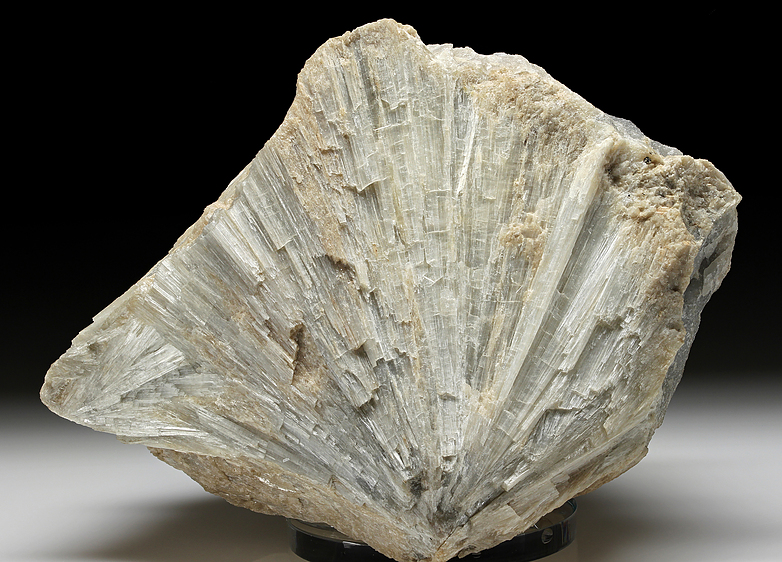

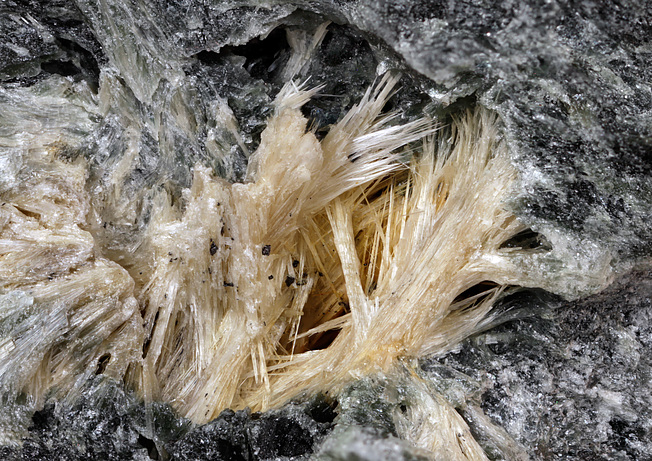
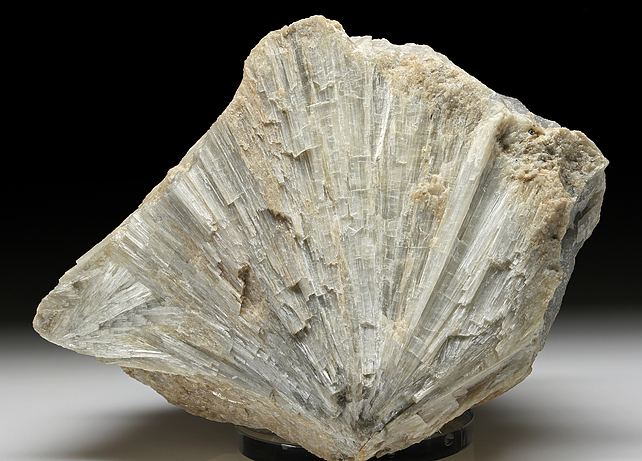
 Visit gemdat.org for gemological information about Tremolite.
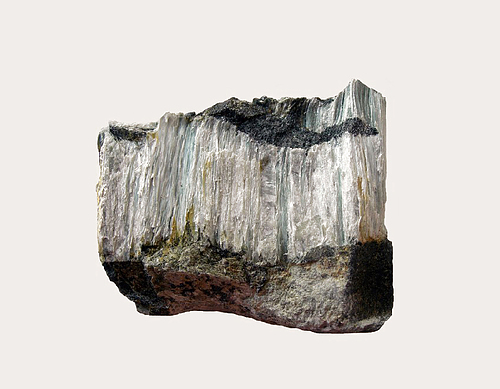
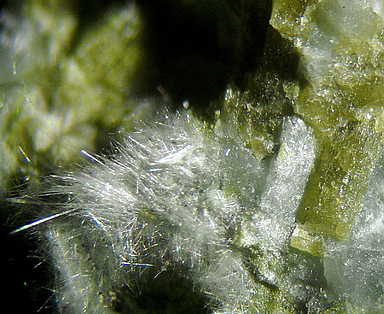
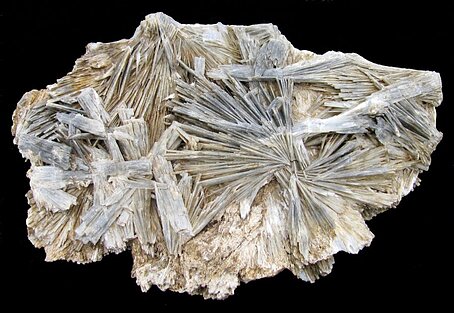


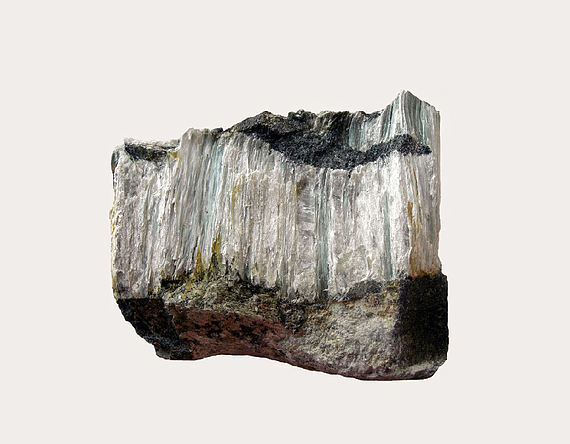

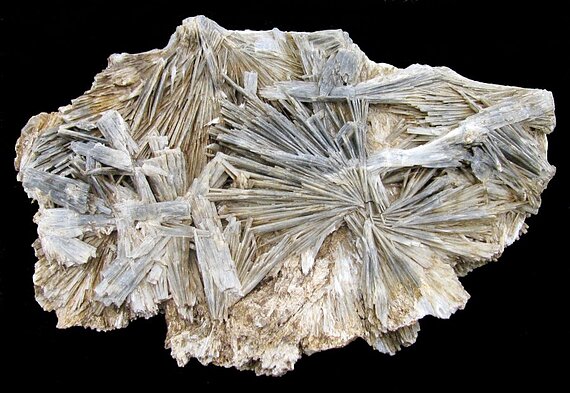


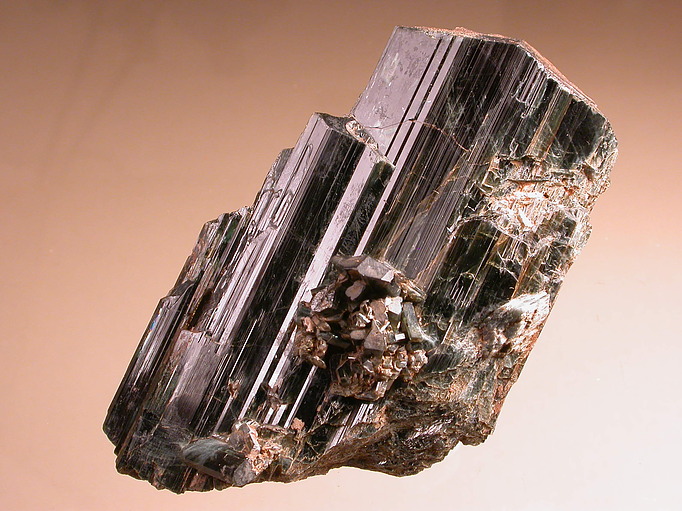

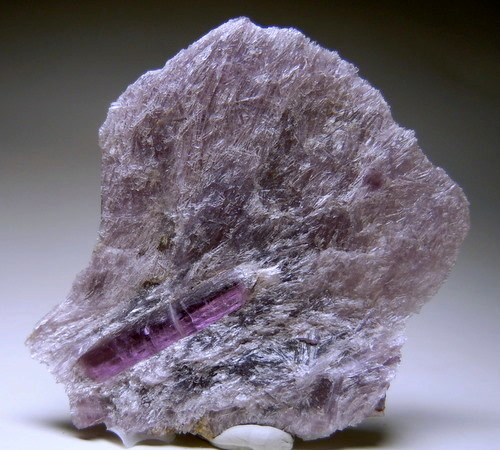


 symbol to view information about a locality.
The
 - This locality has map coordinates listed.
 - Good crystals or important locality for species.
 - World class for species or very significant.

Prince's Soapstone Quarry, Lafayette Station, Philadelphia County, Pennsylvania, USA